Around the world, tea practices reflect diverse philosophies shaping their rituals. In Japan, the tea ceremony embodies Zen principles of mindfulness, harmony, and respect, turning tea into a meditative act. China’s traditions emphasize balance and interconnectedness rooted in Confucian and Daoist ideas. Meanwhile, Indian chai highlights community and hospitality, promoting social bonding. Western tea often symbolizes comfort and self-care. Exploring these regional nuances reveals how tea binds cultural identity and philosophical beliefs—if you’re curious, there’s more to uncover about these rich traditions.
Key Takeaways
- East Asian tea ceremonies (Japanese, Chinese) emphasize mindfulness, harmony, and spiritual reflection rooted in Zen, Confucianism, and Daoism.
- Indian chai promotes community bonding and hospitality, reflecting social and cultural values rather than formalized ritualism.
- Western tea practices focus on comfort, relaxation, and self-care, aligning with mindfulness and personal well-being.
- Tea rituals across regions symbolize philosophical ideals like respect, balance, and interconnectedness, shaping cultural identity.
- Variations in tea preparation and ceremony reveal regional philosophies and values, fostering cultural expression and philosophical reflection.
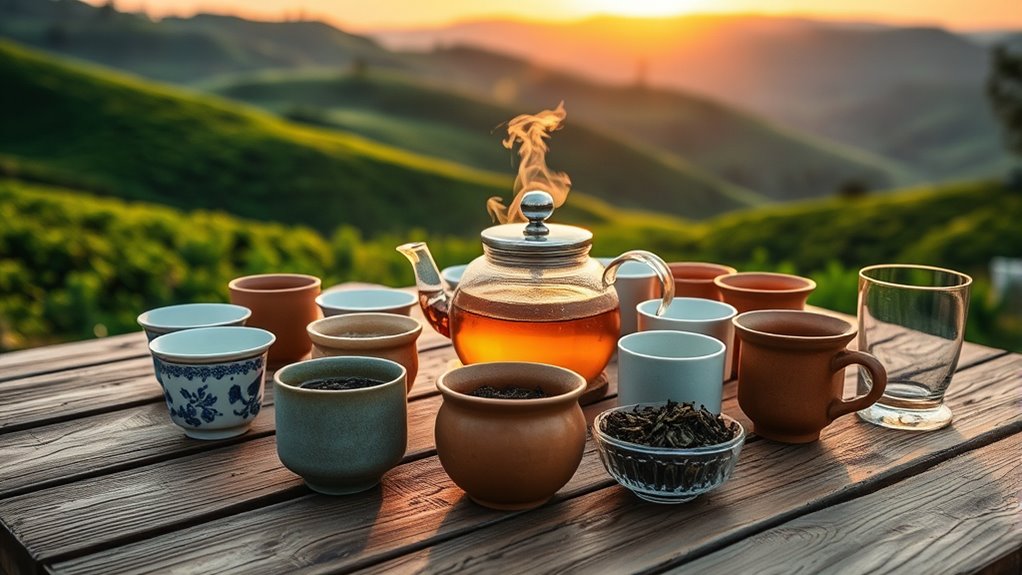
Tea has long been more than just a beverage; it reflects cultural values and philosophical outlooks that vary across regions. In many cultures, the act of preparing and drinking tea transforms into a ceremonial practice that embodies deeper meanings. Take the Japanese tea ceremony, for example. It’s not simply about drinking tea; it’s a meditative ritual rooted in Zen Buddhism, emphasizing harmony, respect, purity, and tranquility. This ceremony is a form of philosophical symbolism, illustrating principles like mindfulness and the appreciation of the present moment. When you participate in or observe such a ritual, you’re engaging with centuries of cultural philosophy that elevate a simple act into a spiritual experience. The slow, deliberate movements and attention to detail serve as reminders to slow down and find serenity amid daily chaos. Staying attentive to market trends and insights can also deepen your understanding of cultural practices and their underlying values.
The Japanese tea ceremony transforms drinking tea into a meditative, spiritual practice rooted in Zen principles of harmony and mindfulness.
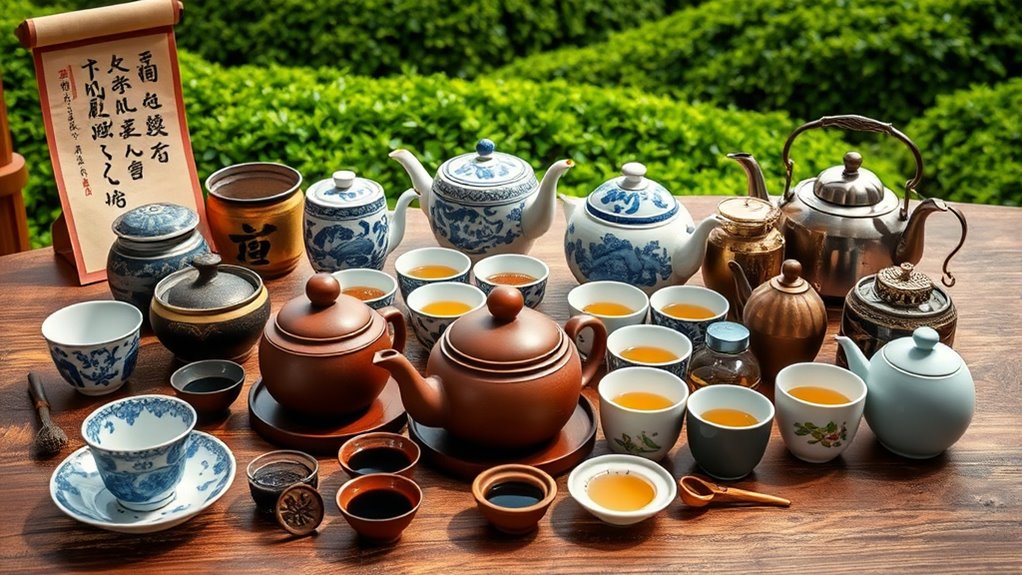
In Chinese culture, tea ceremonies carry profound philosophical symbolism tied to Confucianism and Daoism. The Chinese approach to tea isn’t just about taste; it’s about harmony between humans and nature, balance, and the pursuit of inner peace. During a traditional Chinese tea ceremony, you’re encouraged to embrace patience and mindfulness. The arrangement of tea utensils, the temperature of the water, and the pouring technique all symbolize respect and harmony. These rituals reflect core philosophical ideas—such as the importance of balance in life and the interconnectedness of all things. Drinking tea becomes a way to meditate on these values, fostering a sense of connection and tranquility that extends beyond the act itself.
Across regions, the way you approach tea and its ceremonies reveals a lot about underlying philosophical beliefs. In India, for instance, chai isn’t just a popular drink but a social ritual that promotes community and hospitality. While less formalized than East Asian ceremonies, the preparation and sharing of chai embody values of warmth and togetherness, echoing philosophies centered around community bonding. Meanwhile, in the West, tea often symbolizes comfort and relaxation, reflecting a cultural shift towards mindfulness and self-care. The ritual of brewing a cup, whether steeping loose leaves or using a tea bag, can serve as a moment of pause—a small act that encourages reflection and mental clarity.
In essence, each regional variation of tea and its ceremony mirrors unique philosophical ideals. Whether it’s Zen’s emphasis on mindfulness, Confucian harmony, or Western comfort, tea acts as a vessel for expressing and practicing these values. You don’t just drink tea; you engage with a cultural philosophy that shapes how you see yourself, others, and the world around you. Through these rituals, tea becomes a meaningful symbol—an everyday practice infused with deeper significance that varies across regions but always invites reflection.

Twinings Ceylon Pure Black Tea Individually Wrapped Bags, 20 Count (Pack of 6), formerly Ceylon Orange Pekoe, Crisp, Refreshing, Caffeinated, Enjoy Hot or Iced, 120 Teabags
- Premium Ceylon Black Tea: Selected from high-altitude Dambulla
- Bright, Refreshing Flavor: Crisp taste with golden color
- Caffeinated Tea Bags: Provides an energizing boost
As an affiliate, we earn on qualifying purchases.
Frequently Asked Questions
How Does Tea Influence Regional Philosophical Outlooks Worldwide?
Tea influences your regional philosophical outlooks by shaping your views on patience, harmony, and mindfulness through its symbolism. It reinforces cultural identity, as traditional tea practices embody values and beliefs unique to your community. As you partake in tea rituals, you embrace a way of life that emphasizes balance and introspection, fostering a deeper connection to your cultural roots and inspiring a collective philosophical perspective rooted in serenity and respect.
Are There Specific Tea Ceremonies Linked to Philosophical Teachings?
Yes, many tea ceremonies are deeply linked to philosophical teachings. For example, Japanese Chanoyu embodies Zen principles through precise ceremonial etiquette, symbolizing mindfulness and harmony. Imagine each movement as a ripple, emphasizing serenity and respect. This tea symbolism highlights how the rituals serve as a meditative practice, transforming simple tea preparation into a spiritual experience that fosters inner peace and philosophical insight.
How Do Local Customs Shape Tea Preparation and Consumption?
You’re influenced by local customs that shape how you prepare and enjoy tea. Tea etiquette guides your behavior, dictating serving styles and social manners, while specific brewing techniques guarantee you extract the best flavors unique to your region. These traditions influence your choice of utensils, steeping times, and presentation, creating a unique experience. Embracing local customs helps you connect more deeply with cultural practices and enhances your appreciation of tea’s role in community life.
What Role Does Tea Play in Religious or Spiritual Practices?
You might think tea is just a drink, but it holds deep spiritual significance and symbolism in many traditions. In meditation or prayer, tea’s ritual significance helps you focus and connect with a higher power. It represents purity, tranquility, and harmony, enriching your spiritual practice. Embracing these customs allows you to experience tea beyond taste, deepening your mindfulness and respect for the spiritual symbolism embedded in each sip.
How Have Modern Philosophies Impacted Traditional Tea Cultures?
Modern philosophies have transformed traditional tea cultures by encouraging deeper reflection on tea symbolism and sparking philosophical debates about its cultural significance. You might notice how contemporary ideas challenge old customs, making tea practices more about personal meaning and mindfulness. This shift invites you to see tea not just as a beverage but as a vessel for philosophical exploration, blending tradition with modern perspectives and fostering richer, more thoughtful tea experiences.
Conclusion
As you explore the world of tea and philosophy, you’ll see how regional differences shape both your cup and your thoughts. Did you know that China produces over 2,000 varieties of tea, each reflecting unique cultural philosophies? These diverse traditions remind you that every sip carries a story. Embrace these variations, and you’ll gain a deeper appreciation for how tea not only comforts but also connects you to centuries of wisdom across the globe.