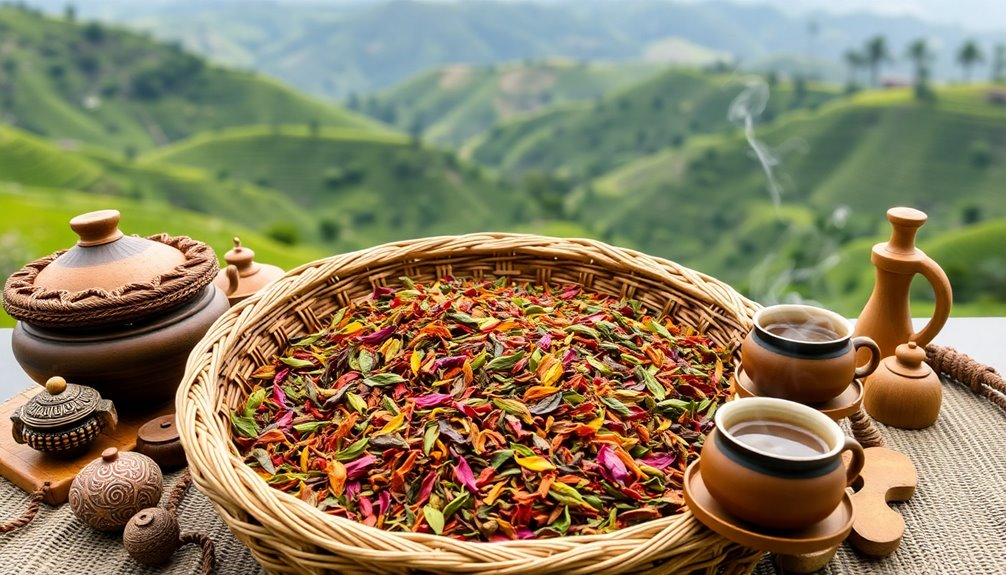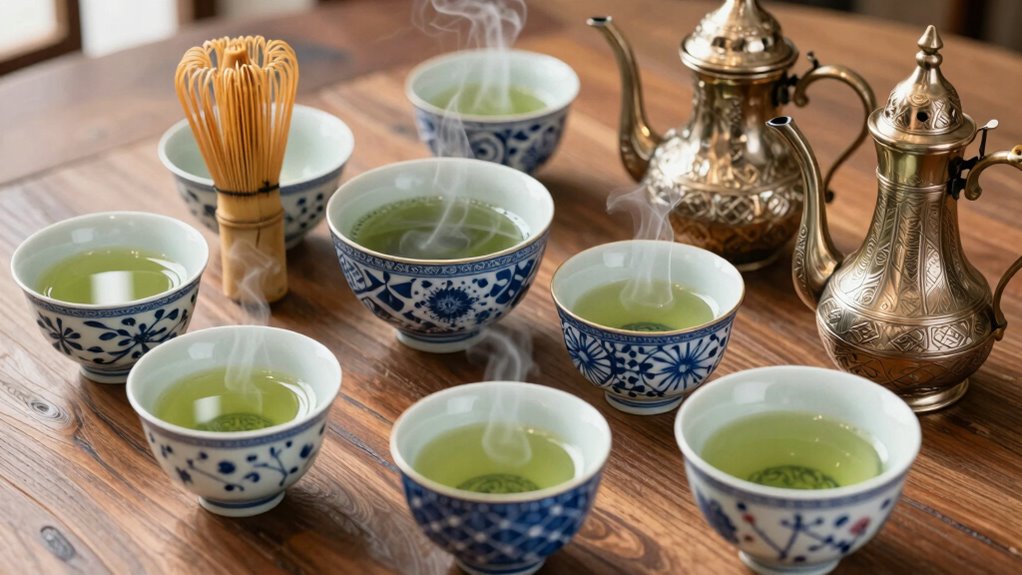

You see, different cultures shape modern tea practices through their unique customs. Japanese tea ceremonies teach mindfulness and respect, while Chinese gongfu brewing emphasizes skill and layered flavors. British afternoon tea highlights elegance and social connection, and Indian chai celebrates vibrant spices and craftsmanship. These traditions inspire innovations in tea presentation and deepen your appreciation for the cultural stories behind each sip. If you keep exploring, you’ll discover even more fascinating ways cultures continue to influence today’s tea world.

Get coffee and tea gear delivered free with Prime
- Fast, free delivery on millions of items
- Prime Video, Amazon Music and more included
- Member-only deals all year
Key Takeaways
- Traditional tea ceremonies and rituals inspire modern practices emphasizing mindfulness, aesthetics, and cultural appreciation.
- Cultural variations, like British afternoon tea and Indian chai, shape diverse contemporary tea consumption styles.
- Heritage techniques, such as Japanese whisking and Chinese gongfu brewing, influence innovative brewing methods and tea ware design.
- Emphasis on craftsmanship and social customs foster a global appreciation for tea’s cultural significance.
- Preservation of traditional practices ensures cultural continuity and enriches modern tea culture’s diversity.
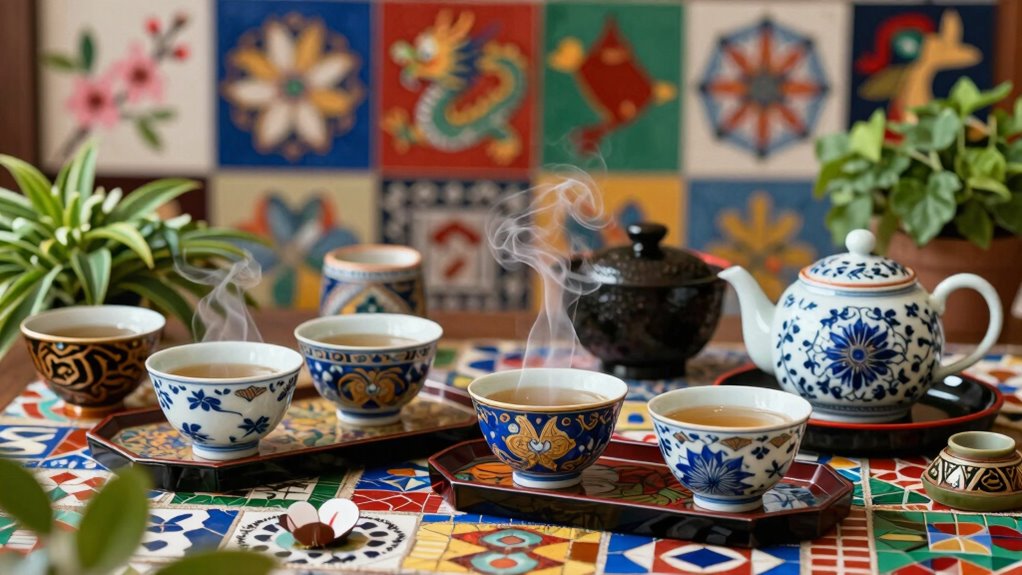
Tea has become more than just a beverage; it’s a reflection of cultural identity around the world. Different regions have developed unique traditions that influence how tea is prepared, served, and enjoyed today. These traditions often involve intricate tea ceremonies, which are more than simple routines—they’re expressions of history, philosophy, and social values. When you participate in a traditional Japanese tea ceremony, for example, you’re engaging in a ritual that emphasizes harmony, respect, purity, and tranquility. These ceremonies guide you through specific brewing techniques, where every movement, from whisking powdered matcha to pouring hot water, is deliberate and meaningful. Such rituals have shaped modern tea culture by emphasizing mindfulness and appreciation for the process, encouraging you to slow down and savor each sip.
Participating in Japanese tea ceremonies inspires mindfulness, respect, and appreciation for each deliberate, meaningful movement.
In China, the birthplace of tea, brewing techniques have evolved over thousands of years and continue to influence global practices. Gongfu tea brewing, with its precise control over water temperature and steeping time, highlights the importance of skill and attention to detail. You might find that this method produces a more concentrated and layered flavor profile, encouraging you to explore the nuances of different teas. These traditional techniques have inspired contemporary tea connoisseurs to pay closer attention to the quality of their brew and to develop a more discerning palate. The Chinese approach to tea also emphasizes aesthetics—the way the tea looks, smells, and tastes—fostering a deeper connection with your beverage and inspiring modern tea artisans to craft beautiful teapots and cups. Moreover, the appreciation of tea aesthetics influences the design of modern tea ware, blending tradition with innovation. Recognizing the cultural significance of tea in different societies helps deepen your understanding and appreciation of these practices. Additionally, traditional brewing methods continue to inspire modern innovations in tea preparation, merging age-old techniques with contemporary tastes. In recent years, there has been a growing movement to preserve and promote heritage tea practices, ensuring that these cultural traditions are passed down through generations. Understanding the history of tea can further enrich your appreciation of its evolving cultural roles across time and regions.
Across other cultures, tea traditions continue to influence modern practices. In Britain, the afternoon tea ritual emphasizes social connection, with carefully brewed black teas served alongside finger sandwiches and scones. This tradition, rooted in elegance and leisure, still shapes how many people enjoy tea today. Meanwhile, in India, chai’s rich spices and robust brewing techniques reflect the vibrant cultural tapestry of the region. The use of spices and milk in chai has become a global phenomenon, influencing how you might experiment with flavor combinations in your own tea routines.
Ultimately, the diverse ways cultures approach tea—through ceremonies, brewing techniques, and social customs—enrich modern tea culture. They remind you to appreciate the history behind each cup, encouraging a mindful, respectful, and creative approach to your tea-drinking experience. Whether you’re brewing a delicate matcha or savoring a robust chai, you’re part of a global tradition that celebrates connection, craftsmanship, and cultural expression.
Products Worth Considering

Cuisinart Deep Fryer, 4 Quart, CDF-200P1

KitchenAid Classic Series 4.5-Quart Tilt-Head Stand Mixer, Onyx Black

Instant Pot Pro 8 Qt 10-in-1 Electric Pressure Cooker, Black
As an affiliate, we earn on qualifying purchases.
Frequently Asked Questions
How Do Regional Climate Conditions Affect Tea Cultivation Practices?
You’ll find that regional climate conditions directly shape tea cultivation practices through climate adaptation and cultivation techniques. In cooler areas, you might see shade growing to protect tea plants, while warmer regions often use irrigation to maintain moisture levels. Rainfall, humidity, and temperature influence leaf flavor and quality, prompting farmers to adjust practices like pruning or planting at certain altitudes. These climate-driven adaptations ensure healthy growth and ideal tea production.
What Are Some Lesser-Known Traditional Tea Ceremonies Worldwide?
You might think traditional tea ceremonies are limited to well-known ones, but lesser-known rituals like Morocco’s Berber tea ceremony or the Japanese Sencha ritual reveal profound cultural significance. These tea rituals embody hospitality, respect, and community, shaping modern tea culture. Investigating these lesser-known ceremonies uncovers a deeper understanding of how tea’s cultural significance extends beyond popular practices, enriching your appreciation for tea’s global cultural tapestry.
How Does Tea Symbolism Vary Across Different Cultures?
You’ll find that tea symbolism varies widely across cultures, reflecting each society’s values and traditions. In China, tea represents harmony and respect, often used in ceremonies to honor guests. In Japan, it symbolizes purity and mindfulness during the tea ceremony. Meanwhile, in England, tea’s cultural significance revolves around comfort and social connection. These diverse meanings shape modern tea culture, emphasizing respect, tranquility, and community in unique and meaningful ways.
What Role Does Tea Play in Social and Political Customs?
Tea plays a crucial role in social and political customs by fostering social bonding and serving as a tool for diplomacy. You might participate in tea diplomacy, where sharing tea builds trust between nations. Socially, tea brings people together during gatherings, creating a sense of community. Its cultural significance helps shape traditions, making it a symbol of hospitality and mutual respect in various societies.
How Are Modern Innovations Influencing Traditional Tea Preparation Methods?
You’ll find modern innovations shaking up traditional tea preparation by blending old and new techniques. Advanced brewing methods, like precision temperature controls, enhance flavor extraction, while innovations in tea fermentation create unique flavors. These changes aren’t just bells and whistles—they’re transforming how you experience tea every day. As technology advances, traditional brewing techniques adapt, allowing you to enjoy richer, more complex brews without losing the essence of time-honored practices.
Conclusion
As you explore the diverse tea traditions around the world, you realize how each culture’s unique rituals and flavors shape today’s global tea scene. Your appreciation deepens, understanding that tea isn’t just a drink—it’s a powerful bridge connecting history, identity, and community. Embrace these rich traditions, for they hold the magic to transform your simple cup into an extraordinary experience. Truly, tea’s influence is nothing short of a world-changing phenomenon, awakening your senses like never before.