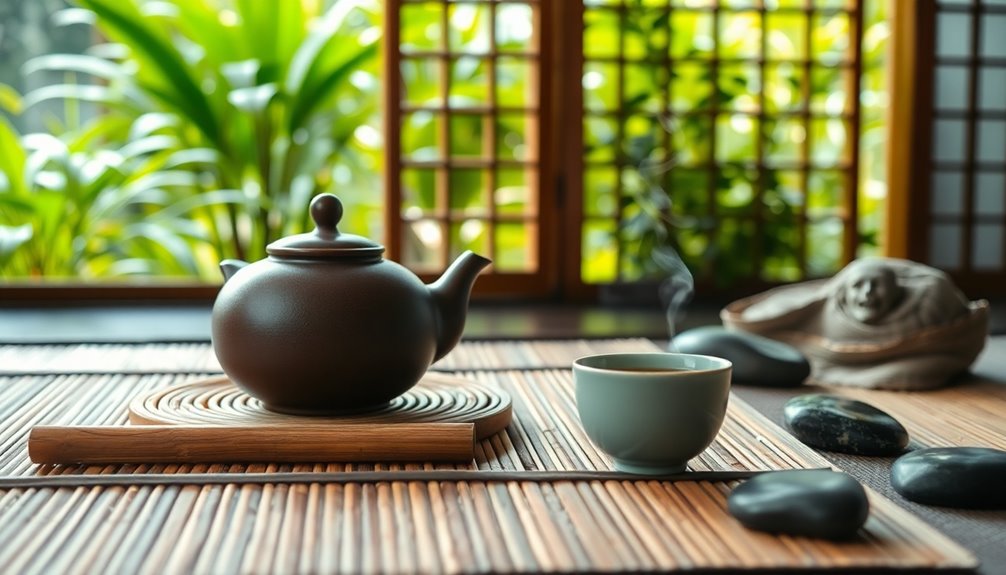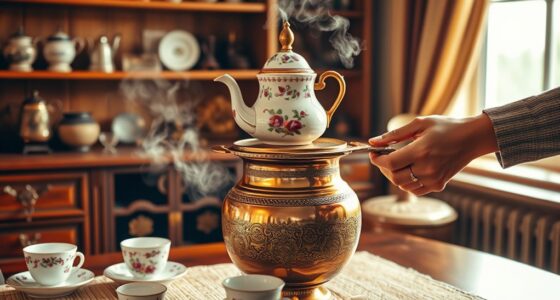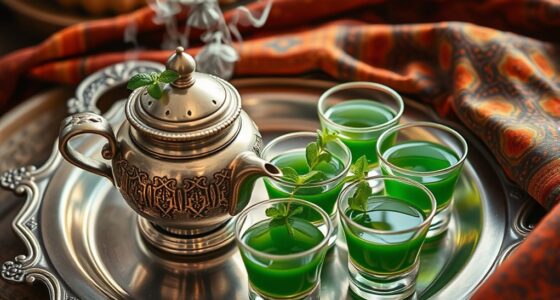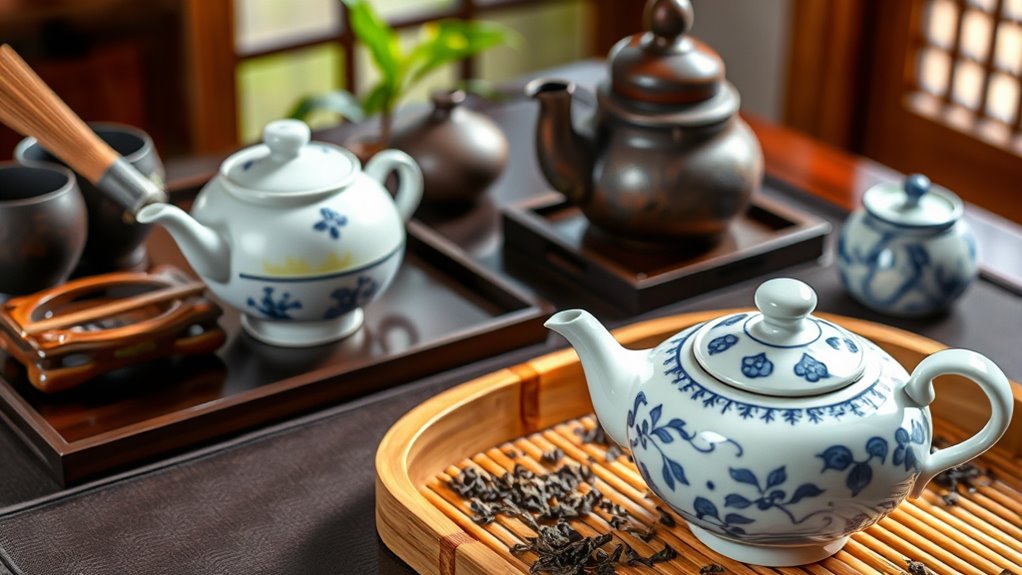
You’ll notice that regional tea ceremonies vary greatly, reflecting local customs, history, and values. Japanese tea etiquette emphasizes deliberate movements, respect, and harmony, while Chinese ceremonies focus on social bonding and appreciation. Middle Eastern traditions highlight ornate utensils and hospitality, and Indian practices showcase craftsmanship with metal teapots. Each region’s approach reveals unique cultural priorities. Exploring these differences helps you understand how tea serves as a mirror of diverse societies — if you continue, you’ll uncover even more fascinating insights.
Listen free for 30 days with Audible
Thousands of audiobooks and originals — cancel anytime.
As an affiliate, we earn on qualifying purchases.
Key Takeaways
- Tea ceremonies differ significantly across regions, from Japan’s strict protocols to China’s social-focused rituals.
- Utensil types and materials, such as Japanese chawan or Moroccan silver teapots, reflect regional cultural values.
- Etiquette varies, with Japanese ceremonies emphasizing deliberate movements and Chinese ones prioritizing social bonding.
- The cultural significance influences ceremony styles, whether symbolizing harmony, respect, or community connection.
- Regional history and philosophies shape the rituals, presentation, and social context of local tea practices.
Have you ever wondered how tea ceremonies differ across regions? It’s fascinating to see how each culture puts its unique spin on this ancient practice. One of the key aspects that varies is tea etiquette, which governs how you handle the tea and interact during the ceremony. In some cultures, there’s a strong emphasis on respect and formality, while others embrace a more relaxed approach. For example, in Japan, tea etiquette is meticulous; every movement is deliberate, from bowing to pouring the tea. You’re expected to follow strict protocols that symbolize harmony and respect, such as holding the tea bowl with both hands and turning it slightly before drinking. In contrast, a Chinese tea ceremony may focus more on appreciation and social bonding, with less rigid gestures but an emphasis on the flow of the process. Additionally, the cultural significance of the ceremony influences how it is performed and understood within each society.
Different regions showcase unique tea etiquette emphasizing respect, harmony, or social bonding in their ceremonies.
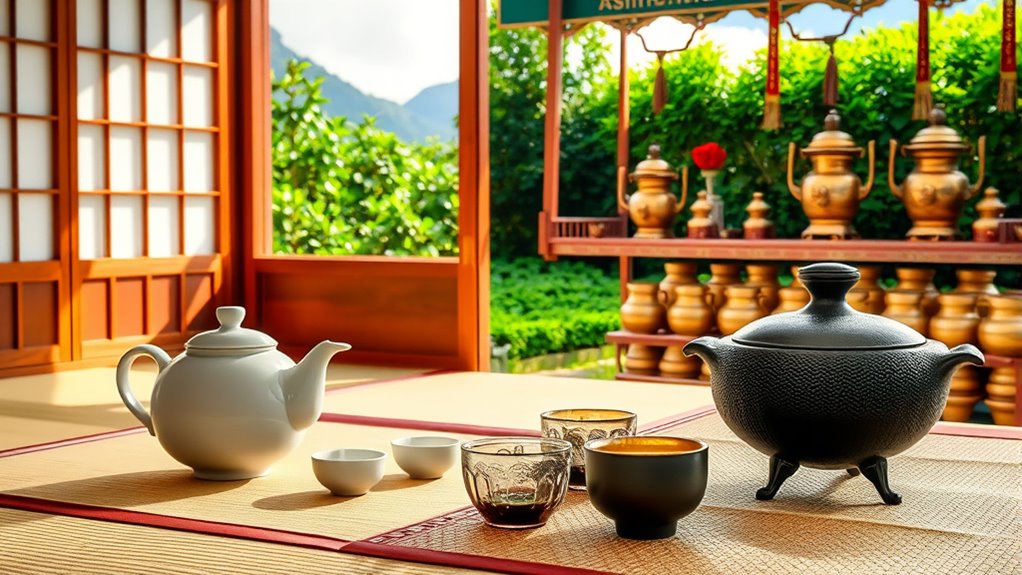
Ceremonial utensils also play a essential role in distinguishing regional tea ceremonies. Each region has its own set of tools that contribute to the overall experience. In Japanese tea ceremonies, you’ll find a chawan (tea bowl), chasen (bamboo whisk), and chashaku (tea scoop). These utensils are often handcrafted and hold symbolic meaning, representing purity, harmony, and tranquility. The way you handle these tools reflects respect for tradition and the ceremony itself. Meanwhile, in the Middle East, the focus is on the elegant presentation of the tea, often served in small, ornate cups. The utensils may include a cezve (long-handled pot) for brewing, along with a tray and sugar cubes, emphasizing hospitality and aesthetic appeal.
Across regions, the style and materials of ceremonial utensils reveal cultural values. In India, for instance, traditional brass or copper teapots are common, highlighting durability and craftsmanship. In contrast, in Morocco, a traditional teapot might be made of silver or stainless steel, used to serve mint tea in a social setting that emphasizes generosity. The selection of utensils also influences the ceremony’s atmosphere—simple, rustic tools evoke humility and community, while ornate utensils suggest a ceremonial grandeur.
Ultimately, the regional differences in tea ceremonies aren’t just about the tools or etiquette—they reflect the history, philosophies, and social norms of each culture. When you participate in or observe these ceremonies, you gain insight into the values and traditions that shape each region’s unique approach to tea. Whether formal or informal, the essence remains the same: a moment of connection, mindfulness, and appreciation for this timeless beverage.

Amazon Basics Basket Coffee Filters for 8-12 Cup Coffee Makers, White, 200 Count, Packaging May Vary
- Package Quantity: 200 filters included
- Compatibility: Fits 8-12 cup coffee makers
- Filtration Quality: Eliminates sediment for better taste
As an affiliate, we earn on qualifying purchases.
Frequently Asked Questions
How Do Regional Climate Differences Influence Tea Ceremony Customs?
Climate differences shape how you adapt tea ceremonies, influencing the customs you follow. In colder regions, you might focus on warmth and comfort, while in warmer areas, the ceremony emphasizes refreshment and lightness. These adaptations reflect regional symbolism, highlighting local values and environment. You modify rituals to suit your climate, ensuring the experience remains meaningful and comfortable, demonstrating how climate adapts and enriches your tea ceremony practices.
Are There Specific Utensils Unique to Certain Regional Tea Ceremonies?
You’ll notice that certain regional tea ceremonies feature unique utensils, like the ornate, carved tea scoop in Japan’s chanoyu. These utensils often embody regional symbolism and reflect local aesthetics. For example, a tea whisk might have regional design influences that honor local craftsmanship. These unique utensil designs deepen the cultural significance of the ceremony, making each regional practice truly special and distinct in its use of traditional tools.
How Do Regional Traditions Affect the Types of Tea Used?
Regional traditions influence your choice of tea leaf choices, reflecting local climate and cultural tastes. You’ll notice that regional flavor profiles guide you to prefer certain teas, like green tea in China or black tea in India. These preferences shape the entire ceremony, ensuring the tea complements local customs. By understanding regional influences, you can appreciate how specific tea types enhance the authenticity and cultural significance of each ceremony.
What Role Does Local History Play in Shaping Regional Tea Rituals?
You’ll find that local history deeply shapes regional tea rituals, reflecting your area’s cultural identity. For example, regions along historic trade routes often incorporate unique traditions and specific teas, like the ancient Silk Road‘s influence on Central Asian ceremonies. Did you know that some ceremonies include ingredients traded centuries ago? Your regional history influences not just the teas you drink but also the customs and symbols that make your tea ritual special.
Are Regional Variations of Tea Ceremonies Recognized Officially or Informally?
Regional variations of tea ceremonies are often recognized informally through cultural recognition, as local communities celebrate their unique practices. Official standards, however, are less common and usually limited to specific areas or institutions. You’ll find that these variations thrive because of community pride rather than formal regulation, emphasizing the rich diversity and cultural significance of tea rituals across different regions.
Conclusion
As you explore these regional tea ceremonies, you might find a surprising connection—how a simple sip can reveal shared traditions across different cultures. Just like discovering an unexpected flavor in your favorite brew, understanding these variations offers a glimpse into history and identity. Perhaps, next time you enjoy tea, you’ll notice the subtle differences that tell a story, reminding you that even in diversity, there’s a common thread waiting to be uncovered.
Labor Day sales Picks
labor day deals
As an affiliate, we earn on qualifying purchases.