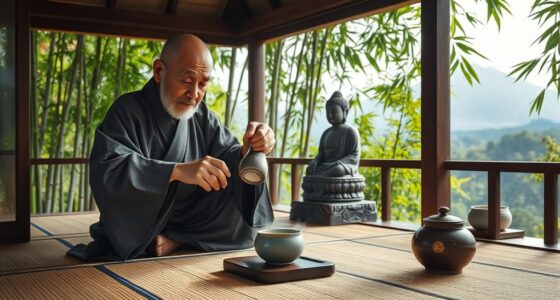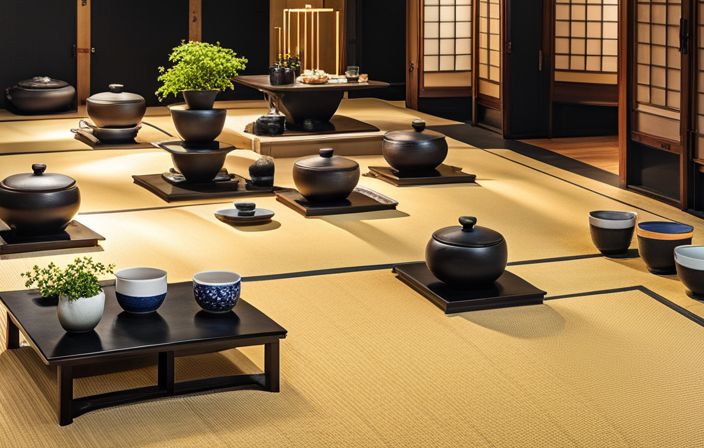

Tea and philosophy are deeply connected through rituals that encourage reflection, mindfulness, and harmony with yourself and nature. As you participate, you slow down, focus on each step, and explore ideas like impermanence and inner peace. These ceremonies turn a simple act into a spiritual journey, helping you connect with a bigger picture of life’s transient beauty. If you want to uncover the true meaning behind these traditions, there’s more to explore that reveals profound insights.

Get coffee and tea gear delivered free with Prime
- Fast, free delivery on millions of items
- Prime Video, Amazon Music and more included
- Member-only deals all year
Key Takeaways
- Tea ceremonies serve as meditative rituals that foster mindfulness, reflection, and philosophical exploration beyond just drinking tea.
- Traditional practices in Japan and China emphasize ecological harmony, sustainability, and interconnectedness with nature.
- The acts within tea rituals symbolize deeper philosophical concepts like impermanence, balance, and inner peace.
- Tea acts as a vessel for spiritual growth, encouraging self-awareness and contemplation of life’s transient nature.
- The overall philosophy of tea emphasizes intentionality, presence, and connecting to broader existential and spiritual questions.

Have you ever wondered why tea has become intertwined with philosophical thought across cultures? It’s not just because of the drink’s calming qualities, but because tea ceremonies serve as a gateway to deeper reflection. When you participate in a tea ceremony, you’re not merely preparing and drinking tea—you’re engaging in a ritual that encourages mindfulness, presence, and philosophical exploration. These ceremonies, whether in Japan, China, or elsewhere, are carefully designed to cultivate a sense of harmony between the individual, the environment, and the act of brewing. As you follow each step, from boiling water to pouring it into delicate cups, you’re invited to slow down and contemplate the transient nature of life. The simplicity and precision of these rituals mirror philosophies that emphasize balance, impermanence, and the pursuit of inner peace. Moreover, these traditions often incorporate elements of biodiversity, such as using locally sourced, natural ingredients that highlight the importance of ecological harmony. Recognizing the ecological aspects of tea cultivation deepens your appreciation for the interconnectedness of nature and human traditions.
In many cultures, tea ceremonies become more than just social events; they transform into moments of philosophical reflection. When you sit quietly during a tea ceremony, you’re encouraged to focus on the present moment, stripping away distractions and ego. This focus creates space for insights about life’s fleeting nature and the importance of appreciating each moment. It’s in these quiet reflections that you may find yourself contemplating concepts like emptiness, harmony, and humility—ideas deeply rooted in Eastern philosophies. The act of sharing tea in these sacred contexts emphasizes interconnectedness, reminding you that life is a series of delicate, interconnected moments that shouldn’t be rushed.
Furthermore, tea ceremonies often symbolize the pursuit of enlightenment or self-awareness. As you observe the ritual’s details—the precise movements, the choice of tea leaves, the design of the utensils—you’re engaging in a form of meditative practice that aligns with philosophical teachings. These moments of deliberate focus help you explore questions about existence, consciousness, and the nature of reality. The ceremony becomes a physical manifestation of philosophical reflections, turning abstract ideas into tangible experiences. In this way, tea isn’t just a beverage; it’s a vessel for introspection and spiritual growth.
Ultimately, the story behind tea and philosophy reveals a tradition rooted in intentionality and mindfulness. By immersing yourself in tea ceremonies, you open a space for philosophical inquiry that transcends words. It’s an invitation to ponder life’s mysteries while savoring a simple cup, connecting the act of drinking tea to a broader quest for understanding and harmony.
As an affiliate, we earn on qualifying purchases.
Frequently Asked Questions
How Did Tea Influence Philosophical Discussions Historically?
Tea influenced philosophical discussions by serving as a symbol of tranquility and mindfulness practices. When you sip tea, you engage in a moment of reflection, encouraging deeper thinking and calm contemplation. Historically, tea symbolism fostered conversations about harmony, balance, and presence, inspiring philosophers to explore spiritual and ethical ideas. This simple act helped shape philosophical traditions that emphasize mindfulness, self-awareness, and the pursuit of inner peace.
Are There Specific Philosophical Schools Linked to Tea Culture?
Yes, specific philosophical schools are linked to tea culture, especially Zen Buddhism. You see tea symbolism in Zen, emphasizing mindfulness practices that foster presence and tranquility during tea ceremonies. These practices encourage you to focus on each moment, blending philosophy with daily ritual. This connection highlights how tea isn’t just a beverage but a medium for spiritual reflection, promoting calmness and insight through mindful engagement.
Did Any Philosophers Write About Tea Directly?
Yes, some philosophers wrote about tea directly, exploring its symbolism and connection to mindfulness practices. For instance, Zen Buddhists emphasized tea’s calming qualities, using it as a tool for meditation and reflection. Writers like Sen no Rikyū linked tea to harmony and simplicity, illustrating its role in cultivating mindfulness. These insights highlight tea’s significance beyond taste, revealing its philosophical value in promoting serenity and introspection.
How Has Tea Shaped Eastern Philosophical Traditions?
Tea has deeply shaped eastern philosophical traditions through its symbolism and role in mindfulness practice. You’re likely to see tea symbolize harmony, purity, and tranquility, encouraging reflection. When you engage in tea ceremonies, you participate in a mindfulness practice that fosters presence and calmness. This ritual emphasizes simplicity and inner peace, reinforcing core principles of eastern philosophies like Zen and Taoism, and helping you cultivate mental clarity and spiritual insight.
What Are Modern Philosophical Perspectives on Tea Rituals?
Think of tea rituals as a bridge to mindfulness practices, connecting you to the present moment. Modern philosophers see these rituals as more than tradition; they’re tools to cultivate aesthetic appreciation and inner calm. By embracing simplicity and intentionality, you can transform a simple cup into a meditative experience. These perspectives highlight how tea rituals foster mental clarity and emotional balance, making everyday moments feel profound and meaningful.
Conclusion
As you reflect on tea’s deep roots in philosophy, remember that over 80% of the world’s population drinks tea daily, finding comfort and clarity in each sip. This ancient beverage isn’t just about taste; it’s a vessel for mindfulness and introspection. So, next time you brew a cup, think of it as a moment to connect with centuries of wisdom. Embrace tea’s role in shaping thoughtful, peaceful minds around the globe.
Evergreen bestsellers Picks
bestsellers
As an affiliate, we earn on qualifying purchases.