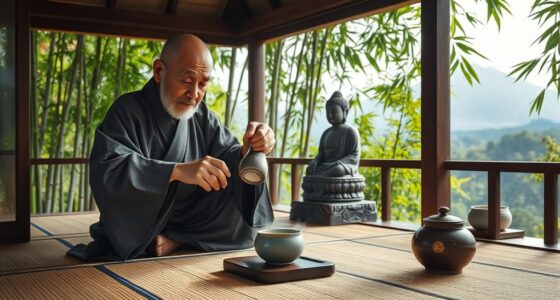

Your appreciation for tea is deeply influenced by its philosophical roots, shaping how you practice and enjoy it today. Modern tea culture reflects ancient ideas from Zen Buddhism and Confucianism, promoting mindfulness, respect, and harmony. These philosophies encourage you to slow down, be present, and find meaning in each sip. As you explore further, you’ll discover how these traditions continue to inspire meaningful tea experiences across cultures.

Get coffee and tea gear delivered free — and shop member deals
- Fast, free delivery on millions of items
- Access to Prime Big Deal Days deals on October 6–7
- Prime Video, Amazon Music and more included
Key Takeaways
- Philosophical traditions like Zen and Confucianism shape mindfulness and respect in modern tea rituals.
- Core principles such as simplicity and harmony influence contemporary tea practices worldwide.
- Tea acts as a vessel for cultural expression and philosophical reflection in daily life.
- Modern tea culture emphasizes slowing down and savoring moments, inspired by ancient philosophies.
- Rituals foster self-awareness, connection, and a deeper appreciation of tea’s cultural and philosophical roots.

Have you ever wondered how centuries-old philosophies shape the way we enjoy tea today? It’s fascinating to see how deep-rooted ideas from different cultures influence modern tea culture, especially through tea rituals and philosophical reflections. When you participate in a traditional tea ceremony, you’re not just drinking tea; you’re engaging in a mindful practice that embodies centuries of philosophical thought. These rituals aren’t random; they serve as a way to cultivate mindfulness, respect, and harmony—values that stem from philosophical traditions like Zen Buddhism or Confucianism. They remind you that drinking tea can be more than a simple act of refreshment; it’s a moment to connect with yourself and the world around you.
Participating in tea rituals connects you to centuries of philosophy, mindfulness, respect, and harmony.
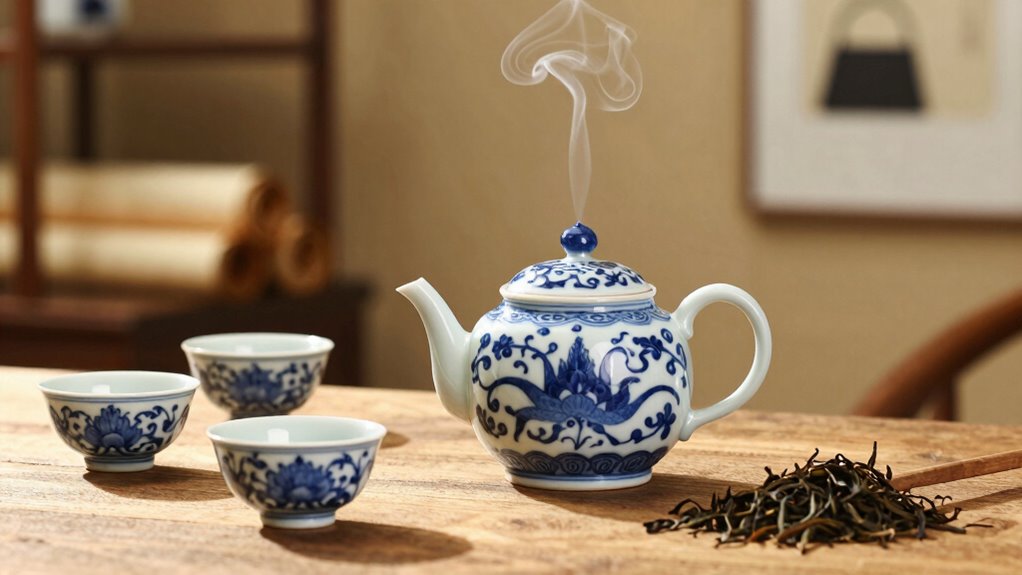
In many ways, your approach to tea is shaped by these philosophical reflections. For example, the Japanese tea ceremony emphasizes simplicity, patience, and humility—principles rooted in Zen philosophy. As you prepare and serve tea, you’re encouraged to be fully present, appreciating each step with deliberate focus. This mindfulness isn’t just about the tea itself but about cultivating a calm, reflective state of mind. Similarly, in Chinese tea culture, the emphasis on harmony and balance mirrors Daoist ideas about living in tune with nature. When you brew a pot of Chinese tea, you’re participating in a tradition that celebrates natural flow and effortless harmony, reminding you that life, much like tea, is best enjoyed with patience and acceptance.
Furthermore, the philosophical foundations behind these traditions influence modern tea practices, inspiring new ways to incorporate mindfulness and cultural appreciation into everyday routines. The influence of philosophy extends beyond rituals and into the way you perceive tea’s role in your life. Modern tea culture often incorporates these age-old ideas, encouraging you to slow down and savor the moment. Incorporating philosophical ideas into tea practices can deepen your appreciation for the cultural significance and promote a more mindful approach to daily life. Additionally, understanding the cultural and philosophical significance behind tea traditions can enhance your overall experience, making it more meaningful and enriching. When you explore the history of tea and its cultural roots, it adds a layer of depth to your appreciation and helps you see tea as more than just a beverage. Whether you’re brewing a simple cup at home or attending a formal tea ceremony, the act becomes a philosophical reflection on presence and mindfulness. These traditions teach you that tea isn’t just a beverage but a vessel for deeper understanding—an expression of cultural values that promote peace, respect, and self-awareness.
Ultimately, your experience with tea is intertwined with these philosophical foundations. They shape your expectations, guide your practices, and deepen your appreciation for the ritual itself. As you sip your tea, remember that you’re partaking in a centuries-old dialogue between philosophy and daily life—an ongoing conversation that continues to influence how we find meaning, calm, and connection in the modern world.
As an affiliate, we earn on qualifying purchases.
Frequently Asked Questions
How Did Ancient Philosophies Specifically Shape Tea Preparation Techniques?
Ancient philosophies shaped tea preparation techniques through an emphasis on Tea aesthetics and Philosophical symbolism. You’ll notice that the careful, mindful steps in brewing reflect principles like harmony and balance, illustrating deeper spiritual ideas. For example, the precise temperature and timing symbolize respect and mindfulness. This approach elevates tea-making into a meditative act, where each step embodies philosophical values, fostering a deeper connection between the drinker and the tea.
Are There Modern Tea Practices Directly Derived From Philosophical Teachings?
Yes, many modern tea practices are directly inspired by philosophical teachings and rituals. You might notice tea symbolism in the way ceremonies emphasize mindfulness and harmony, reflecting Zen or Confucian ideals. These practices encourage you to slow down, focus on the present, and appreciate the moment. Philosophical rituals shape how you prepare, serve, and consume tea, transforming it into a mindful experience beyond just drinking.
How Does Tea Philosophy Vary Across Different Cultures Worldwide?
You’ll notice that tea philosophy varies across cultures through its cultural symbolism and ritual significance. In Japan, tea embodies harmony and respect, emphasizing precision in the tea ceremony. Chinese culture highlights balance and tranquility, reflecting centuries-old traditions. Meanwhile, in Britain, tea’s ritual signifies social connection and comfort. These differences showcase how each culture’s unique history and values shape their approach to tea, making it a meaningful cultural practice worldwide.
What Role Does Mindfulness Play in Contemporary Tea Ceremonies?
Mindfulness plays a essential role in contemporary tea ceremonies by encouraging you to focus fully on each step, turning brewing into a form of meditation. You might think it’s just about drinking tea, but conscious brewing and mindfulness meditation deepen your experience, helping you stay present. This practice fosters relaxation, clarity, and appreciation, making each cup a mindful ritual that connects you to tradition and your inner calm.
Can Philosophical Concepts Influence Sustainable Tea Farming Methods?
Yes, philosophical concepts can influence sustainable tea farming methods. You might adopt eco-conscious practices that prioritize environmental health, reflecting philosophies like harmony with nature. Ethical harvesting aligns with ideas of respect and fairness, ensuring workers and ecosystems are protected. By integrating these principles, you promote sustainable growth, reduce harm, and foster a deeper connection between tea cultivation and philosophical values, ultimately shaping a more responsible and mindful tea industry.
Conclusion
As you explore modern tea culture, remember it’s like a delicate dance between centuries-old philosophy and daily rituals. These influences shape how you appreciate each sip, transforming tea from mere beverage to a mindful experience. Embrace the harmony of tradition and modernity, letting each cup serve as a gentle reminder that tea is more than just a drink — it’s a bridge connecting past wisdom with present moments. Savor it, and let the journey continue.
Fall Picks
fall essentials
As an affiliate, we earn on qualifying purchases.