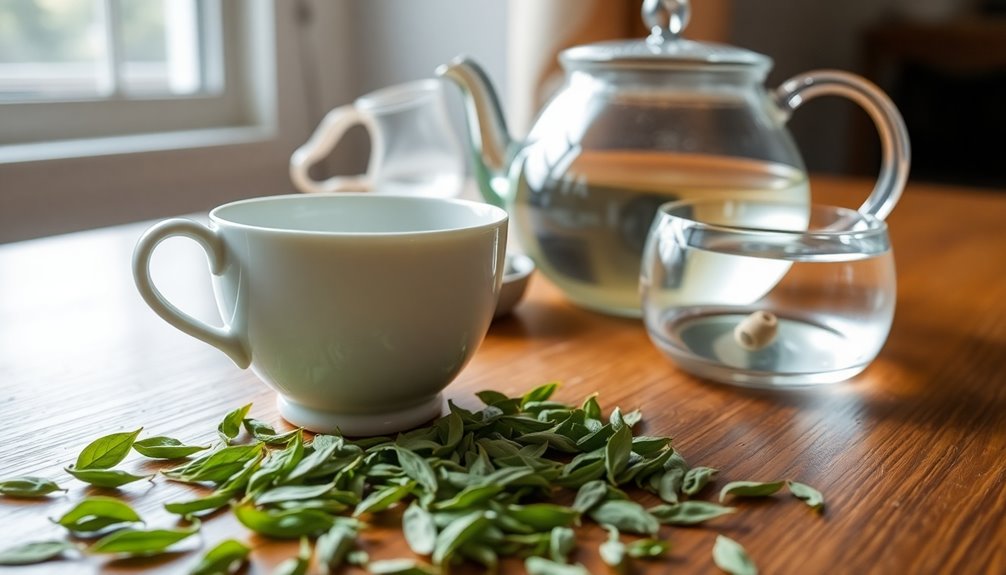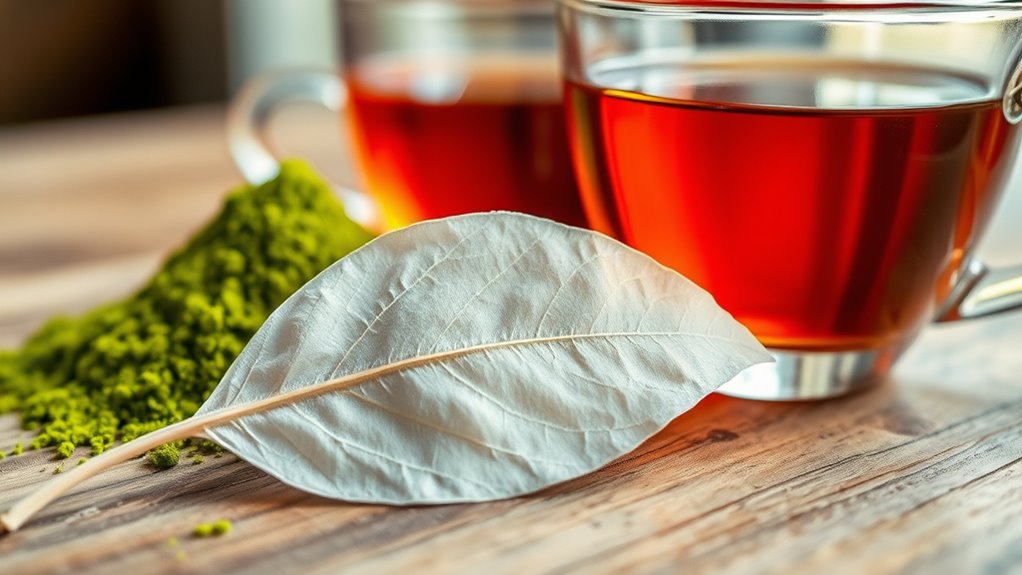

When comparing white tea to others, you’ll find it has a milder, more delicate flavor, with subtle sweetness and floral notes. It’s minimally processed, so it retains higher levels of antioxidants and offers health benefits similar to green and black teas, but with less bitterness. Unlike green tea’s grassy taste or black tea’s boldness, white tea appeals to those preferring a smooth, gentle sip. Explore further to discover how its unique profile can suit your palate.
Key Takeaways
- White tea is minimally processed, retaining more antioxidants and delicate compounds than green, black, or oolong teas.
- It has a milder, sweeter flavor profile with floral and grassy notes, unlike the stronger, more bitter green tea or the bold black tea.
- White tea contains lower caffeine levels compared to black and oolong teas, making it suitable for sensitive drinkers.
- It offers similar health benefits, such as antioxidant support and chronic disease risk reduction, with a more natural, subtle taste.
- White tea pairs well with light foods and is ideal for those seeking a gentle, refined tea experience compared to other varieties.

Have you ever wondered how white tea stacks up against other popular teas? If you’re exploring different options for your daily cup, understanding the health benefits and flavor profiles of white tea can help you make an informed choice. White tea is often praised for its delicate taste and subtle complexity, but how does it compare to green, black, or oolong teas? When it comes to health benefits, white tea is packed with antioxidants, particularly polyphenols, which can help protect your cells from damage and support your immune system. Because it’s minimally processed—just harvested and dried—white tea retains more of these beneficial compounds than teas that undergo extensive oxidation or fermentation. This means you get a purer, more natural source of antioxidants, which have been linked to reduced risks of chronic diseases like heart disease and certain cancers.
In regard to flavor profiles, white tea offers a gentle, light experience that’s often described as sweet, floral, and slightly grassy. It’s usually less astringent than green or black teas, making it an excellent choice if you prefer a smoother, more delicate taste. Its subtlety allows you to appreciate nuanced notes that can vary depending on the specific variety and region where it’s grown. For example, Silver Needle white tea has a refined sweetness and a hint of fruitiness, while Bai Mu Dan offers a slightly bolder, more complex flavor with hints of earthiness. This versatility makes white tea appealing to those who are sensitive to stronger or more bitter teas, and it pairs well with a range of foods, from light salads to fruit desserts.
Compared to green tea, white tea generally has a milder flavor but still delivers a significant punch in terms of antioxidants. Green tea tends to be more grassy and vegetal, with a slightly more bitter aftertaste, whereas white tea’s subtlety can be more appealing for those seeking a gentle, invigorating drink. Black tea, on the other hand, boasts a richer, bolder flavor with notes of caramel and malty undertones, but it’s often more processed and may contain fewer delicate antioxidants. Oolong falls somewhere in between, offering complex flavors that can vary from floral to roasted, yet it doesn’t quite match the lightness of white tea.
Top picks for "compar white other"
Open Amazon search results for this keyword.
As an affiliate, we earn on qualifying purchases.
Frequently Asked Questions
How Does White Tea Affect Skin Health?
White tea benefits your skin by boosting hydration and offering anti-aging properties. When you drink white tea, it helps keep your skin moisturized, reducing dryness and fine lines. Its powerful antioxidants fight free radicals, slowing aging signs. You’ll notice your skin looks brighter and feels smoother over time. Incorporate white tea into your routine to support healthy, youthful skin, and enjoy the natural glow it provides.
Is White Tea Suitable for Children or Pregnant Women?
White tea may seem mild, but you should be cautious. Children’s safety is a concern because of the caffeine content, which can cause jitters or sleep issues. Pregnancy considerations are also important, as caffeine intake should be limited during pregnancy to avoid risks like miscarriage or low birth weight. Always consult a healthcare provider before introducing white tea to children or pregnant women, ensuring safety and avoiding any adverse effects.
Can White Tea Help With Weight Loss?
White tea can support your weight loss efforts by aiding calorie reduction and providing a mild metabolic boost. Its antioxidants may help increase fat breakdown, making it easier for you to shed pounds. Drinking white tea regularly can complement a healthy diet and exercise plan, helping you stay committed to your goals. Just remember, no tea alone guarantees weight loss, but it’s a helpful addition to your overall routine.
What Is the Best Way to Brew White Tea?
To brew white tea perfectly, start with a brewing temperature of about 160-185°F (70-85°C) to maintain its delicate flavors. Steep it for 2-5 minutes, depending on your taste preference—shorter for a lighter taste, longer for more strength. Use fresh, filtered water, and avoid over-steeping to prevent bitterness. This method guarantees you enjoy the subtle, nuanced flavors white tea offers at their best.
Does White Tea Contain More Antioxidants Than Green or Black Tea?
White tea generally has higher antioxidant levels than green or black tea because of its gentle processing methods, which preserve more of its natural compounds. When you choose white tea, you’re getting a beverage rich in antioxidants that may help protect your cells. The minimal tea processing methods used for white tea keep its delicate antioxidants intact, making it a great choice for those seeking maximum health benefits.
Conclusion
In the end, choosing white tea means you’re opting for a delicate, antioxidant-rich experience. Imagine Sarah, who switched to white tea for its subtle flavor and health benefits; she noticed improved skin and more energy. Like her, you can enjoy white tea’s gentle taste while reaping its wellness perks. So, next time you’re looking for a soothing, healthful beverage, consider white tea—you might just find your new favorite.