Different materials in tea accessories, like cast iron, porcelain, glass, and clay, each have pros and cons. Cast iron retains heat well and is durable but needs proper drying to prevent rust. Porcelain and ceramic preserve pure flavors and are easy to clean, though fragile. Glass offers excellent visibility and style, yet lacks heat retention. Clay, such as Yixing, adds flavor over time but requires special care. Keep exploring to discover which material suits your tea experience best.
Key Takeaways
- Ceramic and porcelain are non-reactive, preserving pure tea flavor but can be fragile and prone to staining or odor retention.
- Glass teapots and accessories allow visual observation of brewing, enhancing aesthetic appeal, but are fragile and have poor heat retention.
- Cast iron teapots offer durability, excellent heat retention, and seasoned surfaces, though they require proper drying to prevent rust.
- Yixing clay teapots absorb tea flavors over time, enriching taste but needing regular seasoning and careful handling.
- Modern materials like stainless steel provide durability and ease of cleaning, but may lack traditional aesthetic or heat retention qualities.

When choosing tea accessories, understanding the materials used can enhance your brewing experience and guarantee durability. The type of material impacts not only how your tea brews but also how you connect with the cultural significance of tea. Different materials influence tea brewing techniques, affecting heat retention, infusion speed, and flavor extraction. For example, traditional Japanese tea ceremonies often utilize iron teapots, which are valued for their ability to retain heat and develop a seasoned interior that enhances the tea’s taste over time. Conversely, glass teapots allow you to observe the steeping process, aligning with modern brewing preferences and emphasizing the visual aspect of tea appreciation. Knowing the materials helps you select accessories that match your brewing style and respect the cultural roots of tea, whether it’s the delicate porcelain of Chinese gongfu tea or the rustic charm of clay yixing teapots.
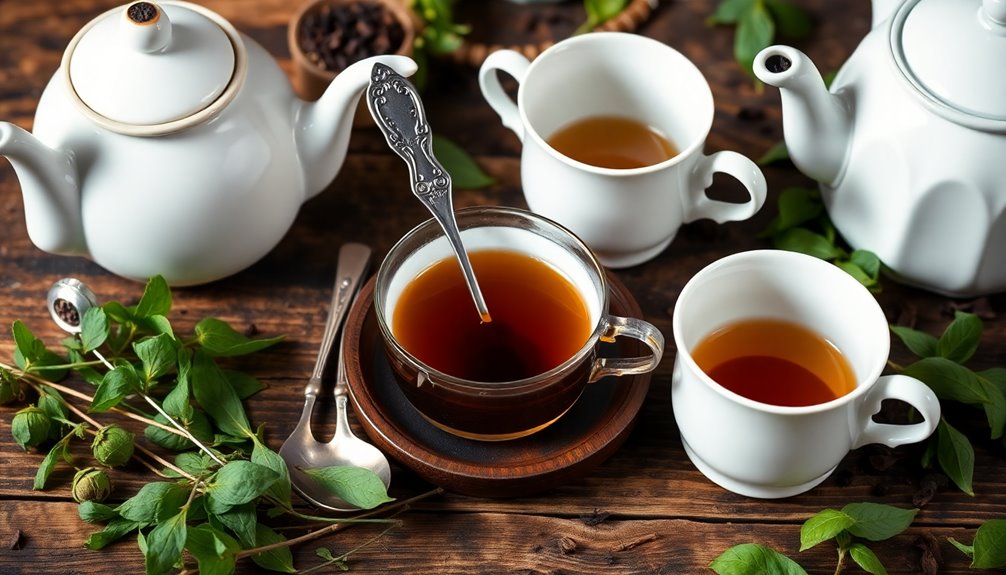
Ceramic and porcelain are popular choices for teapots and cups because they’re non-reactive, preserving the pure flavor of your tea. These materials heat evenly and are often associated with traditional tea cultures, which value the ritual and artistry of tea preparation. Ceramic accessories are durable enough for daily use but can be fragile if dropped. They’re easy to clean, maintaining the integrity of the tea’s flavor and aroma through repeated use. However, they can sometimes retain stains or odors if not properly maintained. On the other hand, glass accessories are excellent for those who want to witness the entire brewing process, making them ideal for showcasing the visual appeal of blooming teas or herbal infusions. Glass is easy to clean and doesn’t impact the taste but can be fragile and less effective at heat retention, requiring careful handling.
Materials like cast iron or clay have their own advantages and drawbacks. Cast iron teapots are incredibly durable and excellent at holding heat, making them perfect for brewing robust teas. They often develop a seasoned surface that enhances the tea’s flavor over time, adding a layer of cultural tradition and history. Yixing clay teapots are highly valued in Chinese tea culture because they absorb the essence of the tea, improving the taste with each brew. However, they require special care and seasoning, and their porous nature means they shouldn’t be used for different types of tea to avoid flavor mixing. Additionally, material choice influences the overall experience, as each material offers a distinctive blend of functionality and cultural connection. Ultimately, selecting the right material depends on your preferred tea brewing techniques and your desire to connect with the broader cultural significance of tea. Each material offers a distinctive experience, blending functionality with tradition, and choosing wisely ensures that your tea rituals become even more meaningful.
Top picks for "material used accessory"
Open Amazon search results for this keyword.
As an affiliate, we earn on qualifying purchases.
Frequently Asked Questions
Are Eco-Friendly Materials More Durable for Tea Accessories?
Eco-friendly materials can be more durable for tea accessories, especially when you choose sustainable options like bamboo or stainless steel. These sustainable material benefits include resistance to wear and environmental impact. Compared to traditional materials, eco-friendly options often last longer and are easier to maintain. While some might worry about durability, many eco-friendly choices outperform traditional ones, making them a smart, environmentally conscious investment for your tea accessories.
How Do Material Choices Affect Tea Flavor Preservation?
Material choices profoundly affect tea flavor preservation through insulation and heat retention. If you select materials with good insulation, like ceramic or double-walled stainless steel, your tea stays hot longer, helping preserve its aroma and flavor. Conversely, porous or poor heat-retaining materials can cause the tea to cool quickly, diminishing its taste. So, opting for high-quality, insulated materials ensures your tea remains fresh and flavorful longer.
Which Materials Are Safest for Hot Liquids?
Did you know that over 90% of tea drinkers prefer safe, heat-resistant materials? When choosing tea accessories, opt for ceramic safety and heat-resistant plastics. Ceramic is naturally non-reactive, making it ideal for hot liquids, while high-quality heat-resistant plastics can withstand high temperatures without leaching harmful chemicals. These materials guarantee your tea stays safe and pure, letting you enjoy each sip without worry.
Can Material Impact the Longevity of Tea Merchandise?
Yes, the material impacts the longevity of your tea merchandise. You’ll notice that durable materials like stainless steel or ceramic maintain their aesthetics longer and resist wear, while cheaper options may crack or fade faster. Keep in mind, your choice influences manufacturing costs too—premium materials often cost more upfront but last longer, saving you money in the long run. So, balancing aesthetics and costs helps guarantee your tea accessories stay beautiful and functional over time.
Are There Health Risks Associated With Specific Tea Accessory Materials?
Imagine holding a delicate, shimmering teacup—do you wonder if material toxicity lurks beneath its beauty? Yes, some materials pose health risks, especially if they contain harmful chemicals or allergens. Certain metals or plastics may release toxins or trigger allergies, so it’s vital to take allergen concerns into account and choose high-quality, safe materials. Being aware helps you enjoy your tea experience without unintended health hazards.
Conclusion
Choosing the right materials for your tea accessories shapes your experience. Whether you value durability, style, or eco-friendliness, each material offers unique benefits and drawbacks. By considering your preferences, you guarantee your tea moments are safe, satisfying, and sustainable. Remember, the right material enhances your enjoyment, protects your health, and respects the planet. Make informed choices, embrace quality, and let your love for tea grow with every sip and every accessory you cherish.