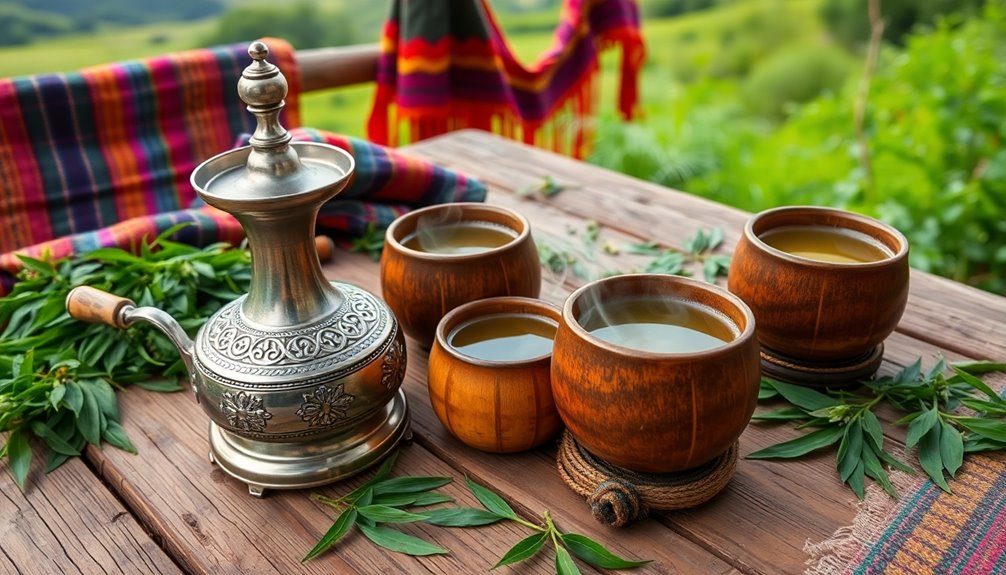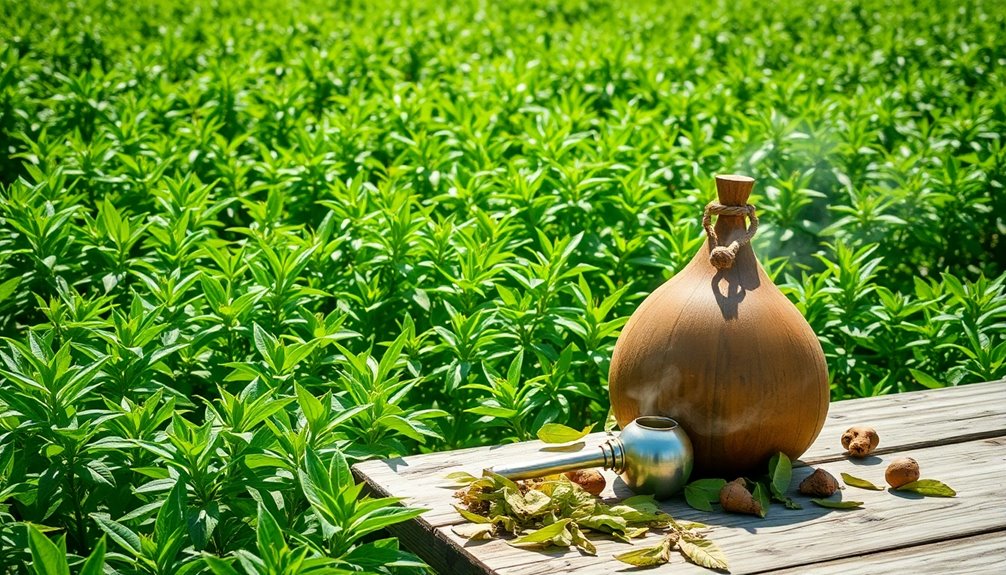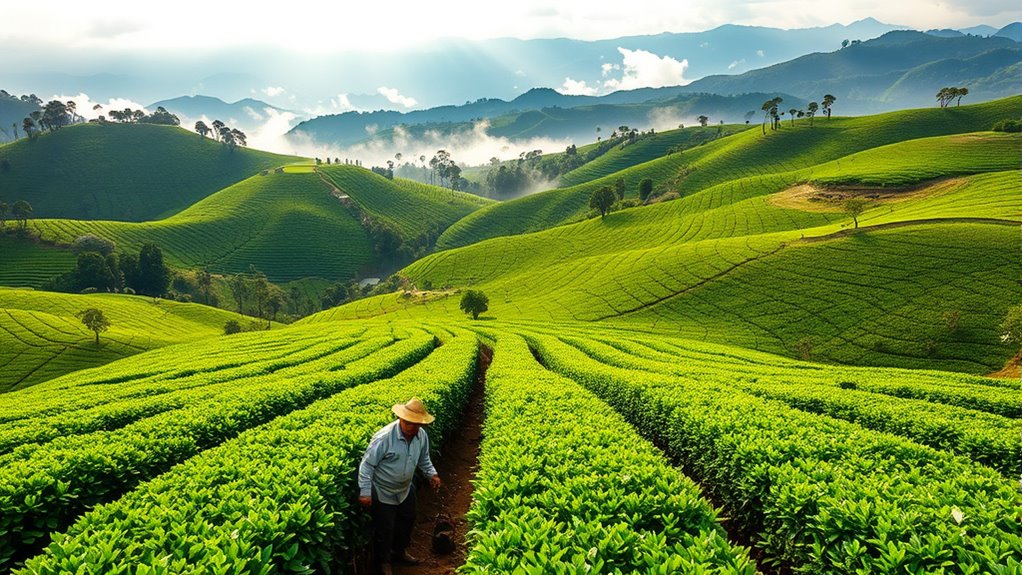
South American teas showcase diverse regional flavors shaped by climate, soil, and elevation. High-altitude areas like the Andes produce teas with delicate, floral, and citrus notes, while coastal zones offer fuller-bodied, earthy varieties. Soil composition adds mineral richness or softness to the taste. Each region’s unique terroir influences the aroma and profile, creating a broad spectrum of flavors. Exploring these regional differences reveals the rich environmental story behind every tea, and there’s more to discover if you keep exploring.

Get coffee and tea gear delivered free — and shop member deals
- Fast, free delivery on millions of items
- Access to Prime Big Deal Days deals on October 6–7
- Prime Video, Amazon Music and more included
Key Takeaways
- High-altitude regions like the Andes produce teas with bright, delicate, and citrusy flavors due to cooler temperatures and mineral-rich soils.
- Coastal areas with warmer, humid climates yield teas with fuller body, earthy notes, and robust, intense flavors.
- Volcanic soils enrich teas with mineral tangs and subtle saltiness, enhancing brightness and clarity.
- Soil type and elevation influence flavor profiles, with volcanic soils offering mineral richness and lower altitudes producing stronger, malty teas.
- Each region’s terroir imparts distinct characteristics, reflecting environmental conditions and cultivating unique South American tea varieties.

South America’s diverse climate and soil conditions give rise to a rich array of tea varieties, each reflecting its unique terroir. When you explore the region’s tea cultivation, you’ll notice how the environment shapes the flavor profiles of each brew. High-altitude regions, like the Andes, provide cooler temperatures and thin, mineral-rich soils that produce teas with bright, crisp, and nuanced flavors. These teas often carry a slight acidity, offering a revitalizing taste that highlights the purity of their environment. In contrast, coastal areas with warmer, more humid climates foster the growth of teas with fuller body and deeper, earthy notes. The moisture and richness of the soil here contribute to robust flavors that appeal to those seeking a more intense tea experience.
You’ll find that in countries like Colombia and Argentina, tea cultivation is adapted to these varied conditions, resulting in a diverse palette of teas. In high-altitude plantations, the slow growth of tea plants enhances the complexity of flavor profiles, giving you teas with delicate floral and citrus undertones. These teas often have a lighter body, making them suitable for gentle infusions or early morning sips. Meanwhile, lower-altitude regions produce teas with a more potent, malty character, perfect for those who prefer a stronger, more rounded cup.
The soil composition plays an essential role in shaping these flavor profiles. For example, volcanic soils in certain areas contribute mineral-rich qualities, imparting a subtle saltiness or mineral tang to the tea. Such teas often carry a distinctive bright clarity that’s highly prized by connoisseurs. On the other hand, sandy or loamy soils tend to produce teas with softer, smoother textures and milder flavors, ideal for everyday drinking. Additionally, proper evaluation and certification ensure that teas meet quality standards and reflect their terroir accurately.
As you taste South American teas, you’ll notice how the regional terroir influences every aspect of the flavor. Whether it’s the crispness of high-altitude teas or the earthiness of those grown closer to the coast, each variety tells a story of its environment. The interplay between climate, soil, and cultivation techniques results in a spectrum of flavor profiles that make South American teas uniquely compelling. So, when you select a tea from this region, you’re not just choosing a beverage—you’re experiencing a piece of its terroir in every sip.
As an affiliate, we earn on qualifying purchases.
Frequently Asked Questions
How Do Regional Climates Influence Tea Flavor Profiles?
You’ll notice that regional climates directly shape tea flavor profiles through microclimate effects and soil mineral content. Warm, humid areas enhance sweetness and aroma, while cooler climates produce bolder, brisker teas. Rich soils with minerals add depth and complexity to the flavor. By understanding these climate influences, you can better appreciate how regional conditions create unique, vibrant teas that reflect their terroir and microclimate effects.
What Traditional Cultivation Methods Are Unique to South American Tea Farms?
You’ll find that South American tea farms embrace unique traditional methods, like shade cultivation, which softly protect delicate leaves from harsh sunlight, enriching flavor. Hand plucking remains a cherished practice, allowing careful selection of tender leaves and buds, ensuring quality. These methods reflect patience and respect for nature’s rhythm, creating a gentle harmony that elevates the tea’s character and distinguishes South American teas from others around the world.
Which South American Countries Produce the Most Tea?
You’ll find Brazil leading South American tea production, thanks to its extensive cultivation and favorable climate. Argentine plantations also contribute substantially, especially in regions like Tucumán and Salta, where the high-altitude terroir enhances tea quality. These countries dominate the industry, with Brazil focusing on large-scale cultivation and Argentina emphasizing traditional methods. Together, they shape the vibrant and diverse South American tea landscape that appeals to global markets.
How Does Altitude Affect the Quality of South American Tea?
Altitude’s impact on South American tea is like the sun’s gentle touch shaping a masterpiece. When you grow tea at higher elevations, the cooler temperatures slow leaf growth, intensifying flavors and aroma. This altitude’s impact enhances quality, creating a more complex and refined sip. You’ll notice a delicate, nuanced taste that speaks of the mountains’ influence, elevating your tea experience to new heights.
Are There Specific Pests or Diseases Unique to South American Tea Regions?
You should be aware that South American tea regions face pests like tea thrips and aphids, as well as diseases such as leaf spot and rust. Effective pest management and disease prevention are vital to protect your crops. Regular monitoring, proper sanitation, and eco-friendly treatments help minimize damage. Implementing integrated pest management strategies ensures healthy tea plants and maintains high-quality yields, addressing issues specific to the region’s unique climate and terrain.
Conclusion
You can see that South America’s tea varieties are deeply shaped by their unique terroirs, much like wine. This suggests that the environment plays a vital role in flavor and quality, supporting the theory that terroir markedly influences tea characteristics. By understanding these regional differences, you can better appreciate the richness and diversity of South American teas, realizing that where they’re grown truly matters. So, next time you sip, remember the land behind your cup.
Halloween Picks
halloween
As an affiliate, we earn on qualifying purchases.