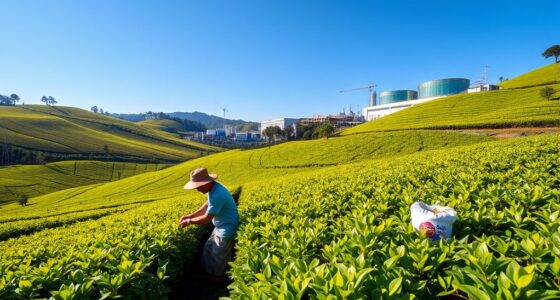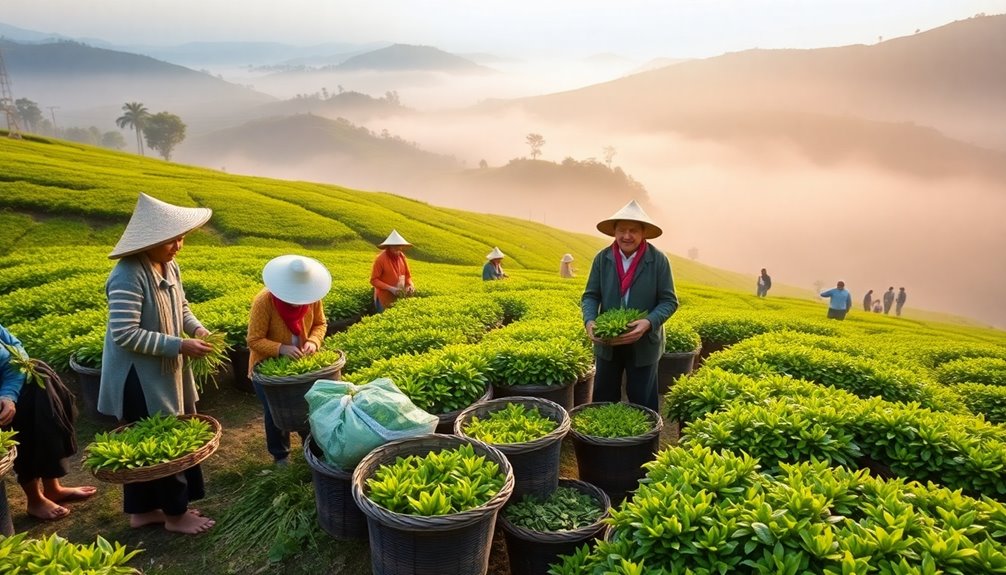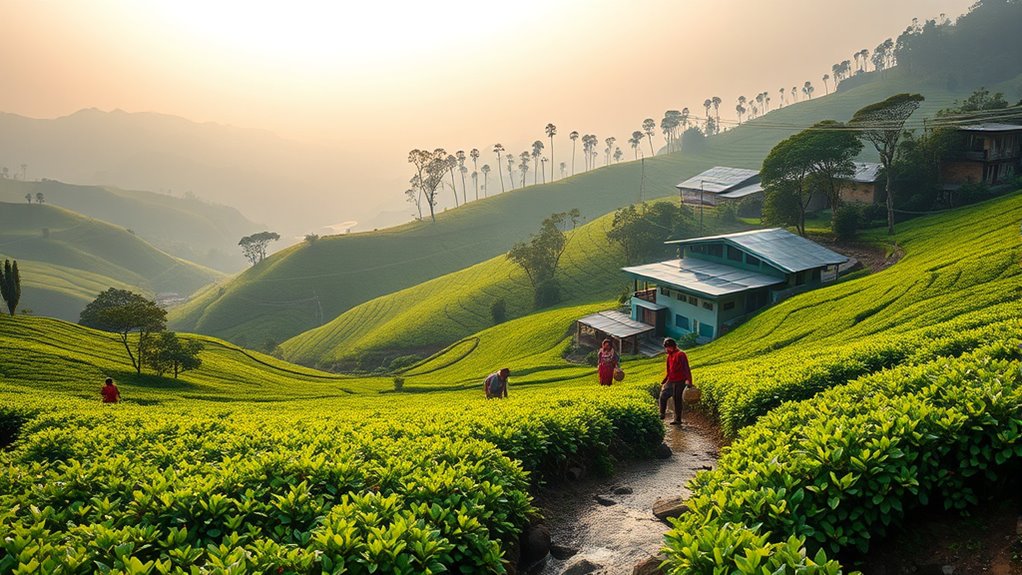
Sustainable and ethical tea sourcing faces multiple challenges, including climate change impacts like unpredictable weather and soil degradation, which threaten crop yields and quality. Additionally, traditional farming practices become harder to maintain, requiring climate-smart solutions. Social issues like low wages and poor working conditions on plantations also persist, risking social sustainability. Certification efforts aim to improve transparency, but gaps remain. Exploring these issues further reveals how these interconnected challenges affect the future of ethical tea production.
Listen free for 30 days with Audible
Thousands of audiobooks and originals — cancel anytime.
As an affiliate, we earn on qualifying purchases.
Key Takeaways
- Climate change impacts tea yields, quality, and traditional cultivation practices, requiring adoption of climate-smart agricultural strategies.
- Maintaining soil health and preventing erosion are critical challenges amid extreme weather events.
- Ensuring fair labor practices and safe working conditions remains difficult in regions with low-wage, exploitative employment.
- Certification schemes like Fair Trade face gaps in accountability, necessitating ongoing evaluation to uphold ethical standards.
- A holistic approach linking ecological health, social justice, and economic viability is essential for sustainable tea sourcing.
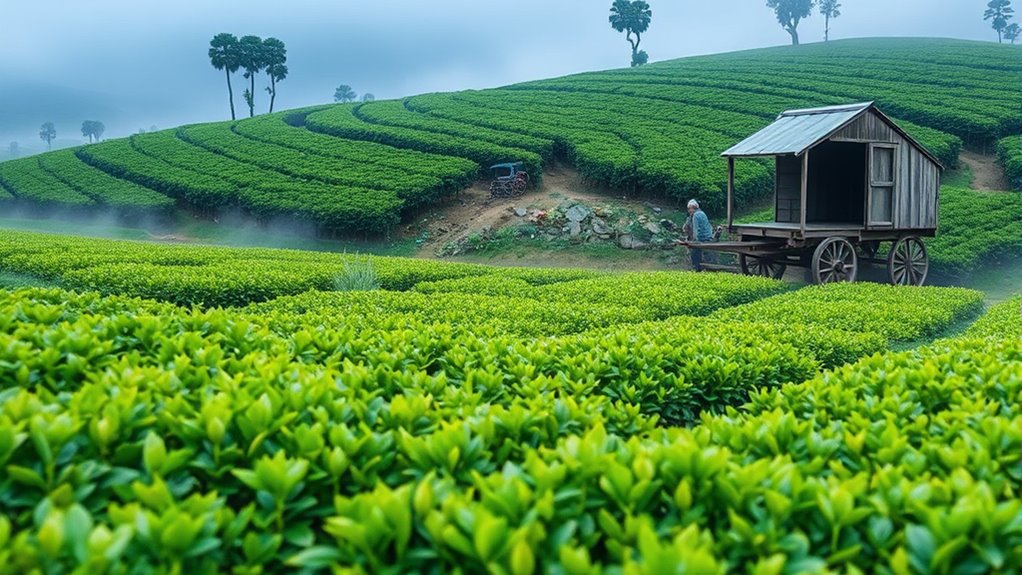
Sourcing tea sustainably is becoming increasingly complex as growers and companies face a range of environmental, social, and economic challenges. One of the most pressing issues is the climate impact on tea cultivation. Rising temperatures, unpredictable rainfall, and extreme weather events threaten tea plantations’ productivity and quality. These changes make it harder for farmers to predict yields and maintain consistent harvests, forcing them to adapt quickly or face economic hardship. Droughts and floods can erode soil health, reduce crop resilience, and increase pest and disease pressures, which further complicate efforts to produce tea responsibly. As climate conditions shift, maintaining traditional growing practices becomes more difficult, and the need for resilient, climate-smart agriculture grows more urgent. Additionally, the genetic diversity within certain breeds can influence the adaptability of tea plants to changing climate conditions, highlighting the importance of preserving breed diversity for future resilience.
Climate change threatens tea yields, quality, and traditional practices, highlighting the urgent need for resilient, climate-smart agriculture.
Alongside environmental concerns, labor practices in tea sourcing present significant sustainability challenges. Many tea plantations, especially in developing regions, rely on low-wage labor, often under exploitative conditions. Workers may face long hours, inadequate safety measures, and a lack of fair compensation. These practices undermine social sustainability and tarnish the reputation of companies committed to ethical sourcing. Improving labor practices requires companies to enforce fair wages, provide safe working environments, and ensure workers have access to rights and benefits. Doing so supports not only social equity but also the stability of supply chains. When workers are treated ethically, they’re more likely to stay in their roles, which helps maintain consistent quality and production levels.
Balancing environmental and social concerns demands that you, as a consumer or company, prioritize transparency and accountability. Supporting certifications like Fair Trade or Rainforest Alliance can help guarantee that tea is produced with respect for both climate resilience and workers’ rights. However, these certifications aren’t infallible; continuous efforts are needed to address gaps and improve standards. You must also recognize that climate impact and labor practices are interconnected—poor working conditions can exacerbate environmental degradation, and vice versa. For example, overexploited land due to climate stress may force workers to cut corners or adopt unsustainable practices.
Ultimately, addressing these sustainability challenges requires a holistic approach that values ecological health, social justice, and economic viability. As you navigate the tea market, understanding these issues will enable you to make more informed choices, supporting producers who prioritize climate resilience and fair labor practices. Your decisions can contribute to a more sustainable future for tea, ensuring that the beverage you enjoy is cultivated responsibly and ethically.

Clipper Organic Decaf Fairtrade Black Tea, 80 Tea Bags
- Organic Decaffeinated Tea: Rich, full-bodied, naturally decaffeinated
- Versatile Hot or Iced: Brew for hot or iced tea
- Chemical-Free Decaffeination: Uses CO2 process for decaf
As an affiliate, we earn on qualifying purchases.
As an affiliate, we earn on qualifying purchases.
Frequently Asked Questions
How Do Tea Companies Verify Ethical Sourcing Claims?
You can verify ethical sourcing claims by checking if tea companies conduct third-party audits, which guarantee they meet labor and environmental standards. Look for transparency in their supply chain, meaning they openly share sourcing practices and origin details. When companies prioritize supply chain transparency and undergo independent evaluations, you gain confidence that their claims about sustainable and ethical sourcing are credible and trustworthy.
What Are the Impacts of Climate Change on Tea Cultivation?
Ironically, climate change is making tea cultivation more unpredictable, forcing you to rethink your crop strategies. Rising temperatures and unpredictable weather threaten tea plants’ health, pushing farmers toward climate resilience and crop diversification. These adaptations help protect tea quality and yield, but also require significant effort and investment. So while climate change disrupts, it also pushes you to innovate, ensuring your tea remains sustainable and resilient in an uncertain future.
How Can Consumers Support Sustainable Tea Practices?
You can support sustainable tea practices by choosing Fair Trade and organic teas. These options guarantee farmers get fair wages and use environmentally friendly methods, reducing chemical use and supporting biodiversity. Look for certifications on packaging and buy from brands committed to ethical sourcing. Your choices encourage more farmers to adopt sustainable practices, helping to protect ecosystems and improve workers’ lives while enjoying your favorite teas.
Are There Certifications for Ethical and Sustainable Tea?
Think of tea certifications as your trusted lighthouse guiding you through foggy waters. Yes, there are certifications for ethical and sustainable tea, like Fair Trade, Rainforest Alliance, and Organic. These ethical labels act as signposts, helping you identify teas that meet strict sustainability standards. By choosing certified teas, you support fair wages, environmental protection, and ethical farming, ensuring your tea-drinking journey stays aligned with your values.
What Are the Economic Challenges Faced by Small-Scale Tea Farmers?
You face economic challenges like limited market access, which makes it tough to reach buyers willing to pay fair prices. Price volatility further disrupts your income, causing uncertainty and financial strain. These factors hinder your ability to invest in better equipment or sustainable practices. Overcoming these issues requires better support, fair trade initiatives, and stronger networks to guarantee you can sustain your livelihood and grow your tea farming sustainably.
Conclusion
So, next time you sip that perfectly brewed cup of tea, remember the journey isn’t as idyllic as it seems. Behind the scenes, farmers grapple with environmental woes and ethical dilemmas, all while the industry champions “sustainability.” It’s almost poetic—your comforting brew masking a complex web of challenges. Cheers to hoping that someday, your cuppa truly reflects the ethical paradise we all pretend exists. Until then, enjoy your tea with a side of skepticism.
College move-in / dorm season Picks
dorm essentials
As an affiliate, we earn on qualifying purchases.