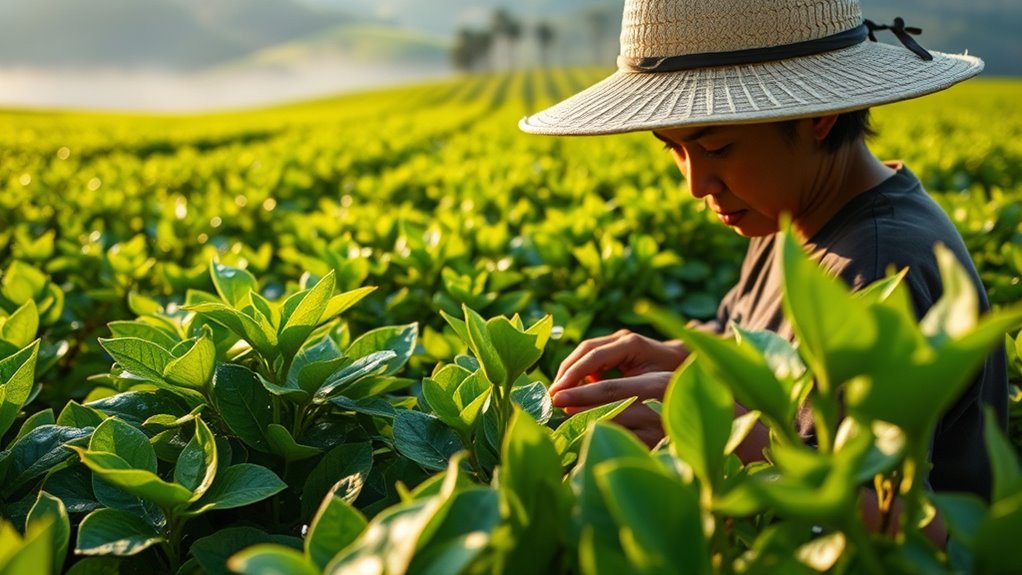

Organic certification for tea shows it’s grown without synthetic chemicals and follows natural farming methods, which can reduce pesticide residues and support sustainability. However, it doesn’t always mean the tea tastes better or has higher overall quality, as costs and standards can affect flavor and aroma. If you want to understand how certification impacts quality and what else to contemplate, there’s more to discover below.

Get coffee and tea gear delivered free — and shop member deals
- Fast, free delivery on millions of items
- Access to Prime Big Deal Days deals on October 6–7
- Prime Video, Amazon Music and more included
Key Takeaways
- Organic certification ensures lower pesticide residues but does not guarantee superior flavor or aroma.
- Certification costs may limit farmers’ investment in quality-enhancing practices, affecting tea taste.
- Organic farming focuses on natural methods, but quality depends on origin, processing, and cultivar.
- Some organic teas may still use approved pesticides, so residue levels vary.
- Overall, organic status indicates health and environmental benefits, not necessarily better tea quality.
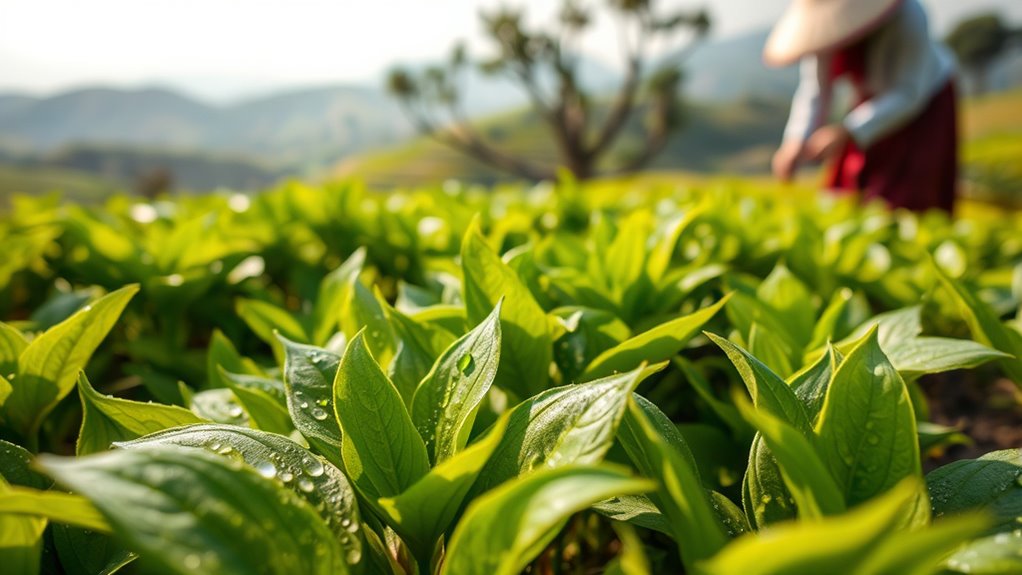
Organic certification for tea guarantees that your favorite brew is grown without synthetic pesticides, fertilizers, or genetically modified organisms. This means you can enjoy your cup knowing it was cultivated with fewer chemical residues, which is especially important if you’re concerned about pesticide residues and their potential health effects. However, it’s worth considering that obtaining and maintaining organic certification involves some costs—called certification costs—that can influence how producers operate. These expenses can sometimes lead farmers to cut corners or reduce their investment in quality, so the link between certification and superior tea isn’t always straightforward.
Organic tea’s certification reduces pesticide residues but may involve costs that impact overall quality.
When you look at organic tea, one of the main selling points is the reduction of pesticide concerns. Conventional tea farms often rely heavily on chemical pesticides to protect crops from pests and diseases, which can leave residues on the leaves. In contrast, organic farms use natural pest management methods, like biological controls or crop rotation, which minimizes chemical residues and reduces your exposure to potentially harmful substances. But keep in mind that some organic growers may still use certain approved pesticides, and the effectiveness of organic pest control can vary depending on the farm’s practices and environment. So, while organic certification generally points to lower pesticide residues, it doesn’t guarantee that all pesticides are absent.
Another factor to consider is the certification process itself. Achieving organic status isn’t cheap; certification costs include application fees, annual inspections, and ongoing compliance measures. These costs can be significant for small-scale farmers, and sometimes, these expenses are passed down to consumers in the form of higher prices. This financial burden might influence a farmer’s ability to invest in other quality-enhancing practices, such as better harvesting techniques or improved processing methods. Therefore, while certification aims to ensure standards are met, it doesn’t automatically mean the tea is of higher quality overall. Sometimes, the focus on meeting certification criteria can overshadow other aspects of quality, like flavor or aroma, which are also vital in determining the true quality of your tea.
In essence, organic certification can be a good indicator of lower pesticide concerns and a commitment to natural farming practices. Still, it’s not an absolute guarantee of better taste or overall quality. The costs associated with certification can influence how farmers prioritize their resources, affecting the final product. So, if your main goal is a healthier, more natural cup, organic tea is a solid choice. But if you’re after the best flavor or aroma, it’s worth exploring beyond just the certification and considering other factors like origin, processing methods, and farm practices.
As an affiliate, we earn on qualifying purchases.
Frequently Asked Questions
Does Organic Certification Impact Tea Shelf Life?
Organic certification can influence tea shelf life by reducing pesticide residue and promoting healthier farming practices. When you choose organic tea, you’re likely getting products with fewer chemical preservatives, which may affect how long the tea stays fresh. Proper storage also plays a role. Overall, organic farming practices can contribute to better preservation, but shelf life depends on storage conditions and processing methods, not just certification.
How Does Organic Tea Taste Compare to Conventional?
Your taste buds will be blown away by organic tea’s flavor nuances, which often feel more vibrant than conventional options. Organic cultivation practices focus on natural methods, potentially enhancing the tea’s complexity and freshness. While some find organic teas more aromatic and smoother, others prefer conventional for its consistent taste. Ultimately, it’s a personal preference, but organic teas often deliver a richer, more authentic experience you’re unlikely to forget.
Are Organic Teas More Expensive Than Non-Organic?
You might notice that organic teas are often more expensive than non-organic ones. The price difference stems from higher costs for organic farming practices and certification fees. Consumer perception also plays a role, as many believe organic teas are healthier and more environmentally friendly, which justifies the higher price for some buyers. Ultimately, your choice depends on your priorities and whether you value organic certification’s benefits enough to pay the premium.
Can Organic Certification Guarantee Pesticide-Free Tea?
Ever wonder if organic certification guarantees pesticide-free tea? While certification standards aim to limit pesticide residue, no certification can promise completely pesticide-free tea. It’s essential to understand that these standards set maximum residue limits rather than eliminating all pesticides. So, you might find certified organic teas with minimal pesticide residue, but absolute pesticide-free status isn’t guaranteed solely by certification. Always check lab testing results for the most accurate info.
Is Organic Certification Recognized Worldwide for Tea?
You’ll find that organic certification is recognized worldwide for tea, thanks to strict certification standards upheld by reputable agencies. These standards guarantee that the tea meets specific organic criteria, making it easier for you to identify authentic organic products across different countries. While global recognition helps maintain consistent quality, always check the certifying body’s credibility to ensure the tea truly meets organic standards.
Conclusion
So, next time you sip that supposedly “pure” organic tea, remember—it might just be a fancy label. While organic certification promises better quality, it’s not a guarantee you’re tasting nature’s finest. Maybe, just maybe, a well-grown, non-certified tea could outshine its organic cousin. So, don’t fall for the sticker shock. After all, in the world of tea, sometimes the best brew isn’t certified at all—it’s just good old-fashioned craftsmanship. Cheers to that!
Fall Picks
fall essentials
As an affiliate, we earn on qualifying purchases.