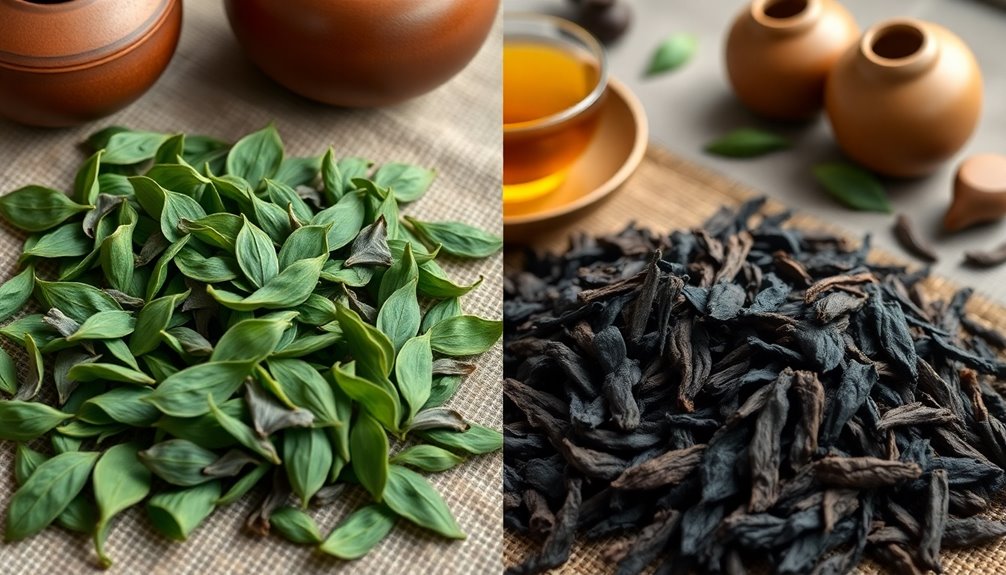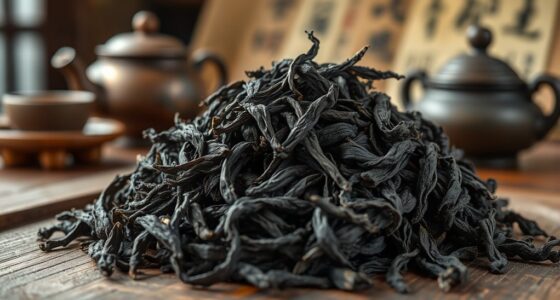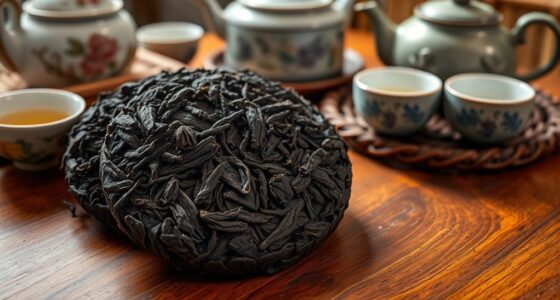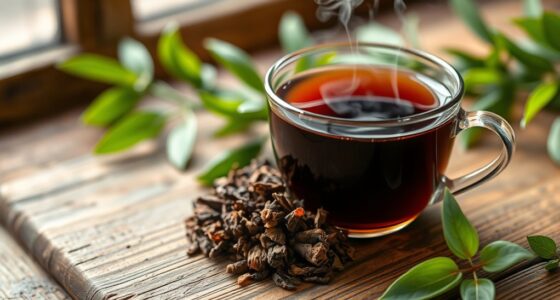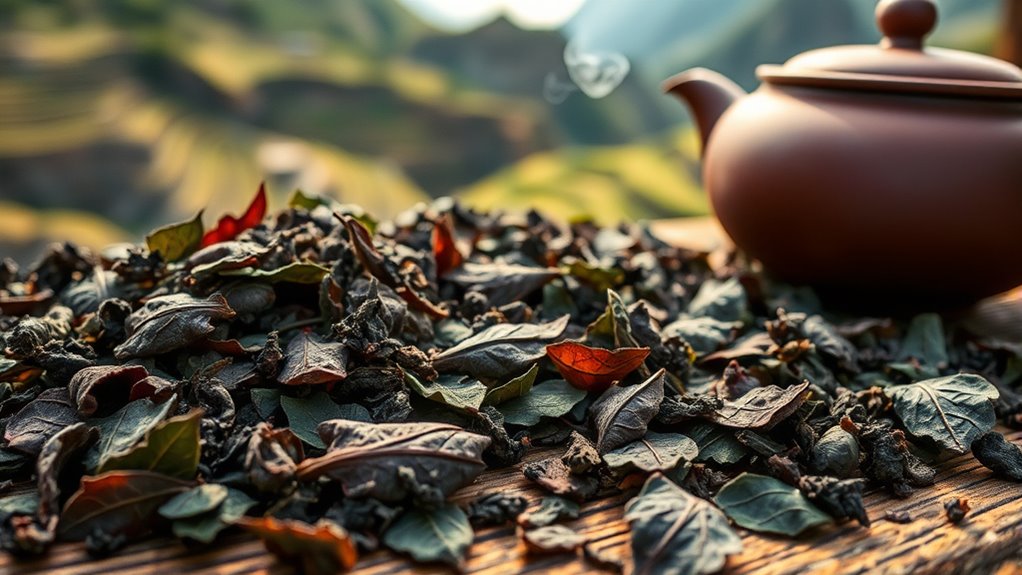

regional varieties and terroir of pu-erh tea deeply influence its flavor, shaped by climate, soil, and traditional fermentation. If you explore different regions, you’ll notice Yunnan produces earthy, mossy notes, while cooler areas yield lighter, floral profiles. Altitude and soil quality also play a role in creating unique tastes. Understanding these regional differences helps you appreciate Pu-Erh’s complexity—keep exploring to discover how land and climate craft its distinctive character.

Get coffee and tea gear delivered free with Prime
- Fast, free delivery on millions of items
- Prime Video, Amazon Music and more included
- Member-only deals all year
Key Takeaways
- Yunnan is the primary region producing robust, earthy Pu-Erh with moss and forest floor notes.
- Regional climate (humidity and temperature) influences fermentation, affecting flavor profiles and complexity.
- Soil composition and altitude contribute to unique terroir-driven flavor nuances in different Pu-Erh varieties.
- Cooler or arid regions yield lighter, floral, or fruity Pu-Erh, contrasting with the deep, earthy profiles of humid areas.
- Traditional craftsmanship and aging techniques enhance regional character and distinctiveness of Pu-Erh tea.
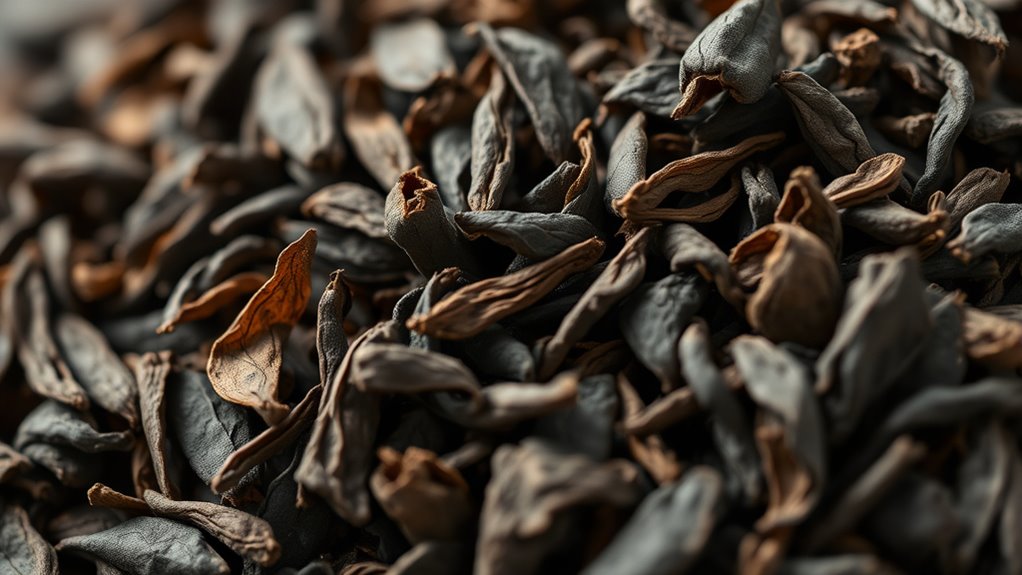
Have you ever wondered what makes Pu-Erh tea so unique? The answer lies in its fascinating fermentation techniques and the way these methods shape its distinct tea flavor profiles. Unlike other teas, Pu-Erh undergoes a special process that transforms its taste over time, and this transformation is heavily influenced by the regional terroir where it’s produced. The fermentation techniques used are key to creating the depth and complexity that enthusiasts love. There are two main types: Sheng (raw) and Shou (ripe). Sheng Pu-Erh is naturally fermented through a slow aging process, allowing the tea to develop nuanced flavors over years. Shou Pu-Erh, on the other hand, undergoes an accelerated fermentation process that produces a smoother, earthier profile in a shorter period. These techniques determine the tea’s texture, aroma, and overall flavor profile, making each variety unique. Additionally, the fermentation process can be influenced by regional climate**, which plays a crucial role in shaping the final flavor characteristics of the tea. When you explore different regions, you’ll notice how the terroir impacts the tea’s characteristics. The climate, soil, and altitude all influence the fermentation process and, consequently, the final tea flavor profiles. In Yunnan Province, the birthplace of Pu-Erh, the warm, humid environment fosters a rich fermentation, giving the tea a robust, earthy taste with hints of moss and forest floor. In contrast, teas from regions with cooler or more arid climates may have a lighter, more floral or fruity profile, reflecting the local conditions. The variation in fermentation techniques across regions results in a broad spectrum of flavors, from bold and intense to subtle and delicate. You can also taste the influence of aging and storage conditions, which interact with regional factors to further shape the tea’s profile. Well-aged Pu-Erh often exhibits deeper, more complex flavors, with hints of dried fruit, cocoa, or leather, depending on where it’s from. The regional differences are not just about the raw ingredients but also about how fermentation techniques are applied and controlled. This makes each regional variety a unique expression of its terroir, offering a different experience with every cup. Understanding the regional varieties and terroir of Pu-Erh tea enhances your appreciation for its complexity. It’s not just about drinking tea but experiencing a piece of the land and the traditional craftsmanship** behind it. By paying attention to these subtle regional differences, you’ll develop a more refined palate and a greater respect for the artistry involved in creating Pu-Erh. It’s a journey through geography, history, and craft, all encapsulated in each sip.
As an affiliate, we earn on qualifying purchases.
Frequently Asked Questions
How Does Climate Affect Pu-Erh Tea Fermentation?
Climate impact profoundly influences the fermentation process of Pu-Erh tea. Warmer, humid conditions accelerate fermentation, leading to richer, more complex flavors, while cooler, drier climates slow it down, resulting in a different profile. You’ll notice that regional climate variations shape the tea’s aging process and taste. By understanding these effects, you can better appreciate how climate contributes to the unique qualities of each Pu-Erh tea batch.
What Are the Traditional Harvesting Methods for Pu-Erh Tea?
You typically use traditional harvesting techniques like hand-plucking, selecting only the tender leaves and bud for quality. Focus on leaf selection, choosing the youngest, most vibrant leaves, which are ideal for fermentation. You carefully pick during the right season, often in spring or early summer, to guarantee the best flavor. This method preserves the tea’s integrity, allowing it to develop complex flavors during fermentation while maintaining its authentic characteristics.
How Does Soil Composition Influence Pu-Erh Tea Flavor?
Think of soil as the tea’s secret recipe book. The minerals in the soil add depth and complexity to your pu-erh, like spices in a stew. Rich soil with abundant microbial activity enhances fermentation, giving your tea a smoother, more nuanced flavor. When the soil’s composition is just right, it’s like planting a flavor symphony that transforms each cup into an earthy masterpiece.
Are There Regional Health Benefits Linked to Specific Pu-Erh Varieties?
You’ll find that specific pu-erh varieties offer regional health benefits due to their unique varietal medicinal properties. For example, some regions produce teas known for aiding digestion, reducing cholesterol, or boosting metabolism. By choosing a pu-erh from a particular area, you can potentially target your health needs more effectively. Remember, these regional health benefits are tied to the unique terroir and processing methods that influence each varietal’s medicinal qualities.
What Role Does Altitude Play in Shaping Pu-Erh Terroir?
Like climbing a mountain for a better view, higher altitude impacts pu-erh’s flavor development, adding depth and complexity. The cooler temperatures and thinner air slow down leaf maturation, resulting in a more nuanced, refined taste. This altitude impact enhances the tea’s unique character, making each sip feel like a journey through the clouds. So, the higher the elevation, the more intricate and vibrant your pu-erh experience becomes.
Conclusion
Just as a master craftsman shapes each piece uniquely, exploring Pu-Erh’s regional varieties and terroir reveals a world rich with distinct character. By tasting these differences, you open a deeper connection to the land and tradition that shapes each cup. Like a story unfolding with every sip, your journey into Pu-Erh’s diverse landscape invites you to savor the complexity and history woven into every brew. Embrace this experience, and let each cup become a chapter of discovery.
Columbus Day / Indigenous Peoples' Day Picks
long weekend sales
As an affiliate, we earn on qualifying purchases.