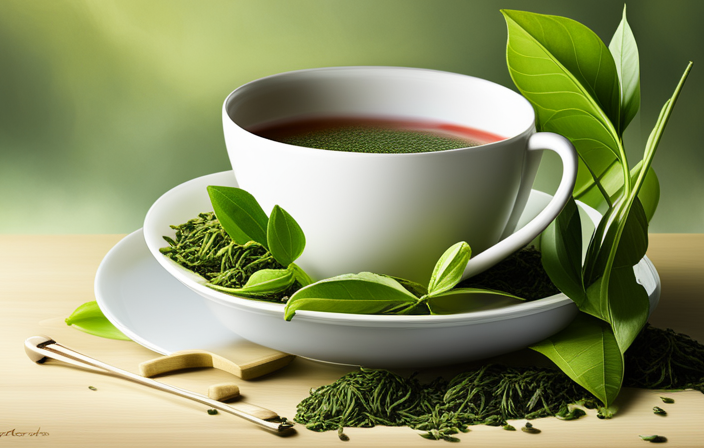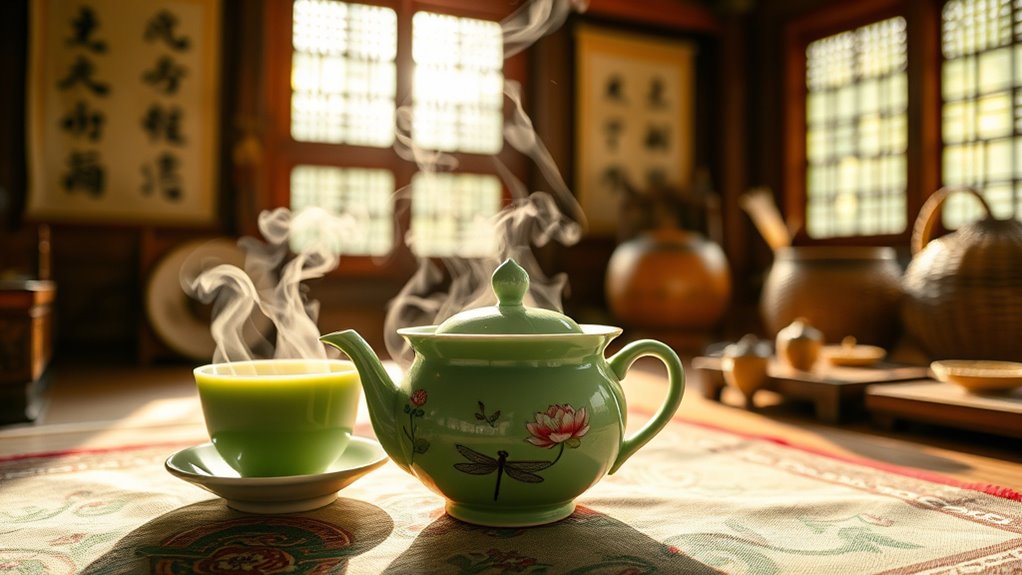

Green tea plays a crucial role in local traditions, symbolizing hospitality, health, and community. Participating in tea ceremonies involves specific rituals that emphasize respect, patience, and mindfulness, reflecting deep cultural values. It’s seen as a way to connect with others, promote well-being, and honor centuries-old customs. By understanding these practices, you’ll discover how green tea fosters social bonds and cultural identity. Continue exploring to uncover more about its rich cultural significance.

Get coffee and tea gear delivered free — and shop member deals
- Fast, free delivery on millions of items
- Access to Prime Big Deal Days deals on October 6–7
- Prime Video, Amazon Music and more included
Key Takeaways
- Green tea symbolizes hospitality, health, and tradition, serving as a central element in cultural rituals and ceremonies.
- Tea ceremonies emphasize harmony, respect, and mindfulness through specific gestures and etiquette.
- Green tea’s medicinal qualities promote well-being, digestion, and immunity, reflecting holistic health practices.
- Sharing green tea fosters community, social bonds, and reflects cultural values of connection and hospitality.
- The ongoing tradition of green tea drinking enriches cultural identity and embodies centuries-old customs of reflection and reverence.

Green tea has long held a special place in many cultures, symbolizing hospitality, health, and tradition. Its significance goes beyond simple refreshment, often serving as a central element in tea ceremonies that reflect deep cultural values. When you participate in a traditional tea ceremony, you’re engaging in more than just brewing and drinking tea; you’re immersing yourself in a ritual that emphasizes harmony, respect, and mindfulness. These ceremonies are carefully structured, often involving specific gestures and etiquette that highlight the importance of patience and reverence. As you follow the steps, you’re not only preparing tea but also honoring centuries-old customs that foster a sense of community and connection. The ritualistic aspect of tea ceremonies underscores their role in social bonding, where sharing a cup of green tea becomes a gesture of hospitality and goodwill.
Moreover, the health benefits associated with green tea have cemented its role in many cultural practices. You might notice that in traditional settings, green tea is valued not just for its flavor but for its medicinal qualities. Rich in antioxidants and polyphenols, this beverage is believed to promote overall well-being, support digestion, and boost immunity. In many cultures, consuming green tea is seen as a way to maintain balance in life and health, making it an integral part of daily routines or special gatherings. This focus on health benefits often intertwines with cultural beliefs about natural remedies and holistic wellness. When you partake in these traditions, you’re often encouraged to drink green tea slowly and mindfully, allowing you to experience its subtle flavors while also reaping its physical benefits. This mindfulness aligns with the broader cultural emphasis on harmony between body and mind.
In essence, green tea’s cultural significance is multifaceted. It embodies hospitality, with hosts offering it as a gesture of welcome. It symbolizes health, with traditions emphasizing its restorative properties. And it serves as a vessel for ritual and reflection, connecting people through shared customs. Whether through elaborate tea ceremonies or simple daily cups, green tea continues to play a meaningful role in shaping cultural identities and fostering social bonds. When you appreciate its significance, you’re not just enjoying a drink—you’re participating in a tradition that spans generations and cultures, enriching your understanding of the values that green tea embodies.
traditional green tea ceremony set
As an affiliate, we earn on qualifying purchases.
As an affiliate, we earn on qualifying purchases.
Frequently Asked Questions
How Did Green Tea Originate in Local Traditions?
You might find that green tea’s origins trace back to ancient China, where its history and origins date over 4,000 years. As you explore its cultural evolution, you’ll see how it spread through Asia, becoming a essential part of local traditions and rituals. Green tea’s role in ceremonies and daily life reflects its deep historical roots, shaping the way communities honor health, hospitality, and spirituality across generations.
Are There Specific Rituals Associated With Green Tea Preparation?
Yes, there are specific rituals associated with green tea preparation. You participate in tea ceremonies that emphasize mindfulness and precision, where ritualistic brewing is key. You carefully measure the tea leaves, heat the water to the right temperature, and follow precise steps to steep the tea. These rituals help you appreciate the tea’s flavor and cultural significance, turning a simple act into a meaningful, meditative experience.
What Symbols Are Linked to Green Tea in Local Culture?
You see green tea as a symbol of harmony and renewal, embodying balance in daily life. Cultural icons like the tea leaf or traditional teapots often represent wisdom and hospitality. These symbols serve as reminders of community bonds and respect for nature. When you share green tea, you’re participating in a rich tapestry of Tea symbolism that connects generations and highlights the cultural importance of this revered beverage.
How Has Green Tea Influenced Local Festivals?
Green tea influences local festivals by being a central part of tea ceremonies that mark special occasions. You’ll find it woven into festival traditions, symbolizing harmony and renewal. During celebrations, people often participate in tea ceremonies, which enhance community bonding and respect for cultural heritage. Green tea’s presence elevates the festival atmosphere, encouraging mindfulness and unity, making it an essential element that connects traditions with modern festivities.
Are There Regional Variations in Green Tea Customs?
You’ll notice charming regional variations in green tea customs, each with its own unique flair. In some areas, a delicate tea ceremony emphasizes tranquility and mindfulness, while others celebrate lively gatherings with regional flavors that highlight local ingredients. These differences reflect local tastes and traditions, enriching your experience as you explore green tea’s diverse cultural tapestry. Embrace the subtle nuances, and you’ll gain a deeper appreciation for each region’s distinctive tea customs.
Conclusion
Just as a tiny green leaf holds the power to awaken your senses, green tea embodies centuries of tradition and harmony. It’s more than a beverage; it’s a bridge connecting past and present, a silent guardian of cultural stories. When you sip it, imagine yourself stepping into a living tapestry woven with history, rituals, and devotion. Green tea isn’t just drinkable; it’s a gentle reminder that even the smallest things can carry profound meaning.
Fall Picks
fall essentials
As an affiliate, we earn on qualifying purchases.