
Green tea has a rich history rooted in centuries of cultural tradition, treasured worldwide for its unique flavor and health benefits. Its origins trace back to ancient China, where careful harvesting methods preserved its purity and quality. Skilled pickers carefully choose the youngest leaves and harvest them at just the right time to maximize nutrients. As you explore further, you’ll discover more about how this timeless beverage continues to grow in significance across cultures.
Key Takeaways
- Green tea has a centuries-old cultural history, especially in Asia, symbolizing health, tradition, and social rituals.
- Its origins trace back over 4,000 years in China, where it was initially prized for medicinal and ceremonial uses.
- Traditional harvesting involves hand-picking the youngest leaves and buds in early mornings to ensure quality and freshness.
- Modern practices still emphasize manual harvesting to preserve the tea’s natural flavors, nutrients, and cultural significance.
- The timing of harvest and careful methods influence green tea’s aroma, flavor, and health benefits, reflecting centuries of expertise.

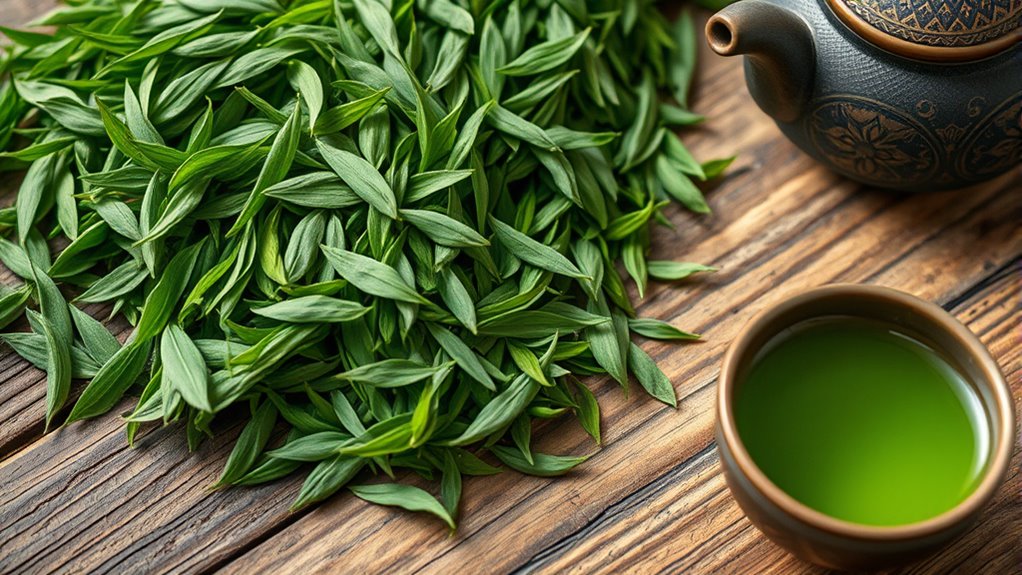
Have you ever wondered why green tea has been cherished for centuries around the world? The answer lies in its rich history and the way it’s cultivated. When it comes to harvesting methods, traditional practices focus on picking the youngest, most tender leaves and buds, usually by hand. This careful selection guarantees the highest quality leaves, which retain their vibrant green color and delicate flavor. Modern techniques still emphasize manual harvesting in many regions, especially in Japan and China, to preserve the tea’s purity and freshness. The timing of harvest plays a vital role; picking leaves at just the right moment maximizes the tea’s health benefits while maintaining its nuanced taste. Skilled harvesters can distinguish the best period for plucking, often during the early morning when the leaves are at their most nutrient-rich. This meticulous process influences the final product’s quality, aroma, and potency, making each cup of green tea a testament to centuries of expertise. Proper harvesting methods are essential to maintaining the tea’s rich nutritional profile and flavor integrity.
The health benefits of green tea are widely celebrated and form a core reason why it’s been revered through the ages. Rich in antioxidants like catechins and polyphenols, green tea offers powerful protection against free radicals, which can damage cells and contribute to aging and disease. Drinking green tea regularly can boost your immune system, improve brain function, and support weight management. It’s also known for its calming properties, thanks to an amino acid called L-theanine, which promotes relaxation without drowsiness. The antioxidants in green tea may reduce the risk of chronic illnesses such as heart disease and certain cancers, making it a natural, healthful addition to your daily routine. Many studies suggest that incorporating green tea into your diet can help lower blood pressure and cholesterol levels, contributing to overall cardiovascular health. Not only does it have these impressive health benefits, but its natural, minimally processed state means you’re getting a pure, unadulterated source of wellness.
In essence, green tea’s enduring popularity stems from more than just its flavor; it’s rooted in centuries of tradition, refined harvesting methods, and a profound array of health benefits. Every step, from selecting the right leaves to the precise timing of the harvest, plays a significant role in preserving its nutrients and flavor profile. As you learn about its history and origins, you begin to appreciate how this simple yet complex beverage has stood the test of time, offering both cultural richness and tangible health advantages. Whether you’re sipping it for relaxation or health, green tea’s legacy continues to grow, inviting you to enjoy its subtle, invigorating qualities each day.

YAMASAN KYOTO UJI Sencha Green Tea Loose Leaf, JAS Certified Organic Japanese Tea from Uji, Kyoto, 80g Bag, Sencha Tea, Loose Leaf
- Organic Certification: JONA & JAS certified organic
- Premium Uji Origin: Sourced from historic Uji, Kyoto
- Traditional Steaming Process: Preserves nutrients and flavor
As an affiliate, we earn on qualifying purchases.
As an affiliate, we earn on qualifying purchases.
Frequently Asked Questions
How Does Green Tea Differ From Other Types of Tea?
Green tea differs from other teas because it undergoes minimal processing, mainly steaming or pan-firing, which preserves its natural green color and fresh flavor. Unlike black or oolong teas, green tea isn’t oxidized, leading to lighter flavor profiles. You’ll notice a more delicate, grassy taste, and it often retains more antioxidants. This simple processing highlights green tea’s unique taste and health benefits compared to other types of tea.
What Are the Health Benefits of Green Tea?
Green tea is like a natural shield, offering numerous health benefits. You gain antioxidant properties that combat free radicals and support your immune system. It can also aid in weight management by boosting metabolism and helping burn fat. Drinking green tea regularly may reduce the risk of heart disease and improve brain function. So, sip on green tea daily to enjoy these health perks and feel energized naturally.
Can Green Tea Be Consumed Daily Without Side Effects?
Yes, you can enjoy green tea daily without significant side effects. Just watch the caffeine content, as drinking too much may cause insomnia or jitters. Store your tea properly in an airtight container away from light to maintain freshness and flavor. Moderation is key; limit your intake to avoid adverse effects, and you’ll reap green tea’s health benefits safely and enjoyably.
Are There Specific Regions Known for the Best Green Tea?
You’ll find the best green teas in regions renowned for their tea cultivation and unique regional flavors. Japan, especially Uji and Shizuoka, produces high-quality green teas like matcha and sencha, known for their delicate taste. China, particularly in Zhejiang and Anhui, offers diverse teas with rich, earthy notes. These regions’ ideal climate and traditional cultivation methods create green teas that stand out, making them perfect for tea enthusiasts seeking exceptional quality.
How Is Green Tea Traditionally Prepared in Different Cultures?
You’ll find that different cultures embrace unique tea ceremonies and preparation methods, creating delightful experiences. In Japan, you immerse yourself in a precise tea ceremony, whisking powdered green tea until frothy. In China, you enjoy a delicate steeping process, emphasizing aroma and flavor. In Morocco, green tea is often brewed with mint and sweetened, served in a social setting. Each tradition invites you to savor green tea’s rich cultural heritage.
Conclusion
Now that you know the rich history and origins of green tea, you can appreciate its journey from ancient traditions to your cup today. Like a timeless story passed down through generations, green tea connects you to centuries of culture and wellness. By savoring each sip, you’re part of that ongoing legacy, enjoying a drink as vibrant and invigorating as a spring breeze. So next time you brew green tea, remember—you’re tasting history in every drop.