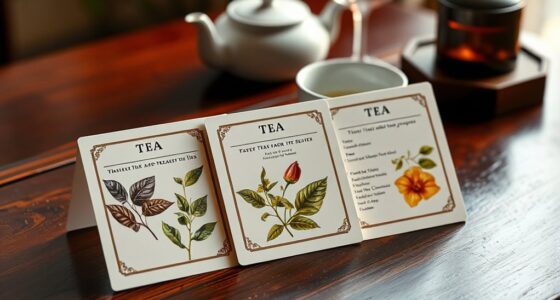
If you’re looking to enrich your understanding of tea’s rich history through stunning illustrations, I recommend exploring classics like *The Book of Tea* and *Tea: History, Terroirs, Varieties*, which blend art, culture, and philosophy. Books like *The Tea Book* and *All the Tea in China* offer regional insights with beautiful visuals, while guides such as *Tea Sommelier* provide practical tips. Keep exploring—these works will deepen your appreciation for tea’s extraordinary story if you stay tuned.
Key Takeaways
- Highlighted titles combine detailed illustrations, photographs, and calligraphy to visually depict tea’s history, culture, and preparation techniques.
- They feature authoritative authors and comprehensive content, covering regional, historical, and philosophical aspects of tea.
- The books include visual insights into traditional utensils, rituals, and art, enriching understanding of tea’s cultural significance.
- Many offer practical guides, historical context, and cultural narratives, making them suitable for enthusiasts and scholars alike.
- Quality printing and design ensure sharp, vivid visuals that bring tea’s rich heritage and artistic traditions to life.

Tea: History, Terroirs, Varieties
As an affiliate, we earn on qualifying purchases.
Tea: History, Terroirs, Varieties

Are you enthusiastic to deepen your understanding of tea’s rich history and the diverse terroirs that shape its flavors? I’ve found that “Tea: History, Terroirs, Varieties” by Gascoyne, Marchand, and Desharnais is perfect for that. It covers tea’s evolution, from ancient origins to modern trends, while exploring regional differences that influence taste. I love how it explains the impact of climate and soil on teas from China, Japan, India, and beyond. The book’s illustrations and detailed profiles really bring each variety and region to life, making complex concepts easy to grasp. It’s an essential read for anyone eager to explore tea’s fascinating journey.
Best For: enthusiasts and scholars seeking an in-depth, visually engaging guide to tea’s history, regional characteristics, and varieties.
Pros:
- Comprehensive coverage of tea’s history, regions, and processing techniques
- Rich illustrations and detailed profiles that enhance understanding
- Suitable for both beginners and experienced tea aficionados
Cons:
- Slightly tangential recipe section may distract from core content
- Some editions have minor factual errors or binding issues
- The detailed content can be overwhelming for absolute beginners

The Book of Tea: Beauty, Simplicity and the Zen Aesthetic
As an affiliate, we earn on qualifying purchases.
The Book of Tea: Beauty, Simplicity and the Zen Aesthetic

If you’re passionate about exploring Japanese culture through a visual and philosophical lens, “The Book of Tea” is an excellent choice for you. This timeless classic by Kakuzo Okakura reveals how tea embodies beauty, simplicity, and Zen principles. It explores tea’s history in Japan, emphasizing mindfulness, harmony, and the appreciation of imperfection—wabi-sabi. The book also highlights related arts like flower arranging and architecture, illustrating their deep connection to tea and spiritual values. Through poetic insights, it encourages a meditative approach to daily life, inviting readers to find serenity and beauty in small, natural moments. It’s a profound reflection on Japanese aesthetics and culture.
Best For: enthusiasts of Japanese culture, art, and philosophy seeking a poetic and insightful exploration of tea’s spiritual and aesthetic significance.
Pros:
- Rich, poetic insights into Japanese aesthetics and Zen principles.
- Deep cultural and historical context enhancing understanding of tea rituals.
- Inspires mindfulness and appreciation of beauty in everyday life.
Cons:
- Formal and poetic style may be challenging for some readers.
- Original language and tone can sometimes seem culturally biased or arrogant.
- Printing quality issues in some editions may affect visual enjoyment.

The Tea Book: Experience the World’s Finest Teas, Qualities, Infusions, Rituals, Recipes
As an affiliate, we earn on qualifying purchases.
The Tea Book: Experience the World’s Finest Teas

For anyone enthusiastic to deepen their understanding of tea, “The Tea Book: Experience the World’s Finest Teas” offers a thorough guide packed with vivid illustrations and expert insights. It takes you on a global journey, showcasing tea cultivation from India to Kenya, helping you recognize varietals and appreciate regional traditions. The book also walks you through brewing techniques, from traditional Japanese rituals to crafting perfect Chai. You’ll develop your palate through sensory tastings and explore the cultural significance behind tea ceremonies worldwide. With fascinating history, health benefits, and 75 recipes, this book truly enriches your tea experience, making it an essential resource for enthusiasts.
Best For: tea enthusiasts and curious explorers eager to deepen their knowledge of global tea traditions, brewing techniques, and sensory appreciation.
Pros:
- Comprehensive coverage of tea origins, cultivation, and cultural rituals worldwide
- Detailed brewing guides and recipes to enhance the tea-making experience
- Rich illustrations and expert insights that cater to both beginners and connoisseurs
Cons:
- May be overwhelming for readers new to tea due to its extensive content
- Some regional or traditional methods might require additional resources to fully understand
- Primarily focused on informational content, with limited emphasis on practical tasting or brewing tools

The Book of Tea
Used Book in Good Condition
As an affiliate, we earn on qualifying purchases.
The Book of Tea

“The Book of Tea” stands out as an essential read for anyone interested in the spiritual and aesthetic dimensions of tea culture, especially artists, poets, and Zen practitioners. First published in 1906, it remains influential, blending Eastern philosophy with Western art and beauty. Okakura Kakuzo’s travels and interactions with luminaries shaped his insights, inspiring generations of artists like Wright and O’Keeffe. The updated edition, with historical photos and new chapters, connects past and present, emphasizing tea’s role in fostering cultural exchange, simplicity, and artistry. This timeless work continues to inspire a deeper appreciation of tea’s spiritual and aesthetic significance worldwide.
Best For: art enthusiasts, poets, Zen practitioners, and anyone interested in the spiritual and aesthetic aspects of tea culture.
Pros:
- Rich historical context and insights into Eastern and Western artistic traditions
- Includes illustrations, photographs, and new chapters that deepen understanding
- Connects traditional tea culture with modern practices and cultural exchange
Cons:
- May be dense for readers new to Eastern philosophy or tea culture
- Some content may be more historical than practical for everyday tea preparation
- The language and concepts might require careful reading for full appreciation
Illustrated Modern Reader of The Classic of Tea

Are you looking for a visually engaging and scholarly guide to Chinese tea culture? *An Illustrated Modern Reader of The Classic of Tea* is the perfect choice for anyone interested in exploring tea’s rich history through vivid illustrations and accessible insights. This book combines modern research by Wu Juenong with the timeless wisdom of Lu Yu’s 8th-century classic. It covers tea types, preparation methods, and cultural practices, all enhanced by hand-drawn images and photographs of traditional tools. The artwork and images deepen your understanding of tea ceremonies and social rituals, making complex traditions approachable and relevant for today’s tea enthusiasts.
Best For: tea enthusiasts and cultural scholars seeking an engaging, visually rich guide to Chinese tea traditions and history.
Pros:
- Combines modern research with historical insights for a comprehensive understanding of tea culture
- Features vivid illustrations, photographs, and traditional artwork that enhance learning and appreciation
- Accessible language and engaging presentation make complex traditions easy to understand and relate to
Cons:
- May be less suitable for those seeking a purely practical or technical brewing guide
- The focus on Chinese tea culture might limit relevance for readers interested in global tea traditions
- As a scholarly and illustrated book, it could be considered dense or visually overwhelming for casual readers
The Story of Tea: A Cultural History and Drinking Guide

If you’re passionate about understanding tea beyond just brewing, this guide offers a rich blend of cultural insights, historical context, and practical tips. It traces tea’s journey from China’s forests to Japanese temples and Indian gardens, highlighting its influence on art, tradition, and social customs worldwide. The book explores the botany of Camellia sinensis, exploring how regional differences shape flavor and aroma. It provides detailed brewing and tasting techniques, along with customs from various cultures. Plus, it covers health benefits, sustainability efforts, and industry trends. With recipes and resources, it’s a thorough, engaging read for anyone enthusiastic to deepen their tea knowledge.
Best For: tea enthusiasts and cultural explorers seeking a comprehensive understanding of tea’s history, varieties, and traditions.
Pros:
- Offers a thorough exploration of tea’s cultural and historical significance worldwide.
- Provides detailed guidance on brewing, tasting, and identifying quality teas.
- Includes practical recipes and resource lists for purchasing high-quality teas.
Cons:
- May be too detailed for casual tea drinkers looking for quick brewing tips.
- Some sections on industry trends and sustainability might be less relevant for everyday consumers.
- The extensive content could be overwhelming for those seeking a brief overview of tea.
The Ancient Art of Tea: Wisdom From the Old Chinese Tea Masters

Anyone passionate about understanding tea beyond its taste will find “The Ancient Art of Tea” an invaluable resource, especially those interested in Chinese cultural, philosophical, and artistic traditions. Warren Peltier’s book explores into tea’s roots in ancient China, highlighting figures like Lu Yu and the significance of different tea names. It explores Daoist influences, metaphors like tea as yang and water as yin, and how brewing techniques evolved over time. Rich with ancient artwork, calligraphy, and photographs, it emphasizes tea’s aesthetic beauty. Practical tips on brewing, water quality, and presentation deepen your appreciation, blending history, art, and philosophy into a thorough understanding of this timeless craft.
Best For: enthusiasts and scholars interested in deepening their understanding of Chinese tea’s historical, cultural, artistic, and philosophical significance.
Pros:
- Provides comprehensive insights into Chinese tea history, philosophy, and artistry.
- Richly illustrated with ancient artwork, calligraphy, and photographs that enhance aesthetic appreciation.
- Offers practical guidance on traditional brewing techniques rooted in historical texts.
Cons:
- Minor grammatical issues such as split infinitives may distract some readers.
- Focuses heavily on Chinese tea culture, which may be less relevant to those interested in other tea traditions.
- As a specialized cultural resource, it may be less accessible for casual tea drinkers seeking simple brewing tips.
A Little Tea Book: All the Essentials from Leaf to Cup

For those enthusiastic to deepen their understanding of tea’s rich history, *A Little Tea Book: All the Essentials from Leaf to Cup* stands out as an engaging and accessible guide. Written by tea expert Sebastian Beckwith and bestselling authors Caroline Paul and Wendy MacNaughton, it combines expert insights with lively storytelling. The book explores tea’s cultural and political influence worldwide, from traditional rituals to modern enjoyment. It covers various tea types, offers tips for selecting quality leaves, and shares brewing techniques to perfect your cup. With vibrant visuals and fun facts, this book makes learning about tea both enjoyable and visually appealing.
Best For: tea enthusiasts and newcomers alike who want an engaging, visually appealing guide to understanding tea’s history, varieties, and brewing techniques.
Pros:
- Combines expert knowledge with lively storytelling for an enjoyable reading experience
- Rich visuals, colorful charts, and illustrations enhance understanding and appeal
- Covers a wide range of topics from cultural history to practical brewing tips
Cons:
- May not provide in-depth technical details for highly advanced tea connoisseurs
- Some readers might find the broad scope less focused if seeking specialized information
- The style of presentation is approachable, which might not suit those preferring a more scholarly tone
The Tea Enthusiasts Handbook: A Guide to Enjoying the Worlds Best Teas

The Tea Enthusiasts Handbook stands out as an ideal resource for both passionate beginners and seasoned connoisseurs keen to deepen their appreciation. I find it incredibly practical, offering clear guidance on identifying, buying, and savoring the world’s best teas. The book emphasizes quality and soundness over superficial traits, helping me discern authentic teas from blends. Its detailed descriptions, visual aids, and brewing tips make the learning process engaging and straightforward. Whether exploring regional varieties or perfecting my brewing technique, I appreciate its focus on education and authenticity. This book truly elevates my understanding and enjoyment of tea, making every cup a richer experience.
Best For: enthusiasts and professionals seeking a comprehensive, practical guide to understanding, selecting, and appreciating high-quality teas with an emphasis on authenticity and education.
Pros:
- Provides detailed descriptions and visual aids that enhance understanding of different teas and brewing techniques
- Emphasizes soundness and quality over superficial traits, aiding in discerning authentic teas
- Suitable for both beginners and experienced tea drinkers, encouraging exploration and deeper appreciation
Cons:
- Focuses heavily on traditional standards, which may limit exposure to modern or blended tea varieties
- Could be less engaging for those seeking a highly romanticized or artistic view of tea culture
- May require some prior interest or basic knowledge to fully appreciate the detailed technical information
The Boston Tea Party (Graphic History)

If you’re looking for an engaging way to understand the Boston Tea Party, this graphic history by Matt Doeden is an excellent choice. The vivid illustrations and lively dialogue make the event come alive, capturing the tension and bravery of the Patriots. It narrates how colonists protested Britain’s Tea Act by secretly dumping tea into Boston Harbor, risking everything for freedom. This pivotal act fueled the revolution and symbolized colonial resistance. The book also includes helpful resources like a glossary and reading list, making it perfect for learners of all ages who want a clear, compelling visual account of this historic protest.
Best For: learners of all ages who want an engaging, visual, and comprehensive introduction to the Boston Tea Party and its significance in American history.
Pros:
- Vivid illustrations and lively dialogue make the historical event engaging and easy to understand
- Includes extensive back matter such as a bibliography, glossary, and additional reading resources for deeper learning
- Suitable for a wide age range, making history accessible and appealing to students and casual readers alike
Cons:
- As a graphic novel, it may simplify complex historical details, potentially lacking in-depth analysis for advanced students
- Some readers may prefer traditional texts over visual storytelling for serious academic study
- The focus is primarily on the event itself, with less emphasis on broader historical context or aftermath

A Social History of Tea is an ideal choice for anyone enthusiastic to understand how tea shaped societies, economies, and cultural identities across centuries. I find it fascinating how tea influenced trade, social customs, and political movements, from its origins in Asia to its role in Britain and America. The book’s detailed chapters highlight key moments like the Boston Tea Party, the rise of afternoon tea, and modern trends in health and specialty teas. With expert insights from Jane Pettigrew and Bruce Richardson, it offers a well-researched, engaging perspective that deepens my appreciation for tea’s enduring cultural and social significance.
Best For: enthusiasts, scholars, and anyone interested in exploring the historical, cultural, and social impact of tea across centuries.
Pros:
- Well-researched and comprehensive, covering a wide range of historical and cultural themes
- Engaging storytelling combined with expert insights from renowned tea historians
- Beautifully produced, making it an excellent gift or coffee table book
Cons:
- Some readers may find the detailed historical content dense or lengthy
- Limited focus on contemporary tea industry practices beyond trends and health benefits
- International accessibility could be improved with translations for broader audiences
A History of the World in 6 Glasses

For readers interested in understanding how everyday beverages have shaped human history, “A History of the World in 6 Glasses” offers a compelling and accessible perspective. This bestseller uses six drinks—beer, wine, spirits, coffee, tea, and Coca-Cola—as lenses to explore pivotal moments across civilizations. Each beverage symbolizes a key era, from early agriculture to modern globalization. The book highlights how drinks fueled technological advances, cultural exchanges, and societal changes, revealing their profound influence on history. I found it eye-opening, showing how something as simple as a glass of beer or tea can reflect humanity’s progress and interconnectedness.
Best For: history enthusiasts and curious readers who want to understand how everyday beverages shaped human civilization through engaging storytelling.
Pros:
- Offers a unique perspective by linking drinks to key historical eras and societal changes
- Well-researched and praised for being entertaining and accessible
- Provides insightful commentary on cultural and technological progress through familiar beverages
Cons:
- May oversimplify complex historical events by focusing primarily on beverages
- Some readers might find the thematic approach limiting for in-depth historical analysis
- Not a comprehensive history, but rather a thematic overview centered on six drinks
All the Tea in China: History, Methods and Musings

Are you curious about how tea became such a vital part of Chinese culture? I find it fascinating that tea is one of the seven essentials in daily life, alongside wood, rice, oil, salt, soy sauce, and vinegar. Its history, diverse types, and production methods reveal a rich craftsmanship that reflects China’s deep appreciation for quality. Traditional etiquette and practical uses demonstrate tea’s role beyond drinking—promoting mindfulness and social bonds. As I explore this topic, I’m inspired by how tea has shaped Chinese literature, art, and identity, making it more than just a beverage—it’s a cultural treasure.
Best For: enthusiasts and learners who want to deepen their understanding of Chinese tea’s history, cultural significance, and craftsmanship.
Pros:
- Provides comprehensive insights into tea’s origins, types, and production methods.
- Includes vivid illustrations to help identify high-quality teas.
- Explores tea’s role in Chinese etiquette, literature, and social rituals.
Cons:
- May contain detailed information that can be overwhelming for casual readers.
- Focuses primarily on Chinese tea, limiting a broader global perspective.
- Some content may require prior knowledge of Chinese culture for full appreciation.
Tea Sommelier: A Step-by-Step Guide

If you’re enthusiastic to turn your passion for tea into expertise, the “Tea Sommelier: A Step-by-Step Guide” is an ideal resource. Authored by Palais des Thés founders, it makes mastering tea accessible and enjoyable through 160 simple lessons. Whether you have ten minutes or an hour, this guide covers everything—from understanding different varieties and cultivation regions to preparing, tasting, and serving tea with confidence. It also explores pairing and cooking with tea. Beautiful illustrations accompany each lesson, making the learning process engaging and visually appealing. This book truly transforms tea appreciation into a refined skill, perfect for anyone eager to deepen their knowledge.
Best For: enthusiasts and aspiring tea experts seeking a comprehensive, visually engaging, and accessible guide to deepen their understanding of tea, from varieties to pairing and serving techniques.
Pros:
- Covers a wide range of topics with 160 easy-to-follow lessons suitable for all levels
- Includes beautiful illustrations that enhance the learning experience and engagement
- Provides practical tips for preparation, tasting, serving, pairing, and cooking with tea
Cons:
- May be too basic for advanced tea connoisseurs looking for in-depth technical details
- The format of short lessons might require supplementing with additional resources for comprehensive mastery
- As a printed guide, it may not be as interactive or adaptable as digital learning tools
The book of tea: The new illustrated & annotated version

The new illustrated and annotated version of *The Book of Tea* stands out as an ideal choice for readers who appreciate visual storytelling alongside deep philosophical insights. This edition brings Kakuzo Okakura’s timeless reflections to life with vivid illustrations and detailed annotations that deepen understanding. It beautifully captures the essence of Teaism—harmony, respect, and mindfulness—through both words and images. As I explored this version, I found it transformed the experience into a richer, more immersive journey into Japanese culture and philosophy. It’s perfect for anyone seeking a visually engaging way to connect with the art of tea and its calming, mindful principles.
Best For: readers who appreciate a visually rich and deeply insightful exploration of Japanese tea culture and philosophy through detailed illustrations and annotations.
Pros:
- Enhances understanding of *The Book of Tea* with vivid visuals that bring the text to life
- Deepens appreciation of Teaism’s principles of harmony, respect, and mindfulness through detailed annotations
- Creates an immersive, visually engaging experience that complements the philosophical content
Cons:
- May be more expensive than standard editions due to its illustrated and annotated features
- Could be overwhelming for readers who prefer a minimalist or text-focused approach
- The detailed visuals and annotations might slow down the reading pace for some users
Factors to Consider When Choosing a Tea History Illustrated Book

When selecting a tea history illustrated book, I focus on the author’s expertise and credibility to guarantee reliable information. I also consider the quality of the visuals and how well they complement the text, along with the cultural regions covered. Finally, I look for clarity and depth to match my level of interest, making the book both informative and engaging.
Author Expertise and Credibility
Have you ever wondered how to tell if a tea history illustrated book is trustworthy? It’s all about the author’s expertise and credibility. Look for authors with a solid background in tea history, such as those with formal qualifications or extensive research experience. Authors who have published multiple works or are recognized industry figures bring added authority. Their credibility is reinforced when they reference scholarly sources, primary texts, and historical accuracy. Experienced writers often include detailed annotations and cultural context, showing their deep understanding. When an author’s background aligns with their content, it’s a strong sign their insights are reliable and well-informed. Choosing books by reputable authors ensures you’re gaining accurate, trustworthy knowledge about tea’s rich history.
Visual Quality and Illustrations
Choosing a tea history illustrated book with high visual quality is essential because vivid, detailed images can considerably enhance your understanding of the subject. Clear, vibrant visuals that accurately depict traditional tea utensils, preparation methods, and cultural scenes create an authentic visual context that deepens your appreciation. Including historical photographs, paintings, or annotated diagrams helps illustrate tea’s evolution and regional variations, making complex concepts easier to grasp. Consistent and professional printing guarantees that illustrations are sharp, color-accurate, and durable, boosting both readability and aesthetic appeal. Well-designed layouts that balance text and images support visual learning, making the information more accessible and engaging. Ultimately, high-quality visuals enrich the reading experience and bring the fascinating history of tea to life.
Cultural Scope and Regions
A thorough understanding of a tea history illustrated book requires examining how well it covers different regions and cultures. I look for books that offer a extensive view of tea traditions worldwide, including China, Japan, India, and Africa. It’s important that the book explores regional variations in tea types, cultivation, and processing, revealing the cultural richness behind each practice. I also check if the illustrations depict diverse customs, ceremonies, and rituals, ensuring broad representation. Additionally, I consider whether the book discusses historical trade routes and cultural exchanges that shaped regional tea innovations. Insights into how local beliefs, philosophies, and aesthetics influence tea appreciation are vital, as they deepen my understanding of tea’s cultural significance across different societies.
Historical Accuracy and Depth
To guarantee a tea history illustrated book is accurate and credible, I look for clear citations of reputable sources and primary texts like Lu Yu’s “The Classic of Tea.” It’s essential that the book provides detailed timelines and contextual information that accurately reflect different eras and regional traditions, such as those from Chinese dynasties or Japanese customs. I also check that the illustrations and imagery align with authentic artifacts and practices, supporting factual accuracy. A thorough book discusses the cultural influences and how tea customs evolved over time, avoiding oversimplifications. Additionally, I value scholarly commentary or expert reviews that confirm the depth and correctness of the historical content. These factors ensure I’m learning from a well-researched, trustworthy source that enriches my understanding of tea’s rich history.
Accessibility and Readability
Ever wonder what makes a tea history illustrated book truly easy to enjoy? It starts with clear, straightforward language that avoids confusing jargon, making it accessible to all readers. Visuals like diagrams, photos, and illustrations play a key role by clarifying complex ideas and keeping the content engaging. An organized layout with headings, subheadings, and bullet points helps you navigate the book effortlessly and find specific information quickly. Including glossaries or sidebars for unfamiliar terms enhances understanding without disrupting the flow. Additionally, a well-chosen font size and high-contrast text and background improve readability, especially for those with visual impairments. These factors ensure the book isn’t just informative but also user-friendly, inviting you to immerse yourself in the fascinating world of tea history.
Range of Topics Covered
When choosing a tea history illustrated book, it’s important to take into account how thoroughly it covers the topic. I look for books that explore the origins and evolution of tea across different cultures and regions, offering a well-rounded perspective. A exhaustive book should detail key historical figures, milestones, and events that shaped tea’s global journey. I also value coverage of traditional ceremonies, cultural rituals, and societal impacts to understand tea’s significance beyond just the beverage. Visual aids like timelines, photographs, and illustrations help bring the history to life. Additionally, a wide scope that discusses various tea varieties and their historical importance provides a richer, more complete picture of tea’s cultural and historical significance worldwide.
Presentation and Layout Style
Choosing a tea history illustrated book with an engaging presentation style is essential for a satisfying reading experience. A well-designed layout balances images and text, making complex information easier to comprehend. Using chronological timelines, thematic sections, or regional maps helps navigate the rich history and cultural context of tea. High-quality photos, detailed diagrams, and artworks deepen understanding and add authenticity. Consistent formatting, including uniform fonts, color schemes, and visual hierarchies, creates a cohesive look that’s easy on the eyes. An organized layout with captions, sidebars, and callouts highlights key facts and interesting insights without overwhelming the reader. This thoughtful presentation ensures you stay engaged and can fully appreciate the depth and beauty of tea’s history, making your reading both enjoyable and enriching.
Updated Content and Editions
Selecting an updated edition of a tea history illustrated book guarantees you access to the most current insights, visuals, and research. New photographs, revised content, and expanded chapters reflect recent discoveries and industry trends, enriching your understanding. Reprints often correct previous inaccuracies, improve print quality, and add illustrations for better engagement. Modern editions also include sections on recent market developments, technological advances, or cultural shifts, keeping the content relevant. Publishers regularly revise content to align with industry standards, such as emphasizing authentic teas or sustainability efforts. When choosing an edition, consider if it incorporates recent scholarship, contemporary design elements, and additional resources that enhance comprehension. An updated book ensures you’re learning from the latest knowledge and visual aids, making your tea history journey more insightful.
Frequently Asked Questions
Which Illustrated Book Offers the Most Comprehensive Timeline of Tea History?
The most extensive timeline of tea history I’ve come across is “The Story of Tea” by Mary Lou and Robert J. Heiss. It’s beautifully illustrated and covers centuries of tea’s journey from ancient China to modern global culture. I love how it combines detailed visuals with insightful narratives, making it easy to follow the evolution of tea over time. If you’re interested in a thorough, visually engaging history, this book’s a perfect choice.
Are There Any Books That Compare Global Tea Cultures Visually?
Ever dream of a tea world tour without leaving your cozy nook? Yes, there are books that visually compare global tea cultures, like “Tea: A History and Cultural Encyclopedia.” It’s a colorful journey through tea rituals, utensils, and ceremonies from around the world. These books serve as delightful visual passports, helping you see how each culture’s tea story is uniquely brewed, steeped, and celebrated.
What Illustrated Book Best Explores the Artistry of Tea Ceremony Utensils?
If you’re interested in the artistry of tea ceremony utensils, I highly recommend “The Art of Tea,” by Yo-Yo Ma and other artists. This beautifully illustrated book dives deep into the craftsmanship of teapots, cups, and other utensils, showcasing intricate designs and cultural significance. I found it inspiring and educational, offering a visual feast that truly enhances appreciation for the delicate artistry involved in traditional tea ceremonies.
Which Book Features the Evolution of Tea Packaging Through Illustrations?
If you’re curious about how tea packaging has evolved, I recommend “The Art of Tea Packaging,” which beautifully illustrates this journey. It’s like a visual timeline, showing everything from ancient clay pots to modern eco-friendly designs. I love how the detailed illustrations bring each era to life, making it easy to appreciate the craftsmanship behind every box and bag. This book truly enriches your understanding of tea’s cultural and artistic history.
Are There Illustrated Books Highlighting Tea’s Influence on Modern Art and Design?
Yes, there are illustrated books exploring tea’s influence on modern art and design. I recommend “Tea and Modern Art,” which beautifully showcases how tea culture has inspired contemporary artists and designers. I love how vibrant illustrations highlight tea’s aesthetic impact, blending tradition with innovation. If you’re interested in how a simple beverage shaped creative movements, this book offers inspiring visuals and insightful commentary that truly enrich your understanding.
Conclusion
If you’re craving captivating chronicles and charming chapters of tea, these books beautifully bridge history and harmony. With vivid visuals and valuable voices, they invite you to explore tea’s timeless tales and tantalizing tastes. Immerse yourself in delightful details, discover diverse drams, and delight in the dreamy dance of tea’s history. Embark on this enriching journey—where pages, pictures, and passion perfectly pour together to deepen your devotion.