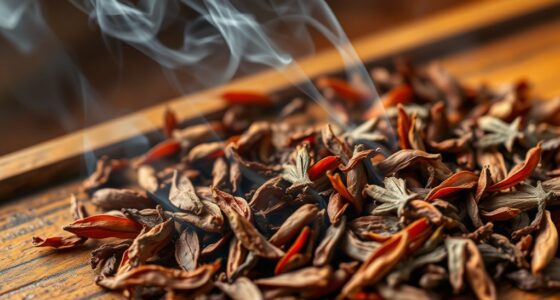
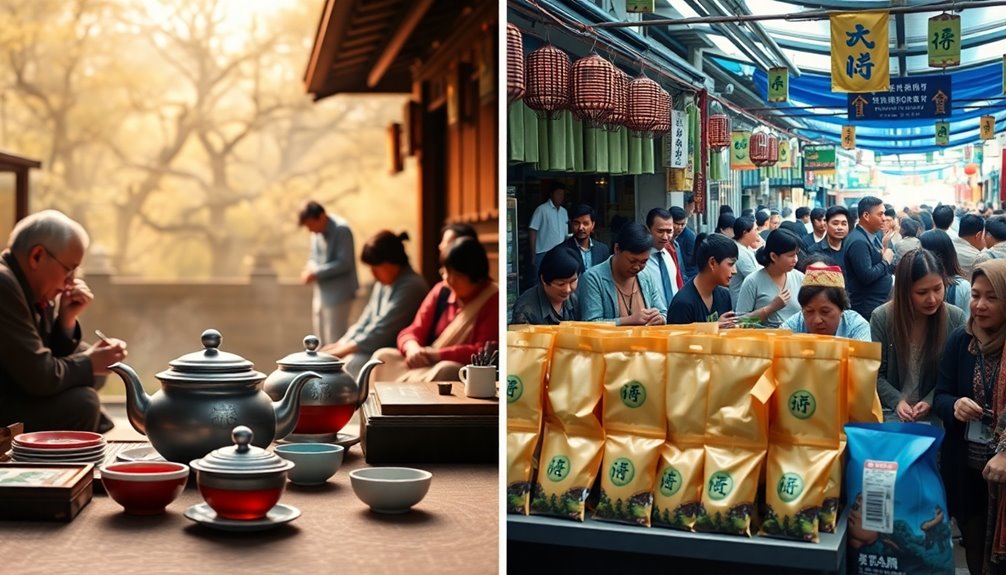
Discover the fascinating journey of tea from its ancient Chinese origins, where skilled harvesters carefully select young leaves during early spring or late winter. These leaves undergo traditional processing steps like withering, rolling, oxidation, and drying, each impacting flavor and appearance. Over centuries, craftsmanship and cultural significance shaped how tea is cultivated and produced today. To explore how this rich history continues to influence modern tea, continue exploring the step-by-step process behind tea’s timeless story.

Get coffee and tea gear delivered free with Prime
- Fast, free delivery on millions of items
- Prime Video, Amazon Music and more included
- Member-only deals all year
Key Takeaways
- Tea originated in ancient China thousands of years ago, marking its cultural and historical significance.
- The journey from plant to cup involves harvesting, withering, rolling, oxidation, and drying steps.
- Traditional processing emphasizes craftsmanship, patience, and precise techniques to develop flavor and aroma.
- Oxidation levels vary by tea type, affecting flavor, color, and processing methods used.
- Sorting and grading ensure high-quality final products, preserving tea’s rich history and cultural value.

Tea has a rich history that traces back thousands of years, with its origins rooted in ancient China. If you’re curious about how tea makes its journey from plant to cup, understanding the process begins with tea harvesting. When the time is right, usually in early spring or late winter, you’ll find skilled harvesters carefully plucking the tender leaves and buds. You might notice that they select only the youngest, most vibrant leaves, as these contain the highest concentration of flavors. The timing and method of harvesting are vital because they influence the quality and character of the final product. Once harvested, the tea leaves move on to traditional processing, a series of steps that transform fresh leaves into the teas you enjoy.
During traditional processing, the leaves undergo several key stages, starting with withering. This involves spreading the leaves out in a cool, shaded area to reduce moisture content, making them more pliable for rolling. You’ll find that this step is essential because it helps develop the tea’s aroma and flavor. Next comes rolling or bruising, where the leaves are gently twisted or crushed, releasing enzymes and juices that kickstart fermentation or oxidation in some types of tea. This step is particularly important for black and oolong teas, as it directly affects their taste profiles. After rolling, the leaves are often subjected to oxidation, a natural process that darkens the leaves and develops complex flavors. The duration of oxidation varies depending on the type of tea being produced—black teas are fully oxidized, while green teas are often minimally processed to preserve their fresh, grassy notes.
Following oxidation, the leaves are dried using heat, which halts fermentation and locks in flavor. This drying process can be done through pan-firing, baking, or sun-drying, depending on the tradition and the type of tea. The final step involves sorting and grading the leaves based on size, appearance, and quality. Skilled artisans and tea producers carefully select the best leaves for packaging, ensuring that each batch meets their standards. Throughout this entire process, traditional methods emphasize craftsmanship, patience, and precision, which are key to producing high-quality tea. By understanding each step—particularly tea harvesting and traditional processing—you gain insight into how this ancient beverage retains its rich, nuanced flavors and cultural significance. Additionally, the use of weather-resistant materials in some modern tea storage methods helps preserve the tea’s freshness and aroma over time.
traditional Japanese tea ceremony set
As an affiliate, we earn on qualifying purchases.
As an affiliate, we earn on qualifying purchases.
Frequently Asked Questions
What Are the Health Benefits of Different Tea Origins?
Different tea origins offer unique health benefits. You’ll find that traditional teas like green and black are rich in antioxidants, boosting your immune system and improving heart health. Herbal teas, on the other hand, often provide specific benefits like calming your nerves or aiding digestion. Both types contain tea antioxidant properties, but herbal teas typically have fewer caffeine effects. Choosing the right origin depends on your health goals and flavor preferences.
How Do Climate Changes Affect Tea Flavor Profiles?
Climate impact is enormous, transforming your tea’s flavor more than you’d imagine. When climate changes, it causes significant flavor variability in tea, altering its taste, aroma, and quality. Rising temperatures, unpredictable rainfall, and shifting growing conditions stress tea plants, making their flavors more complex or sometimes less desirable. You’ll notice these changes in your cup, as climate impacts directly influence the delicate balance of flavors in every sip.
Which Regions Produce the Rarest Types of Tea?
You’ll find the rarest teas in regions like Darjeeling, Yunnan, and Assam, where unique climate and soil influence tea leaf processing. These areas use specific tea blending techniques to create distinctive flavors, making their teas highly sought after. The limited harvests and traditional methods add to their rarity. If you explore these regions, you’ll discover teas that stand out for their complexity and depth, truly a special experience for tea lovers.
How Is Tea Authentication Verified Geographically?
You verify tea’s origin through geographical markers and origin labeling, which serve as proof of authenticity. These markers include specific soil types, climate conditions, and traditional cultivation methods unique to each region. Certification authorities rigorously inspect these details, ensuring the tea matches its labeled origin. By cross-checking these markers, you can confidently distinguish genuine teas from imposters, safeguarding the quality and heritage of regional specialties.
What Are Sustainable Practices in Tea Cultivation?
You can promote sustainable practices in tea cultivation by supporting farms that use organic farming methods, which avoid synthetic chemicals and protect soil health. Additionally, focus on biodiversity conservation by encouraging farmers to maintain diverse ecosystems around their tea plantations. This approach helps preserve native species, enhances resilience to pests, and guarantees long-term productivity. Your choices can drive the industry toward more eco-friendly and sustainable practices.
Conclusion
Now that you know the rich history and journey of tea, you’re better equipped to appreciate every sip. From its ancient roots to modern cups, tea’s story is as layered as its flavors. So, immerse yourself in this world with curiosity and an open mind—there’s always more to discover. Remember, understanding where your tea comes from helps you savor it even more, turning every brew into a little adventure that’s worth its weight in gold.
Halloween Picks
halloween
As an affiliate, we earn on qualifying purchases.