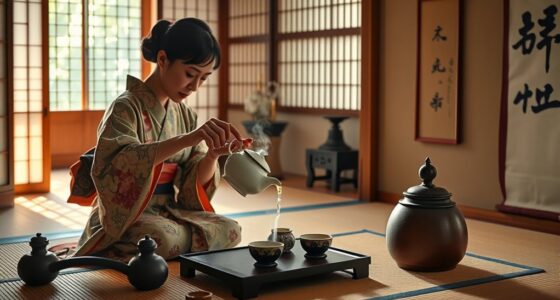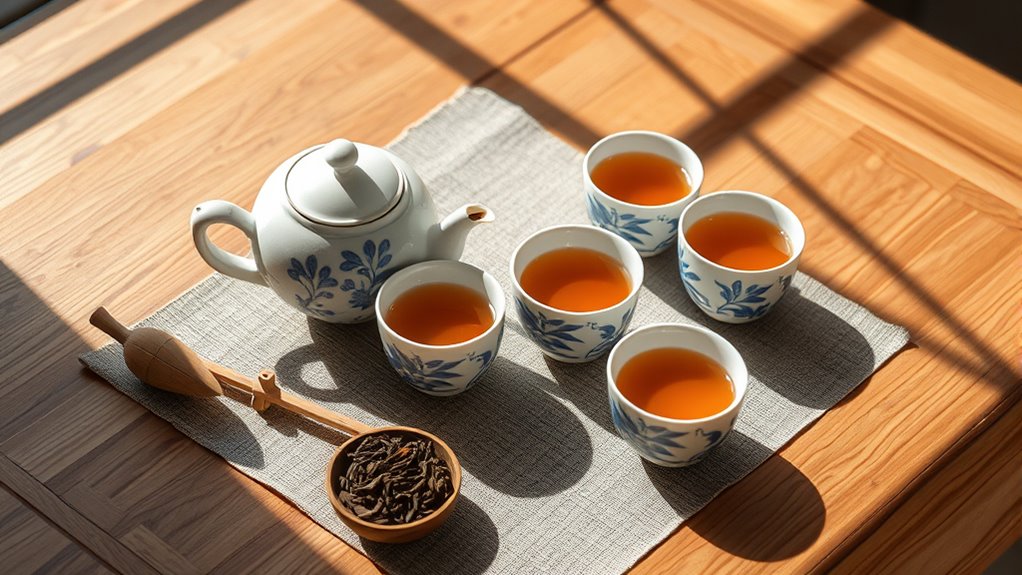
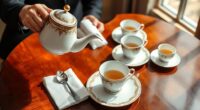
To perform a tea ritual, start by selecting quality tea leaves suited to your taste. Handle the teacup with care to show respect and engage in mindful silence while steeping. Use appropriate water temperatures based on the tea type and pour gently to preserve aroma. Observe the leaves unfurl and inhale deeply before sipping slowly, appreciating each moment. If you want to master mindful tea practices, explore more detailed steps to elevate your experience.
Key Takeaways
- Select high-quality tea leaves and prepare your teapot or infuser with care.
- Boil water to the appropriate temperature for your tea type, then steep for recommended time.
- Handle teacups gently, offering tea politely to others and maintaining a respectful silence during steeping.
- Observe the leaves unfurl and aroma release to gauge when the tea is ready.
- Sip slowly, savoring flavors and textures mindfully to foster presence and appreciation.

Tea rituals have been cherished for centuries as a way to promote mindfulness, connection, and relaxation. When you begin a tea ritual, you’re not just preparing a beverage—you’re creating a moment of calm and focus. To truly honor this tradition, you’ll want to pay attention to tea etiquette, which guides how you handle the teaware and interact during the process. For instance, handling teacups with care, offering your tea to others politely, and maintaining a respectful silence during steeping are all part of proper tea etiquette. These small gestures elevate the experience, making it more than just drinking tea but a mindful practice that fosters respect and presence.
Next, mastering brewing techniques is essential to achieving the perfect cup. Start by selecting quality tea leaves suited to your taste and the occasion. The water temperature and steeping time vary depending on the type of tea—green, black, oolong, or herbal. For green tea, you’ll want water just below boiling, around 175°F, and a steeping time of about 2-3 minutes. Black tea, on the other hand, benefits from boiling water and a longer steep of 3-5 minutes. As you prepare, measure your tea leaves carefully—too many can make the brew bitter, while too few may leave it weak. Use a good-quality teapot or infuser, and pour hot water gently over the leaves to avoid disturbing them excessively. Understanding different tea types can help you tailor your brewing method for optimal flavor.
Once the brewing process begins, you become part of a mindful rhythm. Watch the leaves unfurl and release their aroma, which signals that your tea is ready. Keep an eye on the steeping time; over-steeping can result in a bitter taste, while under-steeping can leave the tea weak. When the time’s up, pour the tea into your cup with care, respecting the etiquette of not rushing the process. Take a moment to inhale the aroma, allowing it to center your thoughts before taking your first sip. Sipping slowly, you’ll notice the flavors and textures unfold, grounding you in the present moment.
As an affiliate, we earn on qualifying purchases.
Frequently Asked Questions
What Are the Origins of Traditional Tea Rituals Worldwide?
You should know that traditional tea rituals worldwide have rich origins rooted in tea history and cultural significance. In China, tea drinking dates back thousands of years, symbolizing harmony and spirituality. In Japan, tea ceremonies emphasize mindfulness and respect. Meanwhile, British afternoon tea reflects social elegance. These rituals evolved to embody cultural values, bringing people together and fostering tradition. Your appreciation of these customs reveals a deep connection to history and cultural identity.
How Can I Adapt Tea Practices for Different Cultural Contexts?
Imagine your tea cup as a bridge connecting worlds. To adapt tea practices for different cultural contexts, embrace local tea etiquette and respect traditions. Observe how locals handle their tea, from serving customs to gestures. Incorporate these cultural adaptations with sincerity, allowing your tea experience to resonate authentically. By blending your style with tradition, you create a harmonious dance that honors diversity and deepens your appreciation of each unique tea moment.
What Are Common Mistakes to Avoid During Tea Ceremonies?
Avoid common tea etiquette mistakes like rushing the ceremony or neglecting to show respect through proper gestures. Don’t interrupt others or handle teaware roughly, as these ritual missteps can disrupt the flow. Stay attentive to the sequence and maintain a calm demeanor. Remember, paying attention to detail and respecting traditions help you create a meaningful, respectful tea experience. Keep these tips in mind to guarantee your ceremony remains graceful and authentic.
Are There Health Benefits Associated With Specific Tea Rituals?
Yes, specific tea rituals offer health benefits through herbal benefits and promote relaxation. Engaging in these rituals can reduce stress, improve digestion, and boost immunity. The ritual significance enhances mindfulness, helping you focus on the present moment. By dedicating time to these practices, you support both your physical and mental well-being, making tea rituals a holistic way to nurture yourself while enjoying the calming effects of herbal teas.
How Do Modern Lifestyles Influence Traditional Tea Practices?
Modern lifestyles influence traditional tea practices by encouraging quick, convenient tea etiquette and modern adaptations. You might find yourself using travel mugs or instant tea instead of traditional teapots, making rituals more flexible. Social norms shift, blending old customs with new routines, so you can enjoy tea anytime without sacrificing the essence of mindfulness and respect embedded in traditional practices. This blending keeps tea culture relevant in today’s fast-paced world.
Conclusion
Embracing tea rituals connects you to centuries of tradition, fostering mindfulness and calm. Many believe these practices enhance well-being, and studies suggest that mindful tea ceremonies can reduce stress and improve focus. So, next time you prepare tea, remember you’re not just making a drink—you’re engaging in a meaningful ritual that nurtures your mind and spirit. Trust in these time-honored customs to bring balance and serenity into your daily life.