When choosing matcha tea, look for products that prioritize sustainable cultivation and ethical sourcing. Organic farming practices avoid harmful chemicals, protect soil health, and promote biodiversity, while fair trade standards ensure farmers receive fair wages and good working conditions. Certifications like USDA Organic and Fair Trade guarantee responsible growing methods. Supporting these practices benefits the environment, communities, and your health. Keep exploring to discover how these values help you enjoy high-quality, ethical matcha every time.
Key Takeaways
- Organic cultivation avoids synthetic chemicals, preserving soil health and promoting biodiversity in matcha farming.
- Fair trade practices ensure fair wages, improve farmers’ living conditions, and support community development.
- Certifications like USDA Organic and Fair Trade verify ethical sourcing and environmentally responsible farming methods.
- Responsible cultivation techniques emphasize soil conservation and water management for sustainable matcha production.
- Ethical sourcing fosters ecological balance, empowers farmers, and aligns with consumer values for sustainable and fair products.
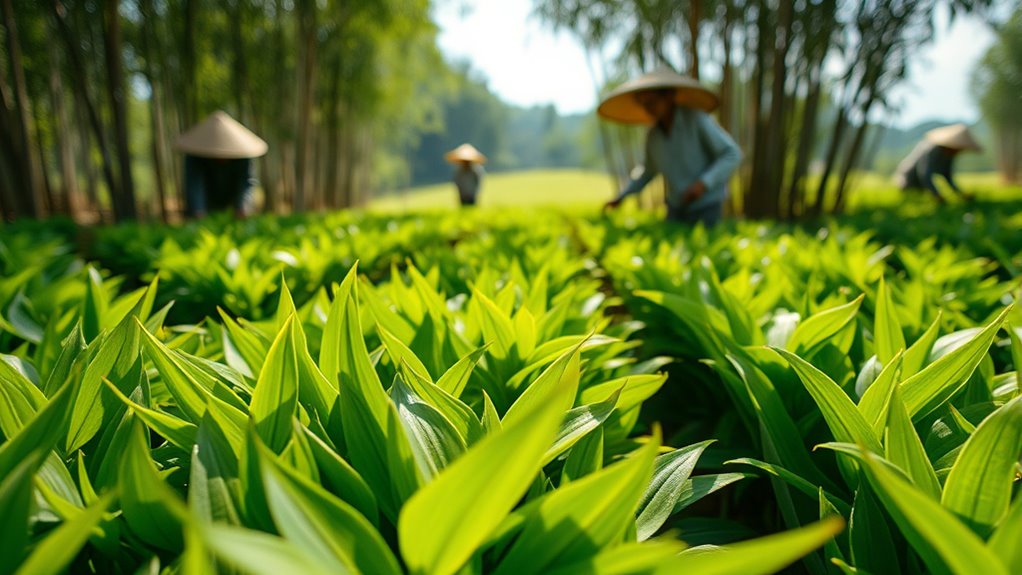
Matcha tea has gained popularity worldwide not only for its vibrant flavor and health benefits but also for the way it’s cultivated and sourced. As a conscious consumer, you’re likely interested in supporting practices that protect the environment and guarantee fair treatment of farmers. Organic farming plays a pivotal role here. When matcha is grown organically, farmers avoid synthetic pesticides, herbicides, and fertilizers. This not only preserves soil health but also guarantees that you’re drinking a pure, chemical-free product. Organic farming encourages biodiversity, reduces pollution, and promotes sustainable land use, making it a wise choice for both the planet and your health. By choosing matcha cultivated through organic methods, you’re supporting agricultural practices that prioritize ecological balance over short-term yields.
Choosing organic matcha supports soil health, biodiversity, and a chemical-free, sustainable future for farmers and the environment.
Fair trade practices further elevate the ethical standards behind your matcha. When farmers participate in fair trade systems, they receive equitable compensation for their work, which helps improve their living conditions and provides access to education and healthcare. These practices promote transparency in the supply chain, giving you confidence that your purchase supports farmers directly, rather than middlemen seeing most of the profits. Fair trade also encourages sustainable farming techniques, including soil conservation and water management, which help preserve the environment for future harvests. When you opt for matcha sourced through fair trade, you’re contributing to a more just and equitable global market.
Sustainable cultivation and ethical sourcing aren’t just buzzwords—they’re essential for the future of matcha production. Many farmers who adopt organic farming methods often work hand-in-hand with fair trade organizations, creating a system that benefits everyone involved. You’ll find that these matcha products often come with certifications, such as USDA Organic or Fair Trade Certified, which verify their commitment to ethical and sustainable practices. These certifications guarantee that the matcha you enjoy was grown without harmful chemicals and that farmers received fair wages. Supporting such practices encourages more producers to adopt eco-friendly and fair treatment standards, fostering a cycle of responsible cultivation.
In the end, choosing matcha that’s responsibly cultivated and ethically sourced aligns with your values. It’s about more than just flavor; it’s about nurturing the environment, empowering farmers, and making a positive impact through your purchasing choices. By prioritizing organic farming and fair trade practices, you help promote sustainable agriculture that benefits everyone—people, planet, and your own health.

Matcha DNA Organic Matcha Powder – XXL 16oz TIN – Matcha Green Tea – USDA Organic Gluten-Free Vegan, Unsweetened No Additives – Everyday Green Macha Powder Tea for Lattes, Smoothies, Baking & Recipes
DELICIOUS AND NUTRITIOUS TEA: 16 oz of MATCHA DNA Organic Green Tea Powder is naturally packed with antioxidants…
As an affiliate, we earn on qualifying purchases.
As an affiliate, we earn on qualifying purchases.
Frequently Asked Questions
How Does Sustainable Farming Impact Matcha Flavor Quality?
Sustainable farming improves matcha flavor quality by maintaining healthy soil through enrichment, which boosts tea plant nutrition and vibrant flavor. You’ll notice richer, more complex tastes when pest management relies on eco-friendly methods, reducing chemical residues that could compromise flavor. Healthy soil and effective pest control create ideal growing conditions, leading to fresher, more delicate matcha with a balanced taste and enhanced aroma that truly reflects high-quality, sustainably sourced tea.
Are There Certifications to Verify Ethical Sourcing of Matcha?
Did you know over 80% of consumers trust products with ethical labels? Certifications like USDA Organic or Fair Trade ensure the matcha meets strict certification standards, verifying ethical sourcing. These labels help you identify teas that prioritize fair labor practices and environmentally friendly farming, giving you confidence in your choice. When shopping, look for recognized ethical labels to support sustainable practices and enjoy your matcha with peace of mind.
What Are the Environmental Benefits of Organic Matcha Cultivation?
By choosing organic matcha, you support pesticide reduction, which lessens harmful chemical runoff and protects local ecosystems. Organic farming also enhances soil health by avoiding synthetic fertilizers and pesticides, promoting natural nutrient cycles. This sustainable approach helps maintain soil fertility over time, ensuring healthier tea plants and a more eco-friendly cultivation process. Your choice contributes to a greener environment and supports farmers committed to environmentally responsible practices.
How Do Farmers Ensure Fair Wages in Matcha Production?
Imagine a world where fairness blooms like a lush tea leaf. Farmers guarantee fair wages by partnering with organizations that enforce labor rights, guaranteeing workers receive just compensation. They also participate in fair trade programs that set minimum wages and improve working conditions. By choosing ethically sourced matcha, you support these practices, helping farmers sustain their livelihoods and uphold dignity in every sip, making your tea experience truly enriching.
Can Sustainable Practices Increase Matcha Production Costs?
Yes, sustainable practices can increase matcha production costs due to the cost implications of eco-friendly farming methods and ethical labor practices. These methods often require higher-quality inputs and more careful management, which can impact the supply chain. While the initial investment might be greater, it benefits the environment and workers. Over time, these practices can lead to higher-quality matcha and a more resilient, transparent supply chain.

Naoki Matcha Superior Ceremonial Blend – Authentic Japanese First Harvest Ceremonial Grade Matcha Green Tea Powder from Uji, Kyoto (40g / 1.4oz)
✓ Premium Japanese Ceremonial Grade Matcha, Fresh from Japan – Made from shade grown, First Harvest tea leaves…
As an affiliate, we earn on qualifying purchases.
As an affiliate, we earn on qualifying purchases.
Conclusion
Think of matcha tea as a delicate garden that thrives only when nurtured with care and respect. By choosing sustainable cultivation and ethical sourcing, you’re tending this garden responsibly, ensuring its beauty endures for generations. Every sip becomes a pledge—like tending a precious tree—protecting the environment and supporting fair labor. When you embrace these practices, you become a guardian of nature’s harmony, helping keep the vibrant, lush world of matcha alive and flourishing.

FGO Organic Japanese Matcha + Green Tea, 100 Count, Eco-Conscious Tea Bags, Resealable Bag, Packaging May Vary (Pack of 1)
ORGANIC MATCHA TEA – The tea is filled into tea bags and packed into foil-lined kraft bags in…
As an affiliate, we earn on qualifying purchases.
As an affiliate, we earn on qualifying purchases.
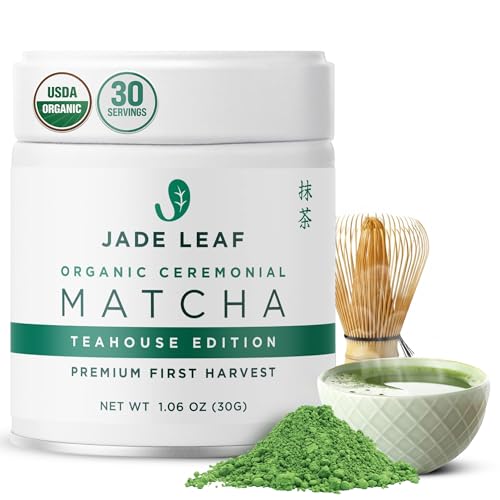
Jade Leaf Matcha Organic Ceremonial Grade Matcha Green Tea Powder – 100% Pure Japanese First Harvest Green Tea for Ceremonies, Usucha, Lattes 30g / 1.06 Ounce Tin (Pack of 1)
JAPANESE CEREMONIAL GRADE MATCHA POWDER: Enjoy top-tier ceremonial grade matcha with our traditional 1.06 oz / 30 g…
As an affiliate, we earn on qualifying purchases.
As an affiliate, we earn on qualifying purchases.