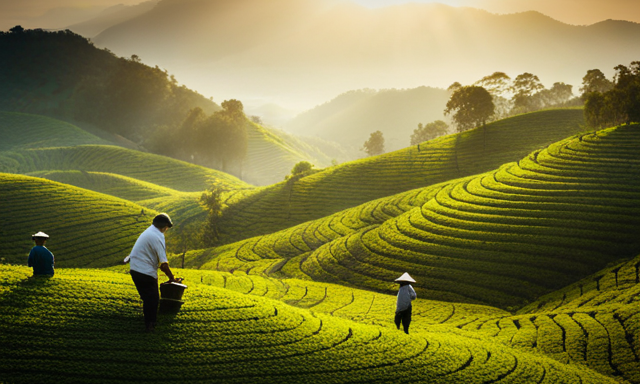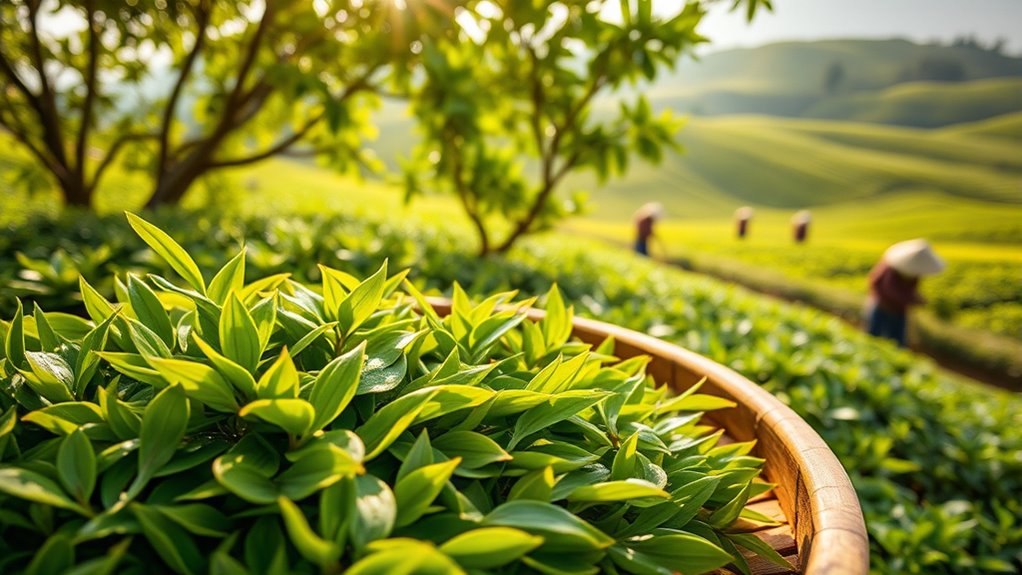

Choosing ethically sourced and sustainably cultivated oolong tea means you’re supporting environmentally friendly farming practices that avoid synthetic chemicals and protect soil health. It guarantees fair wages and safe conditions for farmers, promoting social equity. By opting for certified tea, you’re helping conserve ecosystems and reduce pollution. This commitment encourages responsible industry changes that benefit both the planet and communities. Continue exploring to discover how your choices can make a lasting positive impact.

Get coffee and tea gear delivered free with Prime
- Fast, free delivery on millions of items
- Prime Video, Amazon Music and more included
- Member-only deals all year
Key Takeaways
- Organic cultivation of oolong tea avoids synthetic chemicals, promoting soil health and biodiversity.
- Certified fair trade practices ensure fair wages and safe working conditions for tea farmers.
- Ethical sourcing supports social equity, empowering small-scale farmers and local communities.
- Sustainable farming methods reduce environmental impact and protect ecosystems during oolong tea production.
- Supporting certified practices encourages responsible cultivation, environmental conservation, and consumer confidence.
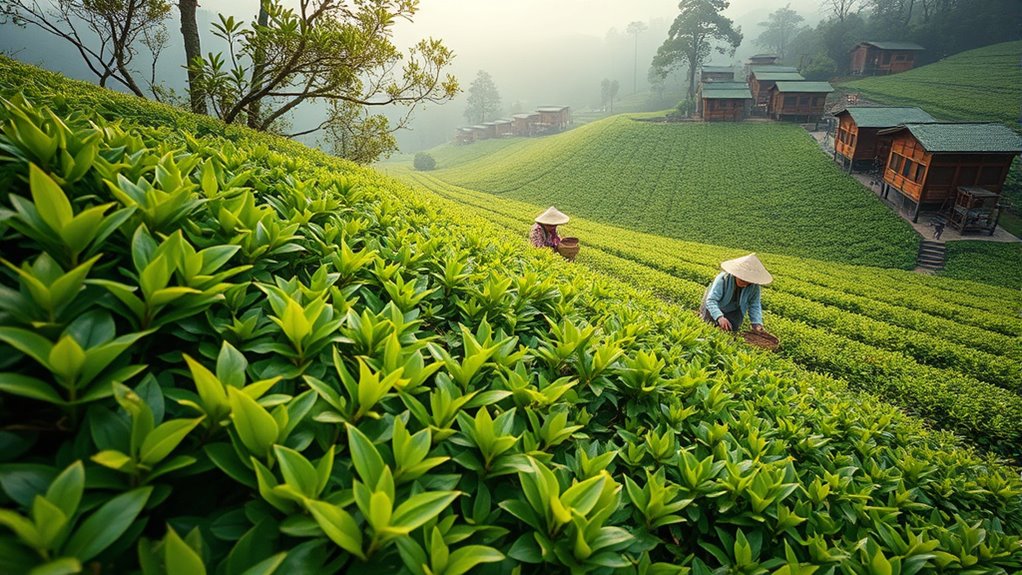
Oolong tea, prized for its unique flavor and aroma, is increasingly being cultivated with sustainability and ethics in mind. As a tea lover, you might wonder how your favorite brew is grown and whether it supports eco-friendly practices. One key approach is organic farming, which eliminates synthetic pesticides and fertilizers, ensuring that the soil remains healthy and that your tea is free from harmful chemicals. Organic farming not only protects the environment but also promotes biodiversity, allowing beneficial insects and plants to thrive alongside the tea bushes. When you choose oolong tea cultivated through organic methods, you’re supporting farmers who prioritize natural techniques that sustain the land for future generations.
Choosing organic oolong tea supports healthy soil, biodiversity, and sustainable farming practices for future generations.
In addition to organic farming, fair trade certifications play an essential role in making sure your tea is ethically sourced. Fair trade standards guarantee that farmers receive fair wages and work under safe conditions, helping to reduce poverty and improve community well-being. When you buy oolong tea with a fair trade label, you’re contributing to a market that values social responsibility, empowering small-scale farmers and workers who often face exploitation in conventional supply chains. These certifications also promote transparent trading practices, ensuring that a fair share of the profits goes directly to those who grow and harvest your tea. By supporting fair trade, you help foster equitable relationships between consumers and producers, encouraging sustainable livelihoods and environmental stewardship.
The combination of organic farming and fair trade certifications creates a powerful framework for sustainable cultivation. Farmers are incentivized not only to adopt environmentally friendly practices but also to uphold social equity. This integrated approach minimizes environmental impact, reduces pollution, and helps conserve local ecosystems. Furthermore, it promotes transparency in sourcing, so you can feel confident that your oolong tea aligns with your values of sustainability and ethical responsibility.
Supporting organic and fair trade practices also encourages the adoption of sustainable farming methods that benefit both the environment and local communities. As you explore different brands and varieties, look for those that emphasize these certifications. Choosing certified organic and fair trade oolong tea means you’re supporting practices that respect both the planet and the people who nurture it. It’s a simple yet impactful way to enjoy your tea knowing it’s produced with consideration for future generations. Supporting such initiatives encourages more farmers to adopt sustainable methods, creating a ripple effect that benefits communities and ecosystems worldwide. Ultimately, your conscious choice helps shift the industry toward more responsible and ethical cultivation practices, ensuring that your favorite tea remains a source of pleasure without compromising the environment or human dignity.
As an affiliate, we earn on qualifying purchases.
Frequently Asked Questions
How Does Oolong Tea Impact Local Biodiversity?
You might notice that oolong tea impacts local biodiversity by influencing biodiversity preservation and ecosystem balance. When grown sustainably, it supports diverse plant and animal life, maintaining healthy ecosystems. Conversely, harmful practices can threaten local species and disrupt natural habitats. By choosing ethically sourced oolong tea, you help promote practices that protect biodiversity and uphold ecosystem stability, ensuring that the environment remains vibrant and resilient for future generations.
What Certifications Ensure Ethical Sourcing of Oolong Tea?
You can trust certifications like Fair Trade and Organic Certification to verify ethical sourcing of oolong tea. Fair Trade guarantees fair wages and good working conditions for farmers, while Organic Certification confirms the tea is grown without harmful chemicals or pesticides. When you see these labels, you’re supporting environmentally responsible farming practices and ethical labor standards, helping protect local communities and ecosystems.
Are There Specific Regions Known for Sustainable Oolong Cultivation?
You’ll find sustainable oolong cultivation thriving in regions with rich regional terroirs, like Taiwan’s high mountain areas and parts of China’s Fujian province. These tea terroirs offer ideal climate and soil conditions, encouraging eco-friendly farming practices. By choosing teas from these regions, you support sustainable methods that preserve local ecosystems and promote ethical sourcing, ensuring you enjoy high-quality oolong while helping protect the environment.
How Do Farmers Benefit Financially From Ethical Practices?
By adopting ethical practices, you can benefit financially through fair trade certifications, which often lead to price premiums for your oolong tea. These premiums compensate you for sustainable methods, ensuring better wages and working conditions. Additionally, fair trade standards help you access new markets and build consumer trust, ultimately increasing your sales and income. Ethical practices create a sustainable cycle that benefits both your community and your bottom line.
What Are the Environmental Challenges in Oolong Tea Production?
You face environmental challenges in oolong tea production, like excessive pesticide use that harms ecosystems and reduces soil health. Water management is also critical, as overuse can deplete local resources and cause pollution. To address these issues, you should adopt eco-friendly practices, reduce chemical reliance, and optimize water use. This way, you help protect the environment while maintaining high-quality tea production, benefiting both the land and your community.
Conclusion
By choosing oolong tea that’s sustainably cultivated and ethically sourced, you support healthier ecosystems and fairer communities. Every sip you take can contribute to positive change, making a real difference for farmers and the environment. Isn’t it worth savoring a cup knowing it’s grown with care and respect? When you prioritize responsible choices, you help create a future where tea cultivation nurtures both people and the planet—one cup at a time.
Fall Picks
fall essentials
As an affiliate, we earn on qualifying purchases.