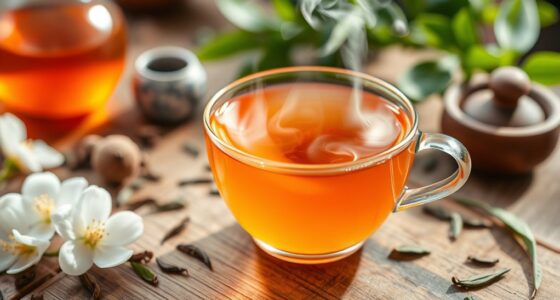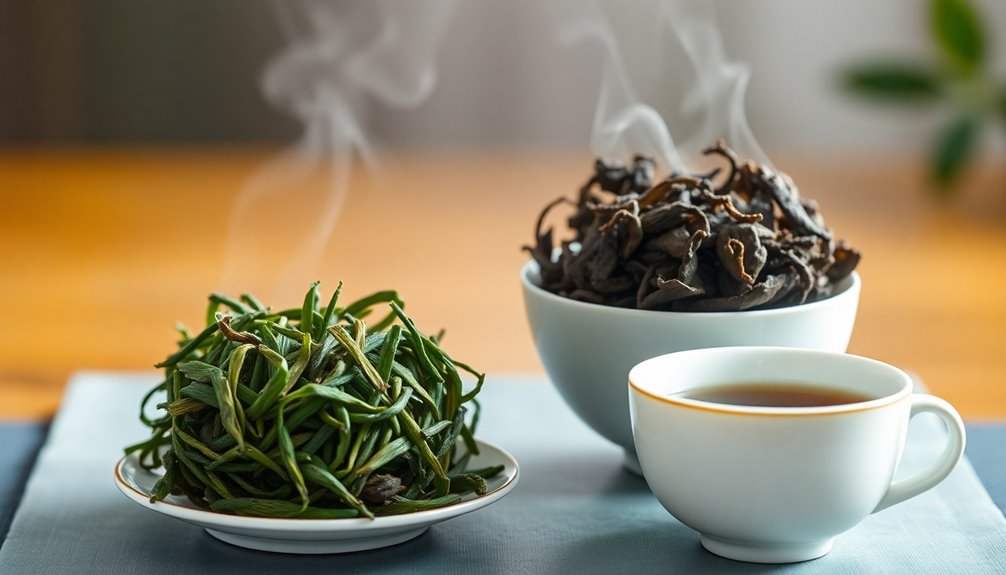
When pairing Taiwanese tea with food and desserts, focus on matching the tea’s aroma and flavor with your dishes. Light green and oolong teas complement subtle flavors, while darker oolong or black teas balance spicy or rich foods. Floral teas enhance sweet treats like pineapple cakes and mochi. Creating harmony between the tea and food elevates your dining experience. If you continue exploring, you’ll discover even more ways to enjoy these perfect pairings.
Key Takeaways
- Match light green or oolong teas with subtle dishes to enhance freshness and natural flavors.
- Pair robust, roasted oolong or black teas with spicy or savory foods for balanced richness.
- Use floral or jasmine teas to complement sweet desserts like mochi or pineapple cakes.
- Focus on harmony between tea aroma and dish flavors for a seamless taste experience.
- Proper pairing elevates both tea and food, creating a memorable culinary journey.
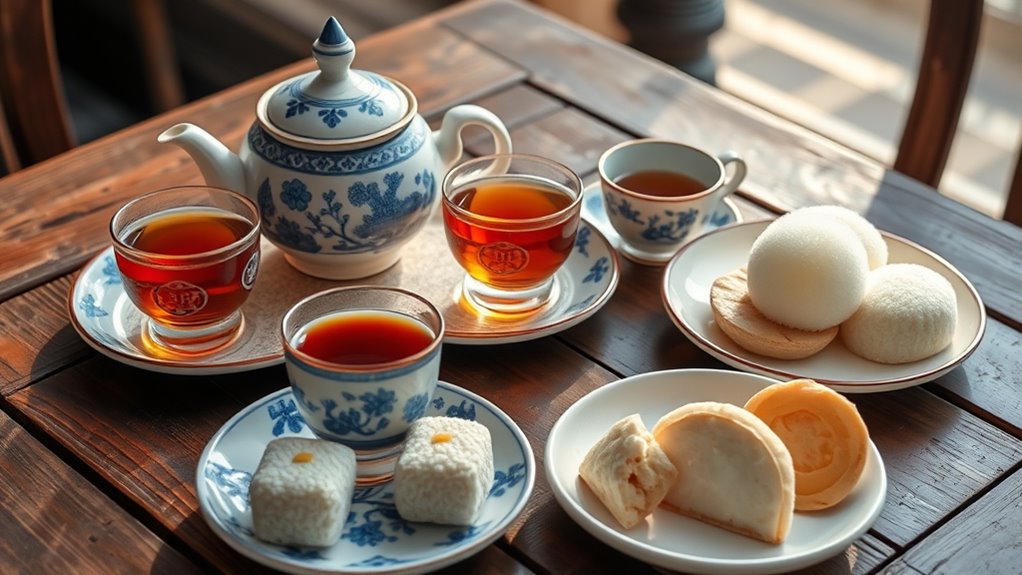
Taiwanese tea is renowned for its rich flavors and aromatic qualities, making it an ideal companion to a variety of local dishes. When you pair it with food, you’ll notice how the tea’s aroma enhances the dining experience, creating a sensory harmony that elevates both the beverage and the cuisine. The key to a successful pairing lies in understanding how the tea’s aroma and flavor profile interact with different foods, ensuring that neither overpowers the other but instead work together to create a balanced taste sensation.
For lighter, subtly flavored dishes like steamed dumplings or delicate seafood, a gentle green or oolong tea works perfectly. These teas offer a clean, fresh tea aroma that complements the natural flavors without overwhelming them. The tea’s subtlety allows the dish’s inherent sweetness or saltiness to shine through while adding a layer of aromatic complexity. When you take a sip, pay attention to how the tea’s flavor harmony complements the dish, enriching the overall taste experience without overshadowing it. This balance is paramount for a satisfying pairing, where the tea’s nuanced aroma acts as a palate cleanser, preparing your taste buds for each new bite.
If you’re indulging in richer, more robust foods like braised pork or spicy stir-fries, you’ll want to select a darker oolong or even a black tea. These teas have a stronger flavor profile and a more pronounced tea aroma that stands up to bold dishes. The deep, roasted notes and complex flavor harmony of these teas contrast beautifully with the intensity of savory foods, cutting through fat and spice to refresh your palate. As you sip, notice how the tea’s aroma interacts with the spices or richness of the dish, balancing the flavors and preventing any one element from becoming overwhelming. This synergy creates a more rounded, satisfying experience, highlighting the unique qualities of both the tea and the food.
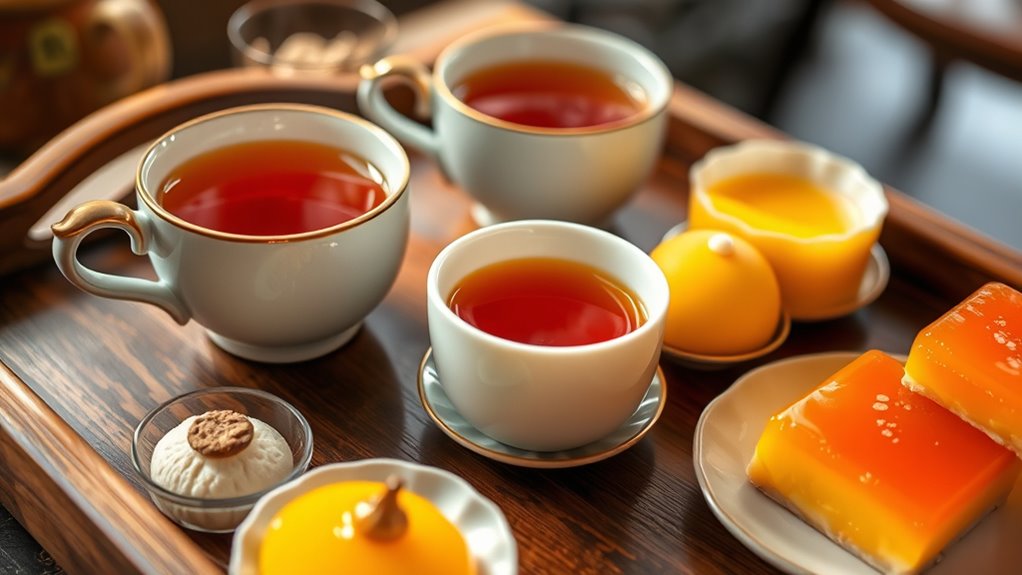
For desserts like pineapple cakes, mochi, or sweet taro dishes, lighter teas such as jasmine green or floral oolongs are ideal. Their fragrant tea aroma and delicate flavor harmony enhance the sweetness without competing with it. The floral notes of jasmine or the subtle sweetness of certain oolongs elevate the dessert, making each bite more memorable. When you pair these, focus on how the tea’s aroma triggers a sense of freshness, cleansing your palate and allowing you to enjoy the dessert’s layers of flavor more fully. Additionally, understanding the aroma and flavor profile of each tea helps you make better pairing decisions that enhance the overall dining experience.
In every pairing, the secret is paying attention to how the tea’s aroma and flavor harmony interact with the food. When you choose the right tea for each dish, you create a seamless flow of tastes that transforms a simple meal into a delightful culinary journey through Taiwan’s rich tea culture.
Top picks for "pair taiwanese food"
Open Amazon search results for this keyword.
As an affiliate, we earn on qualifying purchases.
Frequently Asked Questions
What Are the Best Taiwanese Teas for Spicy Dishes?
For spicy dishes, you should try Taiwanese oolong or green teas. These teas provide a spicy flavor balance that enhances your meal without overpowering it. Their natural cooling properties help soothe your palate after bites of heat. Opt for lightly oxidized oolongs or invigorating green teas like Longjing. These choices bring out the best in spicy flavors while offering a cooling tea option to make your dining experience more enjoyable.
How Does Tea Temperature Affect Pairing Choices?
Your tea’s brew temperature greatly influences pairing choices. When you brew tea at a higher temperature, it extracts more robust flavors, making it ideal for rich, hearty dishes. Conversely, lower temperatures produce milder flavors, perfect for delicate desserts. Adjusting the brew temperature allows you to enhance certain flavor notes, ensuring the tea complements your food or dessert without overpowering it. This balance creates a harmonious tasting experience.
Can Taiwanese Tea Complement Western-Style Desserts?
Yes, Taiwanese tea can beautifully complement Western-style desserts, especially fusion desserts and tea infusions. You can enhance rich, creamy flavors in desserts like cheesecakes or chocolate mousse by pairing them with lightly brewed oolong or jasmine tea. The tea’s nuanced aromas add depth, balancing sweetness and richness. Experiment with different Taiwanese teas to find unique pairings that elevate your dessert experience, creating a harmonious blend of East and West.
Are There Traditional Tea and Food Pairing Customs in Taiwan?
In Taiwan, traditional pairing customs include enjoying tea during a Tea ceremony, where specific teas are matched with foods like dim sum or sweets. You’ll find that the traditional pairing emphasizes harmony between tea’s flavor and the accompanying dish, enhancing the overall experience. During these ceremonies, you actively participate by selecting teas that complement the food, following age-old practices that highlight respect and balance in Taiwanese culture.
How Should I Store Taiwanese Tea for Optimal Flavor?
Think of your tea as a treasure chest, holding delicate flavors that need safeguarding. Store Taiwanese tea in an airtight tea container, away from light, heat, and moisture. Keep it in a cool, dark environment to preserve its essence. Proper storage prevents flavor loss and maintains freshness, ensuring each sip remains as vibrant as the first. Treat your tea like a precious gift, and it will reward you with every brew.
Conclusion
By pairing Taiwanese tea with the right food or dessert, you create a harmonious dining experience. Imagine enjoying a cup of fragrant oolong alongside a sweet pineapple cake—each enhances the other’s flavors. For example, a tea shop in Taipei noticed customers loved pairing jasmine tea with light pastries, boosting their satisfaction. So next time you sip your favorite Taiwanese tea, try matching it with complementary bites to elevate your taste adventure.