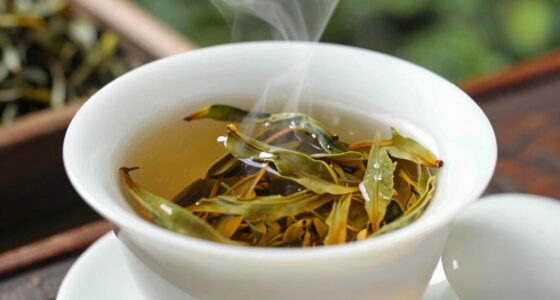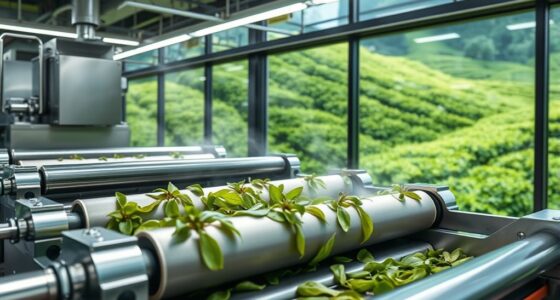

By choosing Taiwanese tea that’s certified organic and Fair Trade, you support sustainable farming and fair treatment for farmers and communities. These practices avoid synthetic chemicals, protect local ecosystems, and promote biodiversity. Your purchases can encourage farmers to use eco-friendly methods like composting and shade-grown cultivation, ensuring long-term land health. If you want to learn more about how your choices impact Taiwan’s tea industry and the environment, keep exploring this topic.

Get coffee and tea gear delivered free with Prime
- Fast, free delivery on millions of items
- Prime Video, Amazon Music and more included
- Member-only deals all year
Key Takeaways
- Organic certification ensures environmentally friendly cultivation, reducing chemical use and promoting soil and ecosystem health.
- Fair trade practices guarantee fair wages and safe working conditions for Taiwanese tea farmers and workers.
- Sustainable methods like integrated pest management and shade-growing minimize environmental impact and preserve biodiversity.
- Consumer choices supporting organic and fair trade Taiwanese tea encourage ethical farming and community development.
- The industry’s focus on sustainability preserves traditional methods, promotes long-term land health, and benefits local communities.
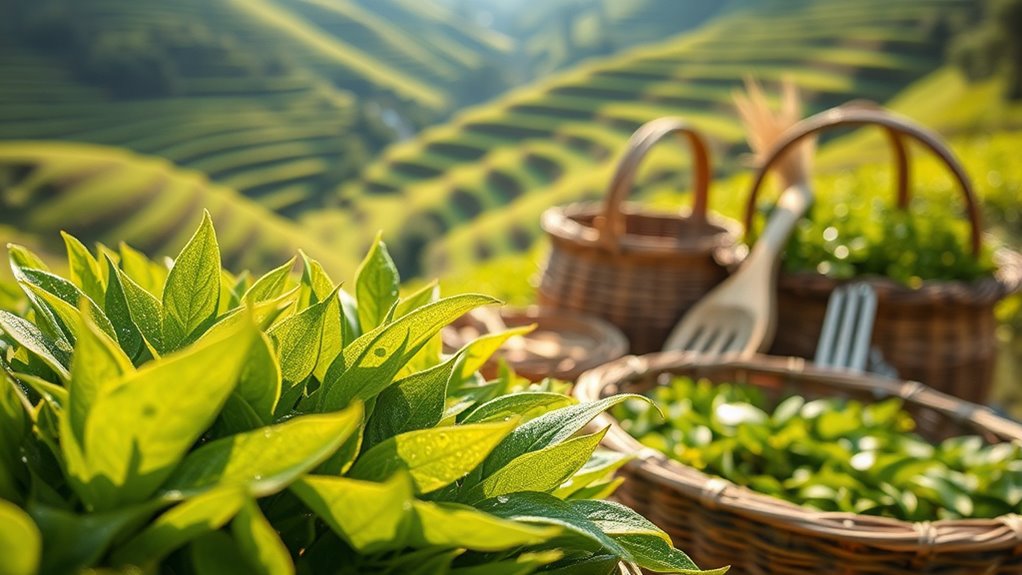
Taiwanese tea has gained global recognition not only for its rich flavors but also for its commitment to sustainability and ethical sourcing. When you choose Taiwanese tea, you’re supporting practices that prioritize environmental health and fair treatment of workers. One key aspect of this commitment is the pursuit of organic certification. Many Taiwanese tea growers are dedicated to cultivating their leaves without synthetic pesticides or fertilizers, which helps maintain soil quality and protects local ecosystems. Organic certification ensures that the tea you enjoy is produced through environmentally friendly methods, reducing chemical runoff and promoting biodiversity. By opting for certified organic Taiwanese tea, you’re making a conscious decision to support sustainable agriculture that respects nature and your health.
Choosing organic Taiwanese tea supports sustainable farming and protects ecosystems through eco-friendly practices.
Fair trade practices also play a fundamental role in Taiwan’s tea industry. You benefit when farmers and workers receive fair wages and work under safe conditions. These practices foster transparency and equitable relationships between producers and consumers. When you buy tea from brands that adhere to fair trade standards, you’re directly contributing to the well-being of local farmers and their communities. They’re empowered to invest in better farming techniques, education, and community development, which creates a cycle of sustainability that benefits everyone involved. This ethical approach ensures that your tea isn’t just a product of tradition but also a symbol of social responsibility.
Sustainable cultivation methods extend beyond certifications. Many Taiwanese tea farmers are adopting innovative techniques like integrated pest management and organic composting to reduce environmental impact. These methods minimize chemical use and enhance soil fertility naturally. You can also find teas produced using shade-grown techniques, which protect delicate tea plants and support local biodiversity. These practices demonstrate a respect for the land that sustains the industry and your enjoyment of high-quality tea. Additionally, implementing sustainable cultivation practices helps ensure the long-term health of the environment and the viability of tea farming communities.
When you seek out Taiwanese tea brands committed to sustainability and ethical sourcing, you’re making a positive impact that extends beyond the cup. Your choice encourages more farmers to pursue organic and fair trade practices, fostering a more sustainable and just industry. As the global demand for ethically produced products grows, Taiwanese tea producers are increasingly aligning their practices with these values. In doing so, they preserve traditional cultivation methods while incorporating modern sustainability standards, ensuring the future of Taiwanese tea remains vibrant, responsible, and flavorful.
As an affiliate, we earn on qualifying purchases.
Frequently Asked Questions
How Do Taiwanese Tea Farms Ensure Biodiversity Preservation?
You can see Taiwanese tea farms guarantee biodiversity preservation by practicing eco-friendly farming methods that protect local ecosystems. They prioritize biodiversity conservation, avoiding harmful chemicals and promoting natural pest control. These farms often maintain diverse plant life and wildlife habitats, ensuring the health of their environment. By doing so, they create sustainable ecosystems that support both tea production and the preservation of native flora and fauna.
What Certifications Verify Ethical Sourcing in Taiwanese Tea Production?
You can verify ethical sourcing in Taiwanese tea production through certifications like Fair Trade and Organic Certification. Fair Trade guarantees farmers receive fair wages and work under good conditions, while Organic Certification assures the tea is grown without harmful chemicals. By choosing teas with these labels, you support sustainable practices and ethical standards, ensuring that the tea’s journey respects both people and the environment.
How Do Climate Changes Impact Taiwanese Tea Cultivation Practices?
Climate change notably impacts your Taiwanese tea cultivation practices by forcing you to adopt climate adaptation strategies. As temperatures rise and rainfall patterns shift, you must adjust pest management techniques to protect your crops from new pests and diseases. These changes challenge traditional methods, requiring innovative solutions to maintain quality and sustainability. Staying adaptable ensures your tea remains resilient, flavorful, and ethically sourced despite the unpredictable climate.
Are There Government Incentives for Sustainable Taiwanese Tea Farming?
Yes, the government offers incentives for sustainable Taiwanese tea farming. You can access various government grants and subsidy programs designed to promote eco-friendly practices. These initiatives aim to support farmers in adopting sustainable techniques, reducing environmental impact, and improving tea quality. By applying for these grants and subsidies, you can enhance your farm’s sustainability efforts while benefiting from financial assistance that encourages responsible cultivation practices.
How Do Local Communities Benefit From Ethical Tea Sourcing Initiatives?
You’ll be amazed at how local communities thrive through ethical tea sourcing. When you support fair trade initiatives, you empower farmers and boost community development, transforming lives. This creates a ripple effect, providing better wages, education, and infrastructure. By choosing ethically sourced Taiwanese tea, you contribute to sustainable growth, ensuring these communities flourish and preserve their rich traditions for generations to come.
Conclusion
By choosing Taiwanese tea cultivated with sustainable and ethical practices, you support local farmers and protect the environment. Did you know that over 70% of Taiwan’s tea farms now implement eco-friendly methods? Your choices can help preserve Taiwan’s rich tea heritage while promoting healthier ecosystems. Every cup you enjoy contributes to a more sustainable future, ensuring these beautiful traditions and landscapes endure for generations to come.
Fall Picks
fall essentials
As an affiliate, we earn on qualifying purchases.