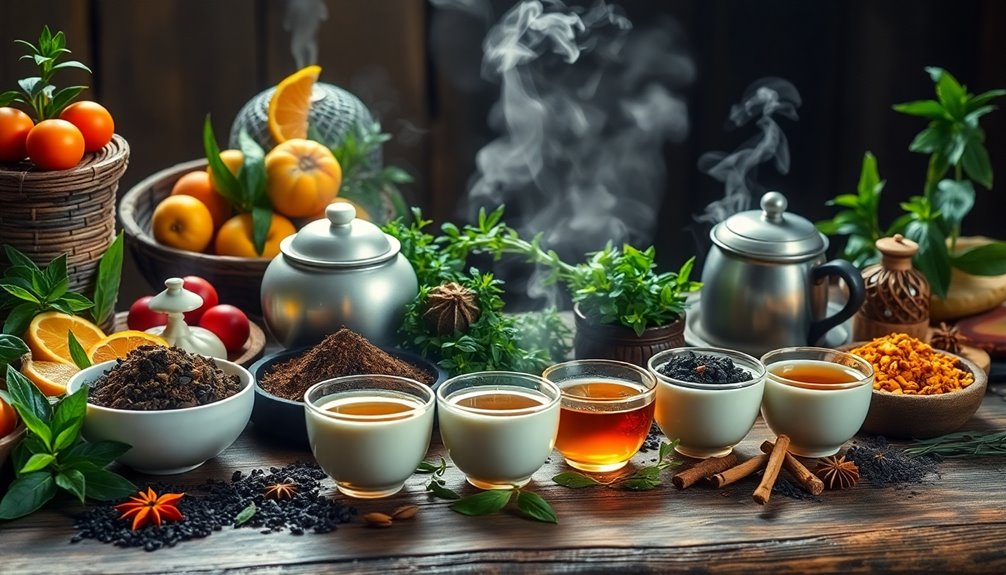
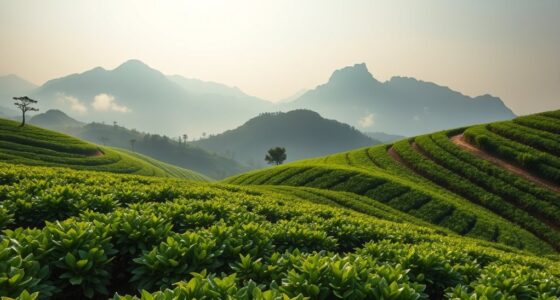
Modern innovations are transforming Taiwanese tea production and preparation by seamlessly combining traditional techniques with advanced technology. You’ll see precision in harvesting with sensors predicting ideal harvest times and controlled fermentation environments that develop complex flavors. Enhanced with modern equipment, processing methods like withering and rolling improve quality and consistency. These innovations preserve cultural heritage while elevating the overall tea experience. Keep exploring to discover how these advancements continue shaping Taiwan’s world-renowned tea industry.
Open a free Amazon Business account
Business pricing, bulk buying and tax-exempt orders.
As an affiliate, we earn on qualifying purchases.
Key Takeaways
- Integration of sensors and data analysis to optimize harvest timing and fermentation conditions.
- Use of precise temperature and humidity controls during fermentation for consistent flavor profiles.
- Adoption of modern withering and rolling techniques to enhance flavor extraction and aroma development.
- Application of innovative processing environments that balance traditional craftsmanship with advanced technology.
- Combining scientific insights with age-old methods to improve quality, sustainability, and global competitiveness of Taiwanese teas.

Have you ever wondered what makes Taiwanese tea so renowned worldwide? The answer lies in the meticulous processes and innovative techniques that growers and producers have perfected over generations. One essential aspect is tea fermentation, a critical step that influences the flavor profile and aroma of the final product. In Taiwan, artisans control fermentation with great precision, carefully monitoring temperature and humidity to achieve ideal oxidation levels. This delicate process transforms fresh tea leaves and develops complex, nuanced flavors that set Taiwanese teas apart from others. Modern tools and scientific insights now assist traditional fermentation methods, allowing producers to fine-tune every batch for consistency and quality. By embracing these innovations, Taiwanese tea makers can enhance the depth and complexity of their teas while respecting age-old practices.
Another key factor in Taiwanese tea production is the harvest technique. Unlike mass-produced teas, Taiwanese growers employ selective harvesting methods, often plucking only the top two leaves and a bud, which guarantees premium quality leaves. This careful handpicking process allows for better control over leaf maturity and freshness, resulting in a superior taste. Additionally, harvest timing is essential; producers consider seasonal variations and weather conditions, choosing the most suitable moment to pick leaves at their peak flavor. Modern technology assists in this process as well, with some farms using sensors and data analysis to predict the best harvest windows. This combination of tradition and innovation enables Taiwanese farmers to maximize flavor potential while maintaining sustainable practices. The precision in harvest techniques directly impacts the tea’s aroma, texture, and overall quality, making each cup a reflection of both nature’s bounty and human expertise. Advanced cultivation techniques further support the goal of achieving optimal tea quality.
Taiwanese tea producers also leverage innovations in processing techniques, such as improved withering and rolling methods, to enhance flavor extraction and consistency. These advancements, along with controlled fermentation environments, give Taiwanese teas a distinctive character that balances freshness with complexity. The integration of traditional craftsmanship and modern technology shows how Taiwan continues to elevate its tea industry. Whether it’s through refined harvest techniques or sophisticated fermentation control, these innovations help preserve the rich heritage of Taiwanese tea while pushing the boundaries of quality. You can taste the results in every sip—an intricate harmony of tradition and modernity that keeps Taiwanese tea at the forefront of the global market. As you explore these teas, remember that each cup reflects a careful blend of age-old techniques and cutting-edge innovations, making Taiwanese tea a truly remarkable experience.
Frequently Asked Questions
How Has Technology Improved Tea Harvesting Efficiency?
Technology has considerably improved tea harvesting efficiency through mechanization advancements and drone surveillance. You now use machines that quickly and precisely harvest tea leaves, reducing manual labor and increasing speed. Drones help you monitor fields remotely, identify ripeness, and prevent issues early. These innovations streamline your harvesting process, saving time and effort, and ensuring higher quality tea production. Overall, technology makes your harvesting more efficient and consistent.
What Sustainable Practices Are Used in Tea Farming?
Did you know that over 60% of Taiwanese tea farms adopt sustainable practices? You can see this in their use of organic cultivation, which avoids synthetic chemicals, and water conservation techniques that reduce resource use. These practices safeguard the environment, improve tea quality, and ensure future harvests. By supporting farms that prioritize sustainability, you help promote eco-friendly tea production and preserve Taiwan’s rich tea heritage.
How Do Different Processing Methods Affect Flavor Profiles?
Different processing methods markedly influence flavor profiles through fermentation techniques and flavor extraction. For example, longer fermentation produces richer, more complex notes, while shorter processes yield fresher, lighter tastes. Roasting enhances aroma, and oxidation levels affect sweetness and astringency. You’ll notice these variations in teas like oolong, black, and green, as each method extracts unique flavors, giving you a diverse tasting experience based on the specific processing approach used.
Are There New Tea Varieties Developed Recently?
Yes, new tea varieties have recently emerged, like fresh leaves sprouting in spring. Through new cultivar development, tea makers are blending tradition with innovation, crafting teas with unique flavor profiles that excite the palate. These efforts lead to flavor innovation, pushing the boundaries of taste and aroma. You might find teas with surprising floral, fruity, or even spicy notes, making each sip an adventure into uncharted tea territory.
How Do Climate Changes Impact Tea Quality?
Climate changes can substantially impact your tea quality by altering growing conditions. You might notice flavor shifts or uneven leaf development. To maintain quality, farmers implement climate adaptation strategies like adjusting harvest times and using resilient tea varieties. These efforts help preserve tea’s aroma and taste, ensuring your favorite brews remain consistent despite environmental challenges. Your tea experience stays rich and satisfying because of these proactive measures aimed at quality preservation.
Conclusion
As you sip your Taiwanese tea, remember that behind each cup lies a story of innovation and tradition blending seamlessly. Just like a master tea artisan once transformed a rough leaf into a delicate brew that warmed hearts, modern techniques continue to elevate Taiwan’s tea scene. These innovations are like a gentle ripple spreading outward—touching lives, inspiring pride, and proving that even in tradition, there’s room for fresh, vibrant change.
Back to school Picks
back to school
As an affiliate, we earn on qualifying purchases.