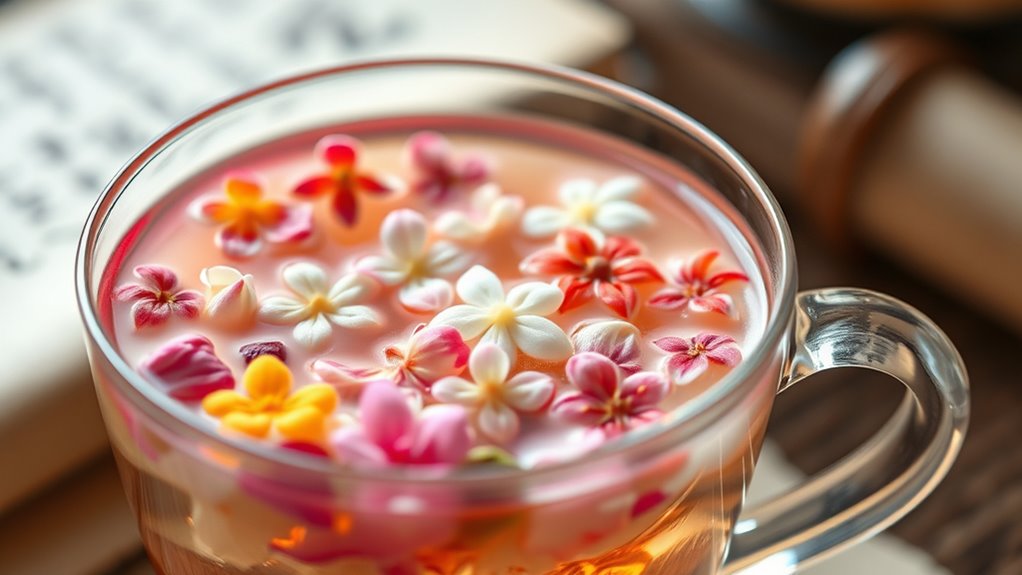
Flower tea has a long history rooted in ancient China, where it was appreciated for both its beauty and medicinal properties. Originally used by emperors and scholars, it gradually spread to neighboring countries like Japan, Korea, and Southeast Asia. Today, it’s prized for its calming effects and aesthetic appeal, blending tradition with wellness. If you keep exploring, you’ll uncover more about its fascinating cultural origins and the art of brewing this delicate tea.

Get coffee and tea gear delivered free with Prime
- Fast, free delivery on millions of items
- Prime Video, Amazon Music and more included
- Member-only deals all year
Key Takeaways
- Flower tea originated in ancient China, valued for its medicinal and aesthetic qualities.
- It was historically used by emperors and scholars for healing and relaxation.
- The practice spread to Japan, Korea, and Southeast Asia, developing regional varieties.
- Traditional brewing emphasizes gentle handling, optimal water temperature, and proper steeping times.
- Flower teas continue to be cherished today for their cultural significance, calming effects, and visual appeal.
Have you ever wondered how flower teas can elevate your tea-drinking experience? These beautiful infusions do more than delight your eyes with their vibrant colors; they offer a range of botanical benefits that can enhance your well-being. From calming your nerves to boosting your immune system, flower teas have been cherished for centuries across various cultures. Understanding their history and origins helps you appreciate the rich tradition behind each cup. Additionally, knowing the right brewing techniques guarantees you access the full potential of these delicate infusions, preserving their aroma, flavor, and health benefits. Using the proper storing techniques ensures that these floral infusions retain their freshness and potency over time.
Flower teas originated in ancient China, where they were prized not just for their aesthetic appeal but also for their medicinal properties. Emperors and scholars alike valued these floral infusions, believing they possessed healing powers that could improve overall health. Over time, the practice of making flower teas spread to Japan, Korea, and Southeast Asia, each region developing its own unique varieties and preparation methods. The popularity of these teas grew as people recognized their calming effects and natural ability to restore balance to the body. Today, flower teas are enjoyed worldwide, both for their health benefits and their sensory pleasures.
Flower teas have a rich history rooted in ancient China, cherished for their healing and calming properties worldwide.
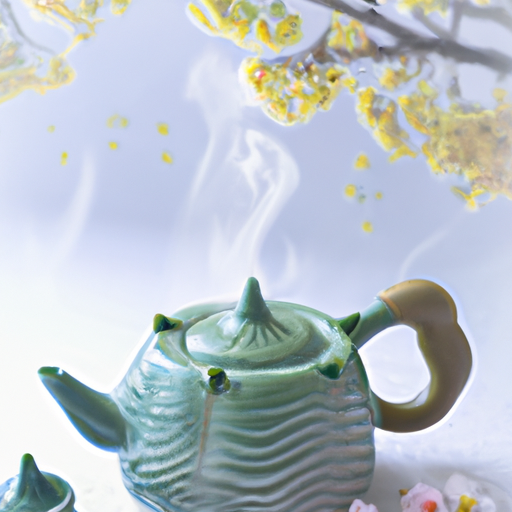
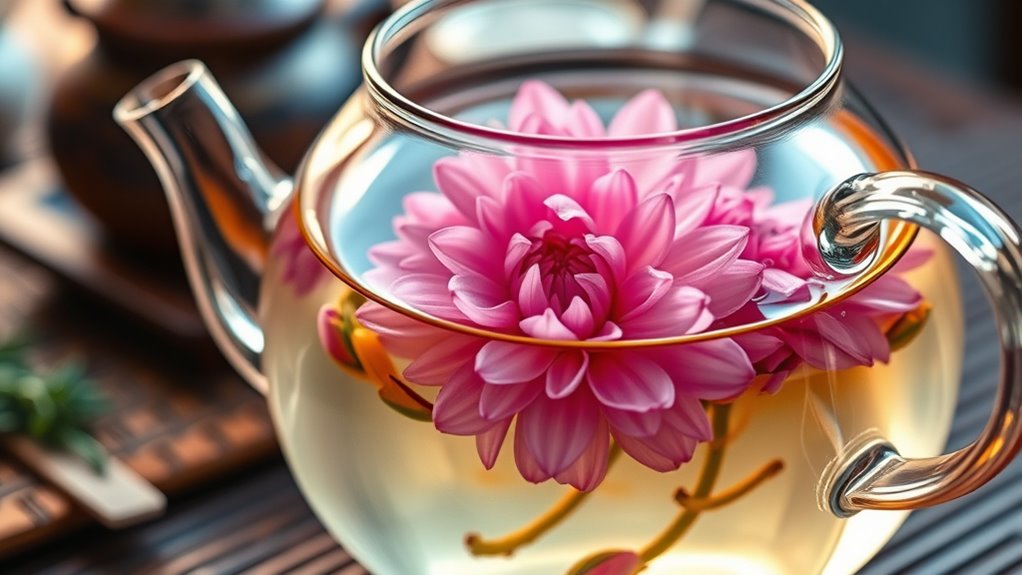
When you prepare flower teas, the key to maximizing their botanical benefits lies in your brewing techniques. Unlike black or green teas, flower teas often require gentler handling to preserve their delicate petals and essential oils. Typically, you want to start with fresh, filtered water heated to a lower temperature—around 160 to 180 degrees Fahrenheit—depending on the flower type. Steeping time is equally important; too short, and you won’t extract enough flavor or benefits, too long, and the tea may become bitter or lose its subtle aroma. Usually, a steeping time of 3 to 5 minutes works well. Using a glass or ceramic teapot allows you to appreciate the visual appeal of the blossoming petals as they unfurl, adding to the overall experience.
Incorporating these brewing techniques guarantees that you get the most out of your flower tea. Whether you’re seeking relaxation, a boost of antioxidants, or simply a moment of peace, the careful preparation amplifies the botanical benefits you can enjoy. The history of flower teas reflects their enduring appeal—rooted in centuries of tradition, yet still relevant today. When you approach your tea with mindfulness and proper technique, you honor that legacy and transform a simple beverage into a nourishing ritual. So next time you brew a flower tea, remember that each step you take enhances your experience and reveals the full potential of these botanical treasures.
flower tea set with glass teapot
As an affiliate, we earn on qualifying purchases.
As an affiliate, we earn on qualifying purchases.
Frequently Asked Questions
What Are the Health Benefits of Flower Tea?
You’ll enjoy numerous health benefits from flower tea, thanks to its floral aroma and natural compounds. It can boost your immune system, reduce stress, and improve digestion. The delicate flower flavor offers antioxidants that fight free radicals, promoting healthier skin and overall wellness. Drinking flower tea regularly helps you relax and stay hydrated, making it a delightful way to support your health while savoring its soothing floral aroma.
Which Flowers Are Most Commonly Used in Flower Tea?
You’ll find that popular flower varieties like chamomile, jasmine, rose, hibiscus, and lily are most commonly used in floral infusions. These types of floral infusions are favored for their aromatic qualities and health benefits. When choosing teas, you can explore these popular flower varieties to enjoy a wide range of flavors and benefits. Each flower adds a unique aroma and taste, making your tea experience more delightful.
How Is Flower Tea Traditionally Prepared?
Imagine opening a fragrant garden, where delicate petals release their essence. To prepare flower tea, you follow traditional brewing techniques: steep the dried flowers in hot water, usually just below boiling, for about 3-5 minutes. You can adjust the steeping time to intensify or mellow the flavor. This simple ritual transforms water into a fragrant, blossoming elixir, inviting you to enjoy a calming, floral escape.
Are There Any Potential Allergies Related to Flower Tea?
You should be aware that flower tea can cause allergic reactions if you’re sensitive to pollen. People with pollen sensitivities might experience symptoms like sneezing, itching, or watery eyes after drinking flower tea. It’s important to check the ingredients and choose varieties that are less likely to trigger allergic reactions. If you notice any adverse effects, stop drinking and consult a healthcare professional to avoid potential allergic reactions.
Can Flower Tea Be Used for Medicinal Purposes?
Yes, flower tea can be used for medicinal purposes, thanks to its herbal synergy. People have long valued its calming, digestive, and detoxifying effects, often incorporating it into traditional practices. Its cultural significance enhances its healing reputation, making it more than just a beverage. However, you should consult a healthcare professional before using flower tea medicinally, especially if you have allergies or health conditions.
Conclusion
Now that you know the floral origins of your fancy brew, you might just start sniffing every blossom you see—hoping to turn every garden into a teahouse. Who knew that sipping on petals could elevate your tea game while making you look like a botanical connoisseur? So go ahead, indulge in flower tea—just don’t be surprised if your neighbors start thinking you’ve got a secret garden full of scented sedatives. Cheers to blooming good taste!
Halloween Picks
halloween
As an affiliate, we earn on qualifying purchases.