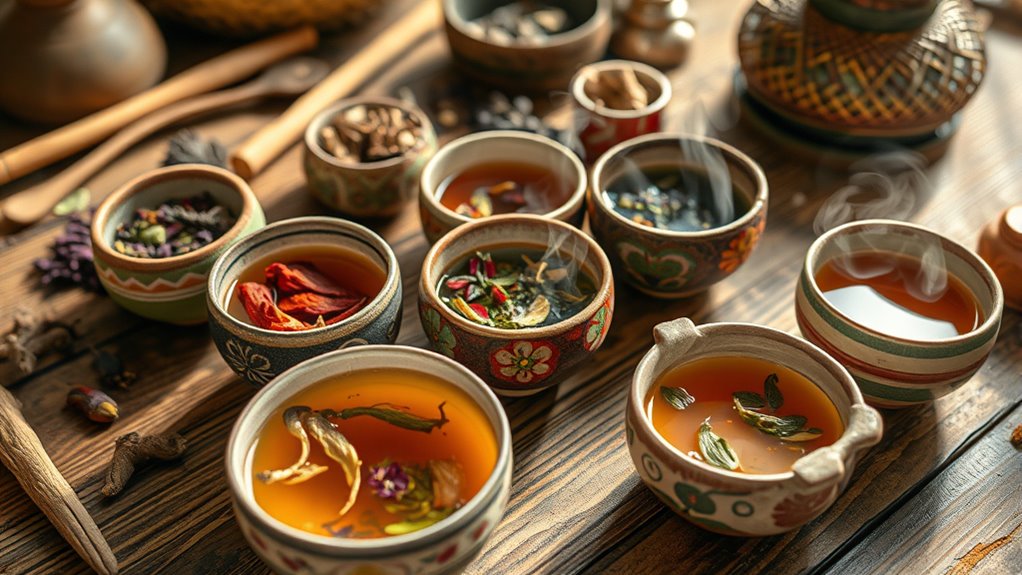
You can craft traditional homemade tea blends inspired by regional cultures by using herbs and spices that reflect local traditions and ingredients. Incorporate regional favorites like mint for North Africa, spices for India’s chai, or ginseng for East Asia to create meaningful flavors and rituals. These blends honor cultural origins and often include herbs known for their health benefits. Exploring different regional ingredients enriches your experience, and if you keep exploring, you’ll discover even more ways to connect with heritage through tea.

Get coffee and tea gear delivered free with Prime
- Fast, free delivery on millions of items
- Prime Video, Amazon Music and more included
- Member-only deals all year
Key Takeaways
- Incorporate regional herbs and spices to reflect local culinary traditions and cultural stories.
- Use traditional preparation methods to honor regional heritage and enhance authenticity.
- Customize blends based on regional medicinal herbs for health benefits aligned with local remedies.
- Focus on high-quality, fresh ingredients to capture regional flavors and maximize therapeutic effects.
- Engage in the creative process of blending to forge a personal and cultural connection with heritage.
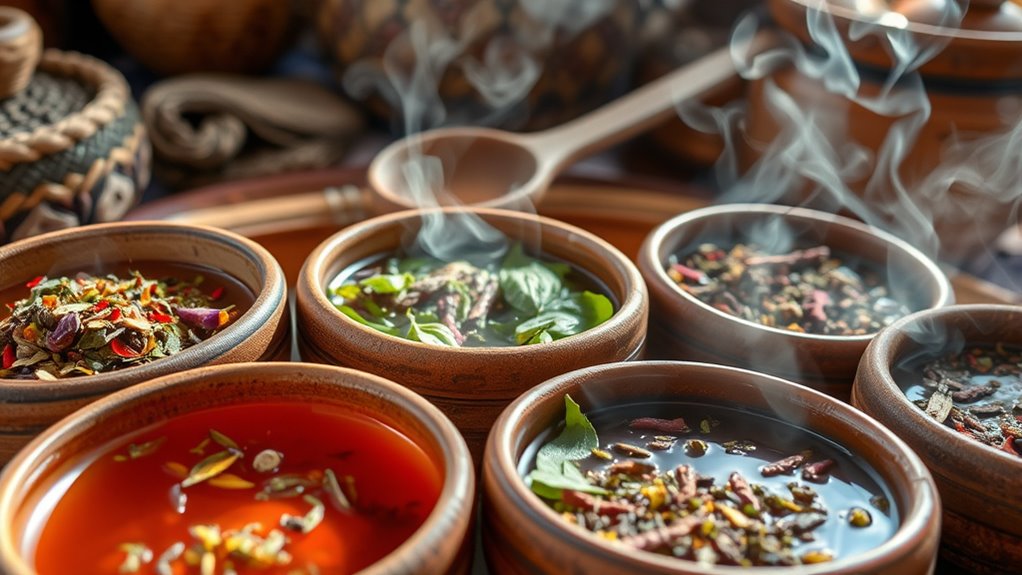
Traditional homemade tea blends have been cherished for generations, offering a simple yet effective way to enjoy natural flavors and health benefits. When you craft your own blends, you tap into a rich history of herbal remedies and regional traditions. These blends aren’t just about taste—they’re about harnessing the healing properties of herbs and creating unique flavor combinations that reflect local culture and ingredients. Whether you’re steeping a calming chamomile with a touch of honey or mixing invigorating ginger and lemongrass, you’re engaging in a centuries-old practice that connects you to a community’s natural wisdom.
Crafting herbal tea blends connects you to centuries of tradition and natural wisdom.
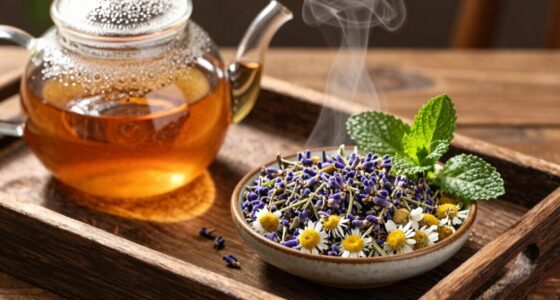
You can explore herbal remedies through your homemade tea blends by selecting herbs with specific benefits. For example, adding peppermint can soothe digestion, while lavender offers relaxation and stress relief. Incorporating herbs like turmeric or ginseng might boost your immune system or increase energy. The key is understanding what each herb offers and balancing those qualities in your blend. You might experiment with combining rosemary, thyme, and lemon peel for a revitalizing, aromatic tea that energizes and clears your mind. These flavor combinations are often inspired by regional cuisines and medicinal traditions, giving your tea a cultural depth that’s both meaningful and enjoyable.
As you develop your skills, you realize that creating traditional blends isn’t just about mixing herbs—it’s about respecting the origins and cultural significance behind each ingredient. Regional influences shape your flavor combinations, whether you’re inspired by the spicy chai blends from India, the soothing mint teas of North Africa, or the herbal infusions common in East Asian cultures. Each combination tells a story, rooted in local flora and traditional uses. You can make your own variations, adjusting the proportions or adding local spices, to craft a personalized brew that honors these traditions while fitting your taste and health needs.
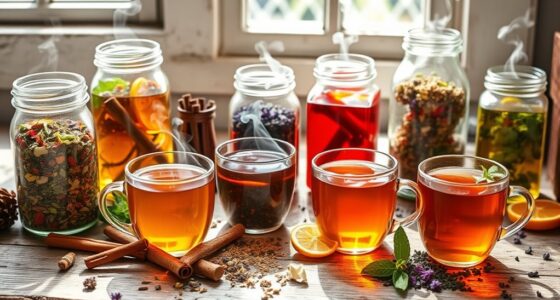
Making your own tea blends also allows you to control quality and freshness, ensuring you’re getting maximum herbal benefits. As you experiment, you’ll discover which herbs work best together and how different combinations influence flavor and potency. It’s a creative process that invites you to connect with nature and your heritage. Incorporating high-quality ingredients can significantly enhance the effectiveness of your blends, ensuring you get the most health benefits from each cup. Whether you prefer a simple, soothing chamomile or a complex, spicy blend with cinnamon and cardamom, your homemade teas become a reflection of regional culture and your own taste preferences. In this way, traditional homemade tea blends become not just a beverage, but a meaningful ritual that combines health, flavor, and history in every cup.
As an affiliate, we earn on qualifying purchases.
Frequently Asked Questions
What Are the Origins of Regional Tea Blend Recipes?
You might wonder about the origins of regional tea blend recipes. They come from centuries of tea blending, where local ingredients and flavors reflect cultural influences unique to each area. These recipes evolved through tradition, trade, and local preferences, blending herbs, spices, and teas to create distinctive tastes. As you explore different blends, you’ll see how history and regional flavors shape each cup, making tea blending a rich cultural craft.
How Do Regional Climates Influence Tea Ingredient Choices?
Imagine you’re crafting a tea blend in a humid tropical region; you’d choose climate-specific herbs like lemongrass and ginger to suit the warm, moist environment. Regional climates directly influence ingredient choices, shaping flavor profiles that thrive locally. For example, cooler areas may favor hearty herbs like thyme or mint. Your tea’s ingredients reflect the climate, creating authentic, regionally inspired flavor profiles that resonate with local traditions and environmental conditions.
Can These Tea Blends Be Customized for Personal Tastes?
Yes, you can definitely customize these tea blends for your personal tastes. With flavor customization in mind, you can add or remove ingredients based on what you enjoy, thanks to ingredient versatility. Whether you prefer a sweeter, spicier, or more herbal profile, adjusting the components allows you to craft a blend that perfectly suits your palate, making every cup uniquely yours.
Are There Health Benefits Associated With Traditional Regional Ingredients?
Yes, traditional regional ingredients in tea blends offer health benefits. You can enjoy herbal healing and anti-inflammatory properties from ingredients like turmeric, ginger, and chamomile. These herbs help boost your immune system, reduce inflammation, and promote relaxation. Incorporating regional ingredients into your tea not only connects you to local culture but also provides natural remedies that support your overall well-being.
How Long Do Homemade Tea Blends Typically Stay Fresh?
Homemade tea blends usually stay fresh for about 6 to 12 months if you follow proper storage tips. To preserve freshness, keep your blend in an airtight container, away from light, heat, and moisture. Make certain you seal it tightly after each use and store it in a cool, dark place. Proper freshness preservation helps maintain flavor and aroma, so your tea remains delightful for as long as possible.
Conclusion
Now, imagine yourself sipping this legendary brew, feeling its aromatic herbs and vibrant flavors transform your day into a cultural adventure. With each sip, you’re not just drinking tea—you’re revealing centuries of tradition, warming your soul like a fiery sunrise over ancient lands. These blends aren’t just teas; they’re magical portals that transport you to bustling markets, serene mountains, and lively villages—all from the comfort of your own cup. Cheers to your epic journey through flavor!
Fall Picks
fall essentials
As an affiliate, we earn on qualifying purchases.