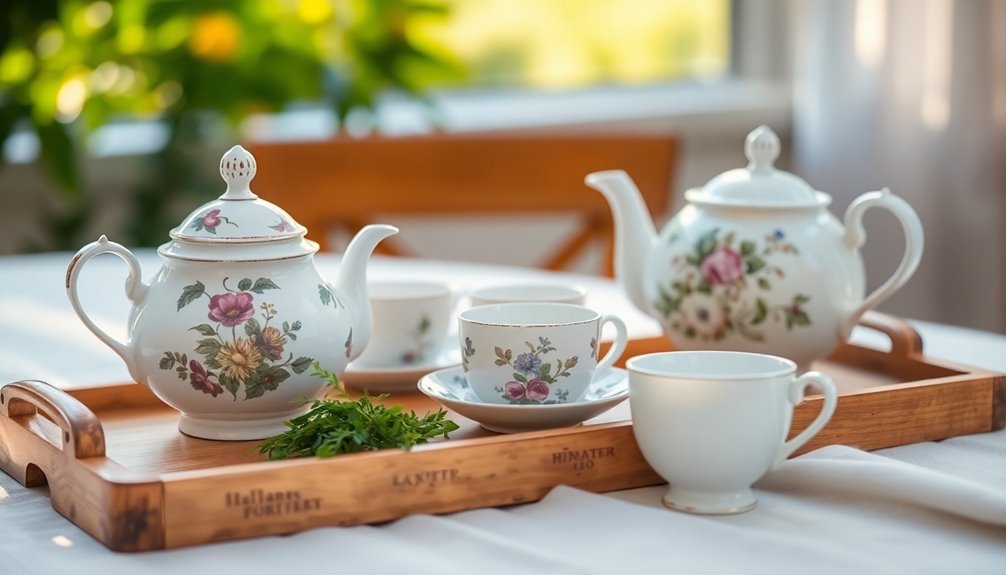
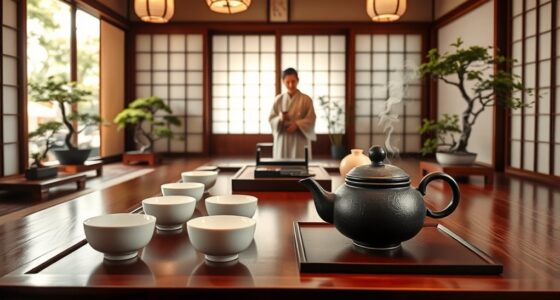
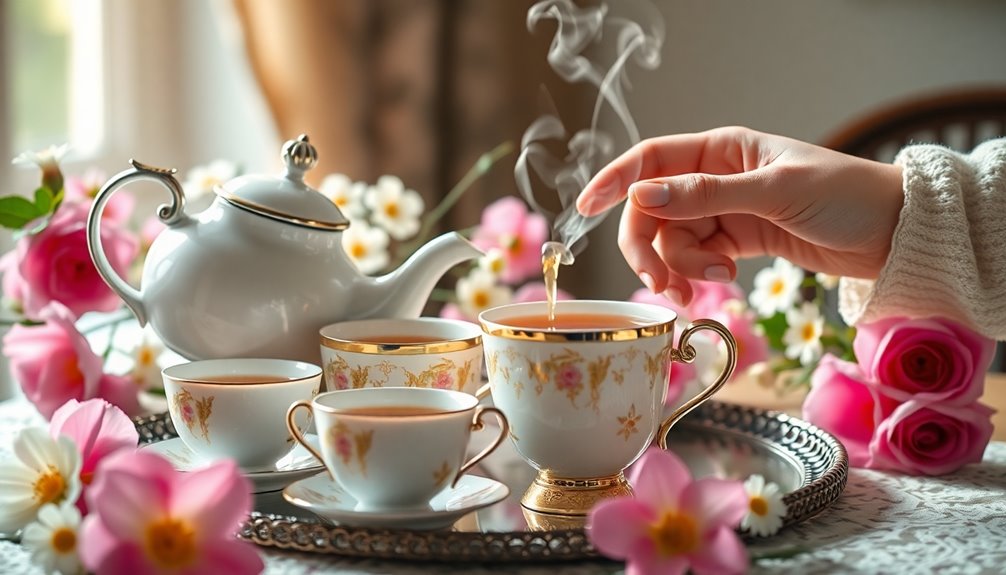
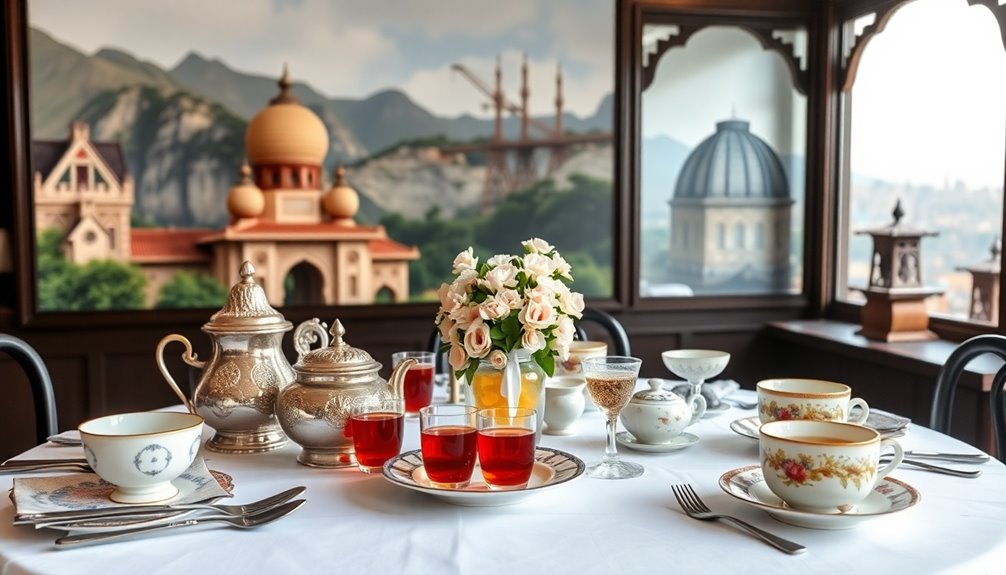
You can see how tea serving etiquette influences art and literature by inspiring themes of harmony, discipline, and respect. It shapes visual representations of delicate gestures and elevates social interactions depicted in paintings and stories. Writers often use tea as a symbol for tranquility and personal growth, reflecting cultural ideals. If you keep exploring, you’ll uncover more about how these traditions continue to influence creative expressions today.

Get coffee and tea gear delivered free — and shop member deals
- Fast, free delivery on millions of items
- Access to Prime Big Deal Days deals on October 6–7
- Prime Video, Amazon Music and more included
Key Takeaways
- Tea serving gestures symbolize respect and mindfulness, inspiring artistic representations of elegance and discipline.
- Artistic works depict ceremonial tea acts, emphasizing ritual precision and cultural refinement.
- Literature uses tea as a metaphor for tranquility, civility, and personal growth, reflecting societal values.
- Tea etiquette shapes aesthetic principles, influencing visual arts, design, and social perceptions of harmony.
- Contemporary art and literature continue to explore tea symbolism, enriching cultural identity and appreciation of tradition.

Tea serving etiquette has long influenced the worlds of art and literature, shaping how society perceives refinement and social harmony. When you observe or participate in a traditional tea ceremony, you’re engaging with more than just the act of drinking tea; you’re immersing yourself in a rich tapestry of tea ceremony symbolism. Every gesture, from the way you hold the cup to how you arrange the utensils, carries meaning—signifying respect, mindfulness, and unity. These subtle signals have inspired countless artists and writers to explore themes of harmony, tradition, and cultural identity. As a result, many literary tea references emphasize the ritual’s deeper significance, often portraying tea as a metaphor for tranquility or philosophical reflection, echoing the ceremonial importance placed on each movement. Additionally, the disciplined movements and aesthetic principles of tea etiquette have influenced modern design and artistic sensibilities. In art, the influence of tea etiquette is evident in imagery that captures the elegance and discipline of the ritual. Paintings and illustrations often depict figures engaged in tea ceremonies, highlighting the careful choreography that elevates a simple act into an art form. This visual representation underscores how tea serving etiquette elevates social interactions, transforming them into acts of deliberate grace. Artists have also used tea symbolism to evoke ideas of purity, patience, and humility—values embedded in the ceremony. These themes resonate deeply within artistic expression, inspiring works that celebrate cultural refinement and the pursuit of inner peace. Literature, on the other hand, often draws upon tea references to symbolize deeper philosophical or emotional states. You might find poets and novelists mentioning tea to illustrate moments of introspection or social connection. In classic literature, tea serves as a metaphor for civility and shared understanding, reinforcing the idea that proper etiquette fosters social cohesion. Writers have used tea symbolism to depict characters’ inner struggles or enlightenment, using the quiet ritual to mirror personal growth or spiritual awakening. These literary tea references elevate the act of tea serving from a simple social custom to a meaningful symbol—highlighting its role in shaping societal ideals of decorum and harmony. Through art and literature, the impact of tea serving etiquette extends beyond the act itself. It influences how societies envision beauty, discipline, and mindfulness. The symbolic language woven into tea ceremonies and literary references continues to inspire contemporary interpretations, reminding us that the simple act of sharing tea can embody the highest ideals of respect, tranquility, and cultural identity. Recognizing the influence of cultural symbolism in these works helps deepen our appreciation of the profound role that tea etiquette plays in shaping aesthetic and social values. Your appreciation of these traditions not only deepens your understanding of history but also enriches your perception of human connection and artistic expression.
As an affiliate, we earn on qualifying purchases.
Frequently Asked Questions
How Did Tea Etiquette Influence the Development of Specific Art Styles?
Tea etiquette influences art styles through ceremonial symbolism and artistic ornamentation, which you see reflected in intricate designs and detailed motifs. You observe that as tea ceremonies became more formal, artists incorporated symbolic elements to emphasize refinement and tradition. This focus on ceremonial aspects inspired the development of elegant, ornamental art styles, emphasizing aesthetic harmony and cultural values, shaping both visual arts and decorative crafts centered around tea culture.
Are There Famous Paintings Depicting Traditional Tea Serving Practices?
You’ll find that many famous paintings vividly depict traditional tea serving practices, capturing tea symbolism and cultural motifs that define specific eras. These artworks, like those by Jean-Siméon Chardin or Japanese ukiyo-e prints, showcase tea’s cultural significance. They serve as timeless windows into history, illustrating the elegance and ritual that elevate simple tea to an art form, making the act of serving tea feel like a poetic dance across centuries.
Which Literary Works Prominently Feature Tea Customs and Rituals?
You’ll find that literary works like “The Tea Rose” and “The Tale of the Teacup” prominently feature tea customs and rituals, using them as symbols of cultural narratives and social connection. These stories often depict tea serving as a symbol of hospitality and tradition, enriching their themes with literary symbolism. By exploring these customs, authors reveal deeper insights into cultural identity and societal values through vivid descriptions of tea ceremonies.
How Has Modern Tea Etiquette Evolved From Historical Practices?
You see, modern tea etiquette has evolved from traditional tea ceremonies, becoming more relaxed and adaptable. While the core principles still emphasize respect and mindfulness, today’s etiquette incorporates casual practices suited for everyday life, reflecting cultural shifts. The etiquette evolution makes tea serving more accessible, blending elegance with comfort. As a result, contemporary tea rituals balance tradition with modernity, allowing everyone to enjoy the experience without strict formality.
Did Specific Cultures Develop Unique Artistic Representations of Tea Ceremonies?
Yes, you can see how specific cultures develop unique artistic representations of tea ceremonies, highlighting their cultural symbolism and ritualistic aesthetics. For example, Japanese tea ceremonies are often depicted with delicate brushwork emphasizing harmony and mindfulness, while Chinese tea art focuses on intricate porcelain designs and poetic calligraphy. These artistic styles celebrate the cultural significance of tea, transforming everyday rituals into visual expressions that deepen your appreciation of tradition.
Conclusion
In embracing the elegance of tea serving etiquette, you enrich your appreciation for art and literature. This tradition transforms simple sips into stories, inspiring artists and authors alike. By blending beauty with behavior, you bolster a bond between culture and creativity. So, savor the ceremony, stir the symbolism, and let the timeless tea rituals transform your perspective, turning everyday moments into extraordinary expressions of art and literature.
Halloween Picks
halloween
As an affiliate, we earn on qualifying purchases.