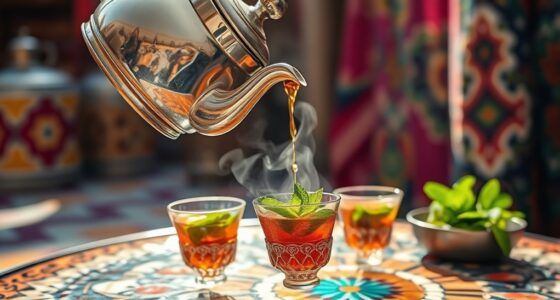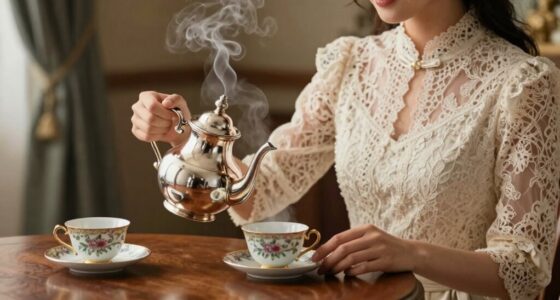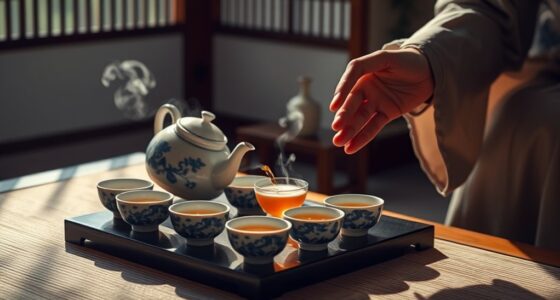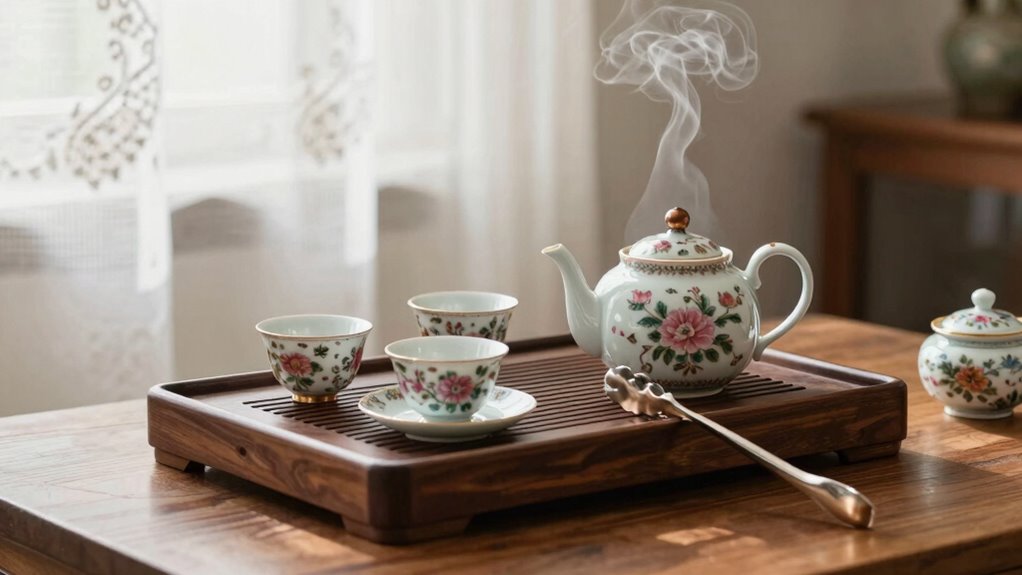

Tea serving etiquette deserves a closer look because it transforms a simple act into a meaningful cultural exchange. When you pay attention to gestures like handling the cup with care or pouring at a gentle angle, you show respect, humility, and thoughtfulness. These small details foster genuine connections and create a welcoming atmosphere for guests. By understanding the deeper significance behind each step, you can appreciate the art of tea and strengthen cultural appreciation—if you keep exploring, you’ll discover even more.

Get coffee and tea gear delivered free with Prime
- Fast, free delivery on millions of items
- Prime Video, Amazon Music and more included
- Member-only deals all year
Key Takeaways
- It embodies cultural traditions, enriching the tea experience with history and meaningful rituals.
- Attention to gestures and details conveys respect, humility, and mindfulness.
- Proper etiquette fosters a welcoming, respectful atmosphere for guests.
- Understanding these practices deepens appreciation and elevates tea serving beyond routine.
- Mindful etiquette transforms simple tea moments into meaningful cultural exchanges.
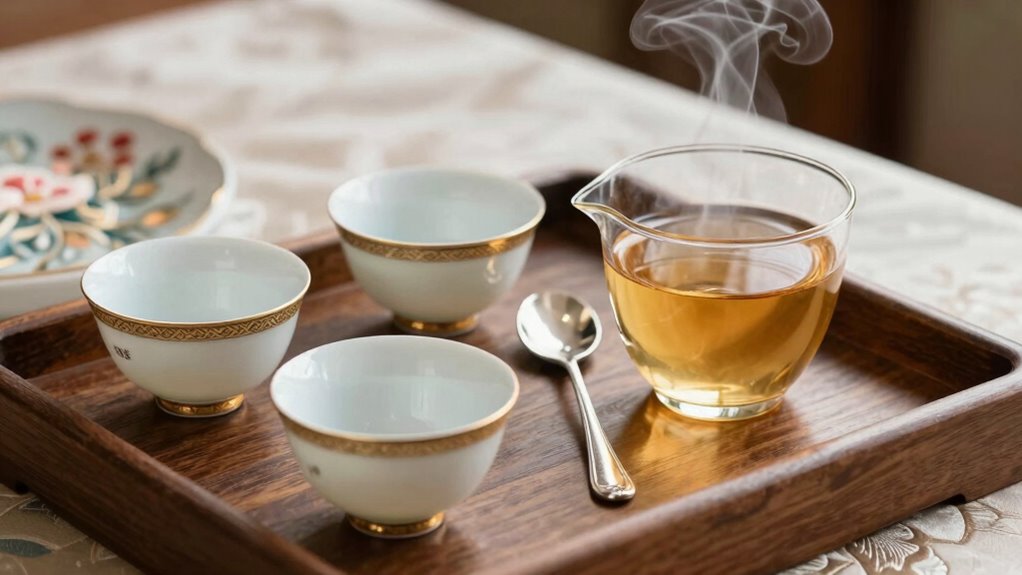
Have you ever wondered what makes a tea service truly graceful? It’s more than just pouring hot water into a cup; it’s about the subtle art of tea serving that reflects respect, tradition, and mindfulness. When you consider a tea ceremony, you’re stepping into a ritual that embodies cultural significance, often rooted in centuries of history. Every movement, every gesture, carries meaning—it’s a dance of precision and intent. These practices aren’t just about drinking tea; they’re about creating a moment of connection, harmony, and respect between host and guest. By paying attention to tea serving etiquette, you honor these traditions and elevate the experience from mere routine to a meaningful exchange.
Understanding the cultural significance behind tea etiquette helps you appreciate why certain gestures matter so much. In many cultures, the way you handle the teacup or place the cup on the saucer isn’t trivial—it’s a reflection of humility, gratitude, and reverence for the process. For example, in a traditional tea ceremony, the careful way you hold the teacup demonstrates respect for the ingredients and the person you’re serving. Small details, like the angle at which you pour or the gentle way you wipe the rim before serving, communicate your attentiveness. These actions aren’t just about manners; they’re about honoring centuries of cultural heritage. Recognizing this depth encourages you to be more mindful and intentional with your gestures, transforming a simple act into a shared moment of cultural appreciation. Additionally, understanding biodiversity and sustainable practices in tea cultivation can deepen your appreciation for the origins of the tea you serve.
Another reason to delve into tea serving etiquette is that it fosters a deeper connection with your guests. When you follow proper protocols, you create a welcoming environment that shows you care about their experience. It’s about more than just following rules; it’s about expressing thoughtfulness and respect through your actions. When you serve tea with grace, you’re not only demonstrating good manners—you’re also inviting your guest to relax and enjoy the moment fully. This attentiveness can transform an ordinary tea break into a memorable experience, one that’s rooted in tradition yet personalized through your genuine care.
In essence, paying close attention to tea serving etiquette allows you to partake in a rich cultural practice that goes beyond the surface. It’s about understanding the significance behind each step and embracing the ritual’s deeper meaning. When you do so, you’re not only honoring tradition but also enriching your own appreciation for the art of tea. This mindfulness elevates your hosting skills and helps foster genuine connections, making every tea service a beautiful gesture of respect, culture, and shared experience.
As an affiliate, we earn on qualifying purchases.
Frequently Asked Questions
How Did Tea Serving Customs Originate Worldwide?
You might find that tea serving customs originated from ancient cultural practices and the historical tea trade. As tea spread globally, each region infused its own symbolism into the tea ceremony, reflecting values like respect and harmony. These customs evolved over centuries, influenced by trade routes and cultural exchanges. Today, understanding these origins helps you appreciate the deep symbolism behind tea ceremony etiquette and the rich history behind every sip you take.
Are There Specific Etiquette Rules for Different Types of Tea?
Think of tea etiquette as a dance, where each step has its rhythm. Yes, there are specific rules for different types of tea. When pouring, be gentle and steady, matching the tea’s character—black, green, or herbal. Handle the cup with care, supporting the base and avoiding slamming the lid. These nuances elevate your tea experience, turning a simple sip into a harmonious ritual that respects tradition and enhances flavor.
What Are Common Mistakes to Avoid When Serving Tea?
When serving tea, avoid rushing through tea ceremony rituals or neglecting proper tea pouring techniques. Don’t pour too quickly or overfill cups, as this can disrupt the harmony of the experience. Be mindful of your gestures, maintaining grace and patience. Avoid distractions, and always serve with respect. These small attentions to detail enhance the cultural significance and guarantee everyone enjoys a respectful, mindful tea experience.
How Can I Adapt Tea Etiquette for Modern Gatherings?
To adapt tea etiquette for modern gatherings, embrace the principles of tea etiquette modernization by blending traditional manners with contemporary customs. You can do this by encouraging casual conversation, using relaxed serving styles, and respecting individual preferences. Incorporate contemporary tea customs like offering a variety of tea options and personalized touches. This approach creates a welcoming atmosphere where tradition complements modern social norms, making tea time enjoyable and inclusive for everyone.
Is There a Hierarchy or Ranking in Traditional Tea Service?
Think of a tea ceremony as a delicate dance, where each step follows a serving hierarchy. In traditional tea service, there’s a subtle ranking—hosts, guests of honor, and other attendees—guiding the flow of the ritual. This hierarchy guarantees respect and harmony, like the lead dancer guiding others. Recognizing this structure helps you appreciate the elegance of tea etiquette, fostering genuine connection and understanding during each refined moment.
Conclusion
Just like a well-tuned orchestra, proper tea serving etiquette guarantees harmony and grace in every sip. When you pay attention to these traditions, you transform an ordinary moment into a delicate dance of respect and connection. Embracing these customs invites a deeper appreciation for tea’s cultural richness, turning a simple act into an artful experience. So, next time you pour, remember—you’re conducting a timeless symphony of hospitality that’s worth a closer look.
Halloween Picks
halloween
As an affiliate, we earn on qualifying purchases.