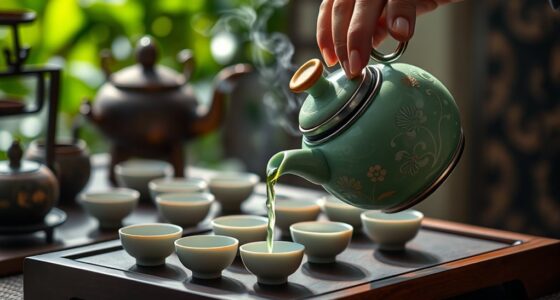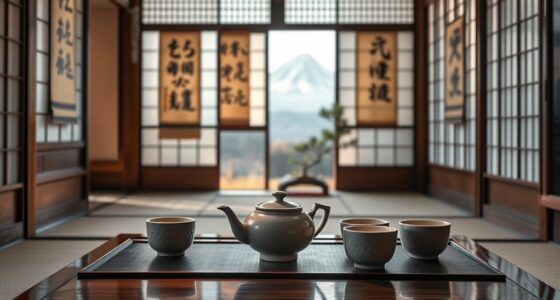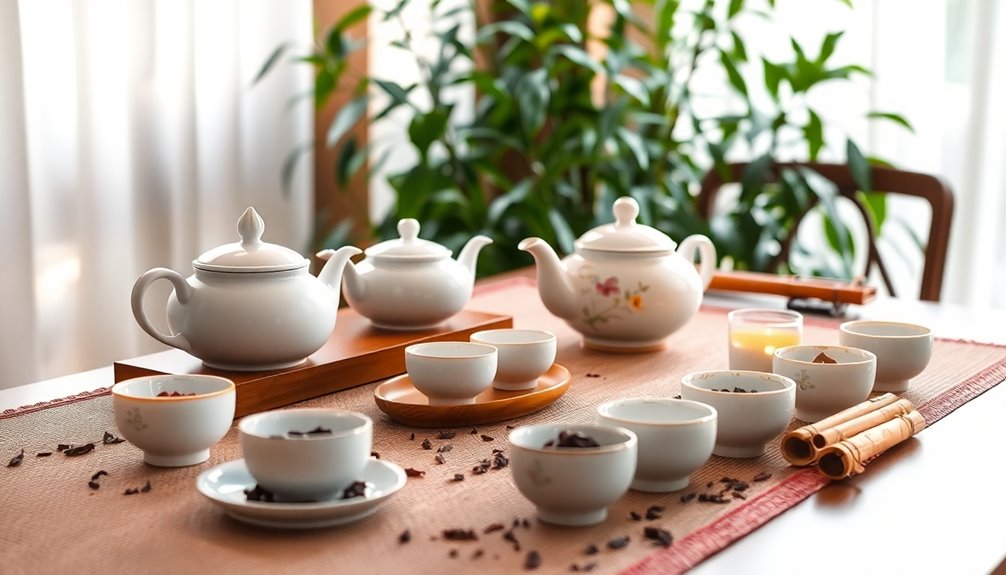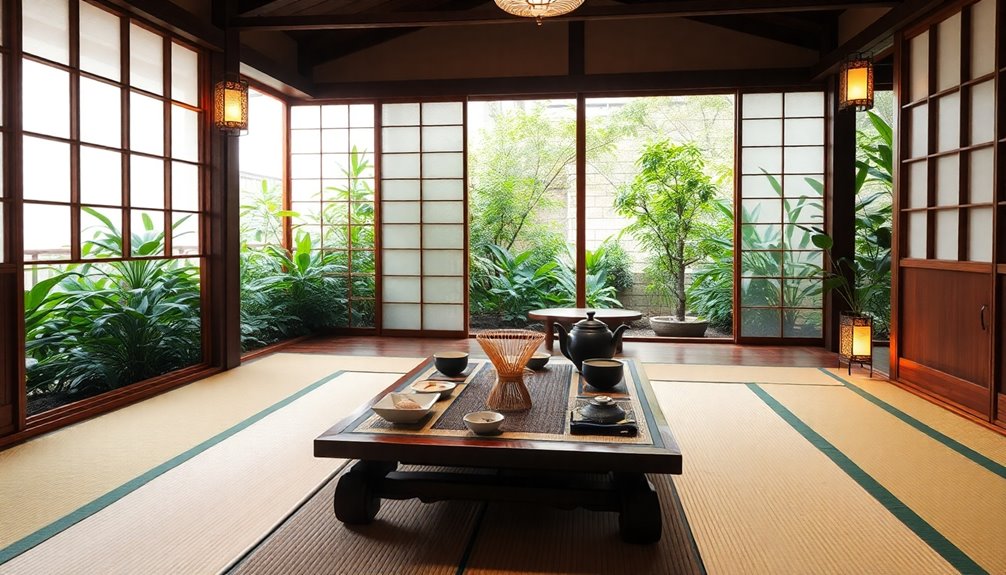

Many tea lovers miss the deeper mindfulness and cultural significance behind traditional tea ceremonies. It’s easy to focus on the tea itself, but the true beauty lies in the careful, deliberate actions—like how you hold your cup or pour the tea—that create a calming, respectful atmosphere. Paying attention to these subtle gestures transforms a simple moment into an artful, meaningful experience. Keep exploring, and you’ll discover the full depth of this ancient practice.

Get coffee and tea gear delivered free with Prime
- Fast, free delivery on millions of items
- Prime Video, Amazon Music and more included
- Member-only deals all year
Key Takeaways
- The mindful rituals that turn tea preparation into a calming, meditative experience.
- The cultural and artistic significance of each utensil and its craftsmanship.
- The importance of deliberate, attentive actions that foster presence and appreciation.
- Overlooked opportunities for deep connection with tradition, oneself, and others.
- The deeper spiritual and reflective meaning behind every step of the ceremony.
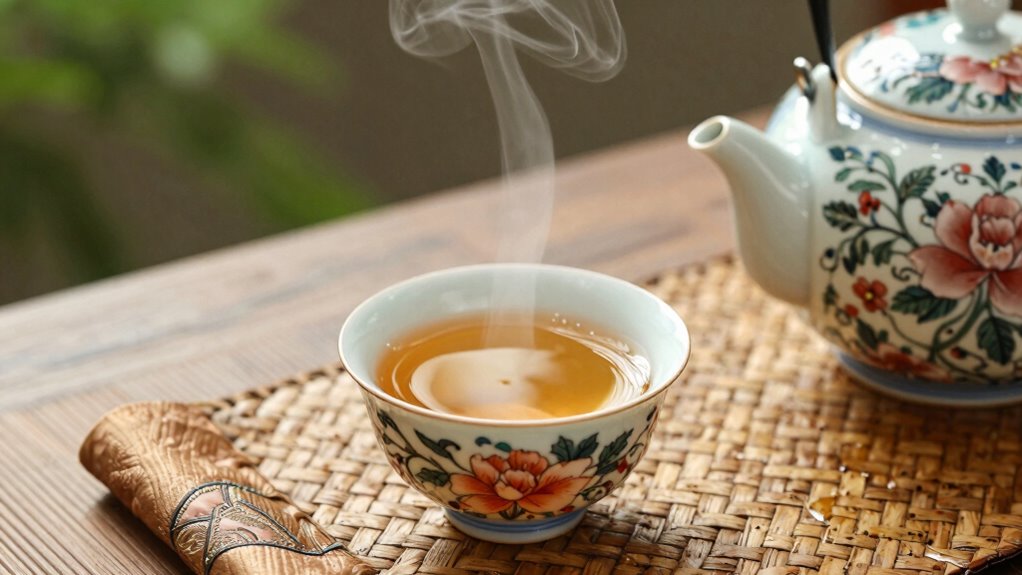
Tea ceremonies are more than just preparing a hot drink—they’re a mindful ritual that invites you to slow down and savor the moment. When you participate in a traditional tea ceremony, you’re engaging in a practice that emphasizes respect, harmony, and tranquility. One of the aspects many tea lovers overlook is the importance of tea etiquette, which guides every step of the process. From the way you hold the teacup to how you pour the tea, each action reflects mindfulness and reverence. Paying attention to these subtle gestures transforms a simple act into a meaningful experience. It’s not just about drinking tea; it’s about honoring the tradition and the company you’re sharing it with.
Mindful tea etiquette transforms a simple act into a meaningful, respectful tradition worth savoring.
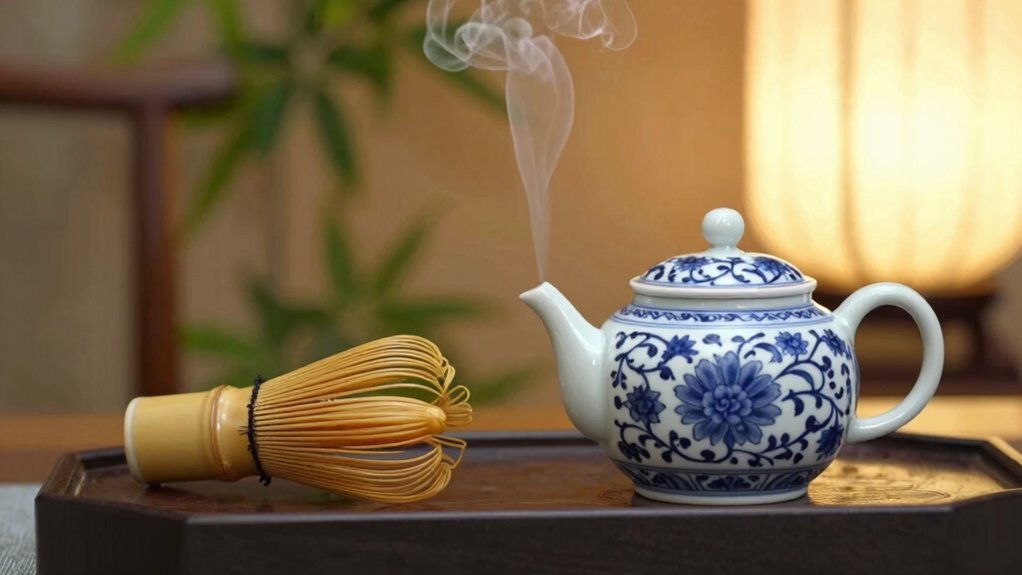
Another element often missed is the ceremonial utensils used during these rituals. These aren’t just functional tools—they carry cultural significance and embody centuries of craftsmanship. The whisk, the delicate teacup, the water pitcher, and the tray all serve a purpose beyond their utility. Handling these utensils with care and respect enhances your connection to the ceremony, turning it into an art form. You learn to appreciate the texture, weight, and design of each piece, understanding their role in creating harmony and balance. Using ceremonial utensils properly is a way to deepen your appreciation of the tradition and to slow down your pace, focusing on each moment.
Many tea enthusiasts rush through their tea-drinking routine, unaware of the deeper significance embedded in the ceremony. The act of warming the teapot, carefully measuring the leaves, and pouring with precision are all steps that foster mindfulness. These small, deliberate actions help you become more present and grounded in the experience. It’s about more than just tasting the tea; it’s about embracing the ritual itself. In doing so, you create space for calm and reflection, which many overlook in a busy world. Developing an awareness of tradition enhances your overall appreciation and connection to the practice. Recognizing the cultural significance behind each step can deepen your respect for this ancient art.
What most tea lovers miss about tea ceremonies is that they’re a chance to reconnect—not only with the centuries-old traditions but also with yourself. It’s a practice that encourages patience, appreciation, and respect for the moment. By paying attention to tea etiquette and handling ceremonial utensils with care, you unlock a richer, more meaningful way of enjoying tea. An often overlooked aspect is the mindfulness cultivated during each step, which helps foster a deeper sense of inner calm. It’s an experience that stays with you, long after the last sip, reminding you to slow down and truly savor life’s simple pleasures.
traditional tea ceremony utensils
As an affiliate, we earn on qualifying purchases.
As an affiliate, we earn on qualifying purchases.
Frequently Asked Questions
How Do Different Cultures Interpret Tea Ceremony Etiquette?
You’ll notice that different cultures interpret tea ceremony etiquette through unique lenses of ceremony symbolism and cultural influences. In Japan, precision and respect highlight harmony, while Chinese traditions emphasize humility and balance. In Morocco, hospitality and community shine through shared tea. Each culture’s approach reflects its values and history, shaping how you participate in these meaningful rituals and appreciate the deeper significance behind every gesture.
Are There Specific Teas Best Suited for Traditional Ceremonies?
Think of the perfect tea as a key to tradition. For ceremonies, you should choose delicate green or white tea leaf varieties that symbolize purity and harmony. These teas complement ceremony utensils like bamboo whisks or porcelain cups, enhancing the ritual’s mindfulness. Such selections help you connect deeply with the cultural essence, turning each sip into a meaningful act of respect and appreciation for tradition.
What Are Common Mistakes Beginners Make During Tea Ceremonies?
You often make mistakes in tea preparation and overlook etiquette nuances. Don’t rush the process; take your time with each step, like warming the teapot and pouring water carefully. Pay attention to posture and gestures, respecting traditional customs. Avoid oversteeping or using too much tea leaves, which can spoil the flavor. Practicing mindful preparation and observing etiquette nuances help you fully appreciate the ceremony’s calming essence.
How Does the Environment Influence the Tea Ceremony Experience?
The environment influences your tea ceremony like a gentle breeze shaping a delicate leaf. An ambient ambiance heightens your sensory perception, making each sip more meaningful. Soft lighting, tranquil sounds, and natural surroundings create a calming space that allows you to fully immerse in the ritual. When your environment aligns with the ceremony, it deepens your connection to the moment, enriching your appreciation and transforming an ordinary act into a soulful experience.
Can Tea Ceremonies Be Adapted for Modern or Casual Settings?
Yes, tea ceremonies can be adapted for modern or casual settings by incorporating casual adaptations and modern rituals. You can simplify traditional steps, use everyday tableware, or set up a cozy space at home or in a café. This way, you maintain the essence of mindfulness and appreciation while making it accessible and enjoyable for contemporary lifestyles. Embracing these adaptations allows you to experience the calming beauty of tea ceremonies anytime.
Conclusion
So, next time you indulge in a tea ceremony, remember it’s more than just brewing; it’s a voyage through centuries of tradition and mindfulness. Don’t let the intricate rituals slip by unnoticed—they’re the heartbeat of the experience. When you truly embrace these moments, you’re not just sipping tea—you’re opening a secret world of serenity and connection. Missing out on that is like skipping the entire universe’s most enchanting story—don’t let it happen to you.
Evergreen bestsellers Picks
bestsellers
As an affiliate, we earn on qualifying purchases.