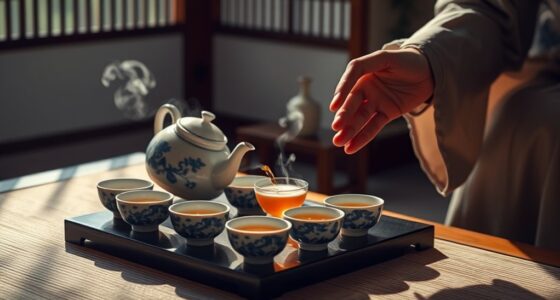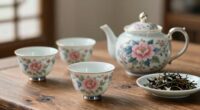
The story behind tea serving etiquette stems from ancient China, where tea was first used as medicine and later became a symbol of hospitality and refinement. As it spread across Asia, customs evolved—emphasizing respect, mindfulness, and social bonding. Practices like pouring for others and handling the cup gently reflect values of humility and connection. To understand how these traditions continue to shape modern tea culture, keep exploring the fascinating history behind these rituals.
Open a free Amazon Business account
Business pricing, bulk buying and tax-exempt orders.
As an affiliate, we earn on qualifying purchases.
Key Takeaways
- Tea etiquette originated in Chinese medicinal and imperial rituals, emphasizing respect, mindfulness, and social harmony.
- Victorian afternoon tea popularized formal customs like holding the cup by the handle and gentle sipping.
- Serving tea for others symbolizes humility, hospitality, and respect across diverse cultures.
- Traditional practices have evolved to balance reverence with practicality in modern settings.
- Understanding tea’s cultural history deepens appreciation and authentic engagement with its etiquette.

Tea serving etiquette isn’t just about following rules; it’s rooted in centuries of tradition that reflect respect and social harmony. The origins of tea culture stretch back thousands of years, primarily in China, where it was initially a medicinal drink before becoming a symbol of hospitality and refinement. Over time, tea spread across Asia, influencing countries like Japan, Korea, and India, each developing distinct customs. For example, the Japanese tea ceremony emphasizes mindfulness, precision, and spiritual connection, while Indian chai embodies warmth and communal sharing. These diverse cultural origins shape how tea is served and enjoyed, highlighting the importance of respect, etiquette, and tradition in every sip.
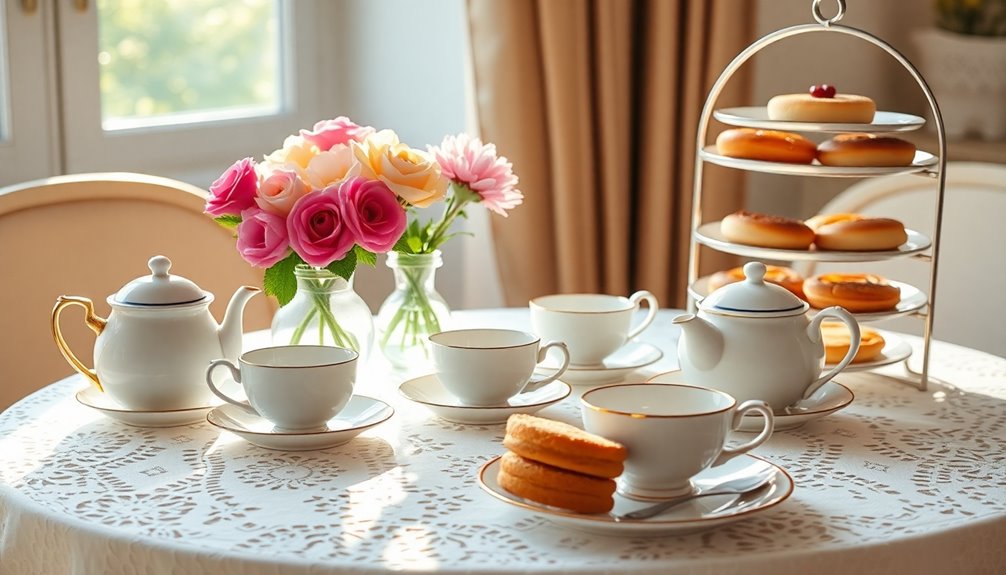
As centuries passed, tea etiquette evolved alongside societal changes. What once was a formal, almost sacred ritual in imperial courts gradually adapted to more casual settings, especially in Western societies. The Victorian era, for instance, popularized afternoon tea as a social event, establishing refined manners like holding the teacup by the handle and sipping quietly. Today, modern etiquette continues to develop, balancing tradition with practicality. You’re encouraged to handle the teacup gently, avoid slurping, and keep your pinky finger down—though some of these rules are more about politeness than strict obligation. The evolution of tea etiquette reflects a broader trend: a move toward making the experience comfortable yet respectful, regardless of the setting.
Understanding these origins and the evolution of modern etiquette helps you appreciate the deeper significance behind each gesture. When you serve or receive tea, you’re participating in a centuries-old exchange rooted in respect and social bonding. The way you handle the teapot, the manner in which you pour, and your body language all carry meaning. For example, pouring for others first demonstrates hospitality and humility—a value that persists across cultures. Recognizing the cultural origins behind these practices allows you to connect more authentically with the tradition, even in casual environments. Additionally, awareness of the historical development of tea customs enriches your appreciation for these manners, making the experience more meaningful.
Ultimately, tea serving etiquette is a living history. It’s a reflection of cultural identity, social manners, and shared values that continue to evolve. By understanding its roots and appreciating its development, you can enjoy tea not just as a beverage but as an experience that fosters respect, connection, and harmony. Whether you’re in a formal setting or sharing a casual cup, these customs remind you of the importance of mindfulness and respect in every sip.
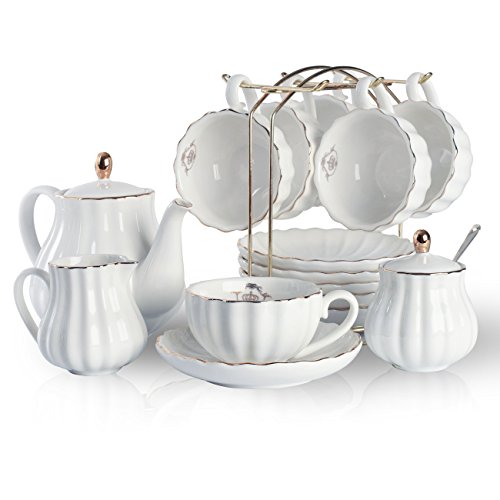
Porcelain Tea Sets British Royal Series, 8 OZ Cups& Saucer Service for 6, with Teapot Sugar Bowl Cream Pitcher Teaspoons and tea strainer for Tea/Coffee, Pukka Home (Pure White)
- Complete Tea Set Package: Includes cups, saucers, teaspoons, teapot, sugar bowl, cream pitcher, and tea strainer
- Elegant British Royal Design: Features exquisite glaze, pumpkin shape, and gold trim
- Stylish Home Decor: Adds sophistication and charm to your dining table
As an affiliate, we earn on qualifying purchases.
As an affiliate, we earn on qualifying purchases.
Frequently Asked Questions
When Did Tea Serving Etiquette First Originate?
You’ll find that tea serving etiquette originated in China around the Tang Dynasty (618-907 AD), influenced heavily by cultural practices and social hierarchy. Over centuries, these customs spread to Japan and Europe, evolving with each region’s cultural influences. During the 17th and 18th centuries, formal tea ceremonies became symbols of sophistication and politeness, shaping modern etiquette. The historical origins reflect a blend of tradition, social status, and intercultural exchange.
Are There Regional Differences in Tea Serving Customs?
Like a tapestry woven with diverse threads, regional variations shape tea serving customs worldwide. You’ll notice differences influenced by cultural influences, from the delicate sips of Japanese tea ceremonies to the hearty, social style of British afternoon teas. These customs reflect local traditions, climate, and history. So, when you partake in tea, you’re experiencing a unique, culturally rich ritual that varies beautifully across regions.
What Are Common Mistakes to Avoid During Tea Service?
When serving tea, avoid common mistakes like improper tea cup placement—never hold the cup by the handle when serving—and neglecting napkin placement, which should be folded neatly on your lap or beside the saucer. Be mindful of your gestures, keeping your movements gentle and deliberate. Don’t rush the process, and always guarantee your guests’ comfort, maintaining proper etiquette with your tea cup and napkin placement to make the experience enjoyable.
How Has Tea Etiquette Evolved Over the Centuries?
You’ll find that tea etiquette has evolved considerably, with over 50% of traditional customs adapting to modern times. Cultural influences, like British formality and Asian hospitality, shaped early practices, but today, modern adaptations emphasize personal comfort and social connection. You might notice more casual styles, like finger foods and relaxed pouring, reflecting a shift towards inclusivity. This evolution makes tea serving more accessible and enjoyable for everyone.
Is There a Proper Way to Handle Leftover Tea?
When handling leftover tea, you should gently pour any spillages into a sink or napkin to avoid messes. Use proper cup handling by holding the handle firmly and avoiding sloshing. If you’re not drinking the remaining tea, consider pouring it out to prevent spills or stains. Always be mindful of tea spillages, and handle your cup with care to maintain good etiquette and avoid accidents.
Conclusion
Now that you understand the history, the customs, and the reasons behind tea serving etiquette, you can appreciate each sip more deeply. You’re not just pouring a drink; you’re honoring centuries of tradition. You’re not simply drinking tea; you’re embracing a cultural story. So, carry these lessons with you—respect the ritual, enjoy the moment, and share the experience. Because, in tea, every gesture, every sip, and every tradition matters.
Back to school Picks
back to school
As an affiliate, we earn on qualifying purchases.