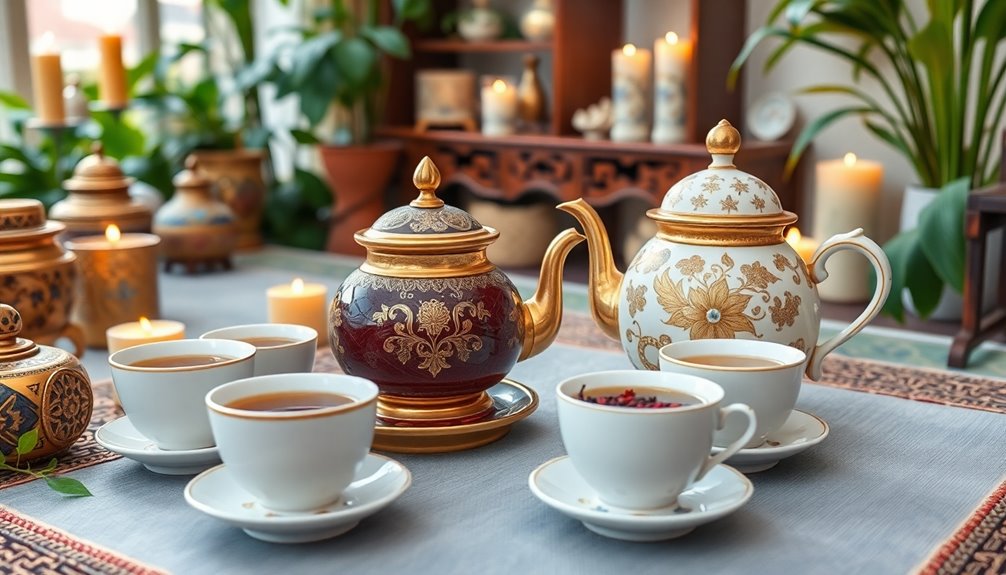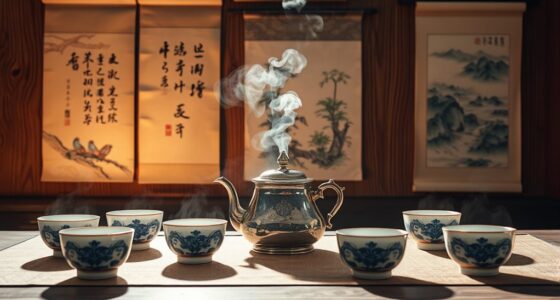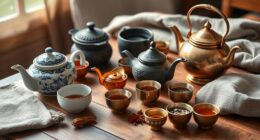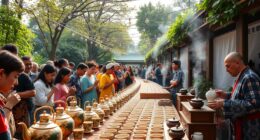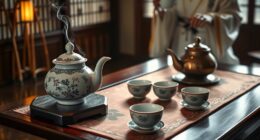
Around the world, tea rituals vary greatly, reflecting unique cultures and traditions. In Japan, the precise matcha ceremony emphasizes harmony and respect through specific movements. Chinese tea practices focus on multiple infusions and artful brewing techniques. Meanwhile, Indian chai is a lively affair, boiling spices, tea, and milk together. Middle Eastern rituals often involve pouring mint tea from heights as a symbol of hospitality. Explore further to discover how these customs connect deeply to community and history.
Key Takeaways
- Different regions have unique tea preparation techniques, such as Chinese multiple infusions, Indian chai boiling, and Middle Eastern steeping.
- Japanese tea ceremonies emphasize precise movements, etiquette, and symbolism, reflecting cultural principles like harmony and respect.
- British afternoon tea features delicate sandwiches, scones, and a refined social setting, contrasting with lively African communal tea practices.
- Regional tools and rituals, like teapots, bowls, or pouring from heights, highlight cultural identity and mastery in each area.
- Tea rituals serve as social bonds, embodying local values, history, and traditions across diverse societies worldwide.
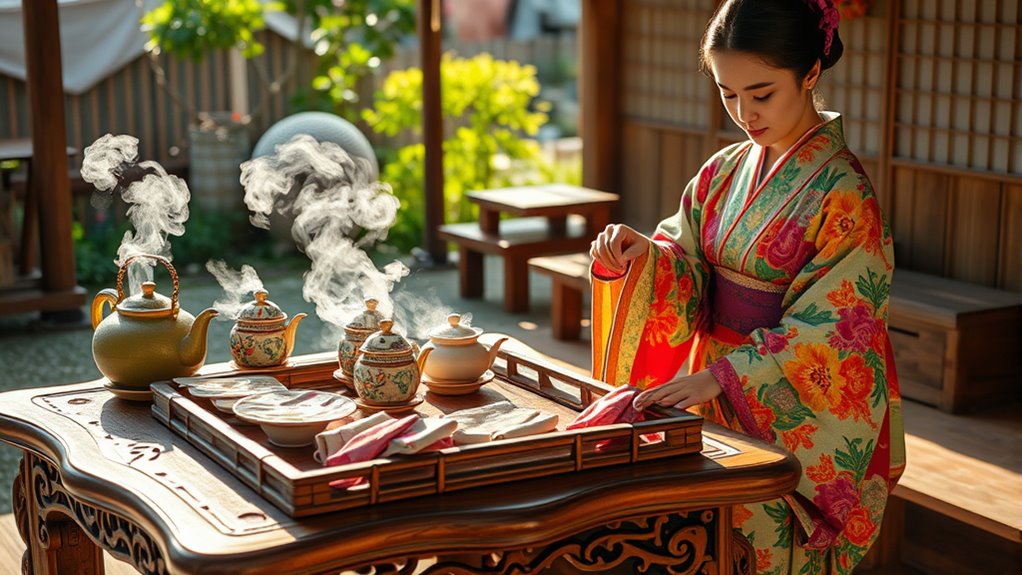
Tea rituals vary widely around the world, reflecting each region’s unique culture and traditions. When you participate in a tea ceremony, understanding the specific tea ceremony etiquette is essential to show respect and appreciation for the local customs. For example, in Japan, you might find yourself following precise movements during a matcha ceremony, such as bowing at specific moments and handling the tea bowl with care. These rituals aren’t just about drinking tea; they embody harmony, respect, purity, and tranquility. In contrast, Chinese tea practices often emphasize the art of regional tea preparation, where the process involves multiple steps like warming the teapot, carefully measuring tea leaves, and brewing multiple infusions that reveal different flavors. This meticulous attention to detail highlights the importance of tradition and mastery in Chinese tea culture.
Tea rituals around the world reflect culture, emphasizing respect, tradition, and artistry in every sip.
As you explore different regions, you’ll notice that each has its own approach to tea making. In India, for instance, chai preparation involves boiling strong black tea with a blend of spices like cardamom, cinnamon, and ginger, then adding milk and sugar. The regional tea preparation here emphasizes warmth, hospitality, and community, often enjoyed in bustling markets or family gatherings. Moving to the Middle East, you might encounter the ritual of preparing and serving Turkish or Moroccan mint tea, where the process involves boiling water, steeping fresh herbs, and pouring the tea from a height into small glasses to aerate it. These regional methods aren’t just about flavor—they’re integral to social bonding and hospitality.
In many parts of Africa, tea drinking takes on a lively, communal aspect, with the preparation often involving large samovars or kettles, and serving it in a manner that encourages conversation and connection. Whether it’s the British afternoon tea, with its delicate sandwiches and scones, or the robust, communal tea ceremonies in Southeast Asia, each tradition reflects the values and social fabric of its culture. You’ll find that mastering regional tea preparation techniques often means more than just making a good cup—it’s about embracing the history, symbolism, and social customs behind it.
Ultimately, these regional variations of tea rituals offer a window into the soul of each society. By paying attention to the specific etiquette and preparation methods, you deepen your appreciation for the cultural significance of tea. It’s not just a beverage but a tradition that unites people, preserves history, and celebrates the artistry of each region’s unique approach. When you partake in these rituals, you become part of a timeless dialogue that connects generations across the globe.

Artcome Japanese Matcha Tea Set, Bowl with Pouring Spout, Whisk, Tea Scoop, Ceramic Whisk Holder, Matcha Powder Caddy, Handmade Matcha Ceremony Kit For Japanese Tea Ceremony (9Pcs)
COMPELETE SET: Matcha whisk, tea scoop, matcha bowl with pouring spout, matcha powder caddy, ceramic whisk holder, tea…
As an affiliate, we earn on qualifying purchases.
As an affiliate, we earn on qualifying purchases.
Frequently Asked Questions
How Do Climate Differences Influence Regional Tea Preparations?
Climate differences greatly influence your tea preparations by shaping climate-driven flavor profiles and regional brewing techniques. Warm, humid areas often produce teas with richer, more robust flavors, leading you to use longer steeping times or specific methods to enhance taste. Conversely, cooler regions favor delicate, subtle brews, prompting you to adopt lighter techniques. These climate-driven variations impact how you select, prepare, and enjoy tea, making each regional style unique.
Are There Specific Utensils Unique to Certain Tea Traditions?
Think of tea traditions as a treasure chest filled with unique utensils and ceremonial vessels. You’ll notice that certain cultures use specific tools, like the ornate Yixing teapots in China or the delicate Gaiwan for Chinese brewing. These utensils aren’t just functional; they embody the spirit of the ritual. Using these ceremonial vessels enhances the experience, making each sip feel like a dance of history and artistry in every cup you enjoy.
What Role Does Tea Play in Regional Social Hierarchies?
You see, tea often reflects social stratification, acting as a symbol of status and hierarchy. In many regions, serving or drinking tea during rituals holds significant social and cultural weight, reinforcing social roles. You might notice that the ritual significance of tea elevates its importance beyond mere refreshment, serving as a way to display respect, power, or social standing within a community or social event.
How Have Modern Influences Altered Traditional Regional Tea Rituals?
Think of traditional tea rituals as ancient melodies; modern globalization and technological innovations remix these tunes. You see, they introduce new instruments—instant brews, social media, and global influences—that reshape how you experience tea. While some purists cling to tradition, you’re increasingly blending old with new, making rituals more accessible yet less rooted in regional customs. This evolution creates a vibrant, dynamic tea culture that reflects the interconnected world you live in.
Are There Regional Variations in Tea Ceremony Music or Attire?
Yes, regional variations in tea ceremony music and attire are quite noticeable. You might wear traditional regional attire that reflects local culture, which adds authenticity to the experience. Ceremony music, too, varies; some regions use classical instruments, while others incorporate local sounds. These differences enhance the atmosphere, making each tea ritual unique and deeply rooted in its cultural heritage, allowing you to fully immerse yourself in the tradition.

Chinese Gongfu Wooden Tea Ceremony Utensil Tools Set, 6PCS Kungfu Tea Set Asian Gongfu Teaware Kit for Traditional Brewing
FINE WORKSHIP: The 6-piece Chinese tea ceremony set has an elegant and generous appearance. The wooden tea ceremony…
As an affiliate, we earn on qualifying purchases.
As an affiliate, we earn on qualifying purchases.
Conclusion
No matter where you go, tea rituals weave a rich tapestry of culture and tradition, each one unique like a fingerprint. By exploring these regional practices, you’ll see that tea is more than just a beverage—it’s a living story passed through generations. Embrace these differences, for they’re the vibrant threads that make the global quilt of tea rituals so beautifully diverse. In every sip, you taste a world of history, waiting for you to discover.

Rani Tea (Chai) Masala Indian Spice Blend 3oz (85g) PET Jar ~ All Natural | Vegan | Gluten Friendly | Salt & Sugar Free | NON-GMO | No Colors | Indian Origin
You'll LOVE our Tea (Chai) Masala by Rani Brand–Here's Why:
As an affiliate, we earn on qualifying purchases.
As an affiliate, we earn on qualifying purchases.

Hand Painted Moroccan Glasses Set of 6 Glasses Colorful Gold Door Design Teacup Set For Mint Tea
Perfect Size: Each glass measures 3.5 inches in height and 2 inches in width, with a capacity to…
As an affiliate, we earn on qualifying purchases.
As an affiliate, we earn on qualifying purchases.