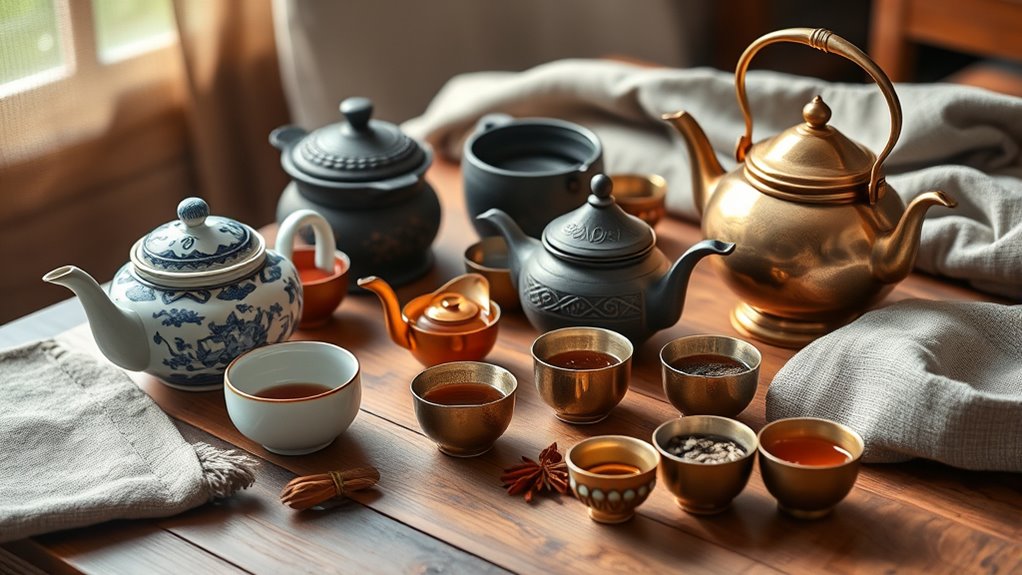
Exploring tea across cultures, you’ll find that Japanese tea ceremonies focus on mindfulness, respect, and harmony, involving precise tools and spiritual rituals. Chinese brewing varies by tea type, emphasizing skill and tradition through techniques like Gong Fu, with multiple infusions and attentive pouring. Indian chai highlights hospitality and community, boiling black tea with spices, milk, and sugar for shared social moments. Each tradition reflects deep cultural values—continue learning to discover how these rituals shape identities worldwide.
Listen free for 30 days with Audible
Thousands of audiobooks and originals — cancel anytime.
As an affiliate, we earn on qualifying purchases.
Key Takeaways
- Highlight the ceremonial steps and tools used in Japanese tea ceremonies, emphasizing mindfulness and spiritual connection.
- Describe traditional Chinese brewing techniques like Gong Fu, focusing on precise steps to enhance flavor and aroma.
- Outline the process of preparing Indian chai, including spice addition, boiling method, and serving in social contexts.
- Compare the cultural values reflected in each tradition, such as respect, skill, hospitality, and community bonding.
- Emphasize how each culture’s tea practices serve as rituals that preserve history and foster social connections.

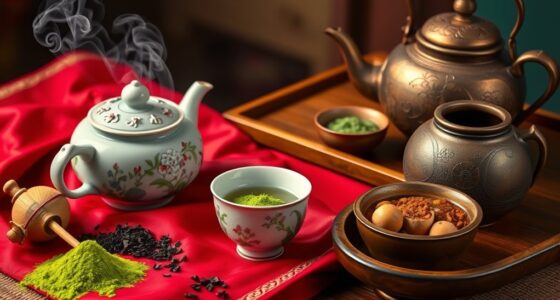
Tea is more than just a beverage; it’s a reflection of culture, history, and social customs around the world. When you explore different cultures, you’ll notice that tea isn’t just sipped—it’s experienced through unique traditions like the tea ceremony and distinctive brewing methods. These rituals reveal much about the values and social bonds of a community. For example, in Japan, the tea ceremony, called “chanoyu,” is a highly choreographed practice emphasizing harmony, respect, purity, and tranquility. You’re encouraged to approach it with mindfulness, paying attention to every detail, from whisking the matcha to pouring the tea. The preparation involves specific steps—using a bamboo whisk, carefully measuring powdered green tea, and serving in beautifully crafted bowls—that transform a simple act into a spiritual ritual. This meticulous process isn’t just about making tea; it’s about creating a moment of connection and reverence.
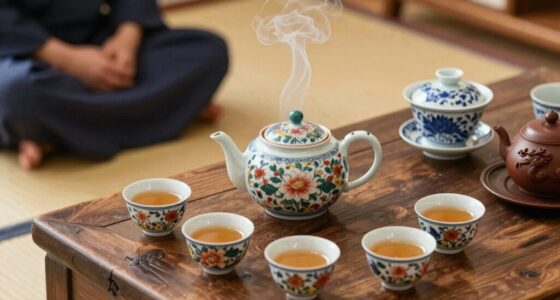
In contrast, Chinese tea culture emphasizes the art of brewing methods, which vary depending on the type of tea. If you’re brewing a delicate green tea, you’ll want to use water just below boiling and steep it for a short time, ensuring the leaves retain their freshness and flavor. For black teas like Keemun, a hotter water temperature and longer steeping bring out deeper, richer notes. The traditional Gong Fu tea ceremony elevates brewing into a precise craft—small teapots, multiple infusions, and attentive pouring techniques highlight the skill involved. As you learn these methods, you start to understand how the process influences taste and aroma, turning a simple cup into an experience rooted in centuries of tradition.
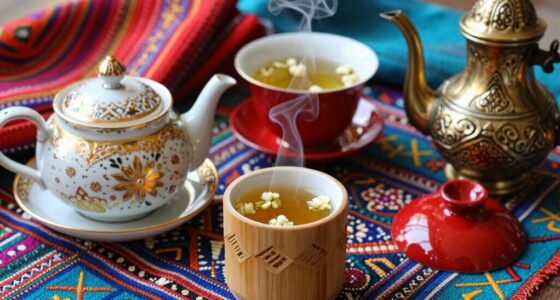
In India, chai is more than a drink; it’s a social event. Here, brewing involves boiling strong black tea with spices, milk, and sugar—creating a rich, comforting beverage. The preparation varies from region to region but always emphasizes warmth, hospitality, and community. You’ll often see chai being made in large pots on the street, where vendors serve it to passersby as a gesture of friendliness. This communal aspect underscores how tea becomes a way to connect, share stories, and foster relationships. Whether it’s the precise, meditative rituals of Japan, the delicate brewing techniques of China, or the lively, social preparation of India, each culture showcases its values through its approach to tea. Through these traditions, you gain insight into the history and social fabric of each society, making every cup a meaningful experience.

ZENSO Premium Matcha Whisk Set – 10 Piece Japanese Matcha Tea Ceremony Kit | Matcha Bowl, Tea Canister, Purple Bamboo Whisk, Whisk Holder, Sifter, Scoop & Scoop Holder, Cup, Cloth, Spoon – Dark Gray
- Complete 10-Piece Matcha Set: Includes all essentials for tea ceremony
- Handmade Ceramic Pieces: Unique, handcrafted with wabi-sabi charm
- Natural Purple Bamboo Whisk: Resin-free, pure bamboo for optimal froth
As an affiliate, we earn on qualifying purchases.
As an affiliate, we earn on qualifying purchases.
Frequently Asked Questions
How Did Tea Originate in Different Cultures?
You’ll find that tea originated in China, where ancient tea plantations helped cultivate wild tea leaves. As it spread, different cultures developed unique brewing techniques—like Japanese tea ceremonies or British afternoon tea. You can explore how each culture’s methods reflect their history and traditions, making tea more than just a beverage. By understanding these origins, you’ll appreciate the diverse ways people enjoy tea across the world.
What Are the Health Benefits of Tea Worldwide?
Tea treats your body with tantalizing health benefits, from boosting brain function to calming nerves. You’ll find powerful tea antioxidants fighting free radicals, promoting longevity. herbal infusions soothe stresses and support digestion. Drinking tea daily can improve immunity, increase alertness, and enhance overall well-being. So, sip smartly and enjoy the healthful, harmonious harmony that tea offers worldwide, making it a wonderful, wellness-wielding wonder in your routine.
How Do Tea Ceremonies Vary Across Countries?
You’ll notice that tea ceremonies vary widely across countries, each emphasizing unique tea etiquette and ceremonial rituals. In Japan, you participate in a precise, meditative matcha ritual that highlights harmony and respect. In China, traditional Gongfu tea brewing focuses on skillful preparation and presentation. Meanwhile, in Britain, afternoon tea involves a relaxed social setting with specific pouring manners. These differences reflect cultural values and deepen your appreciation for tea’s global significance.
What Types of Tea Are Most Popular Globally?
Imagine the aroma of freshly brewed green tea or the rich scent of black tea filling your space; these are some of the most popular teas globally. You enjoy tea brewing and tasting, experiencing the subtle flavors and textures. Green, black, and oolong teas dominate worldwide, appealing to diverse palates. Their versatility and rich history make them favorites, inviting you to explore and savor each unique cup.
How Has Tea Influenced Cultural Diplomacy Historically?
You see, tea has historically shaped diplomatic relations through the tea trade, fostering cross-cultural exchanges. When nations exchanged tea, they built trust and strengthened alliances, making tea a symbol of diplomacy. You might recall the Boston Tea Party or China’s tribute system, where tea’s trade and consumption served as diplomatic tools. This tradition continues today, highlighting tea’s role in fostering international understanding and cooperation.
Conclusion
As you explore the diverse world of tea, you discover there’s always more to savor beyond the cup. Each culture gently whispers its traditions and stories, inviting you to appreciate their subtle nuances. So, embrace these gentle traditions with an open heart, letting each sip be a quiet journey of discovery. Remember, the beauty of tea lies in its delicate ability to bring people together—so enjoy every moment and let your curiosity gently flourish.
College move-in / dorm season Picks
dorm essentials
As an affiliate, we earn on qualifying purchases.