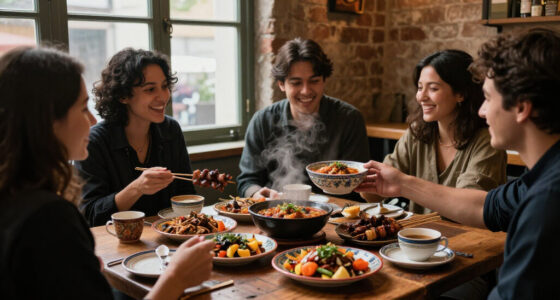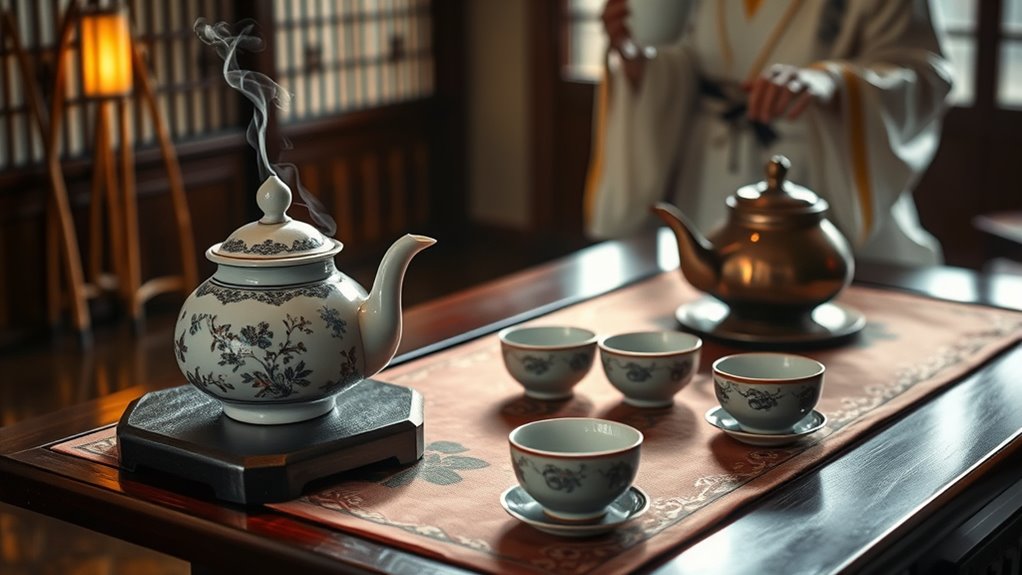
To explore tea culture, start by selecting the right tea and preparing it with mindful attention to water temperature and steeping time. Pay attention to the utensils and setting, ensuring they reflect respect and tradition. Engage fully in each step, from handling the teapot to served cups, embracing the ceremony’s calming rhythm. Learning these rituals helps you appreciate the significance behind each movement, opening the door to a rich tradition that’s worth exploring further.

Get coffee and tea gear delivered free with Prime
- Fast, free delivery on millions of items
- Prime Video, Amazon Music and more included
- Member-only deals all year
Key Takeaways
- Understand the cultural significance and variations of tea ceremonies across different regions.
- Prepare the appropriate utensils and setting that reflect traditional aesthetics and symbolism.
- Follow specific brewing techniques tailored to each tea type to enhance flavor and mindfulness.
- Practice deliberate, respectful movements during serving and pouring to honor the ritual.
- Emphasize creating a tranquil, harmonious atmosphere to foster connection and cultural appreciation.
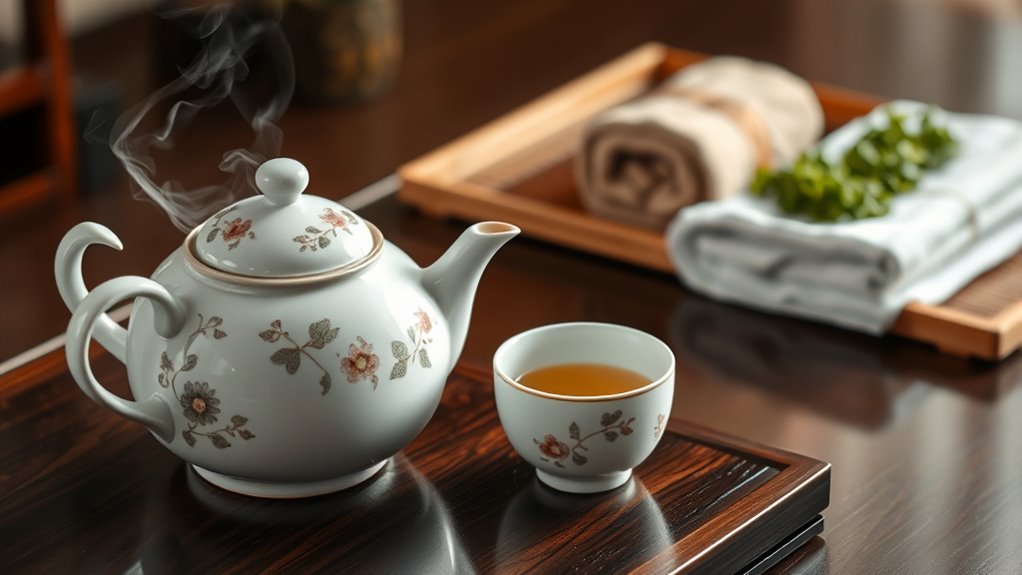
Have you ever wondered why tea holds such a special place in cultures around the world? It’s more than just a beverage; it’s a ritual that embodies tradition, respect, and social connection. When you participate in a tea ceremony, you’re engaging in an ancient practice that varies from culture to culture but always emphasizes mindfulness and harmony. The first step to understanding this rich tradition is grasping the significance behind the ceremony itself. In many East Asian cultures, like Japan and China, the tea ceremony is a carefully choreographed event where every movement, from the way you handle the teapot to how you serve the tea, reflects respect for the process and the guests. It’s not just about drinking tea—it’s about creating an experience, a moment of tranquility amidst daily life.
Learning about brewing techniques is essential if you want to appreciate the intricacies of these ceremonies. Each type of tea—whether green, black, oolong, or herbal—requires specific techniques to bring out its best flavor. For example, green tea often needs a lower temperature and shorter steeping time, while black tea can withstand hotter water and longer brewing. As you prepare tea, pay attention to details like water quality, temperature, and steeping time, because they all influence the final taste. Mastering these techniques allows you to enjoy tea at its peak, much like a professional or a traditional host would. It’s a delicate balance of patience and precision, and once you get the hang of it, you’ll find that each cup becomes a moment of mindfulness and appreciation.
Understanding the importance of tradition and respect in tea ceremonies can deepen your appreciation for the cultural significance behind each step. Participating in a tea ceremony also involves the right utensils and setting. You’ll often use specific teapots, cups, and utensils made from materials like clay or porcelain, which contribute to the overall aesthetic and experience. The way you arrange these items and the manner in which you pour the tea can symbolize respect and mindfulness. As you become more familiar with the process, you’ll notice how the ceremony fosters a sense of community and reverence for tradition, whether you’re in a formal setting or simply sharing tea with friends.
As an affiliate, we earn on qualifying purchases.
Frequently Asked Questions
How Did Tea Originate Historically Across Different Cultures?
You discover that tea originated in China over 2,000 years ago, where it was valued for medicinal purposes. As trade routes expanded, tea’s popularity spread to Japan, India, and Europe, fueling a global tea trade. This trade fostered cultural exchange, influencing how different societies embraced tea rituals and traditions. Today, you can enjoy a rich history that connects diverse cultures through shared appreciation for this timeless beverage.
Are There Specific Etiquette Rules for Tea Ceremonies Worldwide?
Yes, there are specific tea etiquette and ceremonial rules worldwide. You should follow local customs, like bowing in Japan, holding the teacup with both hands in China, or sipping gently in Britain. Respect the traditions by observing proper gestures, avoiding rushing, and appreciating the ceremony’s significance. Learning the ceremonial rules shows respect and enhances your tea experience, making it more meaningful and culturally enriching.
What Are the Health Benefits Associated With Traditional Tea Drinking?
Imagine a medieval alchemist discovering health benefits; tea drinking offers numerous perks. You get powerful tea antioxidants that boost your immune system and fight free radicals. Herbal infusions can improve digestion, reduce stress, and promote better sleep. Drinking traditional tea may also lower your risk of heart disease and support overall wellness. So, sip mindfully, knowing your favorite brew is not just soothing but also a natural health booster.
How Do Regional Tea Types Influence Local Customs and Celebrations?
Regional tea types shape your local customs and cultural celebrations by reflecting unique flavors and traditions. Tea regionalism influences how communities gather, whether for festive ceremonies or daily rituals. When you partake in traditional teas like matcha in Japan or chai in India, you connect deeply with local history and social practices. These regional variations enrich celebrations, making each event distinct and meaningful, and help preserve the authentic essence of local culture.
Can Tea Preparation Techniques Vary Significantly Between Cultures?
Imagine you’re participating in a Japanese tea ceremony, where precise ritualistic steps and specific brewing methods emphasize mindfulness and respect. Tea preparation techniques can vary dramatically between cultures, reflecting their unique traditions and values. For example, Chinese gongfu tea emphasizes multiple short infusions, while British afternoon tea focuses on steeping and pouring. These differences shape the ceremony rituals, making each culture’s approach to tea both distinct and meaningful.
Conclusion
As you sip your way through tea traditions, remember you’re unveiling a world as rich and layered as the brew itself. Each cup holds stories steeped in history, culture, and ceremony—like a delicate dance of flavors and customs. Embrace the journey, letting the warmth and aroma guide you deeper into this timeless art. With every sip, you weave yourself into the tapestry of tea’s enchanting legacy, savoring more than just the drink, but a world of connection and tradition.
Fall Picks
fall essentials
As an affiliate, we earn on qualifying purchases.