Your experience with tea is shaped by how it’s harvested and produced. Hand-picking tender leaves and timing the harvest influence the flavor and aroma you enjoy. Traditional fermentation methods create diverse profiles, from floral to malty, enriching cultural rituals and daily routines. These techniques also reflect regional identities and sustainable practices, ensuring quality and heritage. If you want to uncover how these traditions continue to influence modern tea culture, there’s more to discover below.

Get coffee and tea gear delivered free with Prime
- Fast, free delivery on millions of items
- Prime Video, Amazon Music and more included
- Member-only deals all year
Key Takeaways
- Traditional harvesting techniques and precise timing preserve flavor and cultural authenticity in modern tea practices.
- Fermentation methods shape distinctive flavors, reflecting regional and cultural influences in contemporary tea varieties.
- Production methods influence social and ceremonial tea customs worldwide, linking craftsmanship to cultural identity.
- Sustainable cultivation practices ensure environmental health, maintaining quality and cultural heritage for future generations.
- The artistry of harvesting and fermentation underscores tea’s role as a cultural symbol and ceremonial tradition today.
Have you ever wondered how the methods of tea production and harvesting shape the modern tea culture we enjoy today? The way tea is grown, harvested, and processed deeply influences the flavors, varieties, and traditions that define tea drinking across the world. At the core of this influence are techniques like harvesting and tea fermentation, which determine not just the quality of the tea but also the cultural significance it holds.
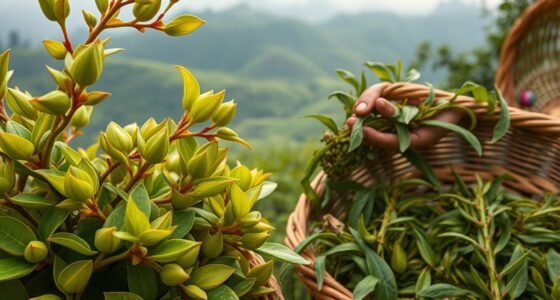
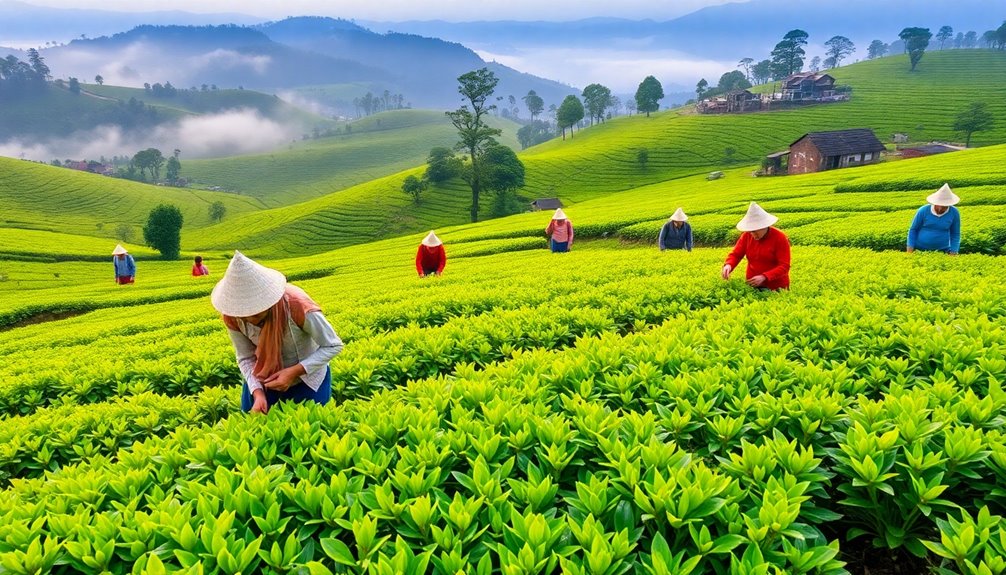
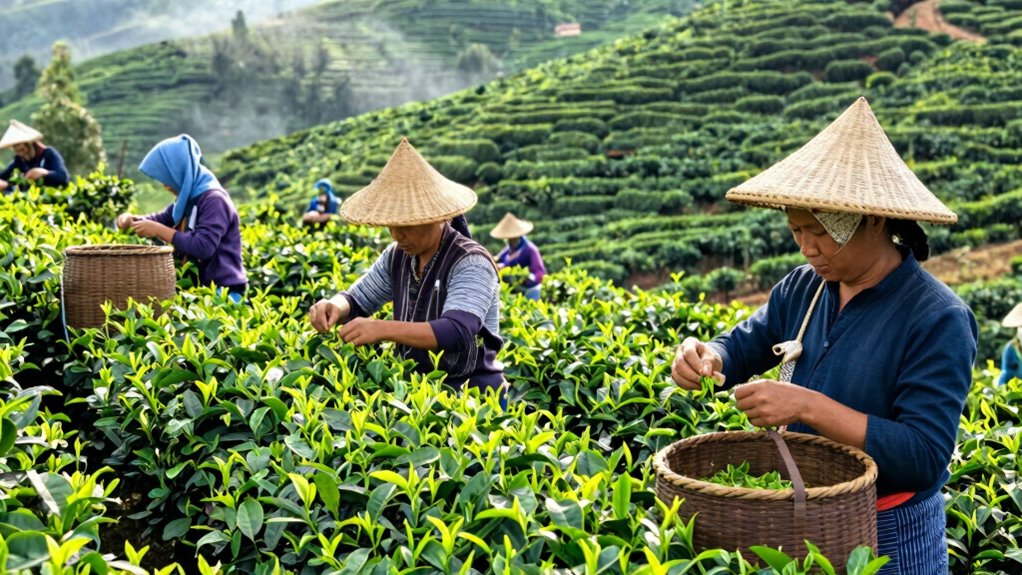
When you think about harvesting techniques, they aren’t just about picking tea leaves—they’re about timing, precision, and tradition. For many high-quality teas, especially those meant for premium products, hand-picking is still the standard. Skilled harvesters select the youngest, most tender leaves, often just the top two leaves and a bud, which contain the most delicate flavors. This careful selection preserves the integrity of the leaves and guarantees that the subsequent processing captures the tea’s nuanced aroma. The timing of harvests, whether early spring or late summer, also influences the taste, aroma, and even the cultural rituals surrounding tea production. These techniques shape the narrative of craftsmanship that modern tea culture celebrates, emphasizing authenticity and tradition. Additionally, harvesting techniques can vary significantly depending on regional practices and the type of tea being produced, reflecting diverse cultural influences. The environmental conditions and cultivation methods also play a vital role in determining the final flavor profile of the tea. Furthermore, climate and geography significantly impact the growth and flavor development of tea leaves, adding another layer of complexity to tea production. Understanding sustainable farming practices is increasingly important as demand grows, helping to preserve the environment and maintain the health of tea gardens for future generations.
Hand-picking young leaves at the right time preserves delicate flavors and upholds tea’s rich tradition and craftsmanship.
Tea fermentation plays an essential role in defining the character of different types of tea, especially black and oolong teas. This process involves controlled oxidation, where enzymes in the tea leaves react with oxygen, transforming the chemical composition and creating distinctive flavors and aromas. The degree of fermentation varies—from lightly fermented oolongs to fully fermented black teas—each producing a unique taste profile. The mastery of tea fermentation influences modern tea culture by allowing producers to craft a wide array of flavors, from sweet and floral to rich and malty. This process also connects deeply with cultural practices, as different regions have perfected their fermentation techniques over generations, contributing to the global diversity of tea. Moreover, understanding the role of enzymes in fermentation helps producers fine-tune their processes to achieve specific flavor profiles and quality standards.
Together, harvesting techniques and tea fermentation shape not only the physical qualities of tea but also its cultural identity. They influence how tea is appreciated, whether as a ceremonial ritual in Japan, a social activity in Britain, or a daily routine in China. These methods have been passed down through generations, creating a shared heritage that enhances the cultural significance of tea today. When you sip your favorite brew, you’re partaking in a centuries-old tradition, crafted through careful harvesting and precise fermentation—an enduring symbol of the artistry behind every cup.
As an affiliate, we earn on qualifying purchases.
Frequently Asked Questions
How Do Climate Changes Affect Tea Harvesting Schedules Globally?
Climate shifts directly impact your tea harvest schedules worldwide. Warmer temperatures and irregular rainfall cause unpredictable harvest timing, often leading to earlier or delayed plucking. These changes can alter leaf quality and flavor, affecting your tea experience. Farmers must adapt to these shifts by adjusting harvesting times to maintain quality. Overall, climate changes challenge traditional schedules, forcing a reevaluation of harvest timing to sustain tea production and meet consumer expectations.
What Innovative Technologies Are Shaping Modern Tea Cultivation Methods?
You might be surprised to learn that automated plucking and drone monitoring are revolutionizing tea cultivation. These innovations enable you to harvest tea more efficiently and precisely, reducing labor costs and improving quality. Drones help you monitor crop health and detect issues early, while automated plucking streamlines the process. Together, these technologies shape modern tea culture by making production more sustainable, efficient, and adaptable to changing climate conditions.
How Do Traditional Harvesting Techniques Vary Across Different Tea-Producing Regions?
You’ll notice that traditional plucking varies across regions based on climate, tea type, and local customs. In Japan, workers carefully pluck only the newest leaves, while in India, hand-picking often involves plucking the top two leaves and a bud. Regional methods influence tea quality and flavor, with some areas emphasizing delicate, selective plucking and others using broader, more efficient techniques to meet local demand.
What Is the Environmental Impact of Large-Scale Tea Plantations?
Large-scale tea plantations can harm the environment, but adopting sustainable practices helps mitigate this. You’ll see efforts like reduced pesticide use, organic farming, and water conservation. These practices promote biodiversity conservation, protecting native flora and fauna from monoculture harms. By supporting plantations committed to sustainability, you help reduce environmental impacts, ensuring healthier ecosystems and a more resilient tea industry for future generations.
How Does Fair Trade Influence Modern Tea Production Practices?
Fair trade profoundly shapes modern tea production practices by promoting ethical sourcing and ensuring fair wages for workers. When you choose fair trade teas, you’re supporting farmers who follow sustainable and humane methods, reducing exploitation. This influence encourages producers to adopt environmentally friendly practices and transparent supply chains. As a result, your tea choice helps foster a more ethical, sustainable tea culture that benefits both the environment and the communities involved.
Conclusion
Just as the alchemists of old sought to transform simple ingredients into gold, your appreciation for tea’s journey from leaf to cup deepens with understanding. Recognizing how production and harvesting shape modern tea culture invites you to savor each sip more consciously. So, next time you brew your favorite brew, remember the centuries of craftsmanship behind it—like a secret passed down through time, enriching every moment you enjoy.
Halloween Picks
halloween
As an affiliate, we earn on qualifying purchases.