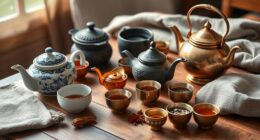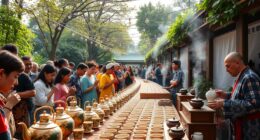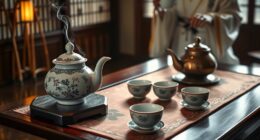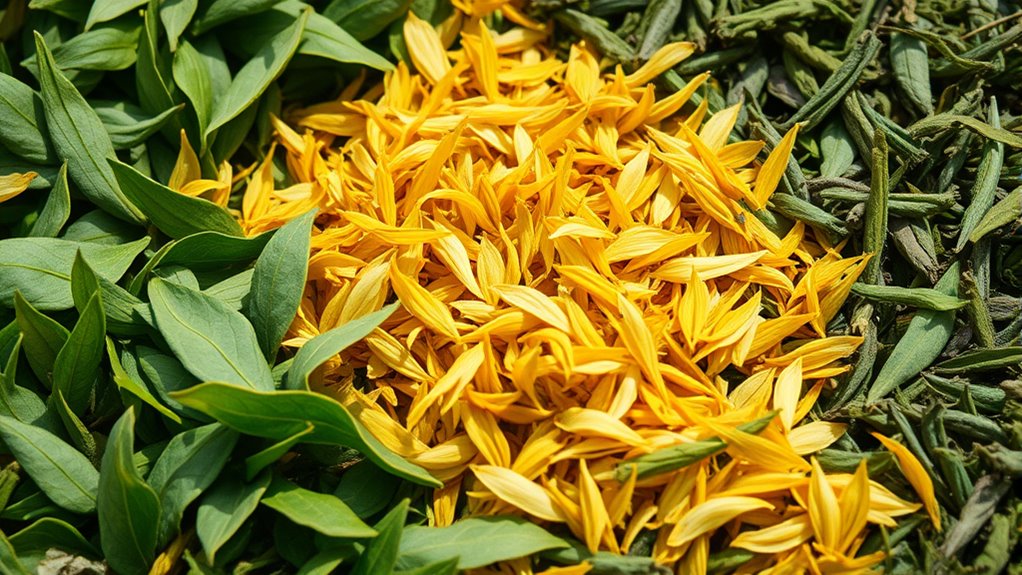

Regional variations of tea origins heavily influence its flavor and aroma, shaped by climate, soil, and microclimate. Warm, humid regions tend to produce richer, more robust teas, while cooler areas offer delicate, nuanced flavors. The soil’s mineral content adds unique earthy or floral notes. Each region’s environment leaves a distinct signature on the tea, making every sip special. Keep exploring to discover how these environmental factors create the diverse world of tea profiles.
Key Takeaways
- Different regions offer unique climate conditions that influence tea flavor, aroma, and leaf characteristics.
- Soil composition varies regionally, imparting distinct mineral and earthy notes to teas.
- High-altitude areas produce bright, brisk teas, while lowland regions yield fuller-bodied, mellow varieties.
- Microclimates and environmental factors create regional signatures that differentiate teas globally.
- Understanding regional origins helps predict flavor profiles and select teas aligned with personal preferences.
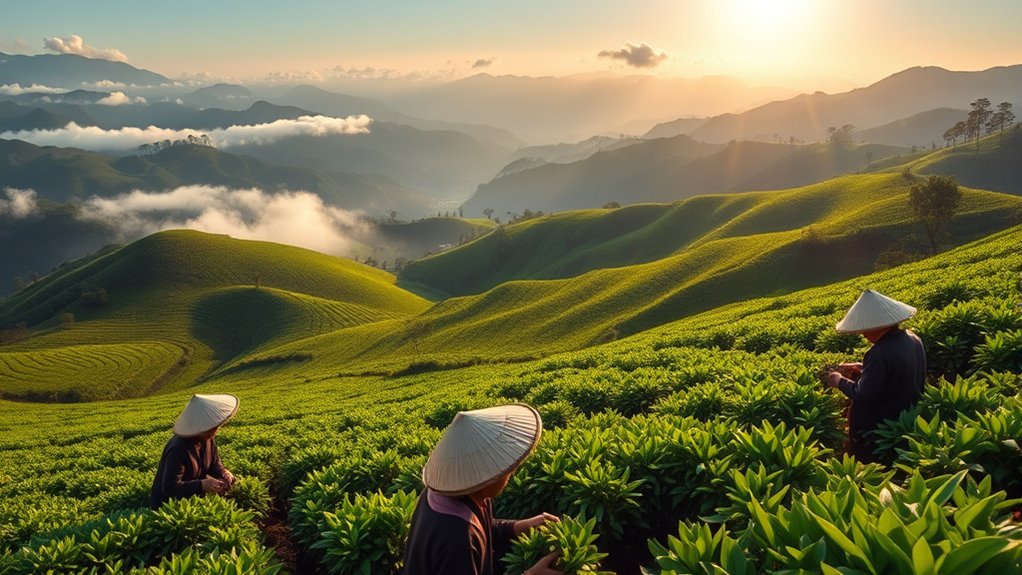
Tea’s flavor and aroma are deeply influenced by where it’s grown, making regional origins a key factor in its character. When you explore different teas, you’ll notice how climate influence and soil composition shape each cup’s unique profile. The climate of a region—its temperature, rainfall, humidity, and sunlight—directly impacts tea cultivation. In warmer, humid environments, for example, tea plants often develop richer, more robust flavors, while cooler climates can produce teas with a delicate, nuanced taste. These climatic factors determine the plant’s growth cycle, leaf maturity, and even the level of essential oils responsible for aroma and flavor. Optimal growing conditions further enhance the development of specific flavor notes, highlighting the importance of environment in tea quality. Soil composition is equally essential. The nutrients, drainage, and mineral content of the soil influence how tea plants absorb important elements from the ground. In regions with rich, volcanic soil, teas tend to have a more complex flavor profile, often with earthy or mineral undertones. Conversely, sandy or well-drained soils might produce lighter, more floral teas. The soil’s pH level can also affect the growth and flavor development of tea leaves. When you taste a tea from a particular region, you’re experiencing the combined effect of these soil qualities and climatic conditions, which together create a distinctive taste that cannot be replicated elsewhere. Different regions have evolved their own unique microclimates and soil profiles, which is why teas from the same plant variety can taste so different depending on where they’re grown. For instance, a high-altitude mountain region with cool temperatures and rocky soil might produce a tea with bright, brisk notes and a clean finish. Meanwhile, a lowland area with warm weather and fertile, loamy soil could yield a fuller-bodied tea with mellow, rounded flavors. Understanding these regional influences helps you appreciate the complexity behind each brew. When you select a tea, consider its origin—the climate influence and soil composition—because they’re what give each tea its signature character. Recognizing these factors allows you to better predict the flavor profile and choose teas that suit your preferences. Whether you prefer a bold, earthy brew or a light, floral infusion, the region where the tea is grown holds the key. It’s a reminder that every sip is a reflection of a specific environment, shaped by nature’s subtle yet powerful touch.

Tiesta Tea – Top 8 Favorites Sampler Set, Loose Leaf, Up to 80 Cups, High to No Caffeine, Hot & Iced, Tea Variety Pack with Green, Herbal, & Black, 8 Sample Pouches
DIVERSE TEA SELECTION: Dive into Tiesta Tea’s premium Loose Leaf Tea Set, featuring our most popular handcrafted blends….
As an affiliate, we earn on qualifying purchases.
As an affiliate, we earn on qualifying purchases.
Frequently Asked Questions
How Do Climate Changes Affect Regional Tea Flavors?
Climate impact profoundly influences regional tea flavors, and you’ll notice flavor variation as temperatures rise or rainfall patterns shift. Warmer weather can boost growth but may also cause teas to develop different, sometimes less desirable, notes. Changes in climate can alter soil quality and pluck timing, resulting in unique flavor profiles. So, as climate impacts the environment, expect your favorite teas to evolve, offering new tasting experiences.
Are There Any Health Benefits Unique to Regional Tea Varieties?
You benefit from regional tea varieties’ unique medicinal properties and antioxidant levels. Certain teas, like Chinese green tea, are rich in antioxidants that boost your immune system, while Indian black teas may support your heart health. These regional differences influence the specific compounds present, giving each tea its distinct health benefits. By choosing regional teas, you can enjoy tailored health advantages rooted in their unique origin and processing methods.
How Does Altitude Influence Tea Leaf Taste Profiles?
Altitude impacts tea leaf taste profiles by enhancing flavor development. When you grow tea at higher elevations, cooler temperatures slow leaf growth, allowing complex compounds to develop fully. This results in a more nuanced, vibrant flavor with brighter notes and a smoother finish. You’ll notice that high-altitude teas often have a crisp, fresh taste, showcasing the altitude impact on flavor development and making these teas particularly prized for their unique, refined profiles.
What Traditional Processing Methods Are Specific to Certain Regions?
You’ll find that certain regions cherish their unique processing methods, like traditional fermentation in China’s Pu-erh or hand rolling techniques in India’s Darjeeling. These methods, often passed down through generations, bring a special touch to each brew. Traditional fermentation softens flavors, creating richness, while hand rolling shapes leaves meticulously, enhancing aroma and texture. Embracing these regional techniques offers a richer, more authentic tea experience that reflects local heritage and craftsmanship.
Can Regional Tea Origins Impact Storage and Brewing Techniques?
Yes, regional tea origins can influence your storage techniques and brewing methods. For example, teas from humid climates may require airtight containers to prevent mold, while those from dry regions might need moisture control. Additionally, certain regional teas are best brewed at specific temperatures or steeping times to bring out their unique flavors. Adjusting your storage and brewing techniques based on the tea’s origin guarantees ideal freshness and taste.

Tiesta Tea – Single Origin Tea Sampler Dry Flight Set, Loose Leaf, High to Low Caffeine, Makes Hot & Iced, Assorted Brew Sets with Green, White, Black & Oolong, 7 Resealable Sample Pouches
DIVERSE TEA SELECTION: Discover the world of loose leaf tea with our Single Origin Sampler Tea Set. This…
As an affiliate, we earn on qualifying purchases.
As an affiliate, we earn on qualifying purchases.
Conclusion
You now see how tea’s flavor and quality change based on where it’s grown. For example, imagine tasting a delicate Darjeeling and then a robust Assam tea—you’ll notice distinct notes that reflect their origins. By exploring these regional variations, you can better appreciate each cup’s unique story. So next time you sip your tea, think about the landscape, climate, and culture behind it—making every brew a richer, more memorable experience.

Tiesta Tea Premium Starter Loose Leaf Sampler Kit – Classic Tea Blends, High to Non Caffeinated, Hot & Iced Brews, Starter Set with Black, Green, Herbal Sample Bags and 100 Disposable Tea Filters
5 CLASSIC FALL TEA BLENDS: Dive into a flavorful journey with our Starter Kit Tea Sampler featuring 5…
As an affiliate, we earn on qualifying purchases.
As an affiliate, we earn on qualifying purchases.

Wissotzky Artisanal Tea Chest Box, Assorted Flavors of Black & Herbal Tea Bags (42 Tea Bags) 6 Flavors | Tea Sampler Variety Pack | Tea Gift Set | Individually Wrapped | Corporate & Holiday Gifts | Certified Kosher
☕PREMIUM QUALITY TEA -Tea Chest contains 42 hand selected, individually wrapped herbal tea bags, 6 unique & inviting…
As an affiliate, we earn on qualifying purchases.
As an affiliate, we earn on qualifying purchases.