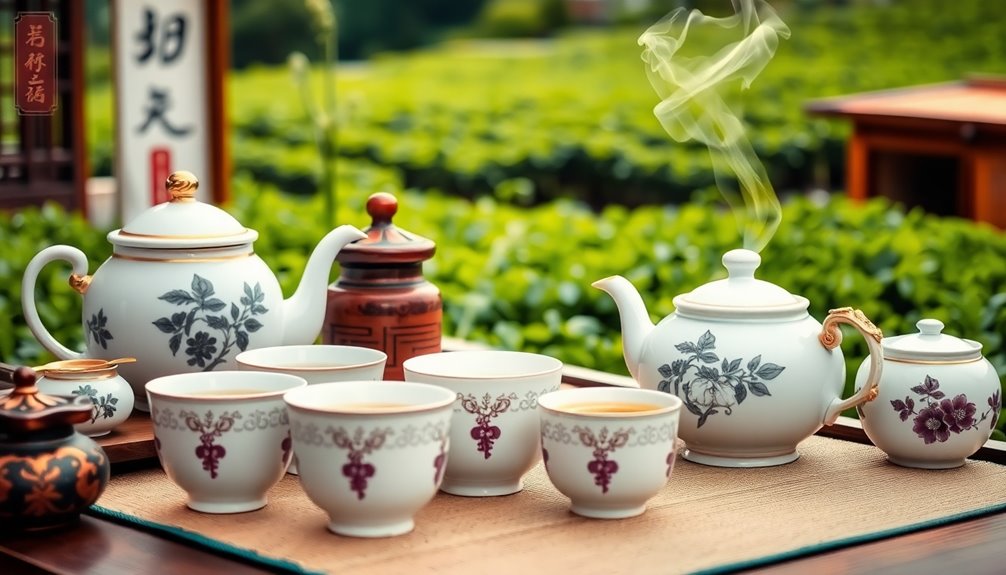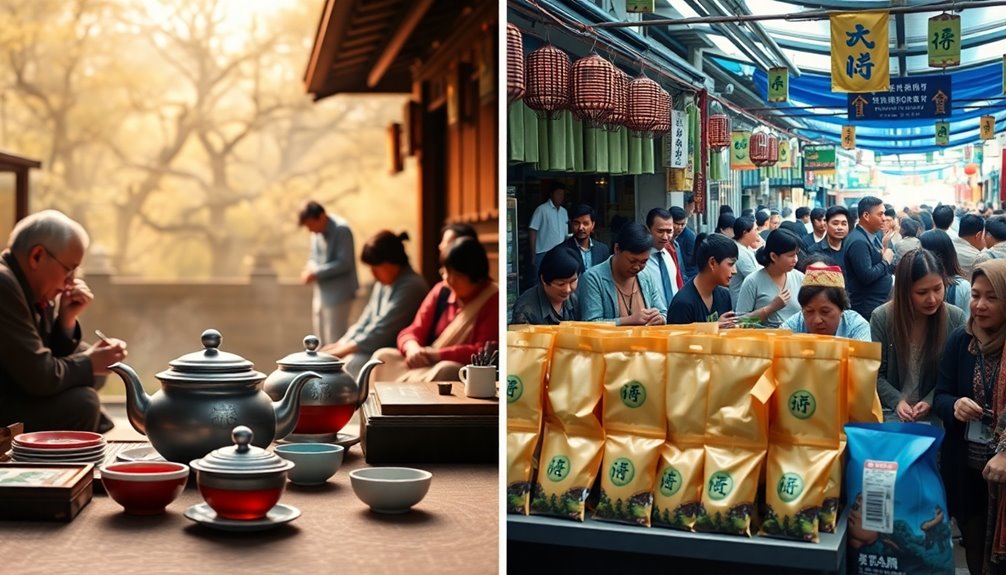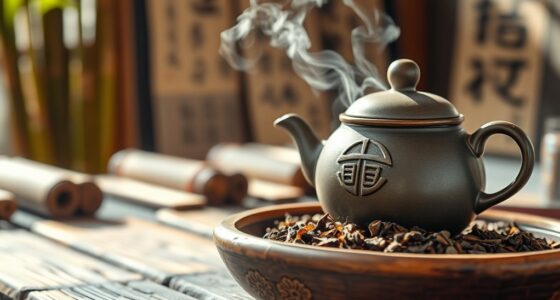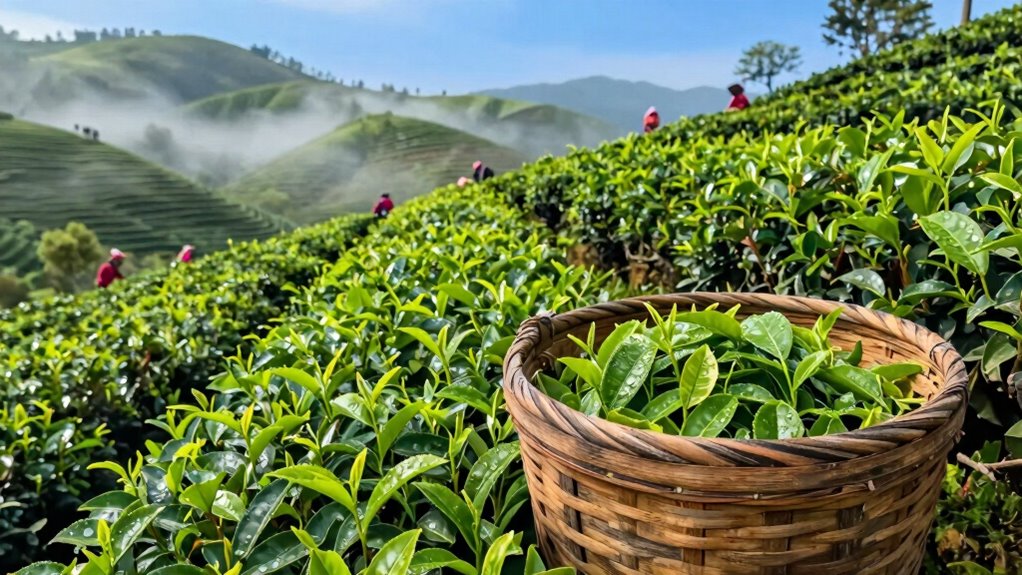

The story of tea begins in ancient China over thousands of years ago, where farmers discovered its medicinal and invigorating qualities. It spread across Asia, becoming a essential part of cultural rituals and societal life. Different regions developed unique practices, from Japan’s mindful tea ceremonies to India’s spicy chai. As tea traveled through trade routes, it shaped international relations and cultural exchanges. To uncover the full story behind tea’s origins and cultural impact, keep exploring its fascinating history.

Get coffee and tea gear delivered free with Prime
- Fast, free delivery on millions of items
- Prime Video, Amazon Music and more included
- Member-only deals all year
Key Takeaways
- Tea originated in ancient China over thousands of years ago, initially valued for medicinal and refreshing qualities.
- It spread across Asia, influencing various cultures and evolving from medicinal use to a cultivated beverage.
- Tea played a significant role in shaping societies through cultivation practices and cultural rituals.
- It facilitated international trade and cultural exchange, impacting global relationships and customs.
- Tea’s enduring cultural significance reflects its evolution into a symbol of tradition, community, and identity worldwide.
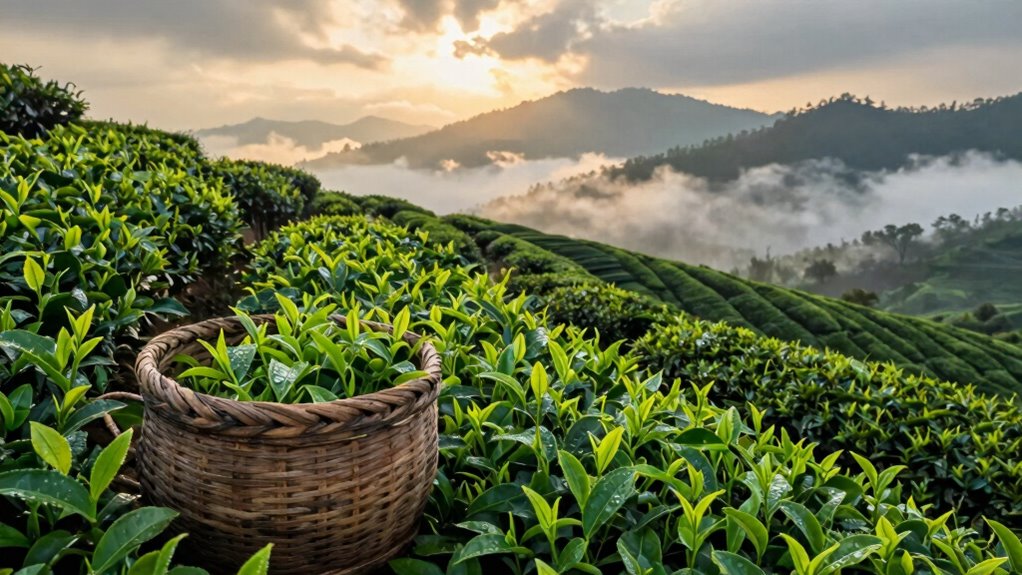
Tea’s origins are a fascinating blend of history, legend, and cultural exchange that many overlook. When you think about where tea comes from, you might imagine distant lands and ancient traditions, but its true story is far more intricate. It all begins with tea cultivation, a practice that dates back thousands of years and has shaped entire societies. Ancient Chinese farmers discovered that tea leaves could be harvested and dried to create a beverage that not only refreshed but also held medicinal value. Over time, tea cultivation evolved, spreading across Asia and influencing cultures along the way. You might not realize how deeply rooted tea is in daily life — it’s more than just a drink; it’s a symbol of hospitality, respect, and social bonding.
The cultural significance of tea is profound. In China, tea became intertwined with philosophy, art, and social rituals. It was during the Tang and Song dynasties that tea drinking shifted from medicinal use to a refined cultural practice. You can see this in the elegant tea ceremonies that developed, emphasizing harmony, respect, purity, and tranquility. These rituals weren’t just about drinking tea; they embodied values and social order, shaping community bonds. Across Japan, the tea ceremony became a spiritual discipline, emphasizing mindfulness and aesthetic appreciation. Meanwhile, in Britain, tea gained popularity during the 17th century, symbolizing sophistication and social status. It played a central role in social gatherings, and you can still see its influence today in tea rooms and afternoon teas.
Throughout history, the cultural significance of tea has adapted to local customs and beliefs. In India, chai combines tea with spices, reflecting the country’s rich culinary traditions. In Morocco, mint tea is a sign of hospitality, often served during social visits. These variations show how tea has become more than a beverage; it’s a vessel for cultural identity and social cohesion. The rituals surrounding tea serve as a reminder of its importance—whether as a daily routine or a ceremonial act, they reinforce community bonds and cultural values. Additionally, tea cultivation played a key role in shaping trade routes and fostering cultural exchanges across continents. The spread of tea across different regions was facilitated by historical trade, which helped it become a truly global commodity. Understanding the historical spread of tea helps us appreciate how it became such a universal symbol.
In essence, the story of tea’s origins is not just about where it was first cultivated but about how it evolved into a symbol of tradition, ritual, and connection. Its journey from ancient fields to modern cups highlights its enduring cultural significance—something you can taste in every sip and feel in every shared moment.
As an affiliate, we earn on qualifying purchases.
Frequently Asked Questions
When Did Tea First Become Popular Worldwide?
You’ll find that tea first became popular worldwide during the 17th century, especially with the rise of tea cultivation in China and its trade through global branding efforts. As traders introduced tea to Europe and beyond, its popularity surged, making it a staple worldwide. The spread of tea culture was driven by European colonial powers who promoted tea as a luxurious, fashionable beverage, establishing its place in global markets.
Are There Any Ancient Tea Traditions Still Practiced Today?
Yes, ancient tea traditions like the Japanese tea ceremony and Chinese gongfu tea are still practiced today. You can participate in a traditional tea ceremony to experience mindfulness and respect, or enjoy herbal infusions that have been used for centuries for health benefits. These traditions connect you with history, emphasizing aesthetics, ritual, and calmness, making tea a meaningful part of modern life.
How Did Tea Spread From China to Europe?
Imagine tea as a gentle breeze spreading across the world. You see, tea cultivation in China reached European shores through trade routes like the Silk Road and maritime routes. As merchants and explorers exchanged goods, they also shared cultural ceremonies and brewing techniques. This movement introduced Europeans to tea, transforming it from a rare luxury into a popular beverage that connected distant cultures through shared traditions and the love of a warm, soothing cup.
What Are the Oldest Tea-Producing Regions?
You’ll find the oldest tea-producing regions mainly in China, especially Yunnan and Sichuan, where tea cultivation dates back thousands of years. These areas are renowned for their ancient tea ceremonies, reflecting centuries of tradition. Japan’s Uji and India’s Assam also have historic tea cultivation sites. In these regions, traditional methods and ancient ceremonies continue to shape the rich cultural heritage of tea, making them essential to understanding its deep roots.
Did Tea Originate From Any Other Plants or Herbs?
Did you know that herbal infusions, often mistaken for tea, actually come from various herbs and plants, not the tea plant itself? These botanical origins include chamomile, mint, and rooibos, which are steeped for flavor. While true tea comes from Camellia sinensis, many herbal infusions have become beloved for their health benefits and unique flavors, illustrating how diverse and rich the world of botanical infusions truly is.
Conclusion
Now that you know tea’s fascinating journey from ancient China to your cup, it’s clear how much history and culture it carries. Did you know that over 2 billion cups of tea are consumed worldwide each day? That’s enough to fill a small lake! So, next time you sip your favorite brew, remember you’re part of a global tradition that’s been thriving for thousands of years. Cheers to uncovering the stories behind your daily habit!
Halloween Picks
halloween
As an affiliate, we earn on qualifying purchases.