Choosing the right home water setup for tea brewing can significantly enhance your tea experience. The best options balance precise temperature control, ease of use, and water quality. The HHT Electric Tea Maker stands out as the overall top pick thanks to its precise temperature control and BPA-free glass design. For those seeking a more traditional kettle, the Chefman Electric Kettle offers reliable performance and a generous capacity. Meanwhile, the Govee Smart Electric Kettle appeals to tech enthusiasts with WiFi control and customizable temperature settings. Each option involves tradeoffs between price, sophistication, and ease of maintenance. Keep reading for a detailed comparison to find your ideal setup.

Get coffee and tea gear delivered free with Prime
- Fast, free delivery on millions of items
- Prime Video, Amazon Music and more included
- Member-only deals all year
Complete the kit


Key Takeaways
- Precise temperature control is critical for brewing different types of tea and is a feature shared by the top picks.
- Materials matter: glass and stainless steel options reduce plastic contact and improve water purity.
- Capacity varies widely; larger kettles are better for frequent large-batch brewing, but smaller models save space.
- Smart features like WiFi control are helpful but often come at a higher price and complexity.
- Ease of cleaning and maintenance should influence your choice, especially with models featuring infusers or complex parts.


| home water setup for tea brewing | Capacity | Material | Power |
|---|---|---|---|
| HHT Electric Tea Maker with In | 0.8L (27oz) | — | — |
| Chefman Electric Kettle with T | 1.8 liters | Glass, Stainless Steel | — |
| 3L Electric Kettle & Beverage | 3 liters | Borosilicate glass, 316 stainless steel | 1000W |
| Cuisinart Electric Kettle | 1.7 liters | — | 1500W |
| Cosori Electric Kettle | 1.7L | No plastic contact with water | — |
| Breville BTM800XL Tea Maker In | 51 oz | — | 1500 Watts |
| HomeCraft 3-Quart White Stainl | 3 quarts | Stainless steel | — |
| Chefman Electric Kettle | 1.8L | Stainless steel & borosilicate glass | 1500W |
| Govee Smart Electric Kettle Wi | 0.8L | 304 food-grade stainless steel | 1200W |
| Mueller Home Rapid Boil Electr | 1.8L | BPA-Free glass and stainless steel | 1500W |
More Details on Our Top Picks
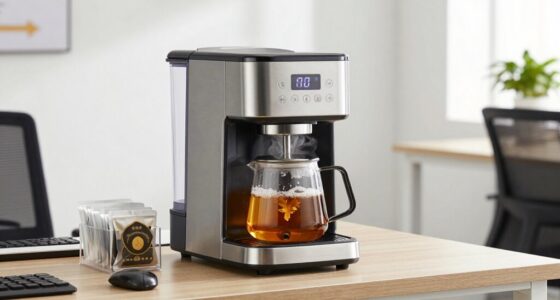
HHT Electric Tea Maker with Infuser, 0.8L Glass Electric Kettle with Precise Temperature Control, Auto Shut-Off, Keep Warm, BPA-Free
This glass electric tea maker is a standout choice for those who prioritize control and purity. Its precise temperature settings and removable infuser allow for tailored brewing, making it ideal for tea connoisseurs. Compared to larger models like the 3L Dispenser, this unit offers more focused, single-serving functionality with a glass body that preserves water taste better than plastic-lined alternatives. The 12-hour keep warm feature ensures your tea remains at the perfect temperature, but the limited capacity may frustrate households brewing multiple cups simultaneously. The high price and fragile glass construction are tradeoffs for purity and fine-tuned control.
Pros:- Precise temperature control for optimal tea extraction
- BPA-free, glass construction preserves flavor purity
- 12-hour keep warm maintains beverage temperature
Cons:- Limited 0.8L capacity, not suited for large groups
- Fragile glass body requires careful handling
- Higher price compared to basic kettles
Best for: Tea enthusiasts who want precise temperature control and pure water taste in small servings
Not ideal for: Large families or office settings needing higher capacity and frequent multi-cup brewing
- Capacity:0.8L (27oz)
- Temperature Range:104–212℉
- Brew Power:100–400W
- Brew Time:3–60 min
- Keep Warm Duration:12 hours
- Materials:Borosilicate glass, 304 stainless steel
Our verdict“This pick is best for individual tea lovers seeking optimal control and purity, despite its small size and fragility.”
Chefman Electric Kettle with Temperature Control, 1.8 Liters, Glass Tea Kettle & Hot Water Boiler
This kettle excels in providing quick, flexible hot water solutions, with seven preset temperatures that cover everything from delicate teas to boiling water. Compared to the Cuisinart 1.7L, it offers more temperature options, making it a better fit for those who brew a variety of beverages. Its removable infuser simplifies steeping loose leaf teas, and the cordless design enhances ease of use. However, the fragile glass body and limited preset options may be drawbacks for busy kitchens or users seeking broader temperature controls. The higher cost reflects its feature set, but durability could be a concern over time.
Pros:- Seven preset temperatures for diverse brewing needs
- Removable infuser for loose leaf tea
- Cordless, 360° swivel base for convenient serving
Cons:- Glass body may be fragile and prone to breaking
- Limited to 7 preset temperatures, less than some competitors
- Higher price point for feature set
Best for: Home tea drinkers who enjoy a range of beverages and value flexibility in temperature settings
Not ideal for: Small households or those looking for a more durable, metal-bodied kettle with fewer presets
- Capacity:1.8 liters
- Temperature Presets:7
- Material:Glass, Stainless Steel
- Lid:Removable
- Base:360° swivel
- Safety Features:Auto shutoff
Our verdict“This kettle offers versatile temperature options ideal for varied tea brewing, with some fragility to consider for daily use.”
3L Electric Kettle & Beverage Dispenser with Tea Infuser
This 3L combo unit combines a kettle and beverage dispenser, making it perfect for entertaining or busy households. Its digital controls and multiple preset programs enable brewing hot or cold beverages with ease, surpassing smaller, simpler kettles like the Cuisinart 1.7L. The large capacity and auto shut-off ensure safety and efficiency, while the drip-free spigot simplifies serving. Its bulkier size may not fit well in tight kitchens, and the digital interface could be overwhelming for those preferring straightforward operation. Longer boiling times at full capacity are also a factor to consider.
Pros:- Large 3L capacity suited for gatherings
- Multiple preset programs for diverse drinks
- Durable materials with safety features
Cons:- Bulkier size may not suit small kitchens
- Digital controls might be complex for some users
- Longer boil times at full capacity
Best for: Hosts who need a multi-purpose brewing station for parties or office use
Not ideal for: Small kitchens or single-user households with limited space and simpler needs
- Capacity:3 liters
- Power:1000W
- Material:Borosilicate glass, 316 stainless steel
- Preset Programs:8
- Features:Removable infuser, drip-free spigot
- Rotation:360°
Our verdict“Ideal for entertaining or multi-drink needs, though its size and complexity limit everyday small kitchen use.”
Cuisinart Electric Kettle, 1500W Fast Heating, 6 Temp Presets, 1.7L
This kettle delivers rapid boiling with a robust 1500W power, making it a reliable choice for busy mornings. Its six preset temperatures cover common tea types, and the one-touch controls simplify operation. Compared to the Chefman 1.8L, it offers slightly less capacity but benefits from faster heating and a more secure lid design. The absence of a digital display means less precise temperature adjustment, which may limit customization for some tea aficionados. It’s best suited for those wanting quick, consistent results without extra features.
Pros:- Fast heating with 1500W power
- Six preset temperature settings for common teas
- Cordless operation for easy pouring
Cons:- Limited capacity at 1.7L, not ideal for large families
- No digital display for exact temperature control
- Lid design less secure than some models
Best for: Time-conscious users who want quick, reliable brewing with preset temperatures
Not ideal for: Large households or users needing extensive temperature range customization
- Capacity:1.7 liters
- Power:1500W
- Temperature Presets:6
- Temperature Range:160°F to 200°F
- Auto Shutoff:Yes
- Boil-Dry Protection:Yes
Our verdict“Best suited for users needing quick, accurate tea brewing without complex controls or large capacity.”
Cosori Electric Kettle, 1.7L, No Plastic Contact with Water, Black
This kettle emphasizes water purity with its no plastic contact with water design, making it ideal for those sensitive to plastic tastes. Its rapid heating capability boils 0.5L in under 3 minutes, surpassing many traditional kettles in speed. The wide mouth and large-angle lid make cleaning straightforward, and safety features like auto shut-off and boil-dry protection boost confidence. Compared with the Chefman 1.8L, it sacrifices some capacity but offers a cleaner water experience. The main tradeoff is its limited capacity, which might not suffice for larger households or frequent use.
Pros:- No plastic contact with water for pure taste
- Heats water rapidly in under 3 minutes
- Easy to clean with wide mouth and large lid
Cons:- Limited to 1.7L capacity, not suitable for large groups
- No cordless operation, tethered cord may be inconvenient
- Higher price for safety and purity features
Best for: Tea and coffee drinkers who prioritize water purity and quick heating in a compact form
Not ideal for: Large families or office environments requiring higher capacities
- Capacity:1.7L
- Color:Black
- Material:No plastic contact with water
Our verdict“Designed for those seeking the purest water taste and quick heating, with limited capacity for frequent large-volume needs.”
Breville BTM800XL Tea Maker Infuser and Kettle, Brushed Stainless Steel
This model stands out for its integrated automated infusion system and multiple temperature presets, making it ideal for tea enthusiasts who want consistent results. Unlike the Govee Smart Kettle, it offers dedicated preset options for different tea types, ensuring optimal flavor extraction. However, its weight and limited capacity mean it’s less suited for larger households or frequent use on the go. The durable glass vessel combined with stainless steel provides a premium feel and longevity, but the price is higher compared to simpler kettles. Overall, this pick makes the most sense for serious tea drinkers who prioritize precision and quality over basic capacity or portability.
Pros:- Automated tea basket for consistent infusion
- Multiple preset temperatures tailored to tea types
- Durable glass vessel with stainless steel base
Cons:- Relatively heavy at over 5 pounds, less portable
- Limited to 51 oz capacity, not ideal for large groups
Best for: Tea connoisseurs seeking precise temperature control and automated brewing for daily tea rituals
Not ideal for: Small households or those wanting a lightweight, portable option without advanced features
- Brand:Breville
- Item Weight:5.2 pounds
- Capacity:51 oz
- Power:1500 Watts
- Materials:German-made glass, brushed stainless steel
- Warranty:1 Year Limited
Our verdict“This is best for dedicated tea lovers who want precise control and automated features, despite its weight and capacity limitations.”
HomeCraft 3-Quart White Stainless Steel Café Iced Tea and Iced Coffee Brewing System, 12 Cups, Strength Selector & Infuser Chamber
This beverage system shines when preparing multiple servings of iced tea or coffee, making it a strong choice over smaller kettles like the Chefman 1.8L for entertaining or family use. Its 3-quart capacity and customizable strength with an infuser chamber allow for tailored flavors, but it’s bulkier and less suitable for quick, single-cup brewing. It lacks digital controls, so users looking for precise temperature settings or automation might find it less versatile than the Govee Smart Kettle. Its sleek stainless steel design adds style, but the size could be a drawback for compact kitchens. Overall, this is the go-to for those who prioritize volume and flavor customization in cold brews or iced drinks.
Pros:- Large 3-quart capacity suitable for multiple servings
- Customizable strength with infuser chamber
- Sleek stainless steel design
Cons:- Bulky size may be inconvenient in small kitchens
- Limited to iced beverage preparation, no hot-only option
Best for: Families or hosts who often prepare large batches of iced tea or coffee
Not ideal for: Individuals seeking quick, hot beverages or compact kitchen setups
- Capacity:3 quarts
- Cup Size:12 cups
- Material:Stainless steel
- Features:Strength selector, infuser chamber
Our verdict“Ideal for preparing large, flavorful cold drinks, though its size and limited controls make it less suitable for quick hot beverages.”
Chefman Electric Kettle, 1.8L, 1500W, Stainless Steel & Borosilicate Glass, Removable Lid, Auto Shut Off, Boil-Dry Protection
This kettle offers rapid boiling in about three minutes, making it a solid choice over the Govee WiFi Kettle for quick hot water needs. Its 1.8L capacity suits single cups or small batches, but falls short for larger groups or continuous brewing. The stylish borosilicate glass body adds a modern look, yet the glass can be fragile if mishandled. Lacking advanced temperature controls means it’s less precise for delicate teas compared to the Breville, but its speed and safety features—auto shutoff and boil-dry protection—are significant advantages. If convenience and speed are your priorities for everyday hot water, this kettle fits well, though it sacrifices some finesse and capacity.
Pros:- Fast boiling time of about 3 minutes
- Stylish borosilicate glass design
- Safety features including auto shutoff and boil-dry protection
Cons:- Limited capacity for larger groups
- Glass body may break if mishandled
Best for: Individuals needing fast hot water for single cups or small batches, especially in limited space
Not ideal for: Large families or those who want precise temperature controls for specialty teas
- Capacity:1.8L
- Power:1500W
- Material:Stainless steel & borosilicate glass
- Lid:Removable
- Features:Auto Shut Off, Boil-Dry Protection
Our verdict“Perfect for quick, small-scale hot water needs, but less suitable for large households or precise brewing.”
Govee Smart Electric Kettle WiFi Variable Temperature Gooseneck Tea Kettle
This kettle stands out for its app and voice control, providing precise temperature settings from 104°F to 212°F, which makes it ideal for tea aficionados who want customizable brewing. The gooseneck spout offers exceptional pour control, surpassing the Chefman for accuracy. Compared to traditional kettles, it allows for remote operation, but its small 0.8L capacity limits its use for multiple cups at once. Lacking 5GHz WiFi and international voltage support might restrict some users, yet its keep-warm feature and quick heating make it a practical choice for dedicated tea brewing. It’s best suited for those who prioritize control and smart features over volume.
Pros:- Supports app and voice control for convenience
- Precise temperature presets for optimal tea brewing
- Sturdy gooseneck spout for accurate pouring
Cons:- Limited capacity at 0.8L, not suited for multiple cups
- No 5GHz WiFi support, limiting connectivity options
Best for: Tea enthusiasts who value precise temperature control and smart connectivity for pour-over brewing
Not ideal for: Large families or those needing high-capacity kettles for multiple servings
- Capacity:0.8L
- Power:1200W
- Material:304 food-grade stainless steel
- Connectivity:WiFi (2.4GHz), Bluetooth
- Preset Temperatures:104°F to 212°F
- Keep-Warm Duration:2 hours
Our verdict“Best for tech-savvy tea lovers seeking precise control and smart features for delicate brewing, but not for volume needs.”
Mueller Home Rapid Boil Electric Tea Kettle 1.8L, BPA-Free
This kettle offers rapid boiling in about three minutes, similar to the Chefman, but adds a BPA-free glass body that allows monitoring water levels at a glance. It’s a straightforward choice for those who want quick hot water without bells and whistles, though the glass construction needs careful handling to avoid damage. Unlike the Breville or Govee, it lacks precise temperature controls, which could impact delicate teas. Its safety features—auto shutoff and boil-dry protection—are essential, but the glass body isn’t dishwasher safe and may require vinegar cleaning in hard water areas. It’s a solid pick for convenience and visibility, but not for nuanced brewing.
Pros:- Fast boiling in approximately 3 minutes
- BPA-free glass body for monitoring water level
- Auto shut-off and boil-dry protection for safety
Cons:- Glass body requires careful handling to prevent breakage
- Not dishwasher safe, making cleaning less convenient
Best for: Home users seeking fast, safe boiling with visibility and simple operation
Not ideal for: Tea drinkers requiring fine temperature control or heavy-duty use in hard water regions
- Capacity:1.8L
- Power:1500W
- Material:BPA-Free glass and stainless steel
- Safety features:Auto shut-off, boil-dry protection
- Lid:Removable
Our verdict“Suitable for quick, visible boiling with safety in mind, but not for precise tea brewing or heavy use in tough water conditions.”

How We Picked
I evaluated these products based on performance, build quality, usability, and value. Precise temperature control and water quality features were key factors, as they directly impact tea flavor. Ease of operation and cleaning also influenced rankings, with more user-friendly designs rated higher. Price was considered in relation to features offered, ensuring a mix of premium and budget-friendly options. The ranking aims to help both casual tea drinkers and enthusiasts find setups suited to their brewing style and needs.Factors to Consider When Choosing Home Water Setup For Tea Brewing
Selecting the right home water setup for tea brewing involves considering several key factors. The ideal kettle or system should deliver accurate temperature control, be made of safe and durable materials, and accommodate your brewing volume. Beyond features, understanding your own tea habits and space constraints will help you choose wisely. This guide explores the most important considerations to help you avoid common pitfalls and find a setup that enhances your tea experience.Temperature Precision and Control
Accurate temperature control is essential because different teas require specific water temperatures to unlock their best flavors. Look for kettles with multiple preset temperatures or digital controls for fine adjustments. Inadequate control can lead to over- or under-extraction, ruining the taste. However, more precise controls often mean higher cost and complexity, so consider how critical this feature is for your tea types.
Build Material and Water Purity
The choice of material impacts both water purity and durability. Glass and stainless steel are preferred for their non-reactive qualities, reducing plastic leaching and preserving water taste. Plastic models are usually more affordable but may introduce unwanted flavors or chemicals over time. Consider your cleaning routine and whether the material is dishwasher safe for easier maintenance.
Capacity and Size
Assess your typical tea brewing volume to pick the right kettle size. Smaller models (around 0.8L to 1.7L) are ideal for personal use and save counter space, while larger capacities (3L or more) suit households or when brewing multiple cups at once. Keep in mind that bigger kettles tend to be heavier and take longer to boil, which might impact convenience.
Smart Features and Connectivity
Smart kettles with WiFi or app control offer precision and convenience, allowing you to set temperatures or start boiling remotely. These features appeal to tech-savvy users but add to the cost and complexity. For casual use, manual controls may suffice and simplify operation. Consider whether you value connectivity enough to justify the added investment.
Ease of Cleaning and Maintenance
Regular cleaning prevents mineral buildup and ensures water purity. Kettles with wide openings, removable filters, and minimal crevices are easier to clean. Infuser systems and complex components can complicate maintenance; choose models that strike a balance between functionality and ease of upkeep. Also, consider whether the materials are dishwasher safe if you prefer minimal effort cleaning.
Frequently Asked Questions
How important is temperature control for different types of tea?
Temperature control is vital because each tea type has an optimal brewing temperature that maximizes flavor and aroma. For example, green tea benefits from lower temperatures around 175°F, while black and oolong teas often require near boiling water. Investing in a kettle with precise control ensures you can tailor water temperature to your tea, leading to a better brewing experience and more nuanced flavors.
Should I choose a glass or stainless steel kettle for tea brewing?
Both materials have advantages—glass kettles are non-reactive and allow you to see the water as it boils, which can be visually satisfying. Stainless steel models are durable and often better at heat retention, making them suitable for frequent use. Your choice should depend on preference for transparency versus durability, as well as considerations around cleaning and potential taste impacts.
Are smart kettles worth the extra cost?
Smart kettles provide precise temperature settings and remote operation, which can enhance convenience and consistency for tea brewing. However, they tend to be more expensive and may have a steeper learning curve. If you value automation and control from your smartphone or voice assistant, they are worthwhile; otherwise, manual kettles with good temperature presets can meet most needs without added complexity.
What size kettle should I buy for everyday tea brewing?
For most households, a kettle with 1.7L to 1.8L capacity strikes a good balance between size and practicality, accommodating multiple cups or infusions without taking up too much space. If you brew tea frequently for several people or like to prepare large batches, a larger model (around 3L) could be more convenient. Conversely, if you have limited counter space or brew solo, a smaller model suffices.
How often should I descale my electric kettle?
Descaling frequency depends on your water hardness and usage, but a good rule of thumb is every 1-3 months. Hard water causes mineral buildup that can impair heating performance and taste. Using descaling agents or vinegar solutions regularly helps maintain efficiency and prolongs the lifespan of your kettle. Always follow the manufacturer’s cleaning instructions to avoid damage.