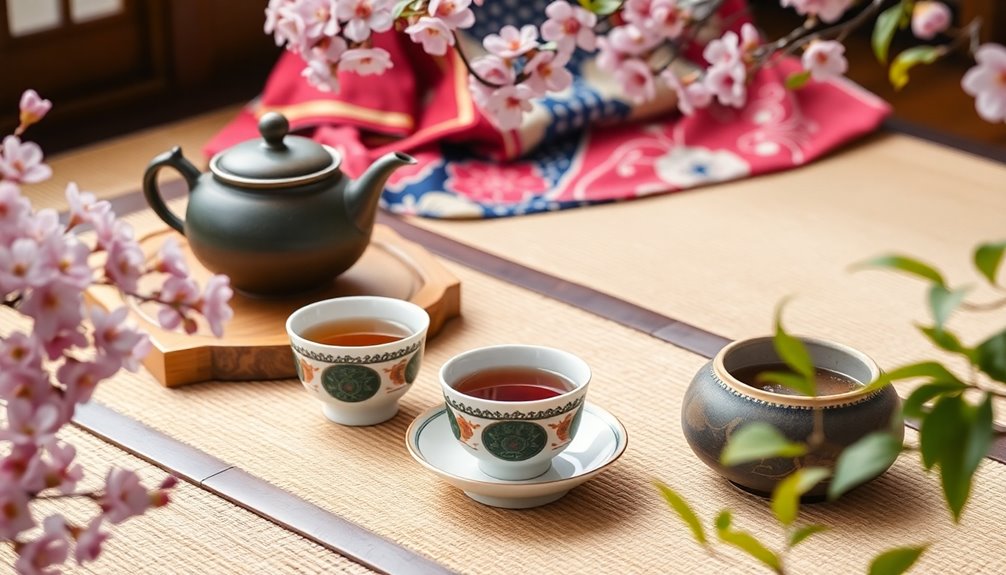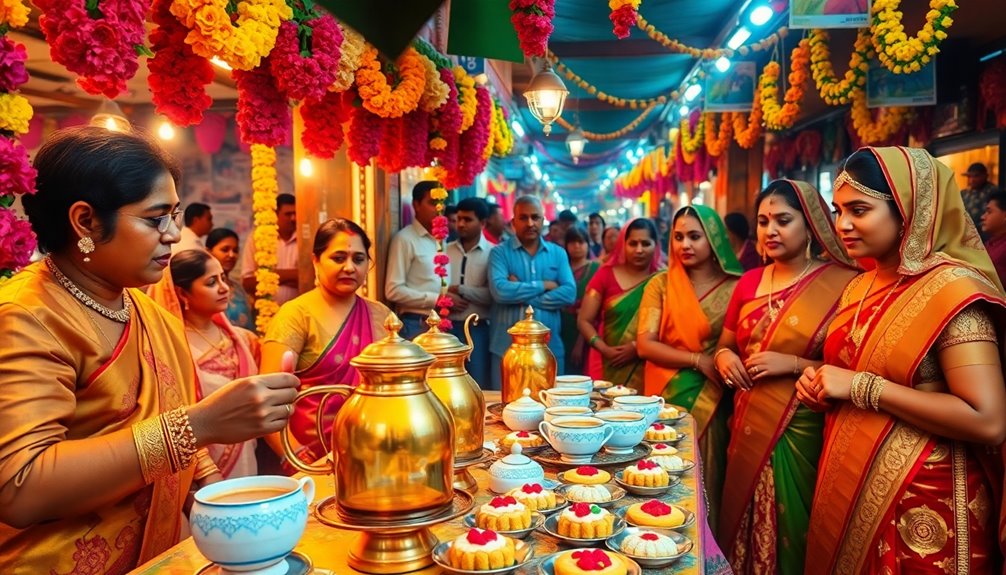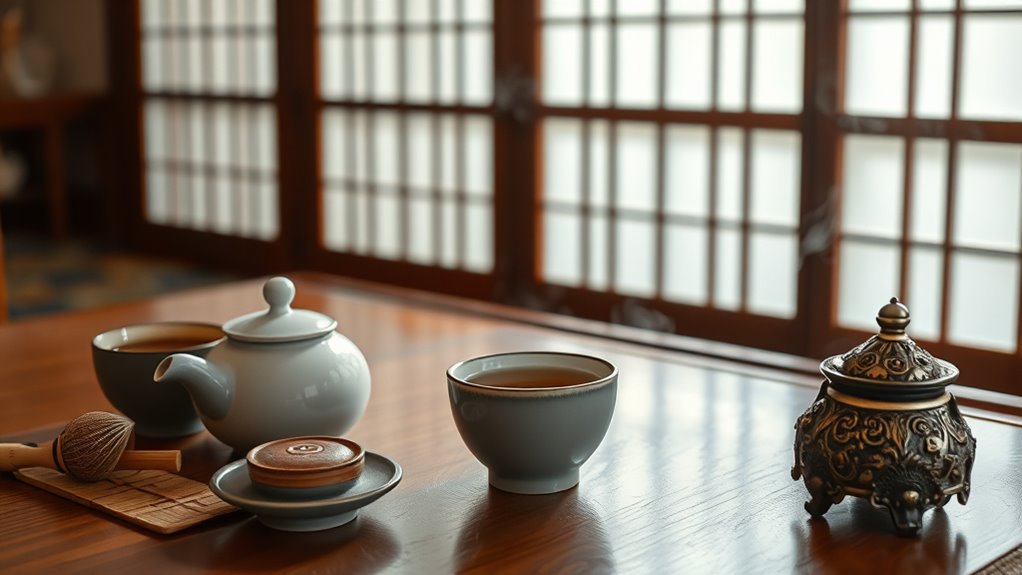

Across cultures, tea symbolizes more than a drink—it embodies spiritual and philosophical values. In Japan, the ceremonial *chanoyu* promotes harmony, respect, and mindfulness, fostering inner tranquility through deliberate movements. Chinese tea practices reflect Taoist ideals, emphasizing balance and patience as you savor each sip. Western traditions often adopt tea as a mindful pause, encouraging self-awareness and reflection. Exploring these diverse perspectives reveals how tea unravels deeper understanding and serenity—you can discover more if you continue your exploration.

Get coffee and tea gear delivered free with Prime
- Fast, free delivery on millions of items
- Prime Video, Amazon Music and more included
- Member-only deals all year
Key Takeaways
- Tea symbolizes spiritual values such as harmony, respect, and tranquility across cultures like Japan and China.
- Tea ceremonies serve as meditative rituals fostering mindfulness, patience, and self-awareness.
- In Japanese *Chanoyu*, tea embodies Zen principles, emphasizing simplicity and inner serenity.
- Chinese tea practices align with Taoist philosophies, promoting balance, harmony, and centeredness.
- Western tea rituals often function as mindfulness tools, encouraging reflection and present-moment awareness.

Throughout history, tea has transcended its role as a simple beverage to become a symbol of spirituality and philosophy across various cultures. You might find that drinking tea is more than just quenching your thirst; it’s a way to connect deeply with yourself and the world around you. In many traditions, tea is intertwined with mindfulness practices, encouraging you to focus on the present moment and cultivate a sense of calm. When you participate in a tea ceremony, you’re engaging in an act that emphasizes patience, intention, and respect. These ceremonies are often more than rituals—they’re meditative practices that help you slow down and reflect.
Tea is a spiritual journey fostering mindfulness, patience, and reflection across diverse cultures and traditions.
In Japanese culture, the tea ceremony, known as *chanoyu*, is a profound spiritual practice. As you prepare and serve the tea, every movement is deliberate, fostering a state of mindfulness. The ritual emphasizes harmony, respect, purity, and tranquility—values that guide your state of mind during the ceremony. By immersing yourself in this process, you learn to appreciate the transient beauty of each moment and embrace simplicity. It’s not just about drinking tea; it’s about cultivating a peaceful mind and a heightened awareness of your surroundings.
Similarly, in Chinese traditions, tea symbolizes harmony and balance, embodying philosophical principles like Taoism. When you partake in Gongfu tea ceremonies, you engage in a mindful ritual that deepens your appreciation for the artistry of tea preparation. The focus on precise movements and attentive aroma sampling helps you center your thoughts and find serenity amid everyday chaos. These practices serve as a reminder that life, much like tea, requires patience and care to fully enjoy its richness.
In Western cultures, tea has also gained a spiritual dimension, often associated with mindfulness and self-care. When you take time for a quiet cup, it becomes a moment of pause—a chance to breathe deeply and reflect. Whether through informal rituals or dedicated mindfulness practices, tea invites you to slow down, be present, and connect with your inner self. The act of brewing and sipping becomes a meditative experience, grounding you in the here and now.
Across all these traditions, tea acts as a bridge between the physical and spiritual worlds. It encourages you to practice mindfulness, whether through structured ceremonies or personal rituals. These moments foster a sense of peace, balance, and insight, making tea more than a drink—it’s a pathway to understanding yourself and appreciating the fleeting beauty of each moment. Additionally, the scientific research on sound healing demonstrates how meditative rituals like tea ceremonies can positively influence your mental and emotional well-being.
As an affiliate, we earn on qualifying purchases.
Frequently Asked Questions
How Does Tea Influence Meditation Practices Globally?
Tea influences meditation practices globally by enhancing mindfulness and deepening rituals and spirituality. When you incorporate tea into your meditation, it helps calm your mind, fostering presence and focus. Many cultures use tea as a ritual to prepare for reflection, turning simple acts into spiritual experiences. By integrating tea, you create a sacred space that promotes tranquility, making your meditation more meaningful and connected to a broader sense of mindfulness.
What Are the Spiritual Symbols Associated With Tea in Various Cultures?
Tea symbolism often represents harmony, purity, and renewal in cultural rituals. In Japan, the tea bowl symbolizes humility and respect during the tea ceremony, while in China, tea leaves embody wisdom and serenity. Across cultures, tea acts as a spiritual bridge, fostering mindfulness and connection. These symbols deepen your appreciation, turning simple tea-drinking into a meaningful ritual that reflects inner peace and cultural values.
How Has Tea’s Philosophical Significance Evolved Over Centuries?
Tea’s philosophical evolution reflects its journey from simple beverage to symbol of mindfulness and harmony. You see tea symbolism adapt through centuries, emphasizing balance, patience, and serenity. As you explore its history, you notice how different cultures have infused tea with philosophical meaning, shifting from ritualistic origins to personal reflection. This ongoing evolution deepens your understanding, making tea not just a drink but a vessel for philosophical insight and spiritual growth.
Are There Specific Rituals Connecting Tea to Spiritual Enlightenment?
Did you know that over 2,000 years ago, Chinese tea ceremonies aimed to achieve spiritual enlightenment? Yes, specific rituals like the Japanese Chanoyu or Chinese Gongfu tea ceremony connect tea to spiritual awakening. These rituals hold deep ritual significance, guiding practitioners to mindfulness and inner peace. By following these precise steps, you can transform tea drinking into a meditative practice, fostering spiritual growth and a sense of harmony.
How Do Different Cultures Interpret Tea as a Symbol of Harmony?
You see, in many cultures, tea symbolism represents unity and balance, serving as a symbol of cultural harmony. When you partake in tea ceremonies, you’re embracing a tradition that fosters social connection and mutual respect. Whether it’s Japan’s meditative tea rituals or British afternoon teas, these customs emphasize harmony through shared experience. By understanding these practices, you can appreciate how tea unites people across diverse backgrounds, reinforcing a sense of collective peace.
Conclusion
As you sip your tea, remember it’s more than just a drink—it’s a mirror of your soul and a bridge to understanding others. Like a quiet pond reflecting the sky, each culture’s tea tradition reveals depths of wisdom and serenity. Embrace the ritual, and let the steam rise as a symbol of enlightenment, guiding you on a journey beyond taste. In every cup, find a moment of connection, peace, and universal harmony.
Halloween Picks
halloween
As an affiliate, we earn on qualifying purchases.