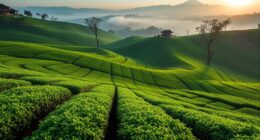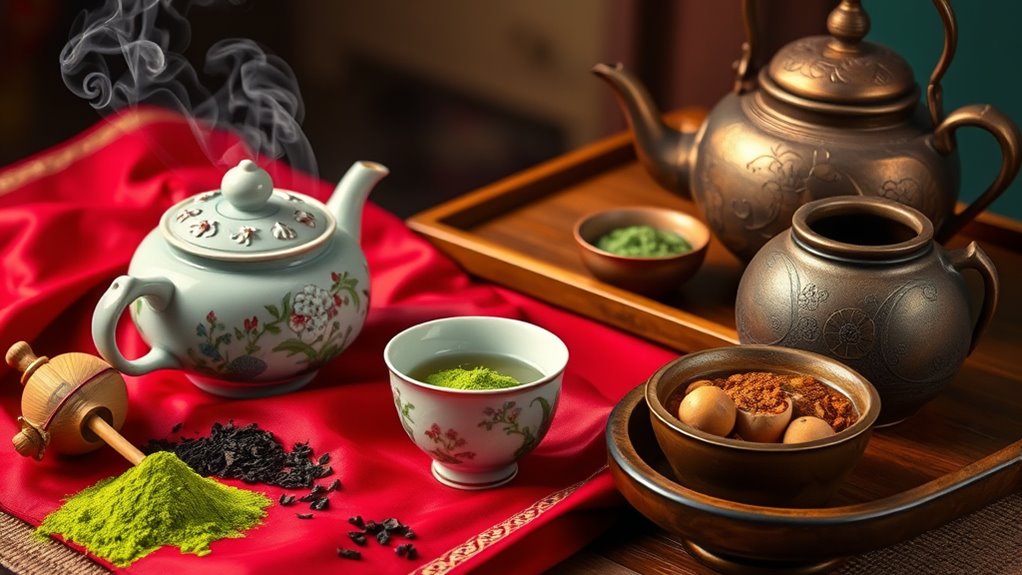
Across cultures, tea varies widely in flavor, aroma, and preparation. In China, delicate green teas like Longjing showcase traditional hand-harvesting, while Japan’s ceremonial matcha is whisked into frothy drinks. India’s Darjeeling and Assam teas adapt to regional climates, producing distinctive tastes. Morocco brews green tea with mint and pours from height, emphasizing hospitality. Each cultural approach reflects local climate, customs, and craftsmanship—if you continue exploring, you’ll discover the unique stories behind each tea tradition.
Key Takeaways
- Different regions cultivate unique tea varieties influenced by climate, soil, and cultural traditions, shaping distinct flavors and aromas.
- Brewing techniques vary globally, such as Japanese ceremonial matcha, British strong infusions, and Moroccan mint tea.
- Regional processing methods, like Chinese hand-picking or Taiwanese semi-oxidation, create characteristic tea profiles.
- Cultural rituals and traditional practices enhance the significance and identity of regional teas worldwide.
- Understanding local cultivation and processing deepens appreciation of regional tea diversity and craftsmanship.
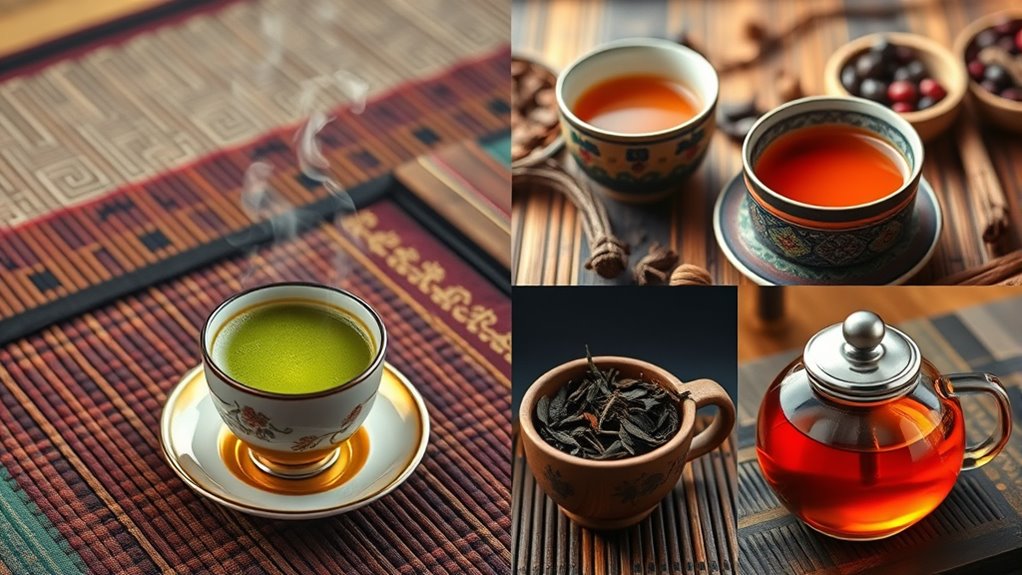
Have you ever wondered how tea varieties differ from one region to another? The answer lies in the unique ways different cultures approach tea cultivation and their distinct brewing techniques. Tea cultivation isn’t just about planting tea bushes; it’s deeply influenced by climate, altitude, soil, and local traditions. For example, in China, tea growers often focus on traditional methods that have been passed down for centuries, emphasizing hand-picking and gentle processing to preserve delicate flavors. In contrast, Indian tea plantations, especially in Assam and Darjeeling, utilize different cultivation practices suited to their specific environments, which directly impact the taste and aroma of the teas produced.
Tea varieties reflect regional cultivation and processing methods, shaped by climate, soil, and tradition.
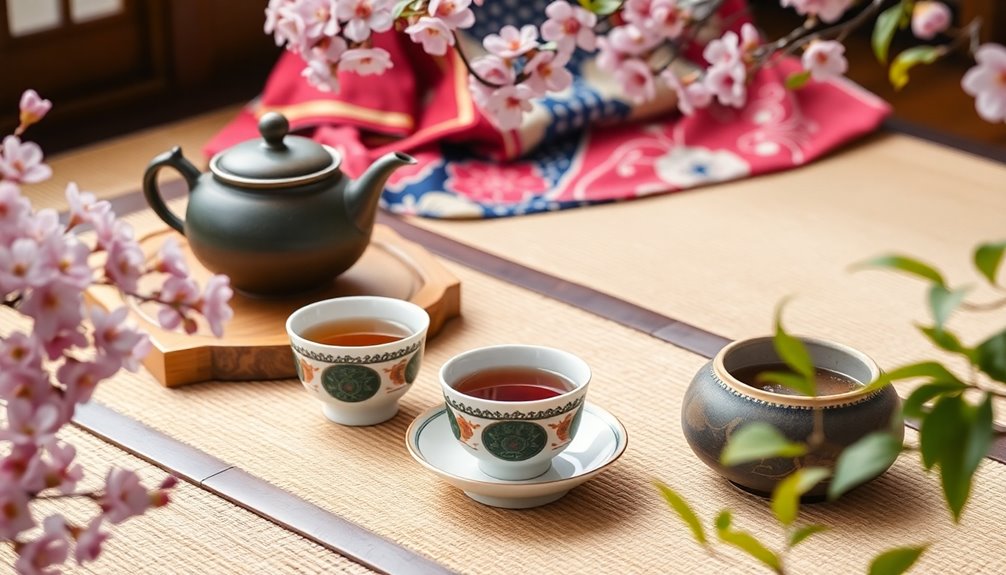
As you explore these variations, you’ll notice that the way tea is brewed also varies widely across cultures. In Japan, precision and technique are key; they often brew matcha by whisking finely ground powder with hot water, creating a frothy, vibrant drink that’s both ceremonial and social. Meanwhile, in Britain, the focus is on the steeping process—using boiling water and longer infusion times to extract a robust flavor, often served with milk and sugar. In Morocco, you might find green tea infused with mint and poured from a height to aerate it, emphasizing hospitality and social ritual. Each culture’s brewing techniques are tailored to its preferred flavors, the type of tea, and the social context.
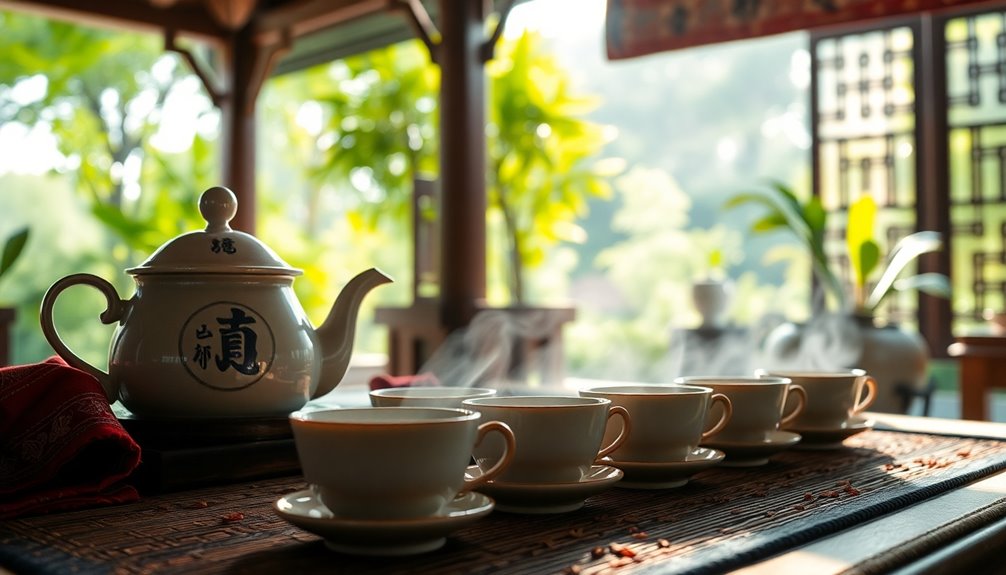
The differences don’t stop at preparation. The selection of tea varieties itself is rooted in regional cultivation. For instance, Chinese green teas like Longjing are celebrated for their flat, tender leaves, a result of specific pickings and processing methods. Conversely, oolong teas from Taiwan undergo a semi-oxidation process that creates complex, layered flavors, reflecting the local climate and craftsmanship. These regional distinctions create a rich tapestry of taste, aroma, and appearance, making each cup a reflection of its origin.
Understanding these regional variations enhances your appreciation of tea beyond just drinking it. It’s about recognizing the skill and tradition behind each brew. Whether it’s the meticulous hand-harvesting in a remote Chinese village or the bold, brisk brews of Indian plantations, every aspect influences the final product. When you brew tea, consider the cultivation practices and techniques that have shaped that particular tea. Doing so allows you to truly savor the diversity and depth that regional differences bring to this beloved beverage. Additionally, appreciating the traditional methods used in different regions can deepen your connection to the cultural significance of tea.
Top picks for "regional variation different"
Open Amazon search results for this keyword.
As an affiliate, we earn on qualifying purchases.
Frequently Asked Questions
How Do Climate Changes Affect Regional Tea Flavors?
Climate impact directly influences your tea’s flavor variation by altering growing conditions. When temperatures rise or rainfall patterns shift, the tea plants adapt, changing their chemical makeup. This results in subtle or significant flavor differences, from more robust notes to delicate aromas. You might notice your favorite tea tasting different over time, as climate change affects the regional climate, impacting the quality and distinctiveness of each brew.
What Are the Health Benefits Unique to Regional Tea Varieties?
Did you know that regional herbal infusions can contain up to 50% more antioxidants than common teas? These regional varieties offer unique health benefits, such as boosting your immune system and reducing inflammation. For example, Chinese ginseng tea is renowned for its energy-boosting properties, while Moroccan mint tea aids digestion. By exploring these regional teas, you can enjoy tailored health benefits and diversify your wellness routine naturally.
How Has Tea Cultivation Influenced Local Economies Historically?
You see, tea cultivation has critically influenced local economies through the tea trade, creating jobs and boosting exports. Historically, regions like India and China thrived on tea, which became a key economic driver. The economic impact is evident in infrastructure development, increased income, and global trade networks. By cultivating and exporting tea, communities transformed their economies, turning tea into an essential industry that shaped their prosperity and cultural identity.
Are There Regional Rituals Associated With Tea Consumption?
You’ll be amazed at how tea rituals can turn a simple sip into a grand event. In many regions, tea etiquette isn’t just about manners; it’s a sacred dance of ceremonial practices that elevate drinking into an art form. From precise pouring techniques to reverent sipping, these rituals create a sense of community and tradition that’s absolutely mesmerizing. Embrace the ritual, and your tea experience becomes extraordinary!
How Do Traditional Processing Methods Vary Across Cultures?
You’ll find that traditional processing methods vary widely across cultures, especially in fermentation techniques and drying processes. For example, Chinese teas often undergo pan-firing and sun-drying, while Japanese teas are steamed and then dried gently. Indian teas may be withered, fermented, and dried in specific ways to develop unique flavors. These methods influence the taste, aroma, and quality, reflecting each culture’s historical preferences and environmental conditions.
Conclusion
So, next time you sip your familiar brew, remember you’re part of a global tea rebellion—each culture claiming it’s the best. Whether it’s a delicate Japanese matcha or a bold Indian chai, you’re just a tiny drop in a worldwide tea party. Embrace the chaos, because in the end, everyone’s just trying to make their cup seem a little more special. Cheers to cultural confusion—one sip at a time!