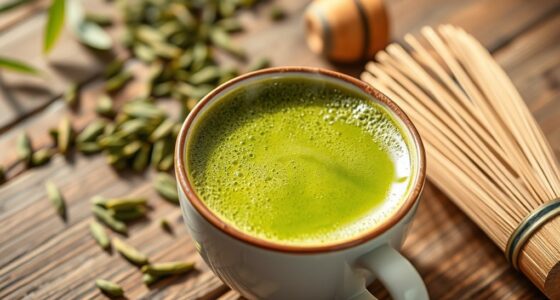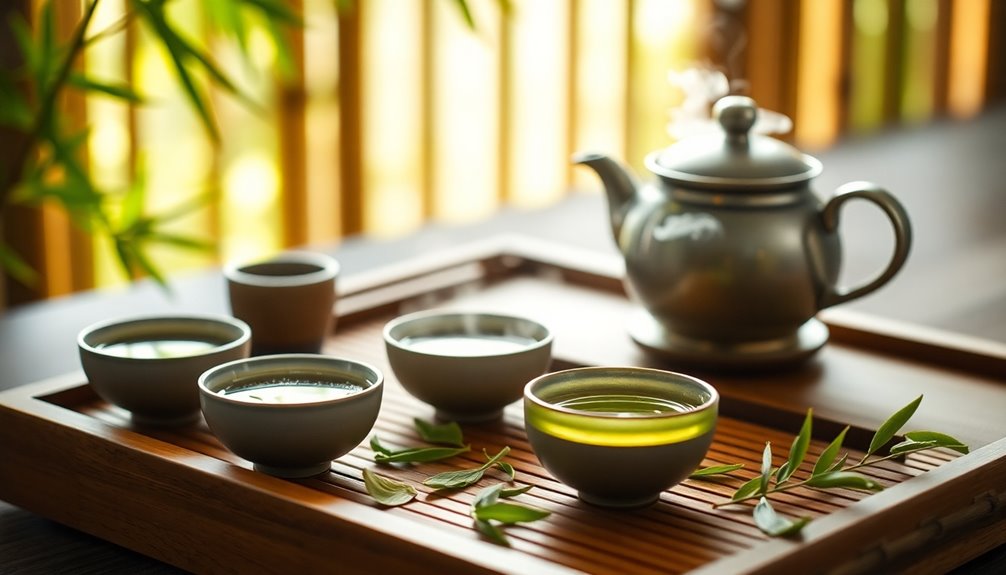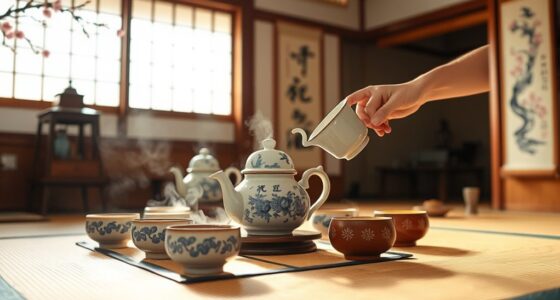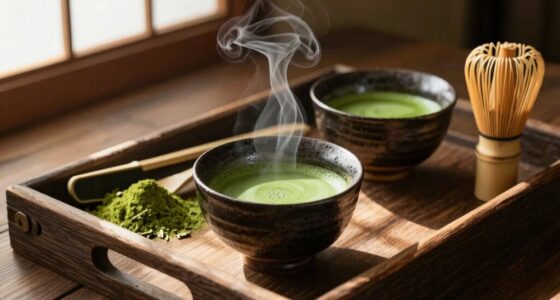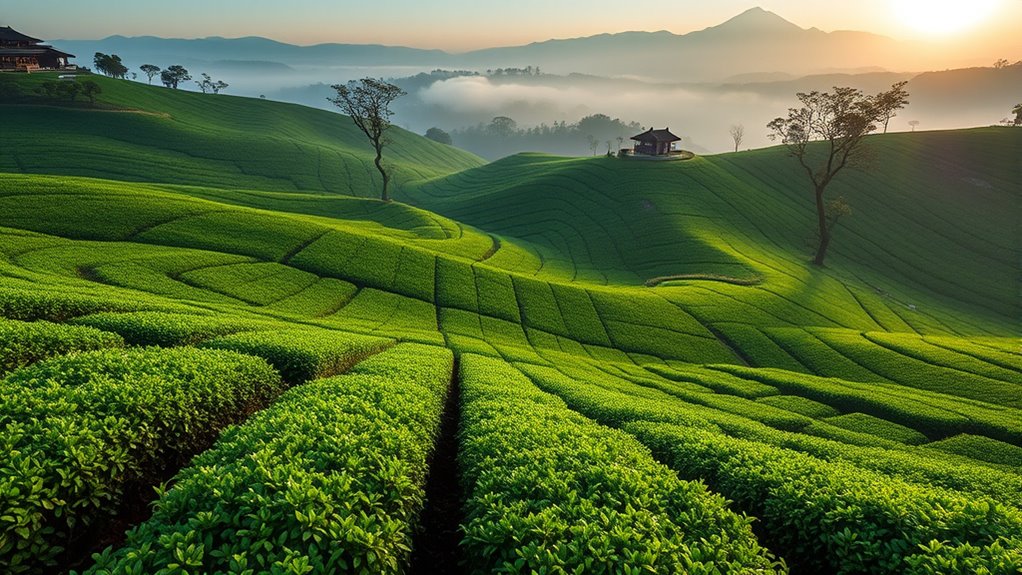

Japanese tea varieties vary greatly depending on their regional terroirs, shaped by unique landscapes, climate, and soil. Regions like Yame, Kagoshima, and Uji produce distinctive flavors, colors, and aromas through traditional cultivation methods and shading techniques. These regional differences reflect long-standing cultural traditions and craftsmanship. By exploring how land, environment, and culture influence each tea’s character, you’ll gain a deeper appreciation for Japan’s diverse tea landscape and what makes each sip special.

Get coffee and tea gear delivered free with Prime
- Fast, free delivery on millions of items
- Prime Video, Amazon Music and more included
- Member-only deals all year
Key Takeaways
- Japanese tea regions each have unique climates, soils, and landscapes that influence the flavor, aroma, and appearance of their teas.
- Terroir factors such as shading techniques and cultivation methods shape regional tea profiles and sensory characteristics.
- Cultivation traditions are passed down through generations, reflecting local culture and contributing to regional tea identities.
- Notable areas like Uji, Yame, and Kagoshima produce distinct teas, showcasing diverse terroir-driven flavor profiles.
- Understanding regional terroir enhances appreciation of Japanese teas’ unique qualities and their cultural significance.

Japanese tea varieties are as diverse as the landscapes they come from, each shaped by unique terroir that influences flavor, aroma, and appearance. When you explore Japanese teas, you’ll notice how the environment, climate, and soil contribute to distinct profiles that reflect their origins. This connection between land and leaf is deeply rooted in traditional tea cultivation techniques, which have been refined over centuries. These methods are not just about maximizing yield but also about preserving the subtle qualities that make each regional tea unique. For example, shading techniques used in producing gyokuro and tencha help develop umami-rich flavors and a vibrant green color, highlighting how specific cultivation methods shape taste and appearance. Understanding these techniques gives you insight into why teas from different regions taste so different, even if they come from the same plant.
The cultural significance of tea in Japan runs deep, shaping how communities grow, prepare, and enjoy their tea. In many regions, tea cultivation is more than just farming; it’s a cultural tradition passed down through generations. The rituals surrounding tea—whether it’s the meditative process of preparing matcha or the careful plucking of leaves—are integral to Japanese identity. You’ll find that each region’s approach to tea reflects local customs, history, and values. Uji, for instance, is renowned for its matcha, a powdered green tea used in tea ceremonies that symbolize harmony and respect. In Shizuoka, the emphasis on fresh, high-quality sencha mirrors the community’s pride in craftsmanship and connection to nature. These traditions influence not only how tea is made but also how it’s appreciated, creating a sense of cultural continuity.
As you taste different Japanese teas, you’ll realize that their unique terroir and cultivation techniques are essential to their identity. Whether it’s the cool, misty hills of Yame producing rich, aromatic gyokuro or the warm, sunny plains of Kagoshima cultivating bold, full-bodied hojicha, each region offers a distinct experience. The cultural importance of tea means that these regional differences are celebrated, making each cup a reflection of its land and traditions. By understanding the interplay of terroir, cultivation techniques, and cultural significance, you can deepen your appreciation of Japanese tea’s rich diversity. It’s not just about flavor; it’s about connecting with centuries of history, craftsmanship, and regional pride embedded in every sip.
As an affiliate, we earn on qualifying purchases.
Frequently Asked Questions
How Does Altitude Affect Tea Flavor Profiles?
Altitude effects markedly influence tea flavor development, and when you grow tea at higher elevations, you’ll notice a more delicate, nuanced taste. The cooler temperatures slow down leaf maturation, intensifying aromatic compounds and creating a brighter, more vibrant flavor profile. You might find the tea to have a cleaner, crisper finish with subtle sweetness. So, altitude plays an essential role in shaping the unique and refined qualities of Japanese tea.
What Role Do Traditional Cultivation Methods Play in Terroir?
Have you ever wondered how tradition shapes a tea’s unique character? Traditional farming and cultivation techniques play a crucial role in creating terroir by preserving local practices that influence flavor and quality. When you embrace these methods, you honor centuries of expertise that enhance soil health, control pests naturally, and develop distinctive taste profiles. So, isn’t it inspiring to see how age-old techniques deepen your connection to each cup of tea?
How Do Regional Climate Variations Influence Tea Quality?
You’ll notice that regional climate variations considerably influence tea quality through microclimate effects and harvest timing. In warmer areas, the microclimate enhances leaf flavor, while cooler regions develop more delicate profiles. Harvest timing also varies with climate, impacting freshness and aroma. When you understand these factors, you can appreciate how climate shapes each tea’s unique taste, aroma, and overall quality, making regional differences truly remarkable.
Are There Specific Pests Unique to Certain Tea-Growing Regions?
You might think pests are the same everywhere, but region-specific pests do exist in Japanese tea-growing areas. For example, the tea green leafhopper is more prevalent in certain regions, threatening crop health. To combat this, farmers use targeted pest management techniques like natural predators and organic sprays. These strategies help protect tea quality while respecting the unique environment of each region, ensuring you get the best tasting brew.
How Does Soil Composition Vary Across Different Japanese Tea Regions?
You’ll notice soil composition varies across Japanese tea regions, affecting flavor and quality. In some areas, high soil mineral content boosts umami, while others feature sandy or volcanic soils that drain well, influencing leaf growth. Regional soil drainage plays a vital role, preventing waterlogging and promoting healthy roots. These differences create unique terroirs, giving each region’s tea distinctive characteristics rooted in their specific soil makeup.
Conclusion
As you explore the rich tapestry of Japanese tea, you’ll discover that each regional variety offers a unique flavor profile shaped by its terroir. From the lush hills of Uji to the sun-drenched fields of Kagoshima, every sip transports you to a different corner of Japan’s breathtaking landscape. Once you taste these teas, you’ll realize they’re more than drinks—they’re nature’s masterpieces, more vibrant and complex than even the most vivid painter’s palette.
Halloween Picks
halloween
As an affiliate, we earn on qualifying purchases.