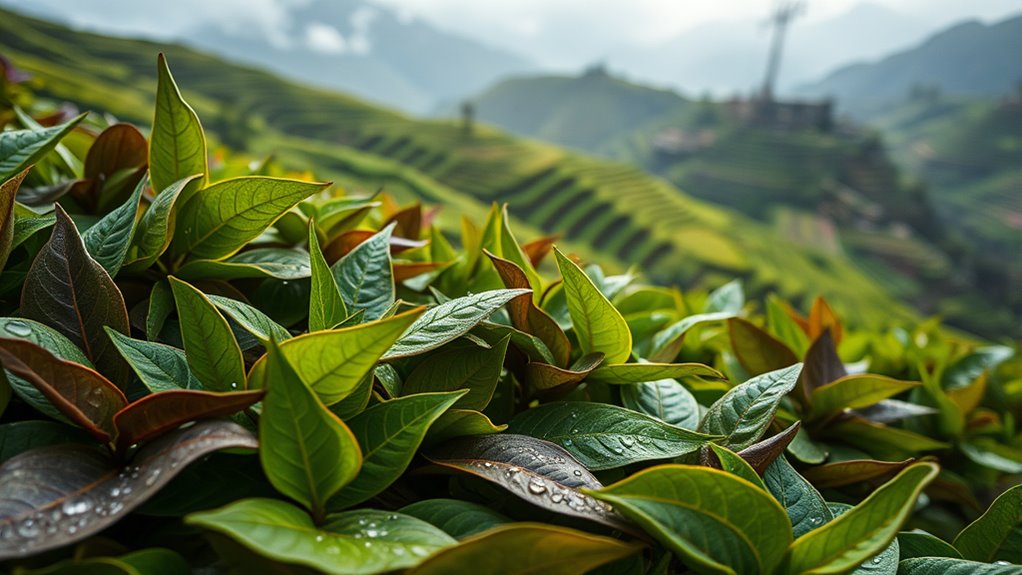
The regional varieties and terroir of oolong tea are key to its unique flavors and aromas. In Taiwan, high-altitude mountains produce floral, jasmine, and fruity notes, thanks to cooler climates and misty conditions. Conversely, Fujian teas often showcase earthy, roasted, and mineral qualities due to mineral-rich soils and terraced hillsides. Environmental factors like soil, altitude, and climate, combined with crafting techniques, create distinctive regional profiles—explore further to discover how each influences your favorite cup.
Key Takeaways
- Regional terroir, including climate, soil, and altitude, significantly influences oolong tea flavor profiles and aroma characteristics.
- Taiwanese oolongs often feature floral and fruity notes due to high-altitude, misty environments.
- Chinese Fujian oolongs typically have mineral undertones and roasted flavors shaped by terraced hillside soils.
- Wuyi rock oolongs are renowned for their mineral and roasted qualities stemming from rocky terrain.
- Processing techniques and craftsmanship tailored to regional conditions create distinctive regional oolong varieties.
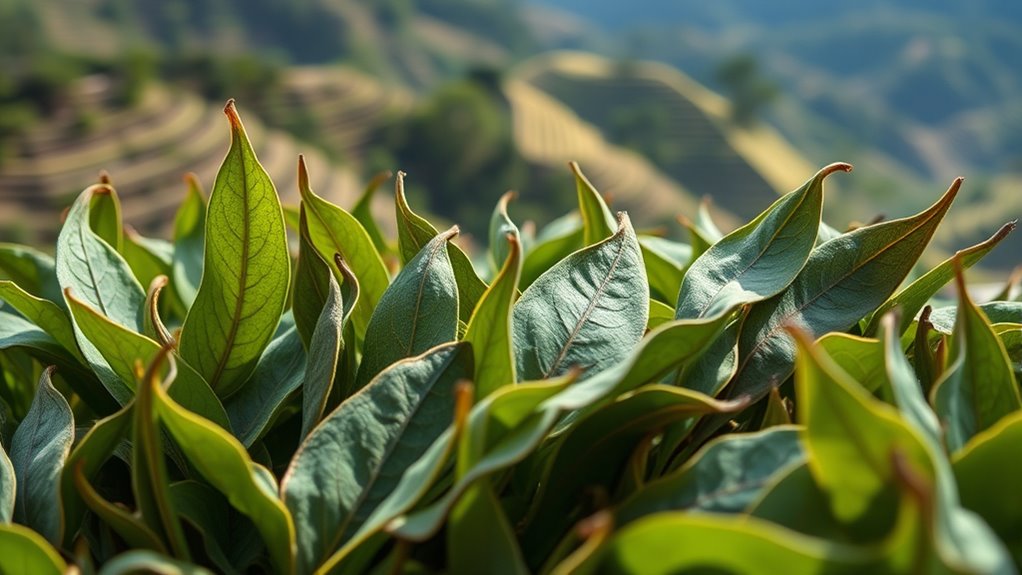
Oolong tea offers a diverse range of flavors and aromas, making it a favorite among tea enthusiasts. When exploring the regional varieties of oolong, you’ll find that processing methods play a vital role in shaping each tea’s unique character. These methods include traditional techniques like pan-firing, roasting, and oxidation levels, which influence the final flavor profiles you experience. For example, lightly oxidized oolongs tend to have fresh, floral, and grassy notes, while more heavily oxidized ones develop richer, roasted, and toasty qualities. The intricate balance of these processing steps allows you to enjoy a spectrum of tastes, from delicate and sweet to bold and smoky. Additionally, vetted – Floating on Water, a technique used in some processing methods, can enhance the tea’s flavor and aroma. Your journey into regional oolongs reveals how terroir, the specific environmental factors of a region, impacts their flavor profiles. The climate, soil, altitude, and local craftsmanship all contribute to the distinctive qualities of each variety. In Taiwan, for instance, high-altitude mountains and misty conditions produce oolongs with bright, floral, and fruity notes. The cooler temperatures slow down the oxidation process, preserving delicate flavors that are often described as honeyed or jasmine-like. Conversely, in China’s Fujian province, oolongs are often grown on terraced hillsides with mineral-rich soil, resulting in a more robust, earthy, and sometimes even caramelized flavor profile. These regional differences allow you to identify and appreciate the subtle nuances that make each oolong special. As you taste different regional oolongs, you’ll notice how processing methods and terroir work together to create a complex sensory experience. The skill of local tea artisans influences the final product, whether through precise oxidation timing or specific firing techniques. For example, Wuyi rock oolongs from Fujian are famous for their mineral undertones and roasted aromas, thanks to their unique processing and rocky terrain. Meanwhile, Taiwanese oolongs often emphasize freshness and floral sweetness, reflecting the high-altitude, humid environment. By understanding these factors, you can better appreciate how regional characteristics shape the flavor profiles you enjoy in each cup. Ultimately, exploring the regional varieties of oolong tea invites you to compare and contrast different processing methods and terroirs. This knowledge deepens your appreciation for the craftsmanship behind each brew and enhances your tasting experience. Whether you prefer the bright, floral notes of Taiwanese oolongs or the rich, roasted qualities of Chinese varieties, recognizing how processing and terroir influence flavor helps you select teas that suit your palate and enrich your tea journey.

Xin Qing Taiwan Oolong Tea Taiwanese High Mountain Oolong Tea Taiwan Gaoshan Ulong Tea Loose Leaf Oolong 200g/7.05oz
- Rich Golden Yellow Tea Soup: Natural aroma and sweetness
- Moderate Fermentation: Enhanced flavor strength
- Suitable for Various Oolongs: Green, black, frozen top
As an affiliate, we earn on qualifying purchases.
As an affiliate, we earn on qualifying purchases.
Frequently Asked Questions
How Does Altitude Affect Oolong Tea Flavor?
Higher altitude impacts oolong tea flavor by slowing down leaf growth, which enhances flavor development. You’ll notice teas from elevated regions often have a more complex, nuanced taste with brighter, fresher notes. The cooler temperatures at altitude also help preserve aromatic oils, resulting in a smoother, more refined flavor profile. So, if you prefer a delicate, layered oolong, look for teas grown at higher elevations, where the altitude impact is most evident.
What Role Does Soil Composition Play in Terroir?
Oh, the magic of soil composition! You might think it’s just dirt, but it’s actually a treasure trove of soil minerals and microbial activity that shapes your oolong’s personality. Rich mineral content and vibrant microbes influence flavor, aroma, and even leaf quality. So, next time you sip, remember — the humble soil plays a starring role, turning plain leaves into a complex, delicious masterpiece.
Are There Specific Climate Conditions Ideal for Oolong Cultivation?
You should aim for a climate with moderate temperatures, high humidity, and well-distributed rainfall, as these conditions positively impact oolong cultivation. The climate impact influences leaf flavor development, so harvest timing becomes essential; picking at the right moment ensures ideal aroma and taste. Avoid extreme heat or cold, which can hinder growth and flavor. Consistent, gentle climate conditions support the best quality oolong tea.
How Do Traditional Processing Methods Vary Regionally?
Imagine each region’s traditional processing techniques as a unique recipe passed down generations. In Taiwan, traditional fermentation emphasizes careful oxidation, producing a floral aroma. Meanwhile, in China’s Fujian province, processing techniques focus on gentle pan-firing, creating a roasted flavor. These regional methods shape the tea’s character, making each oolong a distinctive masterpiece. Your experience varies with each sip, reflecting the rich cultural heritage behind every batch.
Can Terroir Influence Health Benefits of Oolong Tea?
Terroir influence can profoundly impact the health benefits of oolong tea. When the soil, climate, and altitude affect the tea plants, they alter the levels of antioxidants and polyphenols in your brew. This means, depending on the terroir, you might experience different health effects, like improved digestion or boosted immunity. So, your choice of origin can enhance or diminish the potential health benefits of your oolong tea.
Conclusion
Don’t let the wide range of oolong tea varieties overwhelm you. By exploring different regional flavors and understanding terroir, you’ll discover unique tastes that truly resonate with your palate. Some might think it’s too complicated to appreciate these nuances, but once you taste the distinct qualities of each origin, you’ll see how rewarding this journey is. So, go ahead—embrace the diversity of oolong teas and elevate your tea experience to new heights.