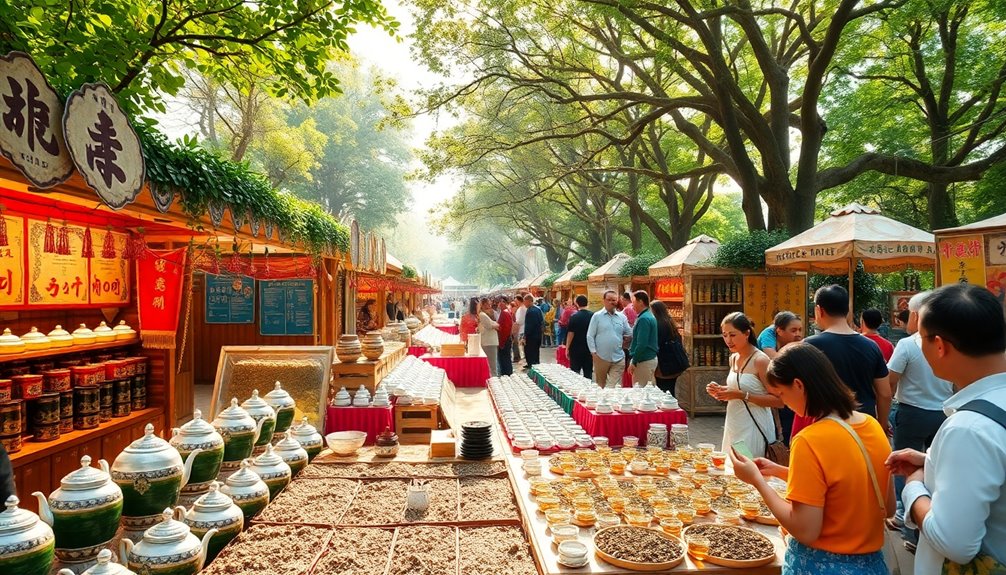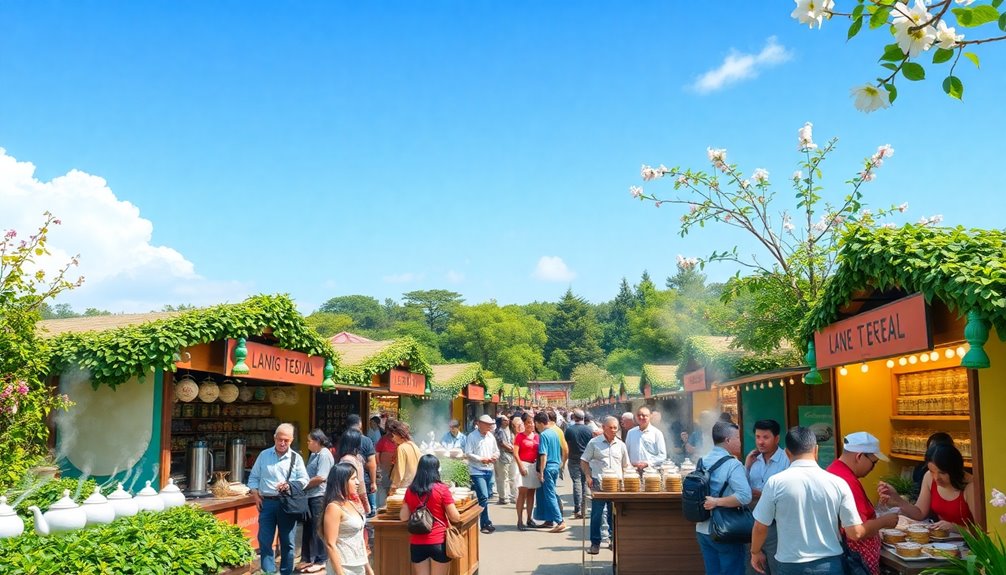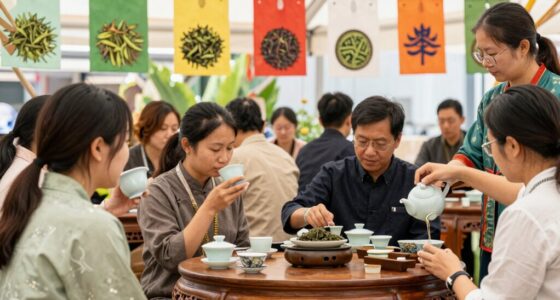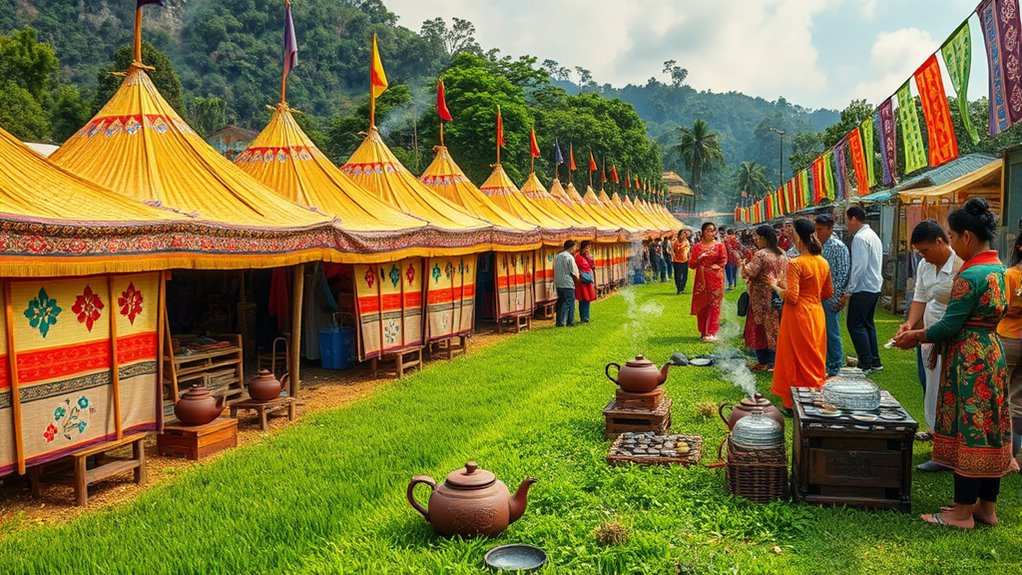
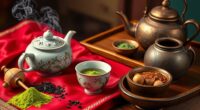
Regional tea events and festivals reflect the unique cultural identities of communities worldwide. In Asia, you’ll find elegant tea ceremonies and vibrant street fairs showcasing brewing skills and traditional customs. Middle Eastern festivals focus on hospitality, social bonding, and storytelling over shared cups of tea. Western celebrations often emphasize education, tasting experiences, and modern twists on age-old rituals. Exploring these diverse traditions offers a rich glimpse into how different cultures honor this beloved beverage—if you keep exploring, you’ll discover even more fascinating customs.
Open a free Amazon Business account
Business pricing, bulk buying and tax-exempt orders.
As an affiliate, we earn on qualifying purchases.
Key Takeaways
- Different regions emphasize unique cultural traditions, such as Japanese mindfulness, Chinese dragon dances, and Middle Eastern hospitality.
- Asian festivals often focus on brewing techniques, ceremonial rituals, and regional tea varieties.
- Middle Eastern events highlight social bonding, storytelling, and the communal sharing of tea.
- Western festivals tend to center on educational experiences, tastings, and blending traditional and modern methods.
- Global festivals showcase diverse customs, from ancient rituals to lively street fairs, celebrating tea’s cultural significance worldwide.

Tea events and festivals vary widely across regions, each reflecting local traditions, cultural histories, and tastes. When you participate in a regional tea festival, you quickly realize how deeply tea is woven into the fabric of local life. These celebrations often highlight specific festival traditions that have been passed down through generations, giving you a glimpse into the area’s unique cultural identity. In many places, the tea ceremony is at the heart of these events, acting as both a ritual and a social activity. You might observe a meticulously performed tea ceremony, where every movement, utensil, and gesture follows centuries-old customs. Such ceremonies often symbolize harmony, respect, purity, and tranquility, offering you a peaceful moment amid the festivities.
Across Asia, for example, the Japanese tea ceremony stands out as a refined ritual emphasizing mindfulness and aesthetic beauty. Watching or participating in this ceremony, you notice how precise movements and symbolic gestures create a meditative experience. In China, traditional tea festivals often incorporate dragon dances, lantern displays, and communal tea tastings, emphasizing festival traditions that celebrate both history and community bonding. Here, the focus might be on brewing techniques and tea types, with vendors showcasing local varieties that reflect regional tastes. Meanwhile, in Taiwan, you find lively tea fairs where street performances and tea competitions highlight the vibrant, dynamic aspects of local tea culture.
Moving to the Middle East, you see how tea plays a central role in social gatherings, with festival traditions emphasizing hospitality and storytelling. You might find yourself sipping sweetened tea in bustling markets or during special celebrations where the act of pouring and sharing tea fosters connections. In these regions, the emphasis is often on hospitality and communal participation, making the tea event a lively, inclusive experience. Additionally, regional cultural expressions influence the styles and themes of these festivals, adding to their unique character.
In Western countries, tea festivals tend to focus more on cultural appreciation and education. You could attend a tea-tasting event where experts explain different types of teas and brewing methods, or watch demonstrations that showcase various festival traditions. These festivals often blend traditional elements with modern twists, making tea more accessible and engaging for a diverse audience. Whether it’s a historical reenactment or a contemporary tea workshop, you’ll find that regional variations reflect the local approach to tea—whether as a ceremonial art or a social beverage.
No matter where you go, each region’s tea event offers a unique window into its cultural soul. From ancient rituals to lively street fairs, these festivals celebrate the rich diversity of tea customs worldwide. As you explore these variations, you’ll gain a deeper appreciation for how tea connects people across different cultures, bringing tradition and community together in a shared love for this timeless beverage.
Top picks for "regional variation event"
As an affiliate, we earn on qualifying purchases.
Frequently Asked Questions
How Do Local Customs Influence Tea Festival Activities?
You’ll notice that local customs shape tea festival activities considerably. They influence tea etiquette, guiding how you should serve and sip tea respectfully. Festival costumes also reflect cultural traditions, making the event more vibrant and authentic. By observing these customs, you show appreciation for local heritage and participate more meaningfully. Embracing these traditions enhances your experience, helping you connect with the community and understand the cultural significance behind every tea ceremony and celebration.
Are There Specific Regional Tea Varieties Showcased in Festivals?
Yes, at tea festivals, you’ll often see regional tea specialties showcased, highlighting local flavors and traditions. These festivals also feature festival tea ceremonies that emphasize unique cultural practices. You get to experience how different regions celebrate their tea heritage through specific brewing techniques, tasting sessions, and ceremonial displays. This immersive experience allows you to appreciate the diverse varieties and customs that make each regional tea scene distinct and memorable.
How Do Climate Differences Affect Festival Timing and Themes?
Like the changing seasons whisper through a wind chime, climate differences shape festival timing and themes. You’ll notice climate-driven schedules adjust to local weather patterns, ensuring celebrations align with harvests or blooming periods. Seasonal theme adaptations reflect the environment—spring festivals highlight fresh greens, while winter focuses on warming brews. This harmony between climate and tradition keeps each event vibrant, authentic, and rooted in its unique landscape.
What Role Do Traditional Music and Dance Play in These Festivals?
Traditional music and dance play a crucial role in these festivals by showcasing cultural expressions through ceremonial performances. You’ll see lively dances and melodious tunes that celebrate tea’s cultural significance, creating a festive atmosphere. These performances enhance the sense of community, preserve heritage, and deepen your appreciation for local customs, making the festival an immersive experience that highlights the rich traditions woven into tea celebrations across different regions.
How Do Regional Festivals Promote Local Tea Businesses?
Regional festivals boost local tea businesses by showcasing their unique teas through vibrant displays, tastings, and live demonstrations. They attract festival tourism, increasing exposure and sales. These events highlight regional tea packaging, making products more appealing and memorable. By celebrating local traditions and flavors, festivals foster community pride and customer loyalty, helping small tea producers expand their reach and thrive in competitive markets.
Conclusion
As you explore these vibrant tea festivals, you’ll find each one paints its own unique tapestry, rich with colors, flavors, and stories. Just like a garden blooming in different seasons, every region offers a distinct aroma and rhythm that beckons you to taste its soul. Embrace the journey, and let these festivals be your passport to a world where tea’s magic dances across borders, inviting you to sip, savor, and discover endless cultural treasures.
Pool season Picks
robotic pool cleaners
As an affiliate, we earn on qualifying purchases.