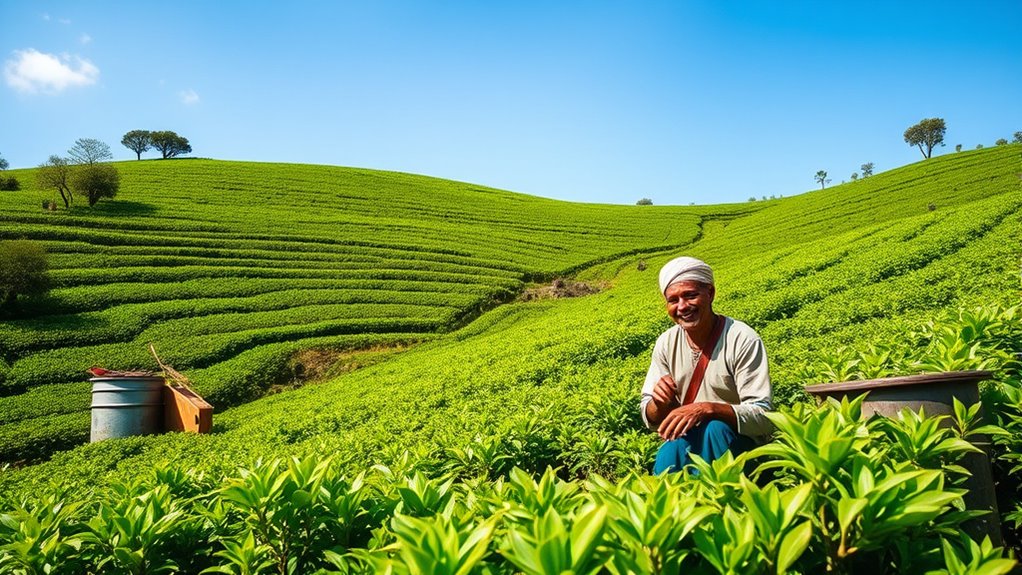

Choosing sustainably cultivated and ethically sourced Indian tea means you’re supporting practices that protect the environment, such as avoiding synthetic chemicals and promoting soil health. It also guarantees farmers receive fair wages and better living conditions, helping uplift local communities. These practices help preserve India’s rich tea heritage while promoting ecological balance. By opting for such tea, you contribute to a more just and eco-friendly process—discover how these steps make a difference in every sip.

Get coffee and tea gear delivered free with Prime
- Fast, free delivery on millions of items
- Prime Video, Amazon Music and more included
- Member-only deals all year
Key Takeaways
- Organic certification ensures chemical-free cultivation, promoting soil health, biodiversity, and environmental sustainability in Indian tea farming.
- Fair trade practices guarantee fair wages and community development, fostering social and economic equity for tea farmers.
- Sustainable methods like crop rotation and composting maintain long-term land productivity and reduce ecological impact.
- Ethical sourcing emphasizes transparency, social responsibility, and environmentally friendly practices throughout the tea supply chain.
- Consumer demand for certified organic and fair trade teas drives responsible cultivation and supports eco-friendly and socially just practices.
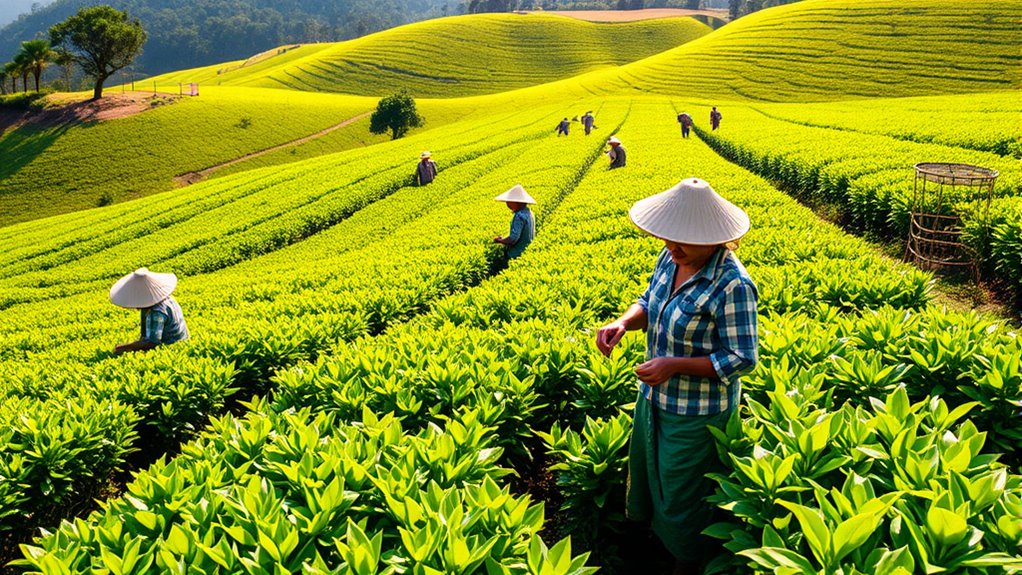
India’s tea industry is increasingly embracing sustainable cultivation and ethical sourcing to meet growing consumer demand for environmentally and socially responsible products. As a conscious consumer, you want to guarantee that the tea you enjoy is produced with integrity, respecting both the environment and the workers behind each leaf. One way producers demonstrate this commitment is through organic certification. When tea is organically certified, it means farmers avoid synthetic pesticides, fertilizers, and genetically modified organisms, reducing chemical runoff and safeguarding local ecosystems. This certification not only assures healthier soil and water but also delivers a cleaner, more natural product to your cup. Organic practices often involve sustainable land management, crop rotation, and composting, which help maintain soil fertility and reduce environmental impact. By choosing organic-certified Indian tea, you support farming methods that prioritize long-term ecological balance over short-term gains.
Alongside organic certification, fair trade practices play a vital role in ethical sourcing. Fair trade ensures that farmers and workers receive fair compensation for their labor, allowing communities to thrive rather than struggle with poverty. When you purchase tea from Fair Trade certified sources, you contribute to better wages, improved working conditions, and investments in local infrastructure. Fair trade also encourages transparency along the supply chain, so you can be confident that your tea was produced ethically. This certification often requires farmers to follow environmentally friendly cultivation methods, including water conservation and minimal chemical use, aligning with the principles of sustainability. By choosing fair trade Indian tea, you support a model of production that values social equity and environmental responsibility equally.
The combination of organic certification and fair trade practices creates a powerful impact, making certain that your tea is both environmentally sustainable and socially just. Producers who adopt these standards often engage in community development projects, such as education and healthcare, which uplift entire regions. As a consumer, your preference for products with these certifications sends a clear message to the market: sustainability and ethics matter. It encourages more farmers and companies to adopt responsible practices, helping to preserve India’s rich tea heritage while safeguarding the planet. By being mindful of these certifications, you actively participate in a movement that promotes respect for nature and human dignity, making your tea-drinking experience not only pleasurable but also purposeful.
As an affiliate, we earn on qualifying purchases.
Frequently Asked Questions
How Do Indian Tea Plantations Ensure Fair Wages for Workers?
You can be assured that Indian tea plantations prioritize worker welfare by implementing wage transparency, ensuring workers know their earnings clearly. They set fair wages based on local laws and standards, regularly reviewing them to match living costs. By fostering open communication and adhering to ethical practices, these plantations promote fair wages, helping workers sustain themselves and their families while contributing to a more equitable and sustainable tea industry.
What Certifications Verify the Sustainability of Indian Tea?
You can verify the sustainability of Indian tea through certifications like Fair Trade and Rainforest Alliance. These labels confirm that the tea is produced with fair wages, environmentally friendly practices, and social responsibility. Fair Trade focuses on equitable trade terms, while Rainforest Alliance emphasizes ecological conservation and worker welfare. By choosing teas with these certifications, you support ethical sourcing and sustainable cultivation practices in India.
How Does Organic Farming Impact Tea Flavor and Quality?
Organic farming considerably impacts tea flavor and quality by enhancing the organic impact, leading to a purer, more vibrant taste. You’ll notice a richer aroma and a smoother, more nuanced flavor profile because organic practices avoid synthetic chemicals. This flavor enhancement results from healthier soil and plants, allowing the tea’s natural characteristics to shine through. Overall, organic farming elevates tea quality, offering a more authentic and satisfying drinking experience.
Are There Government Incentives for Sustainable Tea Cultivation?
Yes, the government offers incentives for sustainable tea cultivation. You can access government grants and policy support aimed at promoting eco-friendly practices. These incentives encourage you to adopt organic farming methods, reduce chemical usage, and improve environmental sustainability. By taking advantage of such support, you not only enhance your tea’s quality but also contribute to conserving resources and supporting ethical sourcing. It’s a great way to grow your business responsibly.
How Can Consumers Identify Ethically Sourced Indian Tea?
You can identify ethically sourced Indian tea by looking for Fair Trade certifications and ethical labeling on the packaging. While some might think labels are confusing, reputable brands clearly display these marks, ensuring the tea was produced responsibly. By choosing products with recognized certifications, you support fair wages and sustainable practices, making your tea purchase both enjoyable and ethically conscious. Always check for trusted labels to make a positive impact.
Conclusion
Imagine sipping a cup of Indian tea that’s been nurtured with care and respect for the environment. When you choose ethically sourced, sustainably cultivated tea, you’re not just enjoying a flavorful brew—you’re supporting farmers who protect their land and communities. Just like a well-tended garden yields the best blooms, your mindful choice helps guarantee these rich traditions flourish for generations to come. Every sip becomes a small act of kindness toward the planet and its people.
Fall Picks
fall essentials
As an affiliate, we earn on qualifying purchases.