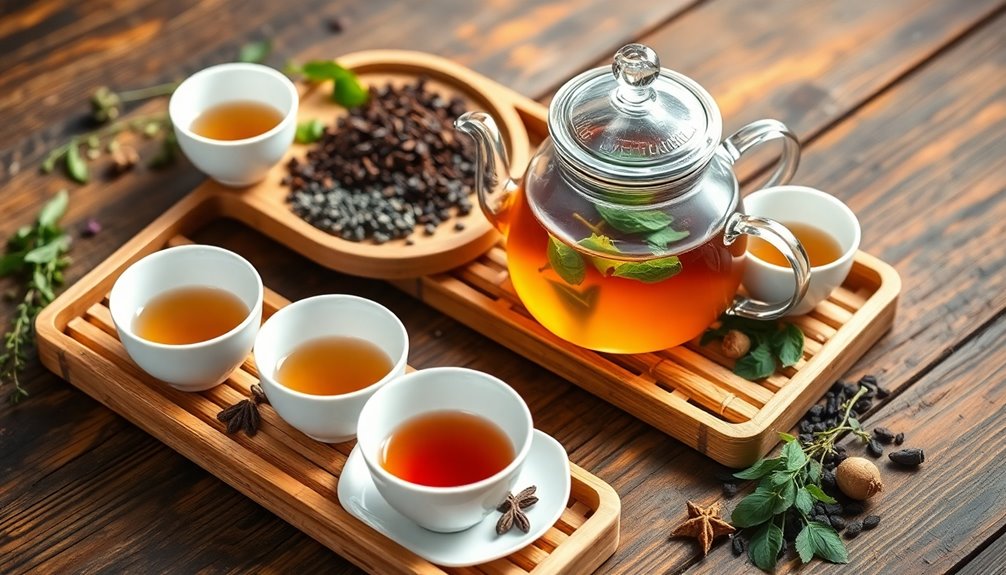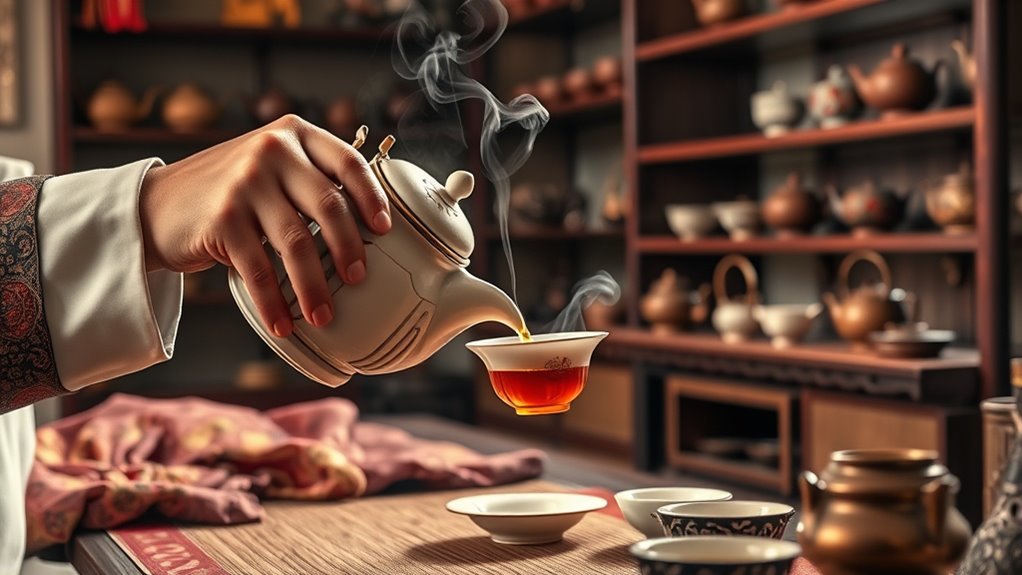

Tea brewing techniques reflect deep cultural values, traditions, and social customs that shape how communities connect and communicate. From precise movements in Japanese tea ceremonies to the patience required in Chinese Gongfu brewing, each method embodies respect, humility, and artistry. These rituals reinforce social hierarchies, foster bonds, and preserve cultural identity across generations. Understanding the significance behind each step reveals how these practices carry profound cultural meaning—you’ll discover even more when exploring how these traditions continue to influence daily life.
Open a free Amazon Business account
Business pricing, bulk buying and tax-exempt orders.
As an affiliate, we earn on qualifying purchases.
Key Takeaways
- Tea brewing techniques reflect and preserve cultural values, traditions, and social hierarchies across different societies.
- Rituals in tea preparation serve as symbols of respect, mindfulness, and community cohesion.
- Specific methods and tools embody cultural aesthetics and philosophies, elevating tea making into an art form.
- Shared brewing practices foster cultural identity, continuity, and social bonds within communities.
- Techniques act as living expressions of cultural history, connecting individuals to their heritage and social fabric.

Tea brewing techniques are more than just methods; they reflect deep cultural values and traditions that shape communities worldwide. When you participate in a tea ceremony, you’re engaging with centuries of history and social customs that transcend mere beverage preparation. Each step in the process—how you select the leaves, the water temperature, the steeping time—embodies specific cultural principles and philosophies. These brewing rituals serve as a form of communication, emphasizing respect, mindfulness, and harmony. By following these rituals, you connect with a community’s identity and its way of appreciating life’s simple pleasures.
Participating in tea ceremonies connects us to cultural values, history, and mindfulness through mindful brewing and shared traditions.
In many cultures, the tea ceremony is a carefully choreographed event that elevates brewing into an art form. For example, in Japan, the traditional tea ceremony, or chanoyu, involves precise movements, a quiet atmosphere, and symbolic gestures that embody humility, purity, and tranquility. You learn to pay attention to every detail—the way you whisk the matcha, the placement of utensils, even the way you bow. This ritual isn’t just about making tea; it’s about cultivating mindfulness and fostering social bonds. Similarly, in China, the Gongfu tea ceremony emphasizes patience and skill, with multiple short infusions that highlight the complexity of high-quality tea leaves. You develop an appreciation for the subtle flavors and aromas that emerge through careful brewing, turning a simple act into a meditative practice.
Brewing rituals also serve to reinforce social hierarchies and community bonds. In many societies, sharing tea is a gesture of hospitality and respect. When you host or are hosted in these traditions, you partake in a mutual exchange that strengthens relationships. The rituals often dictate who prepares the tea, how it’s served, and the manner in which it’s consumed, reinforcing social harmony and cultural identity. These customs often involve specific utensils, serving styles, and etiquette, creating a shared experience that ties individuals to their cultural roots. Whether it’s the delicate pouring in a Japanese tea room or the communal steeping in Middle Eastern traditions, these rituals remind you of the importance of patience, respect, and mindfulness.
Engaging in these brewing practices can also deepen your understanding of how cultural values influence daily life and social interactions. In essence, the tea ceremony and brewing rituals do more than produce a warm beverage. They serve as cultural symbols—embodying values, history, and social cohesion. When you engage in these practices, you’re not just making tea; you’re participating in a living tradition that connects individuals across generations and communities. These techniques highlight how a simple act can carry profound cultural significance, shaping identities and fostering understanding through shared customs and mindful preparation.

ZENSO Premium Matcha Whisk Set – 10 Piece Japanese Matcha Tea Ceremony Kit | Matcha Bowl, Tea Canister, Purple Bamboo Whisk, Whisk Holder, Sifter, Scoop & Scoop Holder, Cup, Cloth, Spoon – Dark Gray
- Complete 10-Piece Matcha Set: Includes all essentials for tea ceremony
- Handmade Ceramic Pieces: Unique, handcrafted with wabi-sabi charm
- Natural Purple Bamboo Whisk: Resin-free, pure bamboo for optimal froth
As an affiliate, we earn on qualifying purchases.
As an affiliate, we earn on qualifying purchases.
Frequently Asked Questions
How Do Tea Brewing Methods Impact Tea Flavor Profiles Globally?
Your tea brewing methods greatly impact the flavor profiles you experience worldwide. By adjusting the tea infusion time, temperature, and steeping style, you influence how flavors are extracted from the leaves. Proper technique enhances the tea’s aroma, body, and subtle notes, creating a richer, more nuanced taste. Different cultures embrace unique brewing traditions that shape the overall flavor extraction, making each cup a reflection of its specific style.
What Role Does Tea Ceremony Etiquette Play in Cultural Identity?
Think of tea ceremony etiquette as a delicate dance where each step reflects deeper cultural symbolism. You might recall how Japanese tea ceremonies embody respect and harmony, reinforcing cultural identity through ceremonial customs. These rituals serve as a living link to history, fostering community and shared values. By observing and participating in such customs, you actively preserve and celebrate your cultural heritage, making your identity resonate through each mindful sip.
Are There Regional Differences in Tea Brewing Tools and Their Significance?
Yes, there are regional differences in tea brewing tools and their significance. You’ll notice variations in regional utensils, like gaiwans in China or samovars in Russia, which reflect local brewing customs. These tools are more than just functional—they embody cultural values and traditions. When you explore different regions, you see how these utensils shape the brewing process and deepen your appreciation for each area’s unique tea culture.
How Has Modern Technology Influenced Traditional Tea Brewing Practices?
Did you know that 65% of tea drinkers now use automated brewing machines? Modern technology, like digital infusion, has transformed traditional practices by making tea preparation more consistent and convenient. Automated brewing tools allow you to set precise temperature and time controls, ensuring perfect flavor every time. This blend of tradition and innovation helps you enjoy tea more effortlessly while preserving the essence of time-honored techniques.
What Are the Environmental Impacts of Different Tea Brewing Techniques?
You can impact environmental sustainability by choosing tea brewing methods that reduce resource consumption. For example, using a smaller amount of water or opting for energy-efficient appliances minimizes your carbon footprint. Traditional techniques like using a teapot with a lid conserve heat, saving energy. By being mindful of your brewing choices, you help protect the environment and promote sustainable practices in your daily routine.
Conclusion
You see how tea brewing connects cultures worldwide, shaping traditions and social bonds. Did you know that over 2 billion cups of tea are consumed daily globally? This shows just how powerful brewing techniques are in bringing people together and preserving cultural identities. So, next time you prepare your tea, remember you’re part of a rich, centuries-old tradition that influences millions. Your simple act of brewing holds cultural significance beyond just taste.
Back to school Picks
back to school
As an affiliate, we earn on qualifying purchases.