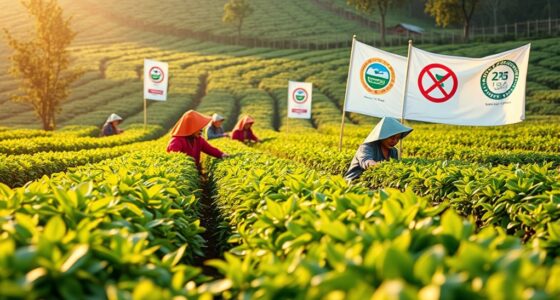

Technological innovations are transforming sustainable and ethical tea sourcing by increasing transparency and verifying claims. Blockchain enables you to trace tea from farm to cup, confirming certifications like Fair Trade and Organic. Digital platforms connect farmers directly with buyers, ensuring fair wages. Precision agriculture uses sensors and drones to optimize cultivation practices, reducing environmental impact. Smart packaging with QR codes empowers you to verify a brand’s sustainability efforts. Keep exploring to discover how these tools are shaping a more responsible tea industry.

Get coffee and tea gear delivered free with Prime
- Fast, free delivery on millions of items
- Prime Video, Amazon Music and more included
- Member-only deals all year
Key Takeaways
- Blockchain technology ensures traceability and verifies sustainability claims from tea plantations to consumers.
- Digital platforms facilitate direct trade, reducing intermediaries and increasing fair wages for farmers.
- Precision agriculture tools optimize resource use, enhance quality, and demonstrate organic compliance.
- Smart packaging with QR codes empowers consumers to verify origin and certifications easily.
- Investment strategies support funding sustainable practices, encouraging responsible sourcing across the industry.
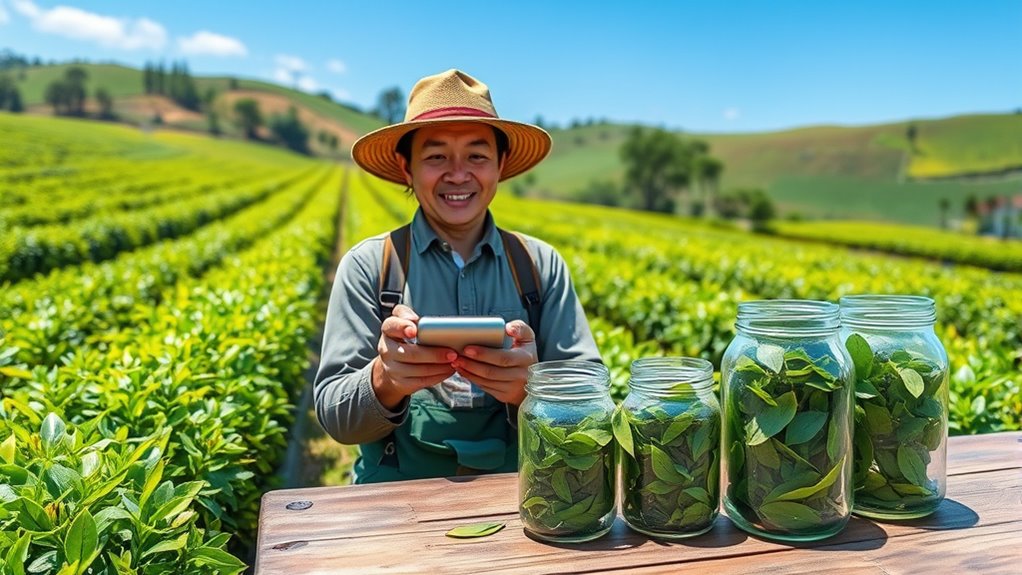
Tea lovers today are increasingly seeking brands that prioritize sustainability and ethics in their sourcing practices. This shift reflects a desire to enjoy quality tea while supporting fair labor practices and environmental stewardship. Technological innovations are playing a crucial role in transforming how tea is sourced, guaranteeing these values are embedded at every step of the supply chain. One of the most significant advancements involves transparency tools that leverage blockchain technology. With blockchain, you can trace the journey of your tea from the plantation to your cup, verifying claims like Fair Trade and Organic certification. This not only builds trust but also encourages brands to maintain high standards, knowing consumers can access detailed origin information at any time.
Furthermore, digital platforms now facilitate better communication between farmers and buyers. Through mobile apps and online marketplaces, small-scale tea producers can connect directly with international companies, reducing the layers of middlemen that often diminish farmers’ earnings. This direct trade approach supports fair wages and ensures that farmers receive a premium for their organic and ethically grown tea. These innovations also promote transparency around certifications such as Fair Trade, which guarantees that farmers adhere to fair labor practices and receive fair compensation, and Organic certification, which ensures the tea is grown without synthetic pesticides or fertilizers. By providing real-time data and digital records, these tools make it easier for consumers to verify the authenticity of these labels, encouraging brands to uphold sustainable standards consistently.
Digital platforms connect farmers directly with buyers, promoting transparency and fair wages for ethically grown, certified organic tea.
Another technological breakthrough involves precision agriculture, which uses sensors, drones, and data analytics to optimize tea cultivation. These tools help farmers reduce their environmental impact by minimizing water usage, avoiding over-application of fertilizers, and preventing soil degradation. Such practices align with organic principles, and the data collected can be used to demonstrate compliance during certification processes. This not only benefits the environment but also enhances the quality and purity of the tea, appealing to health-conscious consumers.
Additionally, innovations in packaging—like biodegradable and smart packaging—are making a difference. Smarter packaging can include QR codes that consumers scan to access detailed information about the tea’s origin, certifications, and the farmers who grew it. This technology empowers you to make more informed choices, supporting brands that genuinely prioritize sustainability and ethical sourcing. As these technological tools become more widespread, they will continue to push the industry toward more responsible practices, making it easier for you to enjoy your favorite tea with confidence that it’s produced responsibly, ethically, and sustainably.
Moreover, private placement strategies are increasingly being integrated into sustainable sourcing initiatives, enabling investors to support innovative companies that prioritize environmental and social governance.
organic fair trade loose leaf tea
As an affiliate, we earn on qualifying purchases.
As an affiliate, we earn on qualifying purchases.
Frequently Asked Questions
How Do Blockchain Technologies Verify Tea Sourcing Transparency?
You can see how blockchain technologies verify tea sourcing transparency by using a digital ledger that records every step in the supply chain. When you track tea, each transaction is securely logged, making it impossible to alter or falsify information. This guarantees that the tea’s origin, production practices, and ethical standards are transparent and trustworthy, giving you confidence in the sustainability and ethics of the tea you enjoy.
What Are the Main Challenges in Implementing Fair Trade Practices Globally?
You might think implementing fair trade practices is straightforward, but supply chain hurdles and cultural resistance make it complex. Overcoming logistical issues requires coordination across regions, while respecting local traditions demands cultural sensitivity. These challenges can slow progress, but persistent effort, education, and collaboration help break down barriers. By addressing these obstacles thoughtfully, you can promote fair trade globally, ensuring ethical sourcing benefits everyone involved.
How Does AI Optimize Sustainable Tea Plantation Management?
AI optimizes sustainable tea plantation management by using analytics to predict crop health and yield. With crop monitoring, it detects pests, diseases, and water needs early, allowing you to take timely action. This reduces resource waste and enhances sustainability. You can make data-driven decisions, improve crop quality, and minimize environmental impacts, ensuring your plantation remains eco-friendly and ethically managed while boosting productivity efficiently.
What Certifications Guarantee Ethical and Eco-Friendly Tea Production?
You can look for certifications like Fair Trade and Organic Certification to guarantee ethical and eco-friendly tea production. Fair Trade ensures workers receive fair wages and work in safe conditions, while Organic Certification confirms the tea is cultivated without harmful chemicals or pesticides. These labels help you make responsible choices, supporting sustainable farming practices that protect the environment and promote social equity in the tea industry.
How Can Consumers Identify Truly Sustainable and Ethical Tea Brands?
If you want to spot truly sustainable and ethical tea brands, look for clear labels that emphasize organic farming and fair labor practices—these are your golden tickets! Don’t just trust pretty packaging; dig into the brand’s story, certifications, and transparent sourcing info. When a company champions environmental care and fair wages, you can be confident you’re sipping tea that’s good for the planet and the people who make it.
Conclusion
Imagine a tea leaf, carefully plucked from a farm where technology and ethics grow hand in hand, much like a well-tended garden. When you choose sustainably sourced tea, you’re helping guarantee that farmers thrive and ecosystems stay healthy. Recent innovations have increased yields by 20% while reducing environmental impact. By embracing these advancements, you’re not just sipping tea—you’re nourishing a future where ethical practices flourish like a well-rooted tree, giving back to communities and the planet alike.
Halloween Picks
halloween
As an affiliate, we earn on qualifying purchases.