
Many tea lovers miss how vital proper brewing techniques and cultural rituals are for perfect food pairing. Small tweaks like water temperature, steeping time, or traditional methods can make a big difference in flavor harmony. Without this knowledge, the tea can overpower or clash with food instead of complementing it. When you pay attention to these details and respect tea’s heritage, your pairings become more refined and enjoyable. If you keep exploring, you’ll discover how to elevate your tea experience even further.

Get coffee and tea gear delivered free with Prime
- Fast, free delivery on millions of items
- Prime Video, Amazon Music and more included
- Member-only deals all year
Key Takeaways
- Many overlook how precise brewing techniques, like water temperature and steeping time, can significantly enhance food pairing harmony.
- The cultural and ritualistic aspects of tea preparation are often missed, yet they deepen appreciation and influence flavor compatibility.
- Tea lovers may choose the wrong types or styles of tea, not tailoring brewing methods to complement specific dishes.
- Understanding traditional brewing methods can transform casual tea drinking into a mindful, harmonious culinary experience.
- Respecting tea’s heritage and rituals elevates pairing from casual to artful, enriching the overall dining ritual.

Have you ever wondered how to enhance your dining experience with the perfect cup of tea? Many tea lovers focus on the tea itself—its aroma, flavor, and the right temperature—but they often overlook how vital the way they prepare and serve it truly is. Tea brewing techniques matter more than you might think, especially when it comes to pairing with food. A simple steeping method might be fine for everyday drinking, but when you want to elevate your meal, you need to pay attention to details like water temperature, steeping time, and tea leaves quality. These subtle adjustments can make a world of difference, turning a good pairing into an exceptional one.
Refining your tea brewing techniques elevates food pairings and transforms your dining experience into an artful ritual.
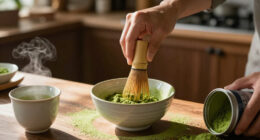
What most tea lovers miss is that tea isn’t just about the beverage; it’s embedded in a rich tapestry of cultural tea rituals. These rituals aren’t just traditions—they’re carefully crafted processes that highlight the nuances of tea and its harmony with food. For example, the Japanese tea ceremony emphasizes precise movements and specific utensils, which enhance the tea’s delicate flavors and create a mindful experience. Similarly, Chinese Gongfu tea brewing involves multiple short steeps, allowing you to appreciate different flavor layers and find the perfect balance with your dish. When you understand and incorporate these cultural rituals into your own tea-drinking, you start to see how different brewing techniques influence the taste profile, making your food pairing more intentional and refined.
Many don’t realize that the way you brew your tea can either complement or clash with your meal. For instance, a strongly brewed black tea might overpower light seafood dishes, while a subtle green tea can be lost if brewed too long or at too high a temperature. Paying attention to tea brewing techniques ensures that each cup enhances your food rather than overpowering it. This is where understanding traditional brewing methods can greatly improve your pairing skills—and deepen your appreciation for tea. Recognizing cultural tea rituals can also heighten your awareness of how different techniques impact flavor harmony. Additionally, experimenting with different tea types and brewing styles allows you to tailor the experience to suit various dishes, elevating your overall culinary experience. Exploring tea culture can inspire you to adopt these practices more intentionally and enrich your appreciation for the complexity of pairing tea with food. Familiarizing yourself with these traditional techniques can also help you develop a more nuanced palate and make your pairings more harmonious.
Ultimately, what most tea lovers miss is that tea pairing with food isn’t just about choosing the right tea but about respecting the cultural context and brewing techniques behind each cup. When you take the time to learn and apply these practices, your dining experience transforms. You move beyond casual sipping to an artful, harmonious pairing that elevates your meal and deepens your appreciation for tea’s rich heritage.
As an affiliate, we earn on qualifying purchases.
Frequently Asked Questions
How Does Tea Temperature Affect Pairing Choices?
Tea temperature profoundly influences your pairing choices by affecting flavor enhancement. When tea is hot, it releases more aromatic compounds, intensifying flavors and complementing rich or spicy foods. Conversely, cooler tea offers a milder taste, ideal for delicate dishes or desserts. Adjusting the temperature allows you to tailor the pairing to enhance specific flavors, creating a more balanced and enjoyable tea and food experience.
Can Herbal Teas Be Paired With Savory Dishes Effectively?
Absolutely, herbal teas can be paired effectively with savory dishes, creating herbal harmony and savory synergy. You’ll find that their unique flavors complement spices, herbs, and rich textures, balancing out saltiness or acidity. For example, mint tea pairs well with lamb, while chamomile enhances poultry dishes. Experimenting with herbal teas opens up new flavor dimensions, making your meal more enjoyable and memorable by highlighting different taste profiles.
Do Different Tea Brewing Methods Influence Food Pairing?
Yes, different brewing techniques profoundly influence food pairing by affecting flavor harmony. You might think brewing methods only matter for tea’s strength, but they also alter aroma and taste nuances. For example, steeping time and temperature can intensify or soften flavors, making pairing more or less effective. By adjusting brewing techniques, you can enhance how tea complements your food, creating a more harmonious and enjoyable dining experience.
Is There a Best Time of Day for Tea and Food Pairing?
You should enjoy tea and food pairing during mid-morning or early afternoon, when your senses are most alert. During these times, the tea aroma and flavor balance shine brightest, enhancing your tasting experience. Avoid late evenings, as fatigue dulls your palate. By choosing the right time, you allow the nuanced flavors of your tea and food to complement each other fully, elevating your overall enjoyment.
How Do Regional Tea Traditions Impact Pairing Options?
Did you know that regional tea traditions shape over 80% of local pairing preferences? Regional flavor and cultural influences deeply impact your pairing options, making each experience unique. For example, Japanese matcha often pairs with savory dishes, while Indian chai complements rich, spicy foods. Embracing these traditions lets you explore authentic flavors, enhancing your tea moments and respecting the cultural roots behind each pairing.
Conclusion
Many tea enthusiasts overlook the art of perfect food pairing, missing out on a richer tasting experience. Did you know that 78% of tea drinkers report enjoying their tea more when paired thoughtfully with food? Next time you sip, try matching your tea with a complementary dish—it could transform your whole tea-drinking experience. Don’t settle for plain; explore the flavors that elevate your tea and food to delightful new heights.
Halloween Picks
halloween
As an affiliate, we earn on qualifying purchases.