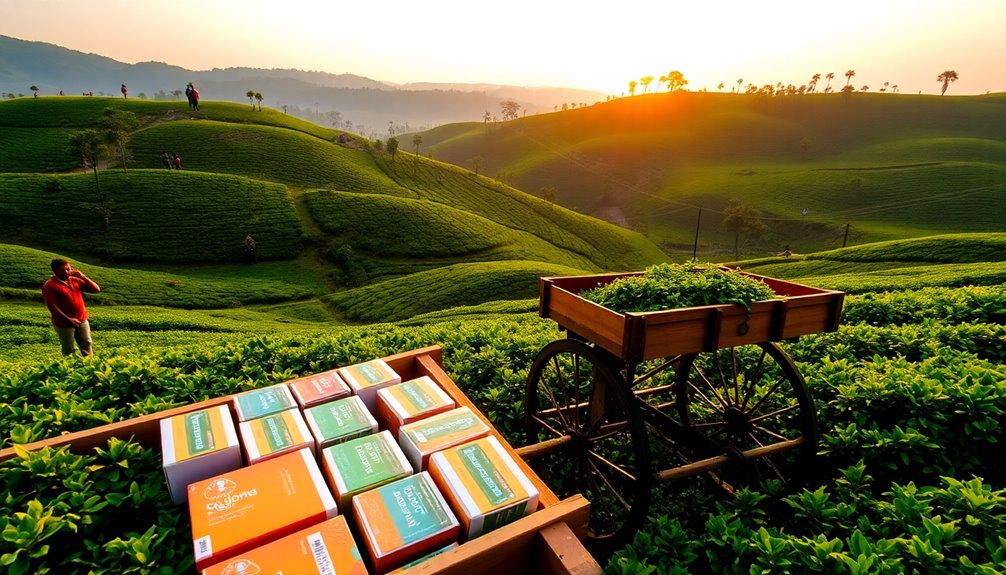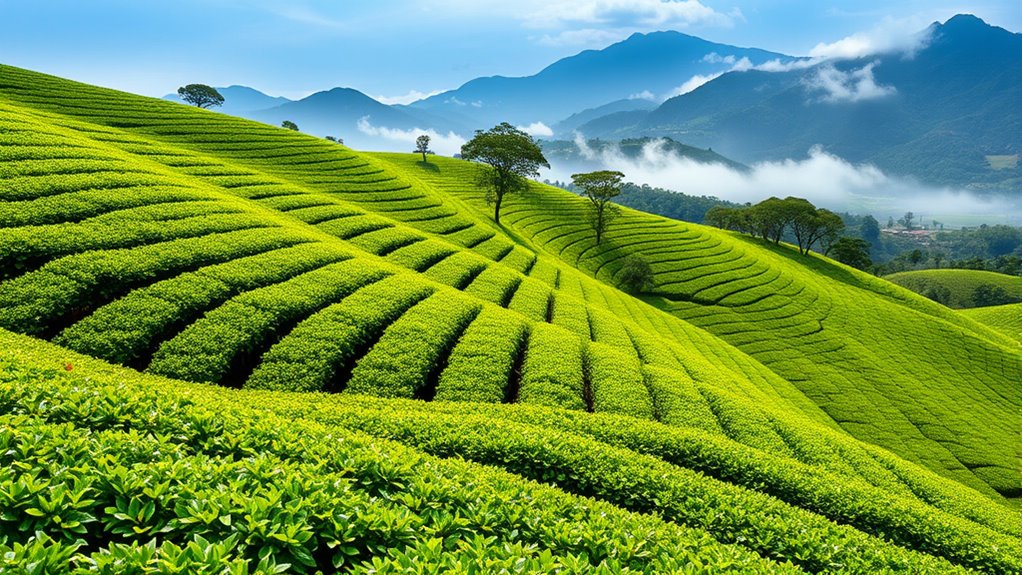
Sri Lankan tea’s regional varieties and terroirs give you a flavorful journey through the island’s diverse landscapes. In Nuwara Eliya, expect delicate, refined aromas from higher elevations, while Uva offers richer, spicier notes with a full body. Ruhuna produces bold, robust teas perfect for strong brews. Each region’s unique climate, soil, and altitude shape the distinctive flavors and aromas. Keep exploring to uncover how these factors craft the perfect cup just for you.
Key Takeaways
- Sri Lankan tea regions like Nuwara Eliya, Uva, and Ruhuna have distinct terroirs that influence flavor and aroma profiles.
- Nuwara Eliya produces light, delicate teas with floral and citrus notes due to high-altitude, cooler climate conditions.
- Uva offers teas with pronounced aroma and spicy hints, reflecting its unique combination of altitude, soil, and climate.
- Ruhuna’s low-altitude plantations create bold, robust teas suitable for strong brews, shaped by warmer, humid conditions.
- The environment, soil, and altitude in each region shape the unique sensory characteristics of Sri Lankan tea varieties.
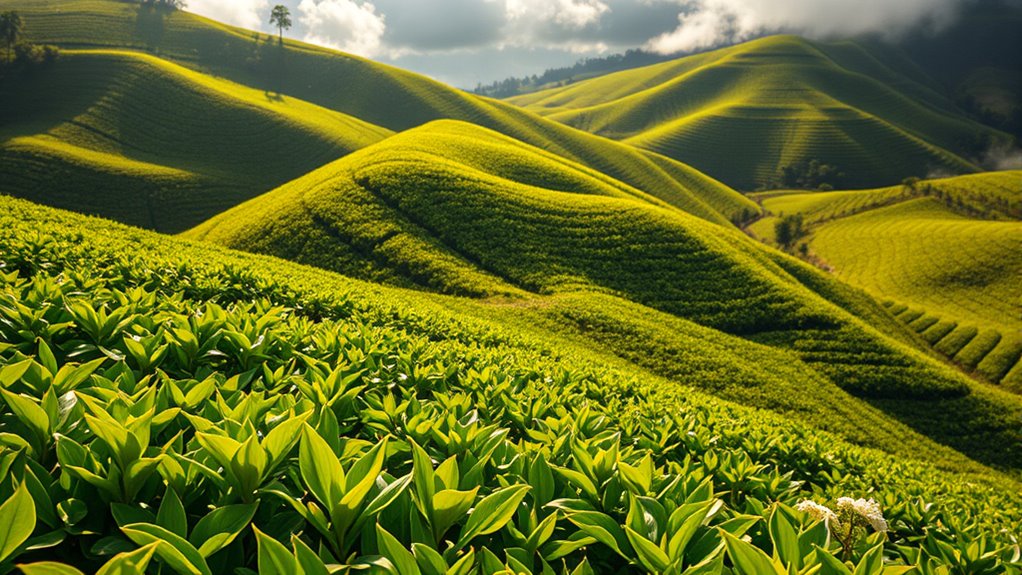
Sri Lankan tea varieties are renowned worldwide for their unique flavors and high quality. When you sip a cup of Ceylon tea, you’re experiencing more than just a beverage; you’re tasting the distinct characteristics shaped by the island’s diverse terroirs. One of the key aspects that sets these teas apart is their tea leaf aroma, which varies notably across different regions. The aroma is influenced by the specific climate, soil, and altitude of each plantation, creating a sensory profile that can range from floral and citrusy to malty and robust. As you explore different varieties, you’ll notice how the subtle nuances in aroma reflect the environment where the tea was cultivated, making each sip a journey through Sri Lanka’s rich landscape.
The plantation heritage of Sri Lankan tea plays an essential role in its overall quality and reputation. Many of the tea estates have been in operation for generations, passed down from one family to the next, preserving traditional cultivation and processing methods. This deep-rooted history contributes to the consistency and craftsmanship that define Sri Lankan teas. When you taste a cup, you’re experiencing the culmination of decades of expertise, where meticulous plucking, withering, rolling, and firing techniques are carefully executed to bring out the best in each leaf. The plantation heritage also influences the terroir, as the unique practices and local knowledge adapt to the specific conditions of each estate, further enhancing the distinctiveness of the teas produced.
Different regions in Sri Lanka are renowned for their particular qualities. For example, the high-elevation estates in Nuwara Eliya produce teas with a delicate aroma and a light, refined taste, perfect for those who prefer subtlety. Meanwhile, teas from the Uva region offer a more pronounced tea leaf aroma with a hint of spiciness and a fuller body. The low-grown teas from the Ruhuna region tend to be bold and robust, ideal for making strong brews. These regional distinctions are deeply rooted in the island’s plantation heritage, where centuries of tradition and adaptation have created a rich tapestry of flavors and aromas. By understanding the terroir behind each variety, you gain a greater appreciation for the craftsmanship and natural environment that shape Sri Lankan tea, elevating your experience beyond mere consumption to an appreciation of its cultural and botanical origins.
Sri Lankan Ceylon tea variety pack
As an affiliate, we earn on qualifying purchases.
As an affiliate, we earn on qualifying purchases.
Frequently Asked Questions
How Does Altitude Affect Tea Flavor Profiles?
Altitude influence markedly impacts tea flavor development. As you go higher in elevation, the cooler temperatures slow leaf growth, allowing more time for complex flavors to develop. You’ll notice teas from higher altitudes often have brighter, more vibrant notes with a delicate, nuanced profile. Lower altitudes tend to produce teas with bolder, fuller flavors. So, the altitude directly shapes your tea’s aroma, taste, and overall character.
What Are the Unique Terroir Characteristics of Lesser-Known Regions?
Imagine uncovering hidden gems in Sri Lanka’s tea landscape. In lesser-known regions, microclimate influences like cooler breezes and humidity craft delicate, nuanced flavors. The soil mineral content acts like nature’s palette, coloring each leaf with subtle hints of richness and earthiness. These terroir characteristics create a unique symphony of taste, making each cup a journey into the region’s untouched beauty and diverse environment.
How Do Seasonal Changes Influence Regional Tea Qualities?
Seasonal harvests markedly influence regional tea qualities by causing flavor shifts and affecting leaf maturity. As seasons change, you notice variations in taste, aroma, and strength, with cooler months producing more robust, malty teas and warmer months yielding lighter, floral notes. These changes are driven by temperature, rainfall, and sunlight, which shape the tea’s character. You can enjoy distinct profiles by understanding how seasonal shifts impact your favorite Sri Lankan teas.
Are There Specific Pests or Diseases Unique to Sri Lankan Tea Regions?
Think of Sri Lankan tea regions as a forest where unique pests and diseases lurk like hidden shadows. You’ll find region-specific pests like the tea mosquito bug and endemic diseases such as blister blight and sooty mold, which thrive in particular climates. These threats are tied to each region’s specific environment, making it essential for growers to stay vigilant and adapt their pest management strategies accordingly to protect their prized tea plants.
How Do Traditional Processing Methods Vary Across Regions?
You’ll notice that traditional processing techniques differ across Sri Lankan regions, shaping each tea’s unique regional flavor. In some areas, hand-rolling and sun-drying are more common, creating a lighter, floral profile. Others may use more oxidization or traditional charcoal firing, resulting in richer, smoky notes. These regional variations in processing techniques are key to the distinct character of each region’s tea, highlighting local customs and environmental influences.
Nuwara Eliya tea loose leaf
As an affiliate, we earn on qualifying purchases.
As an affiliate, we earn on qualifying purchases.
Conclusion
As you explore Sri Lankan tea, you’ll realize each variety and terroir offers a unique story, much like a treasure chest waiting to be opened. From the lush hills to the misty plantations, every sip transports you to a different world. Remember, appreciating these nuances is like discovering the lost city of Atlantis—rare and extraordinary. So, savor each cup with curiosity, and let the rich heritage of Sri Lankan tea enrich your journey, just as it has for centuries.
Uva region spiced tea
As an affiliate, we earn on qualifying purchases.
As an affiliate, we earn on qualifying purchases.
Ruhuna bold black tea
As an affiliate, we earn on qualifying purchases.
As an affiliate, we earn on qualifying purchases.