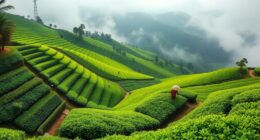
Regional varieties of matcha, like Uji and Nishio, have distinct flavors influenced by terroir. Uji matcha, grown with traditional shading techniques, offers a rich umami taste and vibrant green color. Nishio matcha, cultivated with different methods, tends to be lighter and sweeter. Soil, climate, and altitude shape each region’s unique profile. Exploring these differences helps you find the perfect matcha for your preferences—there’s more to discover behind each cup of tea.
Key Takeaways
- Uji matcha is known for its deep umami flavor and vibrant green color due to traditional shading techniques.
- Nishio matcha offers a lighter, sweeter profile influenced by specific cultivation and leaf development methods.
- Terroir factors like soil mineral content, altitude, and climate significantly shape matcha’s flavor and aroma.
- High-altitude regions produce matcha with complex, nuanced flavors, while lower-altitude areas yield earthier profiles.
- Harvest timing and processing methods further influence regional taste differences and texture of matcha.
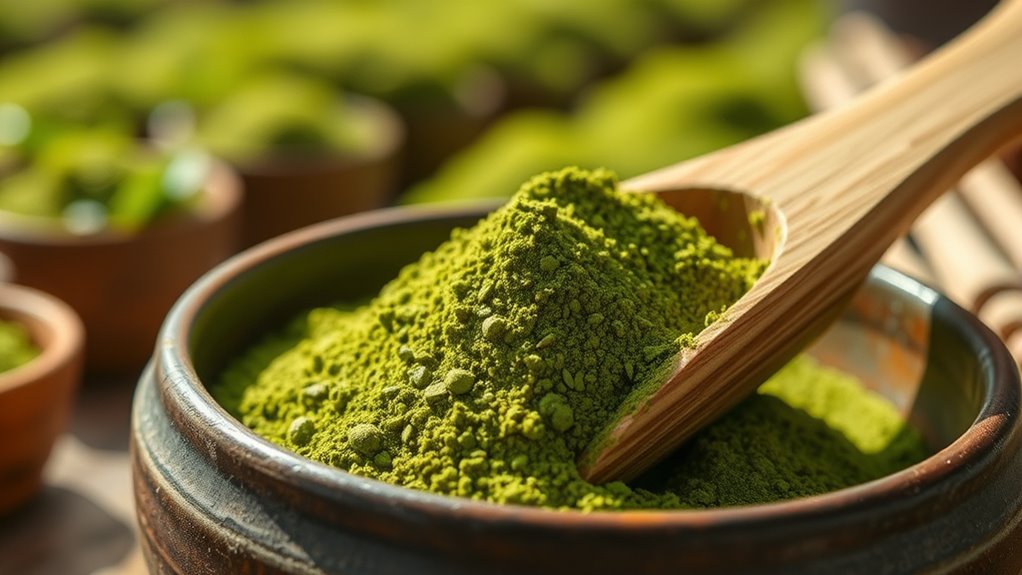
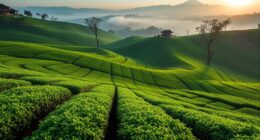
Matcha tea comes in a variety of types, each offering unique flavors, textures, and health benefits. One of the most exciting aspects of matcha is how regional varieties and terroir influence its character. The region where the tea is cultivated substantially impacts its flavor profiles, which are shaped by distinct cultivation methods and environmental conditions. For example, matcha from Uji, Japan, is renowned for its deep, umami-rich taste and vibrant green color, thanks to the area’s traditional shading techniques. These shading methods, which involve covering tea plants to limit sunlight, boost chlorophyll levels and amino acids, creating a rich, mellow flavor. Conversely, matcha from Nishio tends to have a lighter, slightly sweeter profile, due to different cultivation methods that emphasize a more delicate leaf development.
Regional matcha varieties, like Uji’s umami-rich and Nishio’s sweet profiles, showcase unique cultivation methods and terroir influences.
The terroir, encompassing soil quality, altitude, climate, and sunlight, plays a crucial role in shaping the final flavor. High-altitude regions like Uji experience cooler temperatures and longer growing seasons, allowing the leaves to develop complex, nuanced flavors. Meanwhile, lower-altitude areas might produce matcha with a more robust, earthy taste. The mineral content in the soil can also subtly influence the tea’s flavor, adding depth and character that reflect the unique environment in which the tea is grown. These environmental factors, combined with specific cultivation methods, create a spectrum of flavor profiles that appeal to different preferences.
Additionally, the timing of harvest impacts the flavor. First harvest leaves, often called “shincha,” tend to be more delicate and sweet, while later harvests may result in a more robust and slightly bitter profile. The processing techniques, such as stone grinding or modern machinery, further influence the texture and consistency, which varies by region. Some regions focus on producing a finer, silkier powder, enhancing the mouthfeel and overall sensory experience. Soil quality and other environmental factors are integral to the unique taste characteristics of each matcha variety.
Understanding the regional differences in matcha helps you appreciate its diversity and complexity. When choosing matcha, consider where it’s from and how it was cultivated. This knowledge allows you to select a variety that aligns with your flavor preferences and health goals. Whether you prefer the deep umami of Uji or the lighter sweetness of Nishio, the terroir and cultivation methods delivered by each region result in distinct, memorable tea experiences. By exploring these regional differences, you discover a richer appreciation for the artistry behind every cup of matcha.

Naoki Matcha Superior Ceremonial Blend – Authentic Japanese First Harvest Ceremonial Grade Matcha Green Tea Powder from Uji, Kyoto (40g / 1.4oz)
✓ Premium Japanese Ceremonial Grade Matcha, Fresh from Japan – Made from shade grown, First Harvest tea leaves…
As an affiliate, we earn on qualifying purchases.
As an affiliate, we earn on qualifying purchases.
Frequently Asked Questions
How Does Climate Influence Matcha Flavor Profiles?
Climate impact greatly influences matcha flavor profiles, shaping their unique taste nuances. Warmer, sunnier climates often produce sweeter, more vibrant matcha, while cooler, mistier regions tend to yield earthier, more umami-rich varieties. You’ll notice these differences in aroma and mouthfeel, as the climate affects leaf growth and sugar development. By understanding this, you can choose matcha that matches your preferred flavor nuances, elevating your tea experience.
What Are the Traditional Harvesting Methods for Regional Matcha?
You typically harvest regional matcha by hand plucking the youngest, tender leaves, often during early morning hours. Shade cultivation plays a vital role, as it increases chlorophyll and amino acids, enhancing flavor. Skilled workers carefully pick only the top leaves, ensuring quality. This traditional method preserves the delicate balance of flavors, resulting in high-quality matcha that captures the essence of its regional terroir.
How Does Altitude Affect Matcha Cultivation and Taste?
They say, “High altitude, high flavor.” You’ll notice that altitude effects in matcha cultivation lead to slower growth, which enhances flavor development. Higher elevations often produce a more delicate, nuanced taste with a vibrant green color. The cooler temperatures and thinner air allow the tea leaves to develop complex profiles, making your matcha richer and more aromatic. So, altitude truly elevates the quality and flavor of your favorite matcha.
Are There Specific Soil Types Ideal for High-Quality Matcha?
You should look for soil with rich, well-draining composition and high mineral content to grow high-quality matcha. Ideal soils are often slightly acidic, with good aeration and fertility that support healthy tea plants. Loamy soils with a balanced mix of sand, silt, and clay provide preferable conditions. Ensuring the soil has ample minerals enhances the flavor and aroma of your matcha, making it more vibrant and nuanced.
How Do Regional Terroirs Impact Antioxidant Levels in Matcha?
You should know that regional terroirs notably impact antioxidant levels in matcha. For example, teas from Uji often have 20% higher catechin content, thanks to unique soil composition and ideal farming practices. The mineral-rich soil and climate conditions enhance antioxidant production. When you choose matcha from specific regions, you’re getting a product where soil and farming methods work together to boost health benefits.

Naoki Matcha Nishio Bloom Masters Collection Matcha – Authentic Japanese Ceremonial Grade Matcha Green Tea Powder from Nishio, Japan (40g / 1.4oz)
✓ Introducing, The Master’s Collection – Our Master’s Collection showcase the highest quality matcha crafted by reputable tea…
As an affiliate, we earn on qualifying purchases.
As an affiliate, we earn on qualifying purchases.
Conclusion
You might be surprised to learn that Japan produces over 80% of the world’s matcha, showcasing its rich regional diversity. Each variety offers unique flavors shaped by terroir, from the grassy notes of Uji to the umami-rich blends of Nishio. Exploring these regional differences lets you truly appreciate matcha’s complexity. So next time you sip, remember you’re tasting a centuries-old tradition rooted in specific landscapes that make each cup special.

Naoki Matcha Superior Ceremonial Blend – Authentic Japanese First Harvest Ceremonial Grade Matcha Green Tea Powder from Uji, Kyoto (100g / 3.5oz)
✓ Our Superior Blend Ceremonial Grade Matcha in Larger Packaging – Bigger packaging that offers both convenience and…
As an affiliate, we earn on qualifying purchases.
As an affiliate, we earn on qualifying purchases.

Matcha Whisk Set, 7 Pcs Matcha Kit, Ceramic Matcha Set Includes Matcha Bowl with Spout, Matcha Whisk and Holder, Bamboo Scoop, Scoop Rest, Sifter and Tea Towel (Matcha Green)
【𝗘𝘅𝗾𝘂𝗶𝘀𝗶𝘁𝗲 𝗚𝗶𝗳𝘁-𝗥𝗲𝗮𝗱𝘆 𝗦𝗲𝘁】 Unbox authentic Japanese tea ceremony tradition! Our deluxe gift box contains 𝟳 𝗲𝘀𝘀𝗲𝗻𝘁𝗶𝗮𝗹 𝘁𝗼𝗼𝗹𝘀: Ceramic…
As an affiliate, we earn on qualifying purchases.
As an affiliate, we earn on qualifying purchases.