Japanese green tea is packed with antioxidants known as catechins, which help neutralize free radicals and reduce oxidative stress. Drinking it regularly may lower your risk of heart disease and certain cancers, support weight management, boost brain function, and enhance your immune system. Proper brewing maximizes these health benefits and improves flavor. Keep exploring to discover how to prepare the perfect cup and uncover even more health advantages.
Key Takeaways
- Rich in antioxidants like catechins that neutralize free radicals and reduce oxidative stress.
- Regular consumption may lower the risk of heart disease and certain cancers.
- Supports weight management and provides a gentle energy boost through natural caffeine.
- May enhance brain function, focus, and overall mental vitality.
- Proper brewing techniques maximize antioxidant levels and preserve delicate flavors for optimal health benefits.

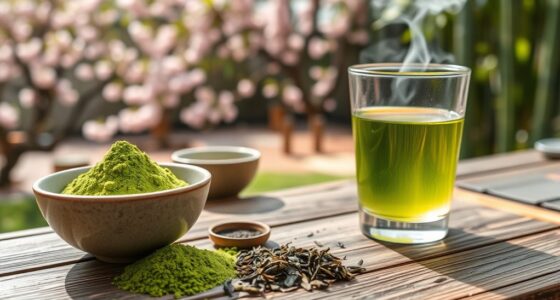
Japanese tea, renowned for its rich tradition and unique flavors, also offers numerous health benefits that can enhance your well-being. One of the most celebrated aspects of Japanese tea, especially green tea, is its high concentration of green tea antioxidants. These powerful compounds, such as catechins, help neutralize free radicals in your body, reducing oxidative stress and lowering your risk of chronic diseases like heart disease and certain cancers. Incorporating green tea into your daily routine can provide a natural boost to your immune system and promote overall health.
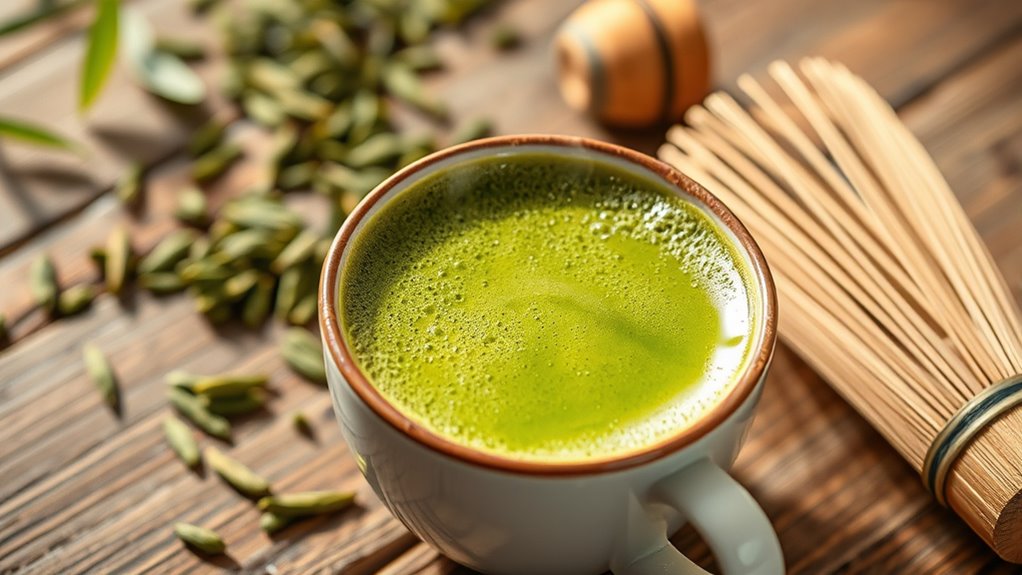
Japanese green tea is rich in antioxidants that boost immunity and reduce chronic disease risk.
To maximize these benefits, it’s crucial to pay attention to tea brewing techniques. Proper brewing not only enhances the flavor but also preserves the antioxidants and other beneficial compounds. You should start by using fresh, high-quality green tea leaves or tea bags. Heat your water to about 175°F (80°C)—boiling water can scorch the delicate leaves, leading to a bitter taste and potential loss of nutrients. Steep the tea for around 1 to 3 minutes, which is enough to extract the antioxidants without overdoing it. Shorter steeping times prevent bitterness and ensure you get the most health benefits from each cup.
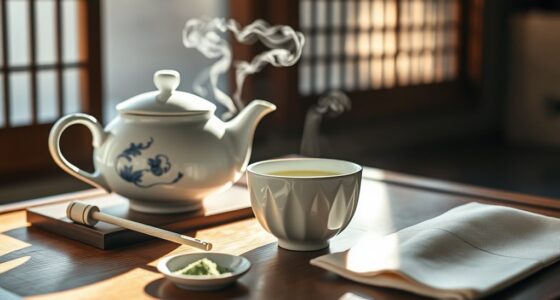
Once brewed correctly, Japanese green tea delivers a delicate, grassy flavor that is both soothing and invigorating. You can experiment with different tea brewing techniques, such as using a traditional Japanese cast-iron teapot or a modern glass infuser, to find what suits your taste best. Pour the hot water over the leaves gently, allowing the tea to steep evenly and release its nutrients. When you follow these tea brewing techniques, you ensure that you’re getting the maximum antioxidant content, which is key to reaping the health benefits.
Drinking Japanese green tea regularly can also aid in weight management, thanks to its metabolism-boosting properties. Its natural caffeine content provides a gentle energy lift without the jitters often associated with coffee. Additionally, the catechins in green tea may help improve brain function and enhance focus. Over time, these small daily choices can add up, supporting your overall health and vitality.
Furthermore, understanding the importance of proper tea preparation can significantly impact the health benefits you receive, ensuring that each cup is both flavorful and nutritious.
Top picks for "health benefit japanese"
Open Amazon search results for this keyword.
As an affiliate, we earn on qualifying purchases.
Frequently Asked Questions
How Does Japanese Tea Compare to Other Green Teas Globally?
You’ll find Japanese tea stands out globally due to its cultural significance and unique brewing techniques. Unlike other green teas, Japanese varieties like matcha and sencha are often prepared with precise methods that preserve their rich flavor and health benefits. This attention to tradition and technique enhances the tea’s antioxidants and calming effects, making it not just a drink but a cultural experience. So, Japanese tea offers a distinctive, mindful approach compared to other green teas worldwide.
Are There Any Side Effects From Drinking Japanese Tea Regularly?
Drinking Japanese tea regularly can have minimal health risks, but you should watch out for caffeine sensitivity. Too much caffeine might cause insomnia, jitters, or increased heart rate if you’re sensitive. Also, excessive consumption could lead to stomach upset or iron absorption issues. If you experience these side effects, it’s best to cut back and enjoy your tea in moderation. Always listen to your body’s responses to stay healthy.
What Is the Best Way to Prepare Japanese Tea for Health Benefits?
Imagine revealing the full health benefits of Japanese tea with the perfect brew. To do so, you should focus on ideal brewing: use fresh, filtered water heated to about 70-80°C, not boiling. Steep the tea leaves for 1-2 minutes to avoid bitterness. This gentle process preserves antioxidants and maximizes taste, ensuring you get the most out of each cup for your well-being.
Can Japanese Tea Help With Weight Loss or Metabolic Health?
Yes, Japanese tea can help with weight loss and metabolic health. Drinking it regularly provides a metabolic boost, helping your body burn calories more efficiently. Plus, the natural compounds in Japanese tea can aid in appetite suppression, making it easier to control your food intake. Incorporate a cup into your daily routine to support your weight management goals and improve your overall metabolic health.
Is Japanese Tea Suitable for Children or Pregnant Women?
Imagine a delicate balance, like a teacup on a thin edge. Japanese tea isn’t always suitable for children or pregnant women. You should prioritize children’s safety and consider pregnancy considerations, as caffeine content can affect both groups. While small amounts may be safe, it’s best to consult a healthcare provider before giving Japanese tea to children or drinking it during pregnancy to avoid any potential risks.
Conclusion
Now that you know the health benefits of Japanese tea, it’s clear this ancient brew can boost your well-being, much like a secret elixir from a bygone era. Drinking it regularly can improve your focus, support your immune system, and even help you relax after a long day. So, why not embrace this timeless tradition and make Japanese tea a part of your daily routine? After all, even Cleopatra would’ve appreciated its natural magic.