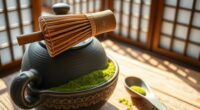
Japanese tea has a centuries-old history that plays a key role in shaping the country’s culture. It began with cultivation on lush slopes and developed into traditional ceremonies like Chanoyu that emphasize harmony, respect, and mindfulness. These practices reflect Japan’s craftsmanship and spiritual discipline. From matcha to sencha, tea continues to connect people with Japan’s rich heritage. If you want to explore how these traditions originated and evolved, there’s much more to discover below.

Get coffee and tea gear delivered free with Prime
- Fast, free delivery on millions of items
- Prime Video, Amazon Music and more included
- Member-only deals all year
Key Takeaways
- Japanese tea dates back centuries, deeply rooted in cultural traditions and craftsmanship.
- Tea cultivation occurs on terraced slopes, with climate and shading techniques shaping flavor.
- Traditional tea ceremonies, such as Chanoyu, embody aesthetics, mindfulness, and hospitality.
- Tea’s cultural significance reflects Japan’s emphasis on artistry, spiritual discipline, and reflection.
- The history of Japanese tea showcases a blend of cultivation, ceremonial practices, and cultural identity.

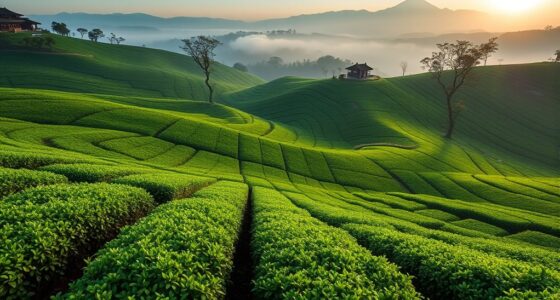
Japanese tea has a rich history that dates back centuries, shaping the culture and traditions of the country. When you think about Japanese tea, you’re tapping into a long-standing tradition rooted in meticulous tea cultivation and revered traditional ceremonies. The journey of Japanese tea begins with how it’s grown—carefully cultivated on lush, terraced slopes where farmers pay close attention to every leaf. This dedication to tea cultivation ensures that each harvest produces leaves with the flavor and aroma that define Japanese tea. The climate and soil conditions in Japan are ideal for growing high-quality tea, which has helped establish a reputation for excellence. You’ll notice that the tea plants are often shaded during certain periods, a process that enhances flavor and imparts a distinct sweetness to the leaves. This careful cultivation process is fundamental, as it influences the taste and quality of the finished product.
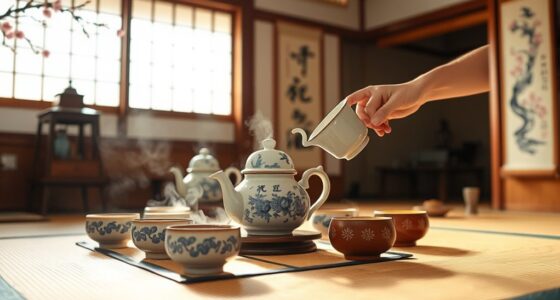
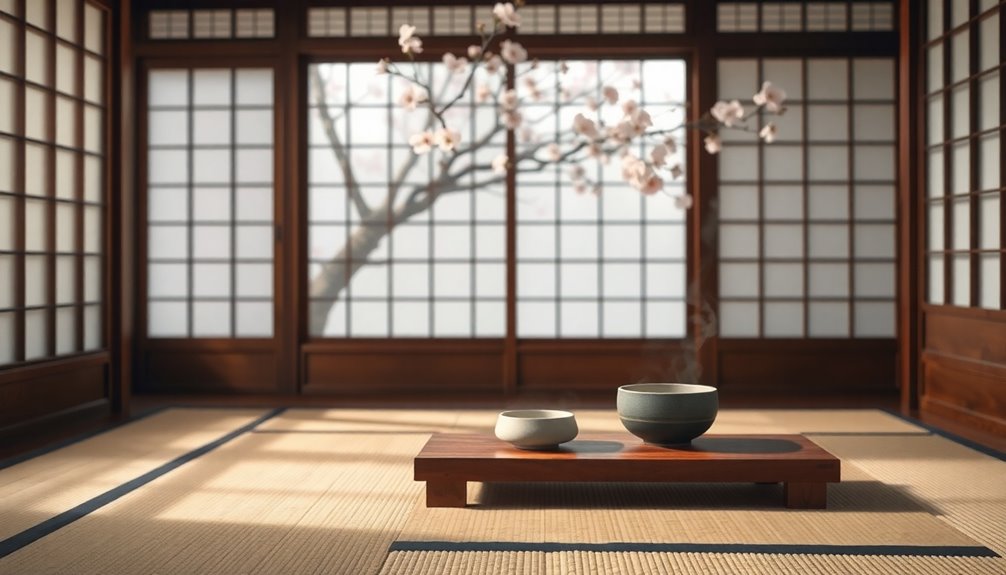
As you explore Japanese tea, you’ll find that traditional ceremonies hold a special place in its history. These ceremonies are much more than just preparing tea—they’re a profound expression of Japanese aesthetics, mindfulness, and hospitality. The most famous, the Chanoyu, or tea ceremony, embodies principles of harmony, respect, purity, and tranquility. Participating in or observing a traditional tea ceremony allows you to experience the deep cultural significance behind each movement and gesture. Every step, from selecting the tea to serving it in precise ways, reflects centuries of tradition. The tools used—such as the tea bowl (chawan), whisk (chasen), and scoop (chashaku)—are often handcrafted, adding to the ceremony’s artistry. The ritual is designed to foster mindfulness and appreciation, turning a simple act of drinking tea into a moment of reflection and connection.
Throughout history, these ceremonies have helped preserve the art of tea and reinforce its cultural importance. They highlight the meticulous attention to detail that Japanese culture values, from the cultivation of the tea leaves to the graceful movements of the host. This tradition has been passed down through generations, becoming a symbol of Japanese refinement and spiritual discipline. Additionally, the color accuracy of the tea leaves and the tools used in ceremonies plays a vital role in enhancing the aesthetic experience. So, as you learn about Japanese tea, recognize that it’s not just about the beverage itself but about the entire cultural context—how tea cultivation and traditional ceremonies intertwine to create a meaningful experience. Whether you’re sipping matcha during a ceremony or enjoying a cup of sencha, you’re partaking in a centuries-old tradition that continues to shape Japan’s cultural identity.
As an affiliate, we earn on qualifying purchases.
Frequently Asked Questions
What Are the Health Benefits of Drinking Japanese Tea?
Drinking Japanese tea offers several health benefits. It’s rich in antioxidants properties, which help protect your cells from damage and boost your immune system. Plus, the caffeine and amino acids in the tea enhance mental alertness, keeping you focused throughout the day. Regular consumption may also support weight management and improve heart health. So, by enjoying Japanese tea, you’re nurturing both your mind and body naturally.
How Is Matcha Different From Other Japanese Teas?
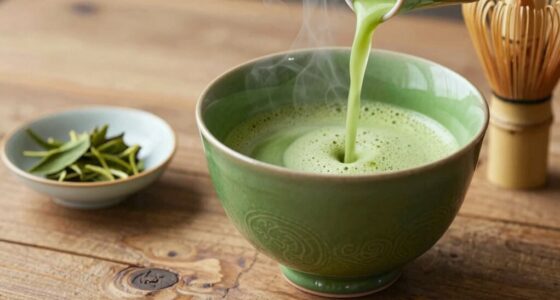
Matcha is like a vibrant jewel among Japanese teas, offering a unique experience. Unlike other teas, you prepare matcha by whisking finely ground powder into hot water, creating a rich, frothy drink. Its flavor profile is bold, umami-packed, and slightly grassy, setting it apart from the delicate, often floral notes of sencha or gyokuro. This intense, smooth taste makes matcha a favorite for those seeking a full-bodied tea experience.
Are There Traditional Ceremonies Associated With Japanese Tea?
Yes, there are traditional ceremonies associated with Japanese tea, like the Chanoyu, which emphasizes precise tea preparation and serving. You participate in these ceremonies, where every movement and utensil holds cultural significance. These rituals deepen your appreciation for Japanese tea, connecting you to centuries of tradition. The ceremony’s careful steps reflect respect, mindfulness, and harmony, making tea preparation a meaningful cultural experience beyond just drinking tea.
How Has Japanese Tea Culture Evolved Over Centuries?
You might think Japanese tea culture stayed static, but it’s actually evolved beautifully over centuries. From humble beginnings in tea cultivation, it grew into a rich tradition filled with cultural symbolism. Today, you see a blend of ancient rituals and modern influences, making each sip a reflection of history and innovation. So, while the roots remain, the branches of this tradition continue to grow, adapt, and surprise you.
What Are Common Regional Varieties of Japanese Tea?
You’ll find regional varieties like matcha from Uji, known for its rich flavor, and sencha from Shizuoka, offering fresh, grassy notes. Gyokuro, cultivated in shaded tea fields, provides a sweet, umami taste. These teas result from distinct tea cultivation methods that develop unique regional flavors. Exploring these varieties lets you experience Japan’s diverse tea culture and appreciate the local nuances that make each region’s tea special.
Conclusion
Now that you’ve glimpsed into Japan’s rich tea tapestry, imagine holding a warm cup that carries centuries of tradition. Each sip is like tasting history itself, a gentle whisper of ancient forests and sacred rituals. As you embrace this art, let the flavors transport you to tranquil gardens and sacred mountains. Your journey into Japanese tea is just beginning—so pour another cup, and keep exploring this timeless, fragrant story waiting to be uncovered.
Halloween Picks
halloween
As an affiliate, we earn on qualifying purchases.