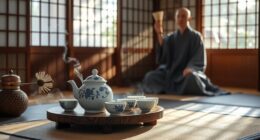
Japanese tea is more than just a beverage; it’s a reflection of centuries-old traditions rooted in craftsmanship, respect, and mindfulness. You experience its cultural significance through meticulous cultivation, where farmers carefully harvest shade-grown leaves during specific seasons. The tea ceremony, or “chanoyu,” emphasizes harmony and spiritual connection. This rich history fosters community, hospitality, and deep respect for nature. If you explore further, you’ll uncover how this centuries-old practice continues to shape Japan’s cultural identity today.
Key Takeaways
- Japanese tea symbolizes centuries-old traditions emphasizing harmony, craftsmanship, and respect for nature.
- Tea cultivation involves meticulous hand-picking and shade-growing to develop unique flavors.
- The tea ceremony, or “chanoyu,” embodies mindfulness, aesthetic harmony, and spiritual connection.
- Historically, tea fostered social bonds, meditation, and community through tea houses and temples.
- Modern appreciation reflects cultural values, linking everyday life to Japan’s rich tea heritage.

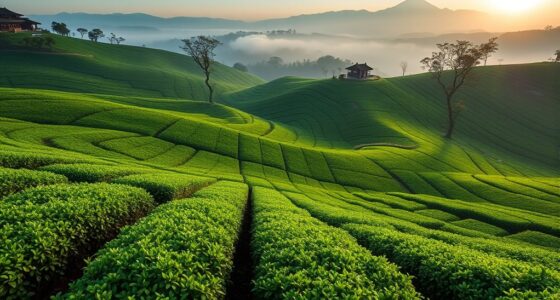
Japanese tea isn’t just a beverage; it’s a cultural emblem rooted in centuries of custom and its development. When you think about Japanese tea, you’re not just visualizing a drink—you’re imagining a tradition that has shaped social customs, ceremonies, and daily routines. The story begins with tea cultivation, a process that requires meticulous care and dedication. Tea plantations are often nestled on steep hillsides, where shade-grown leaves develop their distinctive flavors. You might not realize it, but the quality of Japanese tea depends on factors like soil, climate, and harvest timing. Farmers often hand-pick the freshest leaves during specific seasons, emphasizing precision and respect for nature’s rhythms. This careful cultivation process reflects the profound cultural importance that Japanese society places on tea. It’s more than just a crop; it’s a way of life, a symbol of harmony, patience, and craftsmanship handed down through generations.
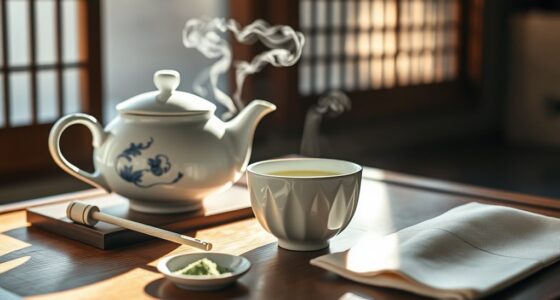
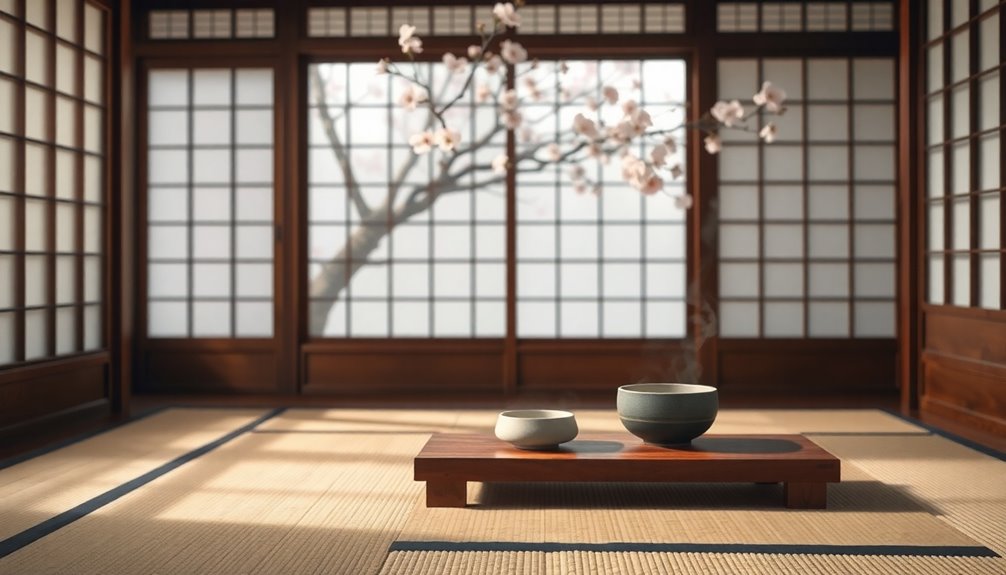
As you explore Japanese tea, you begin to understand its role beyond the fields. The cultural significance of tea in Japan is profound. It’s embedded in traditional practices like the tea ceremony, known as “chanoyu,” which emphasizes aesthetic harmony, mindfulness, and respect. Participating in a tea ritual isn’t just about drinking; it’s about experiencing a moment of tranquility and connection. Every movement, from preparing the tea to serving it, is deliberate, reflecting centuries of ritualistic refinement. The tradition’s roots go back over 500 years and continue to influence Japanese social interactions today. Tea, in this context, becomes a symbol of hospitality and spiritual discipline.
Throughout Japanese history, tea has also served as a catalyst for social bonding and cultural expression. In temples, tea was used to foster meditation and reflection; in tea houses, it became a form of entertainment and conversation. Modern Japan still holds these traditions close, blending them with contemporary life. When you sip Japanese green tea, you’re participating in a centuries-old practice that embodies respect for nature, craftsmanship, and community. The story of Japanese tea is ultimately about more than taste—it’s a reflection of the nation’s values and its enduring reverence for tradition. From the careful cultivation of the leaves to the ceremonial rituals, each aspect underscores how deeply tea is woven into Japan’s cultural fabric.
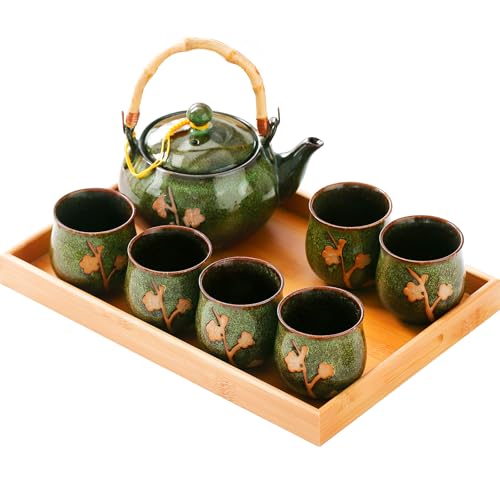
REOWONU Traditional Japanese tea set, Kiln altered glaze Porcelain tea set with 1 Teapot, 6 Tea cups, 1 Tea Tray,Japanese teapot set, Asian tea sets (Kiln altered-Green)
[Exquisite Golden Plum Design for Elegant Tea Time]: This Japanese tea set showcases handcrafted embossed golden plum blossoms…
As an affiliate, we earn on qualifying purchases.
As an affiliate, we earn on qualifying purchases.
Frequently Asked Questions
What Are the Health Benefits of Japanese Tea?
Japanese tea offers numerous health benefits, mainly because it’s rich in tea antioxidants that help protect your cells from damage. Drinking it regularly can improve your heart health, boost your immune system, and even enhance mental alertness. Plus, the natural compounds in Japanese tea may aid in weight management and reduce inflammation. So, incorporating this tea into your routine can considerably support your overall well-being and long-term health.
How Is Matcha Different From Regular Green Tea?
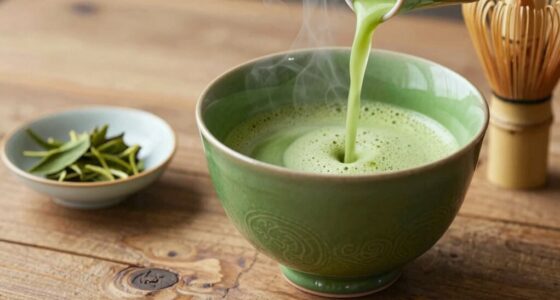
Matcha differs from regular green tea because you consume the whole leaf in powdered form, while regular tea involves steeping leaves. During tea cultivation, matcha plants are shaded to boost chlorophyll, which enhances flavor and color. In tea processing, matcha’s leaves are carefully steamed, dried, and ground into fine powder, preserving more nutrients and giving it a rich, umami flavor. This process makes matcha more concentrated and vibrant than regular green tea.
What Is the History of Tea Cultivation in Japan?
You learn that tea cultivation in Japan dates back over a thousand years, beginning with Buddhist monks who introduced tea for meditation. Over time, Japanese farmers perfected tea farming and cultivation techniques, focusing on shade-grown leaves and precise harvesting methods. This history of meticulous tea farming has helped produce the high-quality green teas Japan is famous for today, blending tradition with innovative cultivation practices.
How Do Japanese Tea Ceremonies Influence Modern Culture?
Think of Japanese tea ceremonies as delicate brushstrokes on a cultural canvas, shaping modern life. They influence you by emphasizing tea aesthetics—simple, refined beauty—and ceremonial symbolism, which promotes mindfulness and respect. These traditions inspire contemporary practices, from minimalist design to etiquette in social settings. By embracing these rituals, you connect with a centuries-old appreciation for harmony and tranquility, making everyday moments feel more meaningful and intentional.
What Are the Key Varieties of Japanese Tea Available Today?
You’ll find key varieties like matcha, sencha, gyokuro, and hojicha available today. Tea production involves carefully cultivating and processing these leaves, which influences their flavor and quality. When you buy Japanese tea, you’ll notice meticulous tea packaging that preserves freshness and highlights each variety’s unique qualities. Each type offers a different experience, from the vibrant, powdered matcha to the roasted notes of hojicha, enriching your tea-drinking culture.

Hdtyyln 4 Pcs Gongfu Tea Set, Chinese Kung Fu Tea Set, Tea Scoop for Loose Tea, Bamboo Tea Ceremony Utensils, Tea Accessories include Tea Scoop Needle Clip Spatula, for Tea House Restaurant Household
You wii get: 4Pcs Gongfu Tea Set Chinese Tea Tool Set. Include tea spoon, tea clip, tea spatula…
As an affiliate, we earn on qualifying purchases.
As an affiliate, we earn on qualifying purchases.
Conclusion
Now that you know the rich history and cultural significance behind Japanese tea, it’s like holding a tiny piece of tradition in your hands. Every sip connects you to centuries of craftsmanship and devotion. As you enjoy your next cup, remember it’s more than just a beverage—it’s a story steeped in time, waiting to be savored. Embrace the journey, and let each sip remind you of the beautiful heritage that makes Japanese tea so special.

Naoki Matcha Organic Ceremonial First Spring Blend – Authentic Japanese First Harvest Ceremonial Grade Matcha Green Tea Powder from Kagoshima, Japan (40g / 1.4oz)
✓ Organic Ceremonial Grade Matcha from Japan – Our Organic First Spring Blend Matcha is what we recommend…
As an affiliate, we earn on qualifying purchases.
As an affiliate, we earn on qualifying purchases.

Happy Sales HSMB-CWCB1, Authentic Japanese Traditional Tea Ceremony Matcha Bowl Chawan Handcrafted in Japan, Cherry Blossom Design
Happy Sales HSMB-CWCB1, Authentic Japanese Traditional Tea Ceremony Matcha Bowl Chawan Handcrafted in Japan, Cherry Blossom Design
As an affiliate, we earn on qualifying purchases.
As an affiliate, we earn on qualifying purchases.