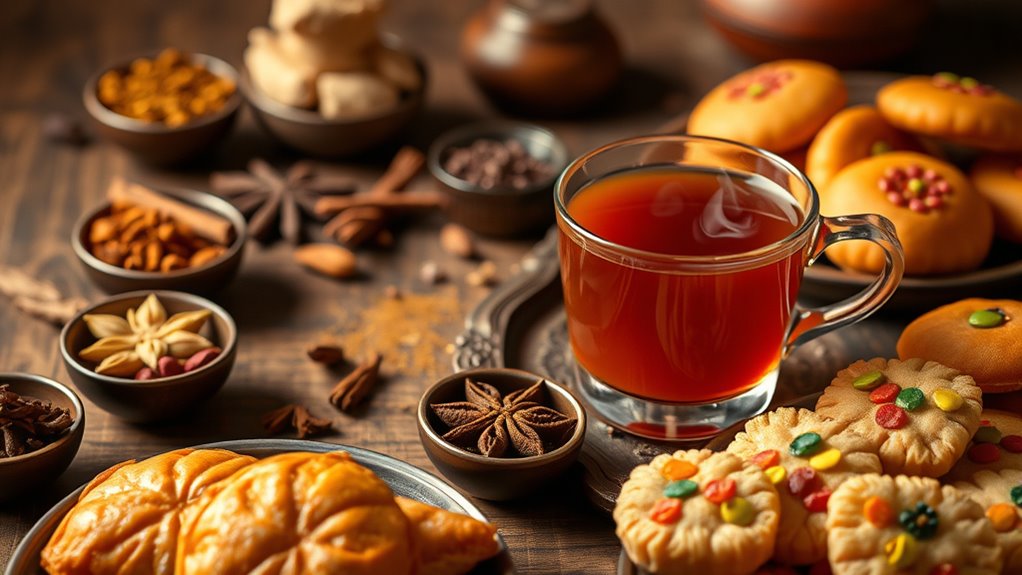
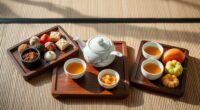
When pairing Indian tea with food and desserts, consider the tea’s origin and brewing style. Strong Assam complements hearty dishes, while delicate Darjeeling pairs well with light snacks and desserts. Use proper brewing times to bring out the right flavors—longer steeping for richness, shorter for delicacy. Spiced chai enhances Indian snacks, while subtle teas go with mild sweets. Keep these principles in mind to create perfect pairings that boost your flavor experience. Explore these tips further for a more refined pairing skill.

Get coffee and tea gear delivered free with Prime
- Fast, free delivery on millions of items
- Prime Video, Amazon Music and more included
- Member-only deals all year
Key Takeaways
- Match strong, full-bodied teas like Assam with hearty, savory dishes, and delicate teas like Darjeeling with light desserts.
- Adjust brewing times and temperatures to enhance tea flavors for specific food pairings, e.g., longer steeping for rich foods.
- Complement spicy snacks like chaat and samosas with spiced chai, emphasizing its warming spices.
- Pair coconut and milk-based sweets with subtle, lightly brewed teas to avoid overpowering delicate flavors.
- Use brewing techniques to highlight specific tea notes, creating balanced pairings with diverse Indian foods and desserts.

Indian tea offers a rich and diverse palette of flavors that can be perfectly complemented by thoughtful pairings. Whether you’re sipping a robust Assam or a fragrant Darjeeling, understanding how to match these teas with food and desserts enhances your tasting experience. To do this well, you should consider where your tea originates—its tea plantation—and how you brew it. The brewing technique plays a vital role in unblocking the tea’s full potential, which in turn influences the best food pairings.
Start by paying attention to the specific qualities of your tea. For example, a strong Assam, with its malty and bold profile, pairs nicely with hearty dishes or rich, savory snacks. To bring out its full flavor, you need to employ proper brewing techniques—use boiling water and steep it for about 3 to 5 minutes. This guarantees a full-bodied brew that complements substantial foods. On the other hand, a delicate Darjeeling, often called the “champagne of teas,” benefits from slightly cooler water and a shorter steeping time to preserve its floral and muscatel notes. When brewed correctly, this tea pairs beautifully with lighter foods like salads, seafood, or mild cheeses.
Pay attention to tea qualities and brewing techniques to enhance flavor pairings and enjoy the perfect match.
Beyond brewing methods, consider the food’s flavor intensity. Spicy Indian snacks like samosas or chaat go well with a robust chai, which combines black tea with spices like cardamom, ginger, and cinnamon. The spices in the chai enhance the flavors of the snacks, creating a harmonious balance. For desserts, delicate sweets like Indian milk-based treats or coconut-based confections match well with lightly brewed teas that won’t overpower their subtle sweetness. For example, a lightly brewed green or white tea can complement these desserts without overwhelming their gentle flavors.
If you’re hosting a tasting, vary your brewing techniques to emphasize different notes. A longer steep will deepen the tea’s strength, making it suitable for rich dishes, while a shorter steep keeps the tea light and revitalizing for pairing with delicate desserts. Remember, the key is to match the intensity of the tea with that of the food. When you understand how your tea plantation influences the flavor profile and how brewing techniques can enhance or mellow those notes, you’ll be able to craft perfect pairings every time.
In essence, the art of pairing Indian tea with food and desserts hinges on appreciating the nuances of each brew and choosing complementary flavors. With thoughtful preparation—paying attention to the origin of your tea and mastering your brewing techniques—you’ll find yourself enjoying a truly harmonious and delightful tea experience.
Frequently Asked Questions
How Do Regional Indian Teas Influence Pairing Choices?
Regional Indian teas, influenced by local flavors and cultural traditions, greatly shape your pairing choices. For instance, strong Masala Chai pairs well with spicy snacks, while delicate Darjeeling complements light desserts. You notice how regional flavor profiles guide your selections, making each pairing more authentic and satisfying. The cultural influence behind each tea type helps you enhance your experience, creating a harmonious balance between the tea’s unique taste and your food or dessert choices.
Can Herbal Indian Teas Be Paired With Traditional Desserts?
Yes, you can pair herbal Indian teas with traditional desserts. Herbal blends offer unique flavors that can complement the sweetness and richness of desserts, creating a delightful flavor harmony. For example, chamomile or mint herbal teas work well with spicy or nutty sweets, enhancing their taste without overpowering them. Experimenting with different herbal blends helps you discover exciting combinations that elevate your dessert experience.
What Are the Best Indian Teas for Breakfast and Snacks?
For breakfast and snacks, you should try scented Indian teas like Darjeeling, which offers a light, floral aroma perfect to start your day. Aged teas, such as Pu-erh, provide a rich, earthy flavor that pairs well with savory snacks. Both types energize you and enhance your snacking experience. You’ll find that the delicate scents of Darjeeling and the depth of aged teas make every sip enjoyable and invigorating.
How Does Brewing Time Affect Tea Pairing With Rich Foods?
A stitch in time saves nine, so pay attention to brewing time when pairing Indian tea with rich foods. Longer brewing increases brew strength, making the tea more robust, but can overpower delicate dishes. Conversely, shorter brewing preserves flavor balance, complementing rich foods without overwhelming them. Adjust your brewing time based on the richness of your dish to achieve harmony and enhance your overall tasting experience.
Are There Specific Pairings for Spicy Indian Dishes?
For spicy Indian dishes, opt for teas that balance the heat and enhance flavors. You should choose milder, aromatic teas like chai, which contains spices that complement the dish’s spice level. These teas provide spice balancing, soothing your palate while boosting flavor enhancement. Additionally, lightly brewed green or white teas with subtle notes can also work well, offering a cooling effect that contrasts and complements the heat.
Conclusion
Just like a perfectly brewed cup of chai can brighten your day, pairing Indian tea with the right food transforms every sip into a memorable experience. Think of it as tuning an instrument—when each note aligns, the harmony is enchanting. I once watched friends savor spicy masala chai alongside sweet jalebi, and their smiles said it all. So, explore these pairings—you might find your own symphony of flavors waiting to be discovered in every cup.
Halloween Picks
halloween
As an affiliate, we earn on qualifying purchases.