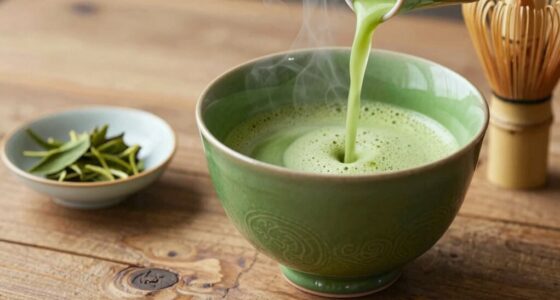
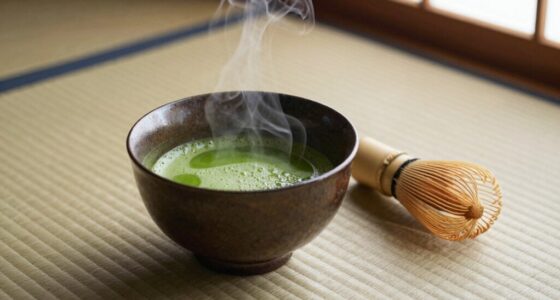
Pairing Japanese tea with food and desserts enhances your experience by balancing flavors and highlighting regional varieties. For example, matcha’s umami complements sweet wagashi, while sencha pairs well with light snacks like rice crackers. Focus on harmony so neither overwhelms the other. Understanding these traditions deepens appreciation of Japanese culture. If you explore different pairings, you’ll uncover even more ways to enjoy the rich diversity and nuanced flavors of Japanese tea.
Key Takeaways
- Matcha pairs well with sweet, seasonal wagashi that highlight its umami and grassy flavors.
- Delicate teas like gyokuro are best complemented by light, subtly flavored desserts or snacks.
- Regional varieties influence optimal pairings; for example, Shizuoka sencha pairs with rice crackers or vegetable-based treats.
- Balance is key—choose foods that enhance rather than overpower the tea’s natural flavors and aromas.
- Understanding traditional tea ceremonies and cultural principles guides thoughtful pairing for a harmonious experience.

Have you ever wondered how to perfectly complement your Japanese tea? It’s a question that often comes to mind when you want to elevate your tea-drinking experience. One of the best ways to do this is by pairing it thoughtfully with food and desserts, and understanding the nuances of a traditional tea ceremony can help you make better choices. During a tea ceremony, the emphasis is on harmony, balance, and appreciation, which extends to the food served alongside the tea. This setting also highlights the regional varieties of Japanese tea—each with distinct characteristics that lend themselves to specific pairings. For example, matcha, with its rich umami and grassy notes, pairs well with subtly sweet confections, while lighter sencha complements fresh, lightly savory dishes.
Regional varieties play a significant role in how you approach pairing Japanese tea. In Uji, famous for its high-quality matcha, you might choose traditional wagashi like wagashi that are sweet, delicate, and often flavored with seasonal ingredients. These treats balance the boldness of matcha and help mellow its bitterness. In Shizuoka, known for its sencha, you’ll find that pairing it with lightly flavored rice crackers or simple vegetable-based snacks enhances the tea’s invigorating qualities. Each region’s unique climate and tea production methods influence the flavor profiles, so understanding these differences can help you select the ideal food pairings.
When you’re hosting a tea gathering or simply enjoying a quiet moment at home, consider the overall harmony you want to achieve. For a robust matcha, opt for sweets that aren’t overly sweet but have a slight earthiness or nuttiness to mirror the tea’s depth. For more delicate teas like gyokuro, which has a sweet, umami-rich flavor, light and subtly flavored treats work best. The goal is to create a balance, where neither the tea nor the food overpowers the other. You can also experiment with savory options—such as lightly salted rice crackers or vegetable tempura—that complement the tea’s natural flavors without overshadowing them. Additionally, understanding green-chemistry principles can help you appreciate how tea’s chemical compounds contribute to its flavor and aroma, enhancing your pairing choices.
Ultimately, pairing Japanese tea with food and desserts is about enhancing the sensory experience and appreciating the cultural tradition behind it. By paying attention to regional varieties and the specific qualities of each tea, you can select complementary foods that elevate your enjoyment. Whether you’re participating in a formal tea ceremony or simply savoring a cup on your own, thoughtful pairings will deepen your appreciation and bring a new dimension to your tea time.
As an affiliate, we earn on qualifying purchases.
Frequently Asked Questions
How Does Tea Temperature Affect Pairing Choices?
Tea temperature profoundly impacts your pairing choices by influencing flavor enhancement. When you serve tea hot, it releases more aromatic compounds, enhancing the flavors of your food and desserts. Conversely, a cooler tea offers a milder taste, making it ideal for delicate dishes or sweets, allowing subtle flavors to shine. Adjusting the tea temperature helps you customize your pairing experience, ensuring each sip complements and elevates your chosen foods.
Are There Seasonal Tea Pairings for Different Foods?
Yes, you should consider seasonal tea pairings to enhance your experience. During spring, match light, floral teas with fresh, seasonal ingredients like sakura or strawberries, perfect for festival celebrations. In summer, opt for cooling, herbal teas with chilled fruits. Fall calls for warm, earthy teas paired with seasonal vegetables and hearty dishes. Winter pairs rich, roasted teas with comforting foods, making every festival celebration more memorable.
What Are Traditional Tea Pairings in Specific Japanese Regions?
You’ll find that regional tea traditions in Japan emphasize cultural pairing customs unique to each area. For example, in Kyoto, you might enjoy matcha with traditional wagashi sweets, highlighting refined tea ceremonies. In Shizuoka, local sencha pairs well with fresh seafood, reflecting the region’s culinary style. Exploring these regional pairings helps you appreciate Japan’s diverse tea culture, where each area’s customs enhance the flavor experience and deepen your connection to local traditions.
How Can I Enhance Flavors With Tea and Food Pairing?
To enhance flavors with tea and food pairing, focus on achieving umami balance and flavor harmony. Choose teas that complement your dishes—light green teas for delicate flavors or robust matcha for richer tastes. Experiment by tasting how the tea interacts with each bite, adjusting your pairings to maximize umami and create a seamless flavor experience. This mindful approach elevates both the tea and food, making every pairing more satisfying.
Can Non-Traditional Foods Be Paired Successfully With Japanese Tea?
Yes, you can definitely pair non-traditional foods with Japanese tea. Embrace fusion cuisine and experiment with modern pairings, like spicy tacos or sushi burritos, to find exciting flavor combinations. Japanese teas, especially green or hojicha, can complement a variety of bold or savory dishes. Trust your palate, and don’t be afraid to explore new culinary horizons—your unique pairing can create a memorable tasting experience.
Conclusion
As you sip your carefully paired Japanese tea, imagine it as a delicate dance partner guiding your taste buds through a symphony of flavors. Each cup unfastens a new chapter in your culinary story, turning every bite into a harmonious melody. Embrace the artistry behind these pairings, allowing them to elevate your dining experience to a poetic crescendo. With every sip, you’re not just drinking tea—you’re orchestrating a timeless tradition that delights and inspires.